
the pavilion projects steering 2025’s design conversation
Pavilions are architecture’s fast, experimental structures that test ideas long before they scale up to cities. This year’s highlights push that spirit further, blurring the lines between sculpture, shelter, ritual space, and ecological device. From bamboo vaults rising in flood-prone villages to inflatable dream temples, from wind-driven feather structures on remote islands to LEGO-built playscapes in London, the pavilion becomes a tool for storytelling.
Across the ten projects, a set of shared themes emerges: material reinvention, circular design, and a renewed focus on community. Bread waste becomes structure, bamboo becomes climate infrastructure, and woven rattan becomes a water-harvesting system. Some pavilions introduce new behaviors, gathering, dreaming, resting, learning, while others revive old rituals like bathing or communal reading. What ties them together is their willingness to ask what a temporary space can do, and how it can shift our relationship to place, resources, and each other. Here are ten pavilions reshaping how we think about space.
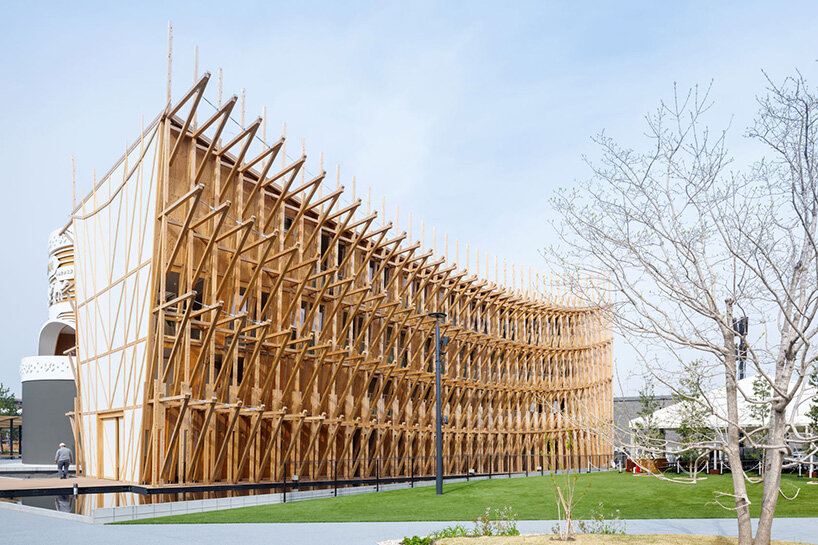
image courtesy of Lina Ghotmeh—Architecture
Lina Ghotmeh—Architecture designs the Bahrain Pavilion for Expo 2025 Osaka, crafting a timber-and-aluminum structure inspired by the nation’s traditional dhow boats and its long maritime history. Positioned along the waterfront in the Expo’s Empowering Lives zone, the pavilion bridges Bahraini boat-building heritage with Japanese wood craftsmanship, expressing cultural exchange through material and form. The structure reinterprets millennia-old construction techniques with a lightweight wooden frame, an aluminum outer layer, and passive cooling strategies that reduce mechanical energy use.
Designed for disassembly and reuse after the Expo, the pavilion embodies Bahrain’s commitment to sustainability and craft-driven innovation. The structure received the Gold Award for Best Architecture and Landscape in the Self-Built category, recognizing Ghotmeh’s precise, contextual approach and the pavilion’s refined expression of Bahrain’s cultural and environmental heritage.
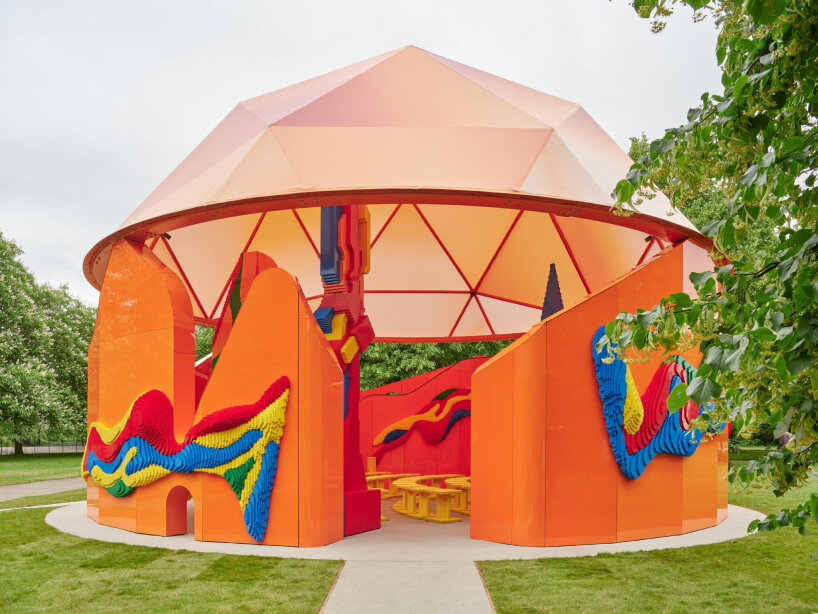
The Play Pavilion, designed by Peter Cook (Peter Cook Studio Crablab), in collaboration with Serpentine and the LEGO Group © Peter Cook (Peter Cook Studio Crablab) | images courtesy of Serpentine; photos by Andy Stagg, unless stated otherwise
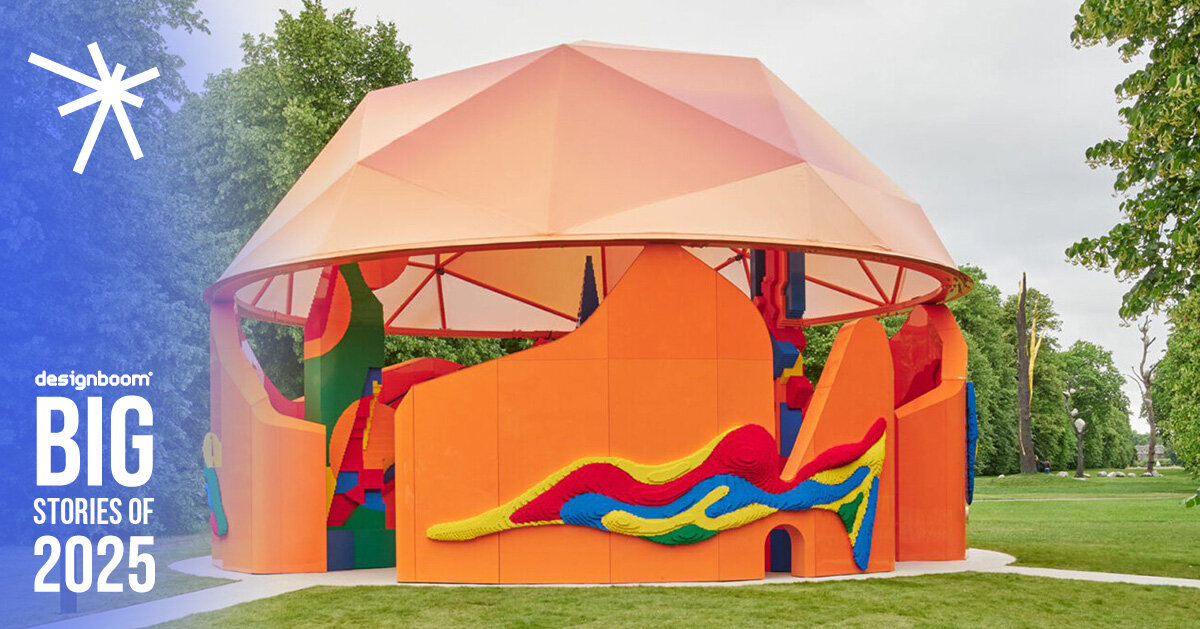
Serpentine and the LEGO Group’s Play Pavilion by Sir Peter Cook, installed in London’s Kensington Gardens, is a bright, bowl-shaped structure wrapped in orange and animated with LEGO-built topographies. The exterior walls of the pavilion rise and dip like a shifting landscape, inviting visitors to touch the tactile brick formations before stepping inside.
Sunlight filters through gaps between the roof and base, filling the interior with natural light while maintaining a breezy, open feel. A towering central pillar, assembled from LEGO bricks, anchors the space like a watchful robotic figure. Visitors are encouraged to play, build, and modify the pavilion in real time through an interactive brick wall and a trove of LEGO pieces. Multiple openings frame views of the garden, while a yellow slide offers a playful exit route.
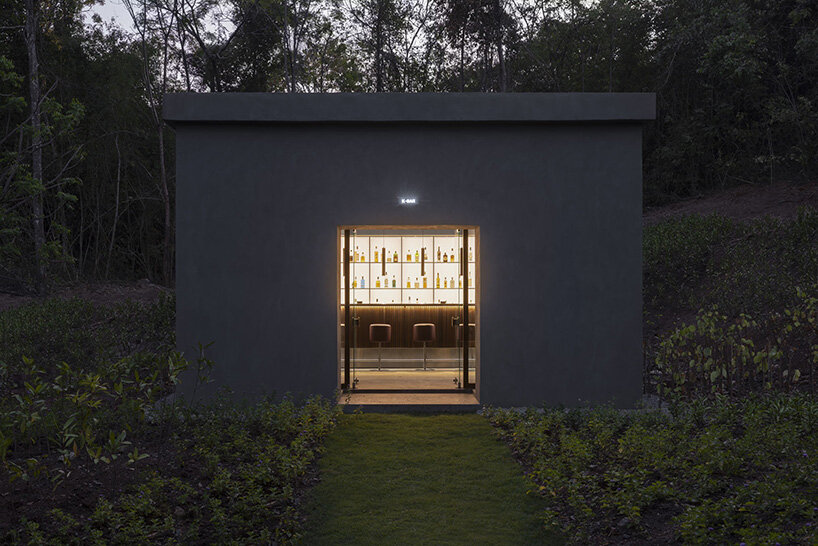
images by Andrea Rossetti, courtesy of Khao Yai Art
Elmgreen & Dragset unveil K-BAR, a six-seat cocktail pavilion tucked deep within Thailand’s Khao Yai Art Forest, inserting an urban typology into a remote natural setting. Appearing most days as a charcoal-gray sculptural object amid dense foliage, the pavilion occasionally comes to life: visitors arriving at the right moment are guided through the forest to find the bar glowing from within.
Inside, stainless steel surfaces, dark wood, red leather stools, terrazzo flooring, and a backlit display channel the intimacy of classic metropolitan bars. A permanently installed 1996 painting by Martin Kippenberger, visible even when the bar is closed, anchors the installation, paying homage to the artist’s legacy and echoing Elmgreen & Dragset’s long-standing interest in ‘denials,’ functional forms that resist predictable use.
Open only once a month, K-BAR plays with visibility, access, and displacement, placing a European artwork in a Southeast Asian forest as a subtle inversion of museum repatriation debates. As part of the newly launched Khao Yai Art Forest, the pavilion underscores the initiative’s mission to merge contemporary art with ecological immersion, offering an unexpected moment of encounter in one of Thailand’s most pristine environments.