
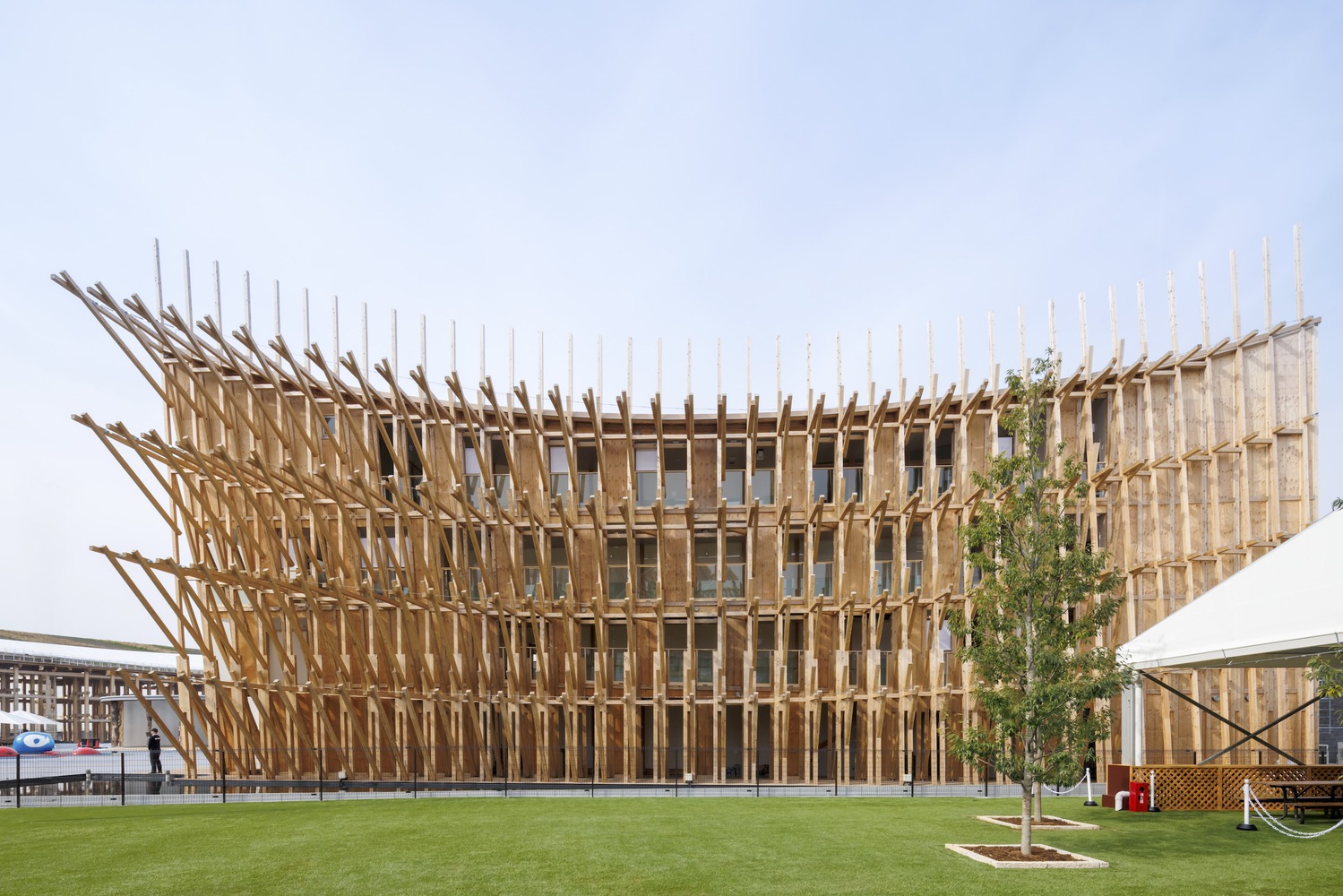
 Anatomy of a Dhow, Bahrain Pavilion Osaka Expo 2025 / Lina Ghotmeh Architecture © Iwan Baan
Share
Or
https://www.archdaily.com/1037071/architects-of-the-global-south-10-pavilions-and-installations-that-shaped-2025
In a global landscape marked by accelerated change, 2025 emerged as a decisive year for architecture—not only because of the major events that animated the international circuit, but above all because of the voices that stood out within them. From the Venice Architecture Biennale to Expo Osaka, pavilions and installations from the Global South ceased to function as mere exhibition gestures and instead asserted themselves as territories of memory, resistance, and imagination, articulating narratives that expand the horizons of contemporary architectural debate.
Across these works, tradition and future move side by side: ancestral materials reappear in reimagined forms, historical wounds are given sensitive expression, and social urgency is translated into proposals that challenge established ways of building and inhabiting the world.
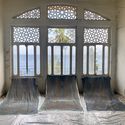
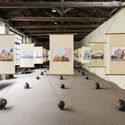
In this selection, we revisit projects that shaped the year and helped redraw the international architectural landscape. They include not only national pavilions that officially represent their countries, but also works conceived by architects from the Global South—such as this year’s Serpentine Pavilion, designed by Bangladeshi architect Marina Tabassum, whose practice sensitively incorporates the culture and imagination of her people.
Related Article On Designing National Pavilions: Power and Identity at Universal Exhibitions Philippines Pavilion at Expo Osaka 2025 / Carlo Calma Consultancy
Composed of more than one thousand strands of rattan and 212 panels woven by artisans from different regions, the pavilion transforms traditional Filipino weaving techniques into architecture, symbolizing unity and continuity. Its atmosphere celebrates biodiversity through natural materials and immersive experiences, reinforcing both environmental and cultural awareness. By interweaving art, ancestry, and community, the project advances a model of sustainable and collaborative development.
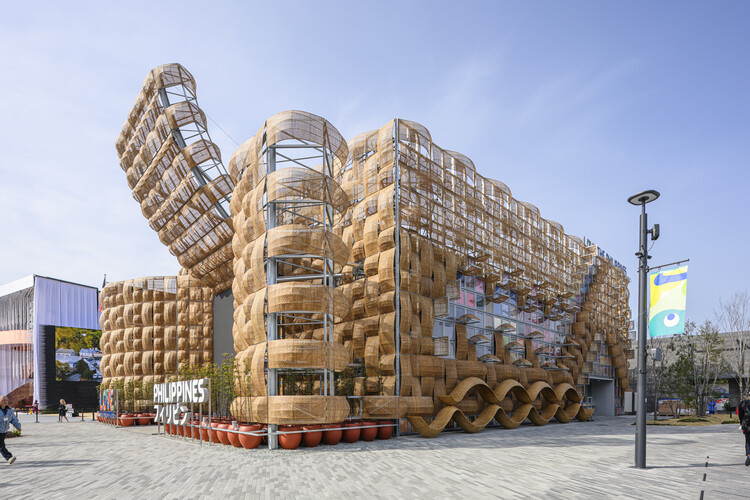 The Philippine Pavilion at Expo Osaka 2025. Image © Masaki KomatsuBrazilian Pavilion at the Venice Architecture Biennale 2025 / Plano Coletivo
The Brazilian pavilion connects ancestral Amazonian infrastructures with contemporary urban challenges, highlighting the sophistication of Indigenous techniques of settlement and environmental management. Its minimalist exhibition design—composed of wood, counterweight stones, and steel cables—creates a suspended structure that makes visible the tension between nature and urbanity. In doing so, the pavilion invites a rethinking of “development” through traditional knowledge, offering a powerful socio-environmental critique and proposing new ways of inhabiting.
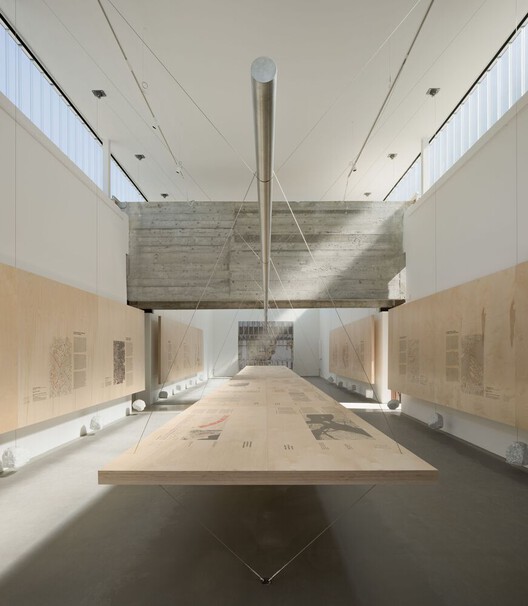 (RE)INVENÇÃO: Brazilian Pavilion at the Venice Architecture Biennale / Collective Plan © Federico CairoliInstallation “Había una vez y dos son tres feminisitios” (Puerto Rico) at the Triennale di Milano / Regner Ramos
The installation revisits the murder of Neulisa “Alexa” Luciano, a Black transgender woman. Through three reconstructed scenarios, the project reveals how both physical and virtual environments contributed to the conditions of the crime. Elevated and deliberately displaced, the work operates simultaneously as presence and absence, prompting reflection on architecture’s role in bearing witness to violence and in protecting marginalized communities. The installation received an Honorable Mention among the International Participants.
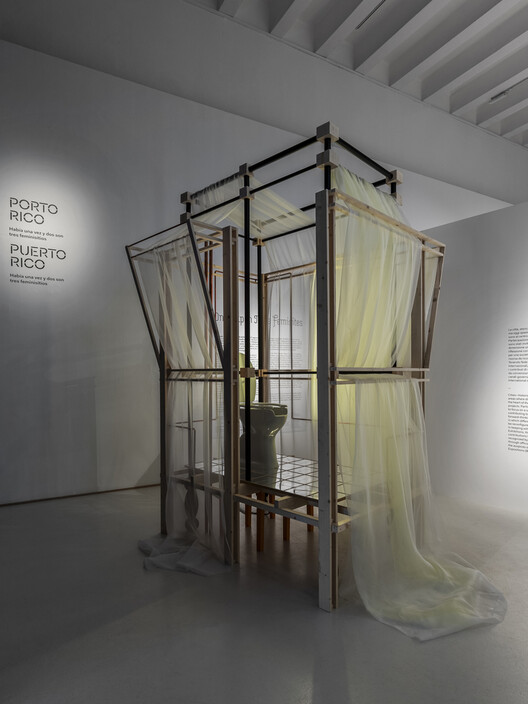 Puerto Rico Pavilion. Image © Alessandro Salettae Piercarlo Quecchia – DSL Studio, Courtesy of TriennalBahrain Pavilion at Expo Osaka 2025 / Lina Ghotmeh Architecture
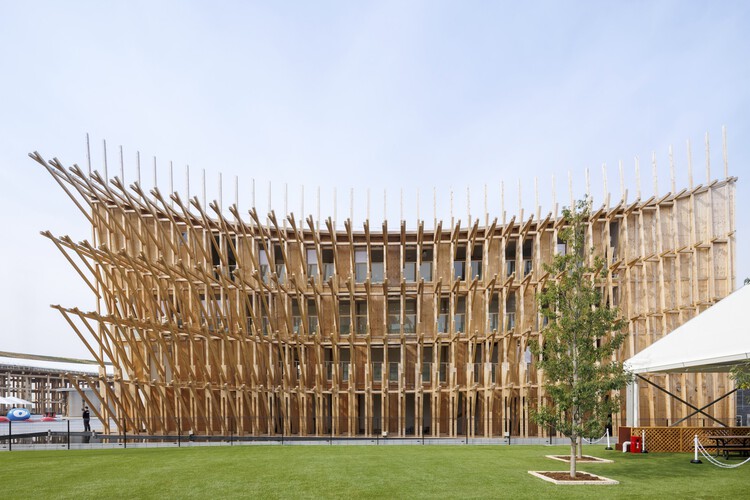
The pavilion reinterprets Bahrain’s maritime tradition through a wooden structure inspired by dhow boats, bringing together techniques from the Gulf region and Japan. Built from approximately 3,000 non-industrialized pieces assembled with precise joinery, it prioritizes lightness, natural ventilation, and sustainability. Inside, the pavilion offers a sensory experience that revives the country’s maritime history and long-standing cultural exchanges. Here, the dhow becomes a metaphor for connection, hospitality, and a future shaped by conscious design.
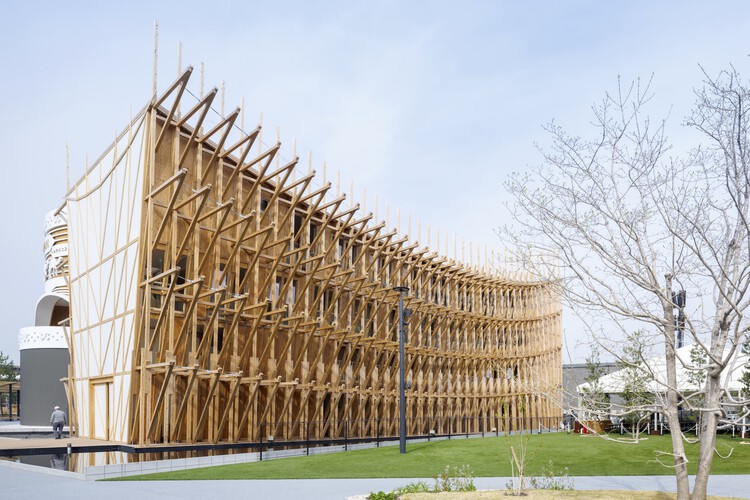 Anatomy of a Dhow, Bahrain Pavilion Osaka Expo 2025 / Lina Ghotmeh Architecture © Iwan BaanTogo Pavilion at the Venice Architecture Biennale 2025 / Studio NEiDA
This inaugural pavilion presents an overview of 20th-century Togolese architecture, emphasizing processes of conservation, transformation, and dialogue between traditional and modernist practices. Adopting an Afrocentric perspective, it underscores the cultural depth and contemporary relevance of this legacy, while offering reflections on equitable design practices and on the relationship between history, materiality, and present-day architectural production.
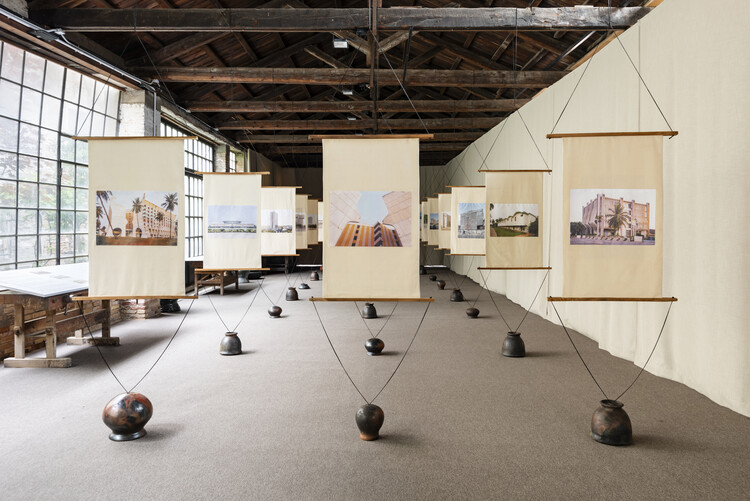 Togo Pavilion at the Venice Biennale 2025. Image © Matteo LosurdoInstallation AlMusalla at the Biennial of Islamic Arts and the Inaugural Biennial of Bukhara 2025 / East Architecture Studio
This installation resulted from an international competition to design a musalla—a flexible prayer space open to people of all faiths. Designed by a Lebanese studio, it consists of a modular structure built from materials derived from local palm waste, including leaves and fibers, and is inspired by regional weaving traditions. Installed at Jeddah Airport, the musalla served as a prayer space for four months during the Islamic Arts Biennale. Conceived to be dismantled and reassembled, it was recently relocated to Uzbekistan for the inaugural edition of the Bukhara Biennial 2025.
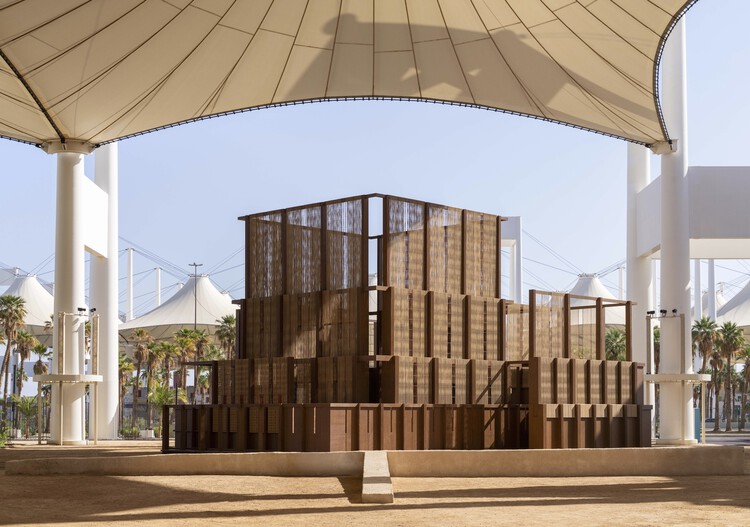 AlMusalla Pavilion at the Biennale of Islamic Arts / East Architecture Studio Courtesy of the Diriyah Biennale Foundation. Image © Marco CappellettInstallation “And from My Heart I Blow Kisses to the Sea and Houses” (Lebanon) at the Triennale di Milano / Ala Tannir
The installation documents the restoration of a French Mandate–era house in Ain el Mraisseh, Beirut, damaged by the 2020 explosion. By combining contemporary art and architectural conservation, the project reflects on memory, loss, and urban transformation. Five permanent interventions revitalize the space and propose new approaches to preserving both the material and social heritage of the country. The work received the Award for Best Installation among the International Participants.
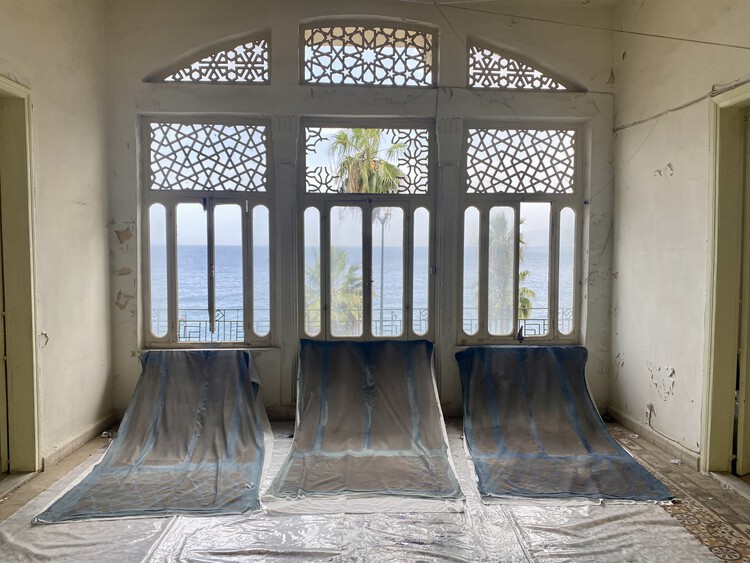 And from My Heart I Blow Kisses to the Sea and Houses. Image © Ala Tannir, Courtesy of YumūmOman’s pavilion at the 2025 Venice Architecture Biennale / Majeda Alhinai
The exhibition centers on the Sablah, a traditional Omani community space typical of villages and neighborhoods, framing it as a case study in architectural resilience and cultural continuity. The pavilion, which inaugurates Oman’s participation in the Biennale, examines the spatial and social logic of the Sablah, exploring its potential to inform the design of contemporary shared environments.
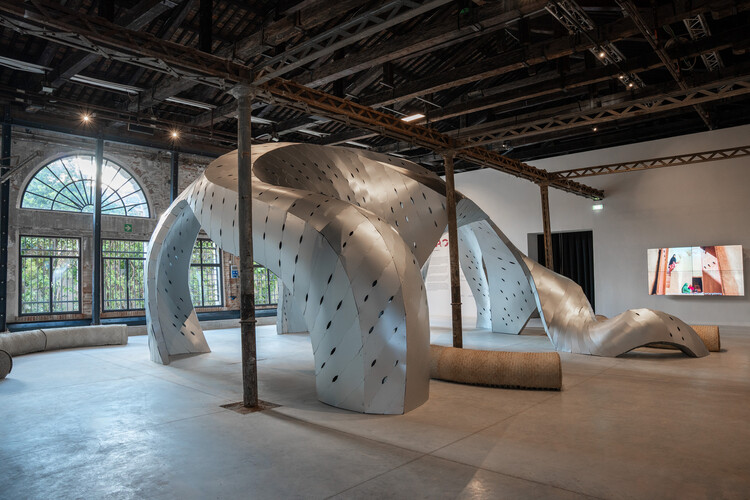 Traces, Oman Pavilion. Image Courtesy of Sultanate of Oman2025 Serpentine Pavilion / Marina Tabassum Architects
This pavilion celebrates the 25th anniversary of the first Serpentine and is composed of four wooden capsules with translucent façades that filter natural light. Arranged around a Ginkgo tree, they form a space for gathering and contemplation. One of the capsules is mobile, allowing for multiple configurations and interactions. Inspired by the architectures of the Bengal Delta, the structure proposes an adaptive approach that values climate, nature, community, and collectivity.
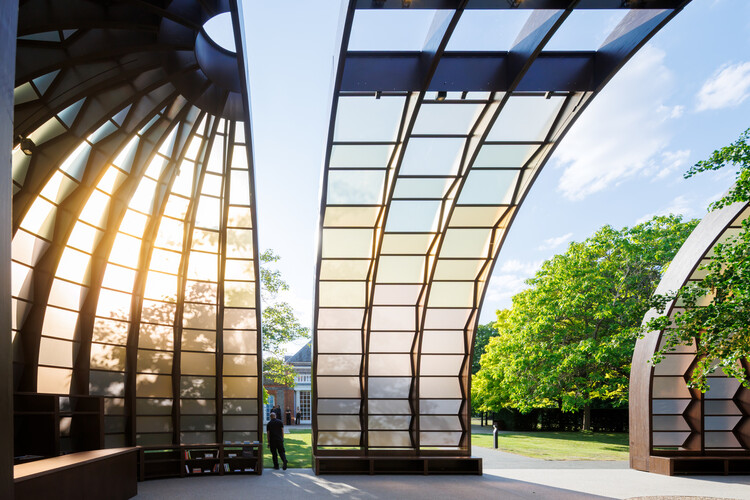 Serpentine Pavilion 2025 A Capsule in Time, designed by Marina Tabassum, Marina Tabassum Architects (MTA). Interior view. Image © Iwan Baan, Courtesy of Serpentine
This article is part of the ArchDaily Topic: Year in Review, proudly presented by GIRA.
GIRA sets the standard where architectural design meets intelligence. From the defining moments of 2025 to the innovations shaping 2026, we create smart solutions that elevate living and working environments with timeless aesthetics. Join us in shaping the future of architecture and interior design — where vision becomes reality.
Every month we explore a topic in-depth through articles, interviews, news, and architecture projects. We invite you to learn more about our ArchDaily Topics. And, as always, at ArchDaily we welcome the contributions of our readers; if you want to submit an article or project, contact us.