
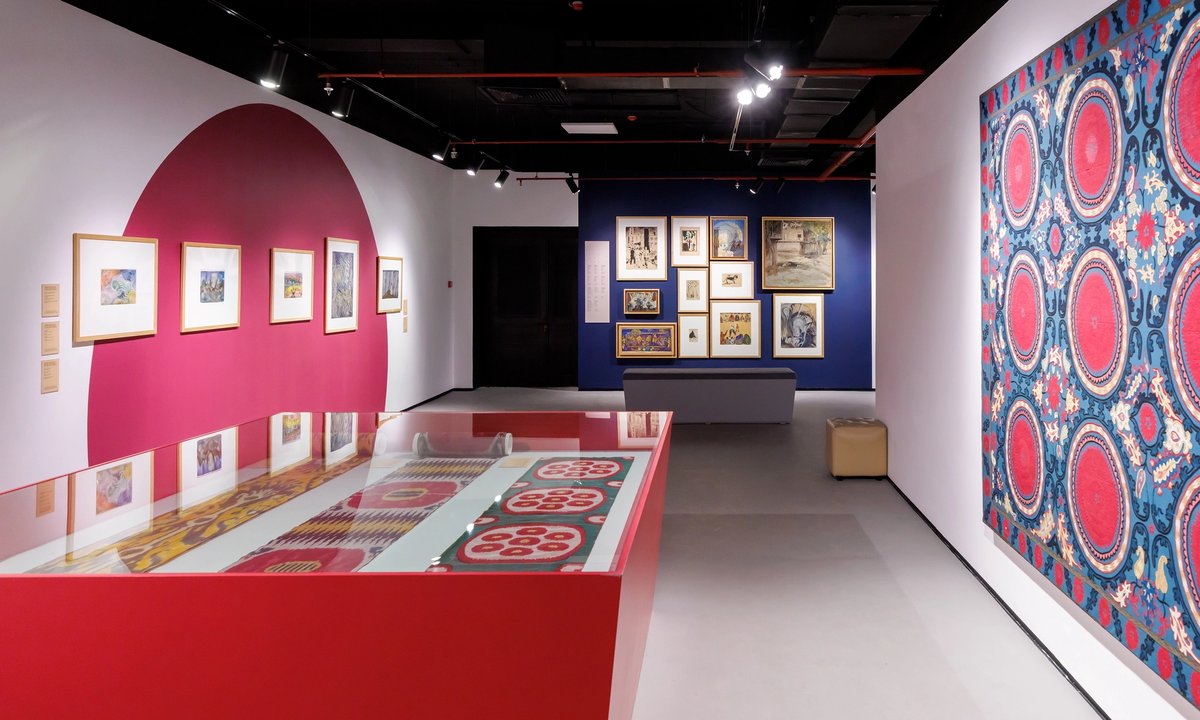
In a corner of Uzbekistan, close to the cracked, muddy crater that was once the Aral Sea, lies an unlikely treasure trove. The I.V. Savitsky State Art Museum of the Republic of Karakalpakstan (as the museum is formally designated), in the city of Nukus, holds close to 100,000 works of art from the middle decades of the 20th century: canvases, etchings and naturalistic sketches of rural life alongside folk art and textiles from a region whose vast, unbounded expanses were crossed for a thousand years by the caravans, travellers and thieves of the ancient Silk Road.
This year, Nukus Museum has received more attention than ever before, both at home and abroad. Following the exhibition of its collection in Florence and Venice in 2024, the museum has been completely overhauled by Italian academics and its new director, Gulbahar Izentaeva, who was appointed at the beginning of the year. It is now “central Asia’s most important and up-to-date museum of 20th-century art”, according to Silvia Burini, a professor of art history at the Ca’ Foscari University of Venice, who has been working on the collection for the past four years.
The renovation is part of a major effort by the Art and Culture Development Foundation (ACDF), a powerful Uzbek government-backed body that promotes the country’s cultural heritage to an international audience. Other recent ACDF initiatives include the inaugural Bukhara Biennial in September and a partnership with the Art Basel fair in Paris in October.
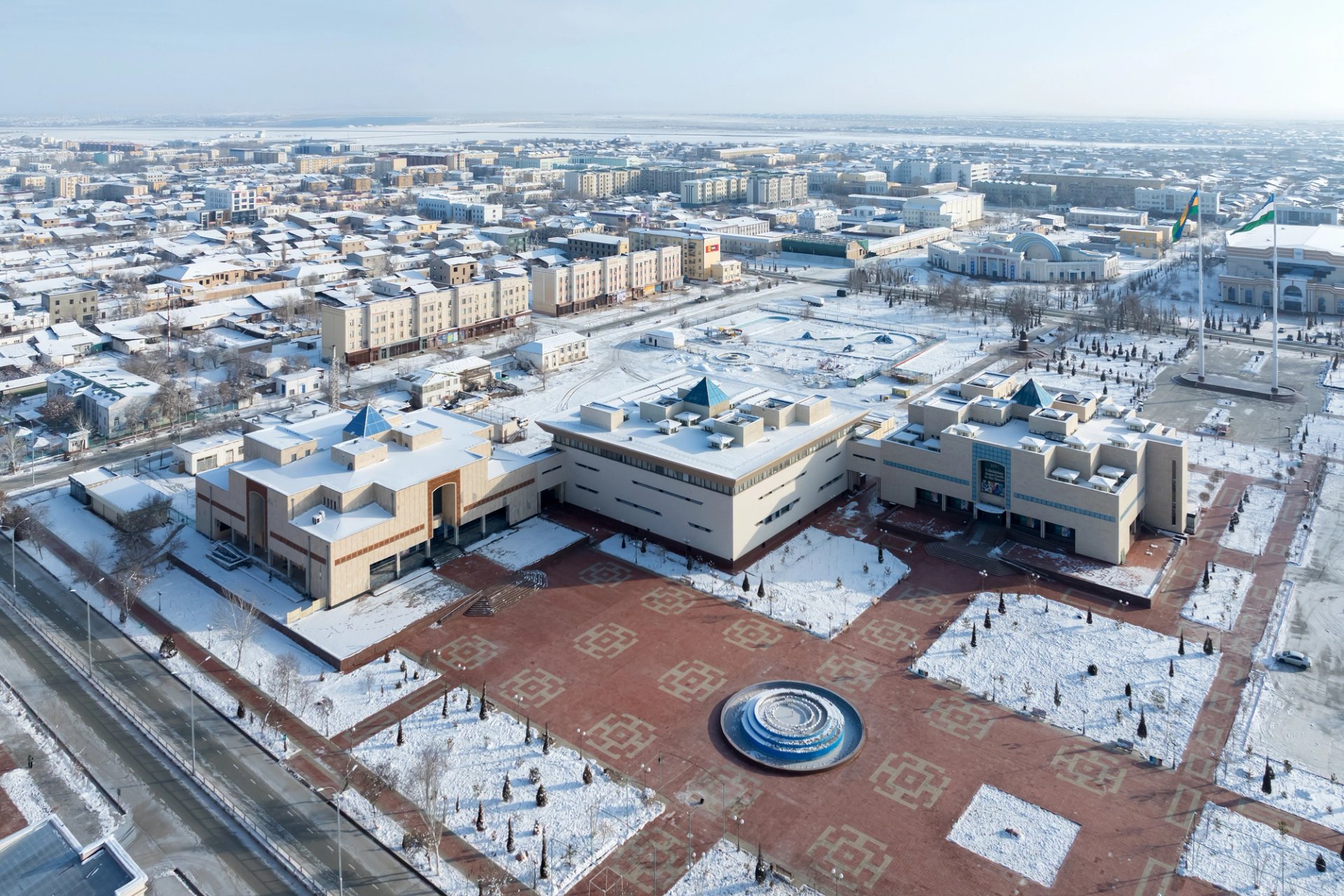
Nukus Museum has welcomed almost 70,000 visitors so far this year Courtesy of Iwan Baan and ACDF, all rights reserved
Celebrating the Avanguardia Orientalis
In 2021, the ACDF approached Venetian art historians to curate an exhibition from the Nukus collection at the 2024 Venice Biennale. Burini and her colleagues began to pay serious academic attention to an institution with a body of work so vast that few have charted its significance. After closing in Italy, the exhibitions travelled back to Nukus, where they were put on display across three floors of the museum last spring.
The exhibition space has been renovated by the Italian architect Massimiliano Bigarello. With its new layout, flooring and lighting, it offers “a completely new atmosphere”, Burini says. A new exhibition she curated at Nukus, The World of Igor Savitsky, tells the story of how the museum came into being.
The current exhibitions are just the beginning of a much larger plan for the academic study of Uzbekistan’s Modern art heritage, Burini explains. “We have to study the different localised micro schools of painting that arose in Bukhara and Tajikistan and Nukus. But that will require doing fieldwork with the old artists who are still alive.” Burini and her colleagues have dubbed these schools the Avanguardia Orientalis in the book Uzbekistan in Paintings: 20th-Century Avant-Garde, which is due to be published next March.
“The defining word for us is dialogue,” Burini says. “The influences came from Turkestan to Russia and back again—and there were European and Caucasian influences too, and much more besides.”
The group of works on show are striking, playful and varied, and have complex, layered origins, including the Russian avant-garde, in which figures like Wassily Kandinsky and Kazimir Malevich responded to global movements such as Cubism, Constructivism and Futurism in the febrile social and political context of early 20th-century Russia.
But Burini argues that the art which emerged from central Asia was not just a “marginal or folkloric offshoot of previous Russian developments—it’s something deeper”. She says it is also rooted in indigenous visual traditions: the inscrutable waves of colour on ikats woven in the monochrome plains of central Asia, stippled walls of glassy turquoise tiles on the soaring heights of Samarkand’s monumental Islamic architecture, and flowering vines painstakingly embroidered on suzanis at Shahrizabz.
“Many of the artists working in central Asia [in the 1920s and 30s] were not native to there,” Burini says. “In the 20s and 30s, they wanted to find new sources of beauty and make something new—like how Picasso looked at African masks.”
The art-loving Soviet bureaucrat
The museum was founded by Savitsky, an art-loving Soviet bureaucrat who made his life in the remote region of Karakalpakstan and compulsively collected Modern and unusual art from Russia and central Asia. It was a risky business—in the Soviet Union, only Socialist Realism received official sanction—but under the cover of preserving local craft traditions, Savitsky was able to amass an important body of work from the fertile, hopeful years that followed the October Revolution of 1917.
“We are very lucky to have Savitsky,” Izentaeva says, “because he not only saved forbidden art, he also saved local folk art.”
After the fall of the Soviet Union, the museum became an important, if fragile, symbol of what had been preserved through the ravages of authoritarianism. At the museum, as the historian Svetlana Gorshenina recalls, the collapse “led to a financial crisis but also freedom”. In the 1990s, an international organisation called the Friends of the Nukus Museum raised funds and awareness.
In the 2010s, Gorshenina co-founded the Alerte Héritage organisation to “show that it was possible to catalogue the collection in public without huge expense, which would make it much harder for these works to be sold abroad”. The ACDF has now hired a private company to take over the digitisation effort at Nukus. According to Izentaeva, 3,000 works have so far been catalogued.
Izentaeva attributes the museum’s recent revival to the ACDF. “They don’t give money directly to the museum but they pay for specialists and restorers to come to Nukus … and funded the renovation of the new premises,” she explains.
The ACDF is run by Uzbekistan’s culture tsar Gayane Umerova, who is a senior member of the country’s presidential administration and commissioner for the Bukhara Biennial. She describes the ACDF’s mandate to “revitalise heritage” as being “just one step in a national cultural renaissance led by President Shavkat Mirziyoyev and supported by Saida Mirziyoyeva”. Mirziyoyeva is a politician, head of the presidential administration and the president’s daughter.
Uzbekistan has “no genuine political opposition”, according to Amnesty International. Responsibility for cultural heritage lies with the ACDF and Umerova. The ACDF’s flagship event, the Bukhara Biennial, focused on tourism and cultural soft power to boost the country’s image and economy. Arts professionals from around the world descended on the city, a richly ornamented relic of Silk Road trade that has been comprehensively restored. It was a proclamation of Uzbekistan’s credentials as a destination for high-end cultural tourism.
Izentaeva hopes the ACDF’s activities will have a similar effect on Nukus. “We’ve had 69,966 visitors since January, and 26% were foreigners,” she says, adding optimistically: “It’s making the town a major touristic city.”
Those working on the museum point out that tourism is not limited to foreigners: “It’s really important to acquaint the young people of Karakalpakstan with this art,” Burini says. Izentaeva agrees. “People from Karakalpakstan are very proud and honoured to have this museum here,” she says. “It’s our identity!”