
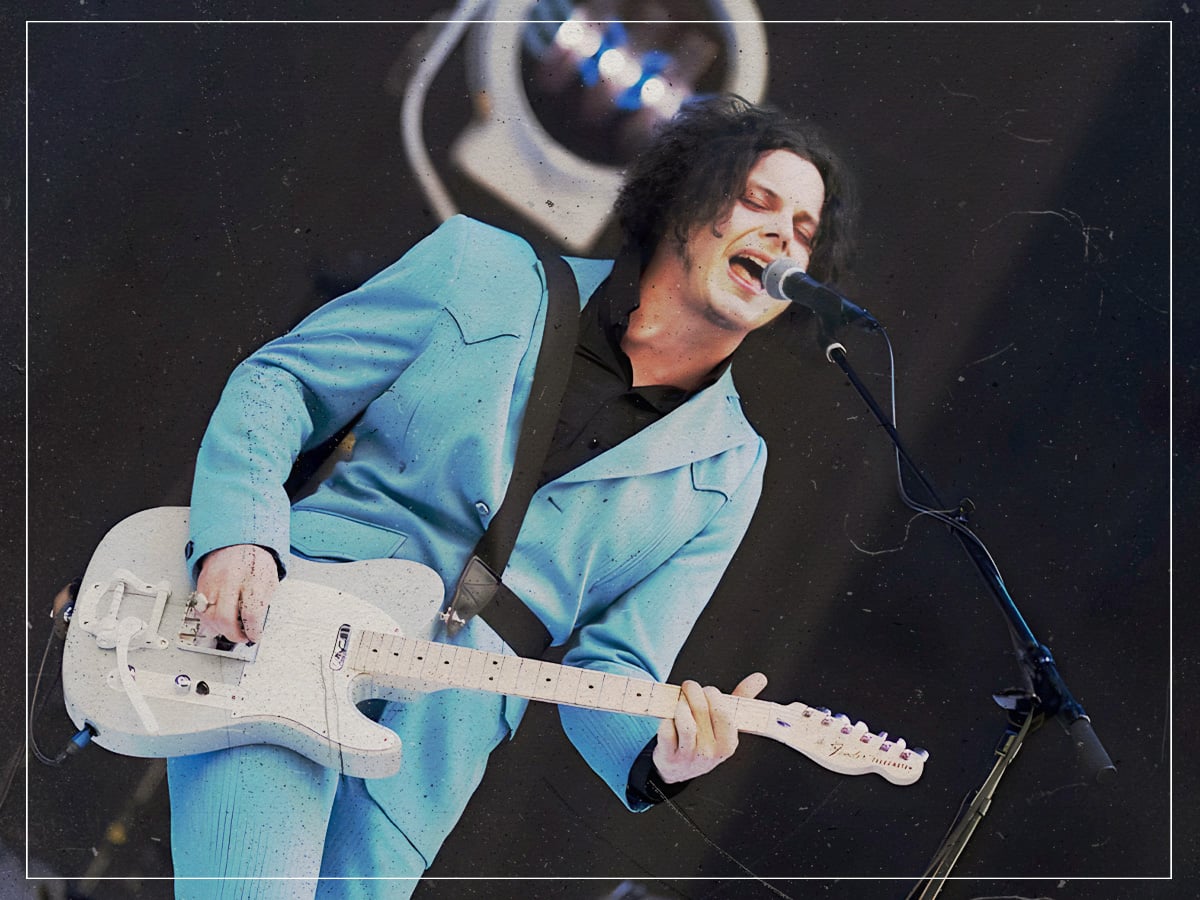
(Credits: Far Out / Alamy)
Tue 23 December 2025 2:00, UK
When it comes to Led Zeppelin, Jack White has made his love pretty clear. “They are an immovable force in music,” he once said, before defiantly claiming, “I don’t trust anyone who doesn’t like them.”
It’s an unsurprising statement from a musician who has clearly taken the Zeppelin blueprint and thrust it into the contemporary scene. Jimmy Page’s guitar playing showed White how the humble beginnings of blues music could be amped up to maximum sound, to make an unrelenting brand of stadium rock. Then there’s Robert Plant’s almost operatic vocals that clearly gave White the credence to embrace the outcry of his own.
So when it comes to putting together the ultimate Zeppelin playlist, there are few better equipped than White to do so. Rattling through their nine studio albums, White carefully curated a list that largely showcased some of Zeppelin’s deepest cuts. Besides the well-known hit ‘Moby Dick’, the playlist is an education for the otherwise uninitiated. Alternate mixes of ‘Two Ones Are Won (Achilles Last Stand)’ and ‘St. Tristan’s Sword’ make the cut, as well as ‘The Girl I Love She Got Long Black Wavy Hair’ and ‘Traveling Riverside Blues’, which was from sessions the band recorded for the BBC.
Amidst the playlist was a song from their triumphant debut album. Closing track ‘How Many More Times’ was chosen by White, which showcases Zeppelin at their blues-rock best. Recorded in 1969, when the early influence of blues bled all over their music, before it developed into the grander worlds of stadium rock.
It was sultry and brooding, celebrating the exact sort of guitar playing that White would come to love. Page explained how the track was inspired by old-school blues rock, saying, “We had numbers from the Yardbirds that we called free form, like ‘Smokestack Lightnin’,’ where I’d come up with my own riffs and things, and obviously I wasn’t going to throw all that away, as they hadn’t been recorded, so I remodelled those riffs and used them again.”
He continued, “So the bowing on ‘How Many More Times’ and ‘Good Times, Bad Times’ was an extension of what I’d been working on with the Yardbirds, although I’d never had that much chance to go to town with it, and to see how far one could stretch the bowing technique on record, and obviously for anyone who saw the band, it became quite a little showpiece in itself.”
When Page was a part of The Yardbirds in the 1960s, he had already developed his instrumental chops to a point where he could create new and innovative sounds alone on guitar, and his bowing technique was certainly one of them.
But what ‘How Many More Times’ goes to prove is just how better a musician he became when he finally found his band. On that track, Led Zeppelin were a band firing on all cylinders, right the way from Page’s guitar to Plant’s vocals, and the rolling thunder rhythm section that sat behind. When you listen to a song like that, it’s hard to argue with White when he said people who don’t enjoy the Zep are untrustworthy.
Related Topics
The Far Out Led Zeppelin Newsletter
All the latest stories about Led Zeppelin from the independent voice of culture.
Straight to your inbox.