
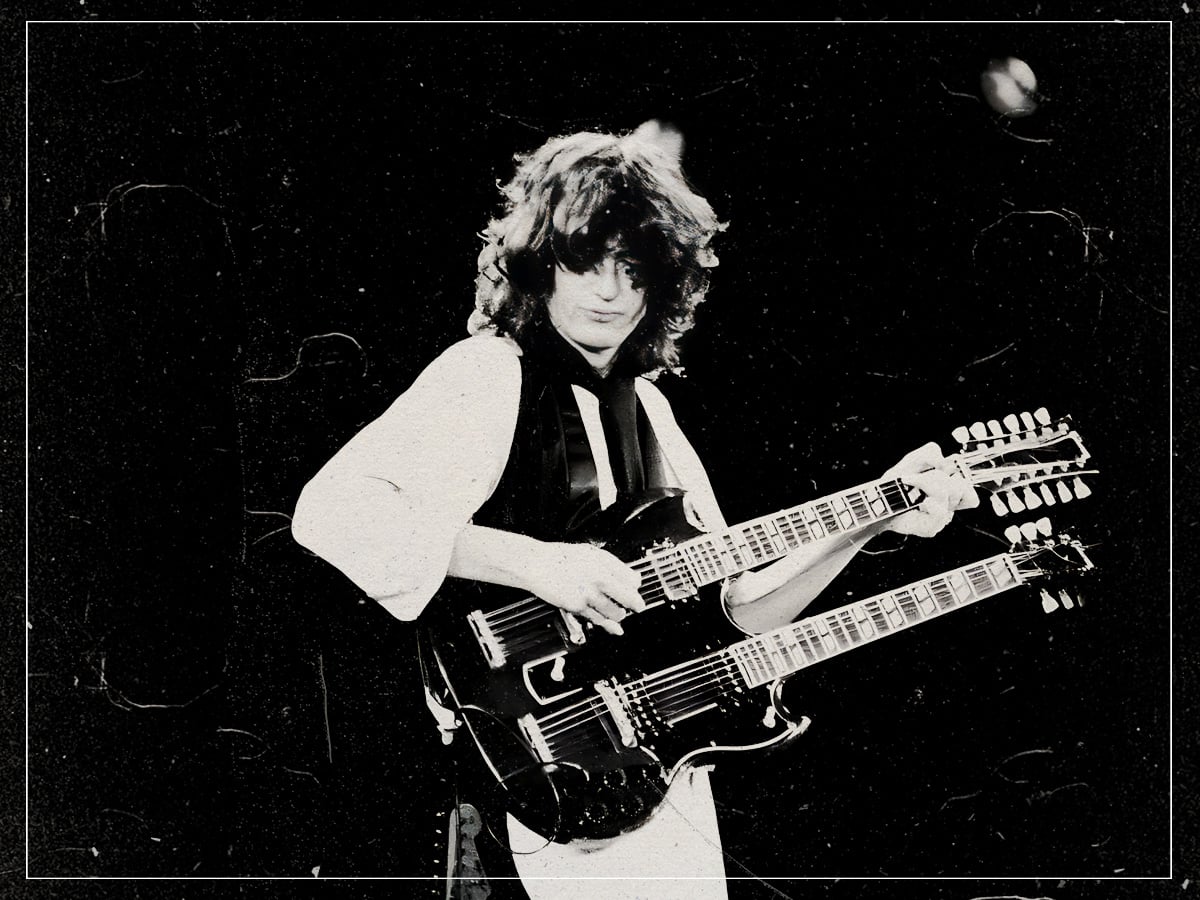
(Credits: Far Out / Andrew Smith)
Tue 23 December 2025 12:16, UK
They’re rightly considered one of the greatest rock bands of all time, but the truth is, Led Zeppelin were always far more than a simple rock and roll band. Far removed from the blues-rock scene that they were born from, by the time the group hit their most successful period in the late 1970s, they were deeply concerned with breaking down any genre-defined barrier in front of them.
Perhaps what is most remarkable is not that the band had these aspirations but that they, aside from one reggae-inspired misstep, largely managed to achieve those aspirations. But when you consider the musical talent the group had at their disposal, perhaps it isn’t all that surprising.
Led Zeppelin, made up of Jimmy Page, Robert Plant, John Bonham and John Paul Jones, made some of the most defining studio albums the world has ever known and have rightly been applauded for their groundbreaking self-titled records. Those LPs would not only signify a changing of the guard, with The Beatles and The Rolling Stones comparatively falling by the wayside, but they would provide fertile ground for a brand new genre in heavy metal.
Formed in 1968, after Page’s mercurial talent saw him go in search of a new band, having seen The Yardbirds fall apart, Led Zep quickly made waves. Recruiting Plant, Bonham and Jones, the group found their name thanks to Keith Moon, who said their new band would go down like “a lead balloon”.
Led Zeppelin were quickly signed up as part of the growing roster of rock acts on Atlantic Records. The band toured relentlessly and refined the idea of a rock show like no other band had done before them. With their touring schedule, the group showcased a vision of the future and laid the blueprints for most modern rock shows as we know them today. But their work in the studio seemed to set them apart from the other rock acts of the time.
 The Jimmy Page shredding position. (Credits: Far Out / Alamy)
It was in the confines of the recording studio that the mercurial talents of all the members of the band, most notably Jimmy Page, were given ample room to express themselves. Undoubtedly, the group’s creative leader, Page, wasn’t just a guitar maestro but a studio whizz and serial innovator. While for much of the group’s discography, that talent was found in the unique ways the band recorded their songs, with the release of Physical Graffiti, Page finally achieved his musical dreams.
Released in 1975, the album would typify the band’s new approach — they were no longer a rock band but leaders of a musical revolution. it means the album was rich with musicality, trusting in the creative process of the four members to deliver their own versions of acoustic folk like ‘Bron-Yr-Aur’, the soul-tinged brilliance of ‘Trampled Under Foot’ and the Moroccan-inspired ‘Kashmir.‘
It was with this ability to merge these styles both in the studio and behind the mixing desk that Jimmy Page got to live out his childhood ambitions. He noted in the liner notes for the Led Zeppelin box set: “To be able to fuse all these styles was always my dream in the early stages, but now the composing side of it is just as important.”
It wasn’t just Page who regarded the album as perhaps the group’s zenith. When asked by Rolling Stone which Zep album was his favourite, Plant didn’t hesitate and revealed: “Physical Graffiti, strong stuff. And it sounded good too. It sounded very tough, but it was also restrained, exhibiting a certain amount of control as well.”
As recently as 2018, in a feature-length piece with Dan Rather, Plant spoke in further detail about the intricacies of the track that make it so perfect to him: “It was a great achievement to take such a monstrously dramatic musical piece and find a lyric that was ambiguous enough, and a delivery that was not over-pumped,” said Plant.
It is the balance of ideas and styles that seems to have appealed to all members of the band, and it is not a huge leap of thought to assume that Page, a man so dexterous in the studio, would have enjoyed this skilful layering and delicate positioning that makes this a dreamy record for the band’s maestro.
You can listen to Page’s unique control of genre on Physical Graffiti below.
Related Topics
The Far Out Led Zeppelin Newsletter
All the latest stories about Led Zeppelin from the independent voice of culture.
Straight to your inbox.