
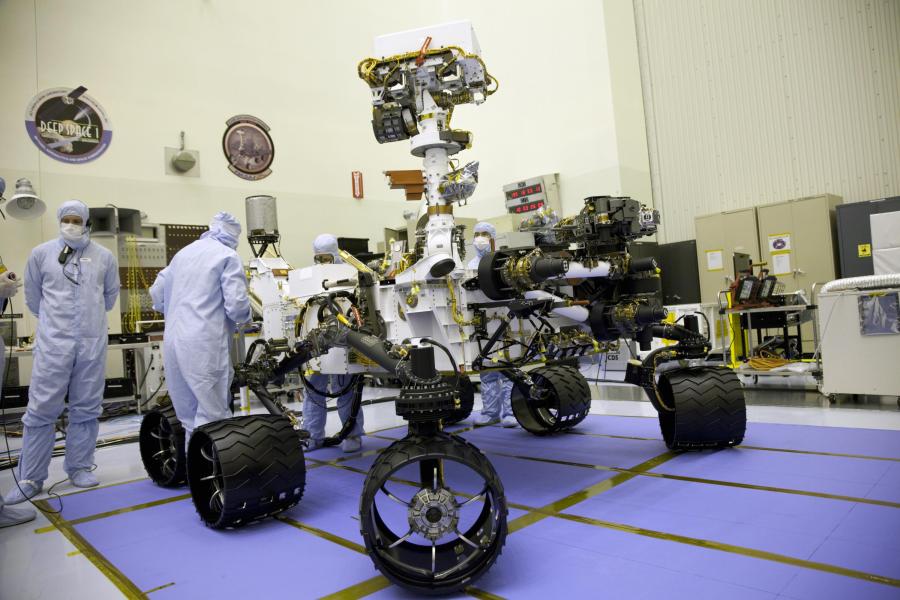
AUSTIN (KXAN) — For more than a decade, the Curiosity rover has explored the surface of Mars. In just a few days, it will go dark as NASA loses contact with the Martian explorer.
From Dec. 27 to Jan. 20, the Earth and Mars will go through what’s known as a “conjunction.” Every two years, the orbits of the two planets put them on opposite sides of the Sun. This blocks all communication between the two planets — and, therefore, all communication between NASA and Curiosity.
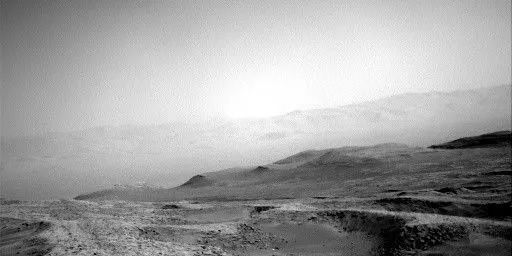
NASA’s Mars rover Curiosity acquired this image, with the boxwork terrain in the foreground and Gale crater rim in the far background, using its Right Navigation Camera. Curiosity captured the image on Dec. 21, 2025 — Sol 4755, or Martian day 4,755 of the Mars Science Laboratory mission — at 15:57:21 UTC. (Credit: NASA/JPL-Caltech)
Ahead of the conjunction, NASA has wrapped up a few experiments. These include a chemical analyses of a rocky ridge and imaging the area. The rover also collected new data on Mars’ clouds.
Curiosity has now driven to a nearby ridge, where it will wait during the conjunction. During the drive, the rover collected data on the terrain.
Curiosity, which is roughly the size of a car, landed on Mars in 2012. Since then, it has traveled over 22 miles of Mars’ surface.
Conjunction junction
Any planet that’s outside the Earth’s orbit (Mars, Jupiter, Saturn, Uranus, Neptune) is part of a conjunction if it is on the other side of the Sun. A conjunction between the Earth and Mars occurs roughly every 26 months.
A “superior conjunction” occurs when the inner planets (Mercury and Venus) are on the other side of the Sun from Earth, blocking our view of them. If these planets are between the Earth and the Sun, we have an “inferior conjunction.”
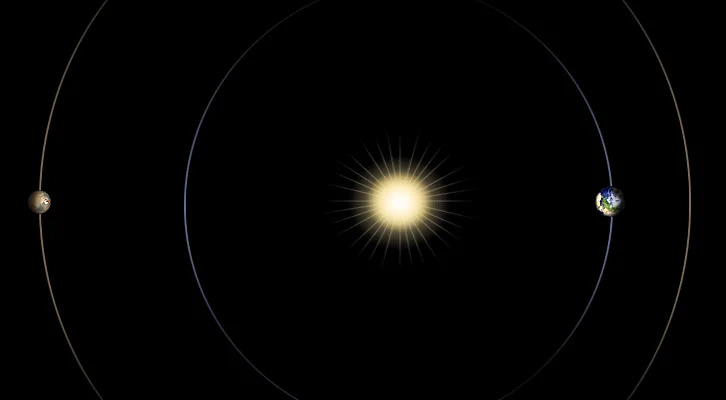
Earth and Mars in conjunction. (Credit: NASA)
If an outer planet is behind the Earth, with our planet between that planet and the Sun, it is called an “opposition.”
Others types of conjunctions include the Great Conjunction, which occurs when Jupiter and Saturn line up in our sky. That happens every 20 years. The next time it will occur is in 2040.
Copyright 2025 Nexstar Media, Inc. All rights reserved. This material may not be published, broadcast, rewritten, or redistributed.
For the latest news, weather, sports, and streaming video, head to KXAN Austin.