

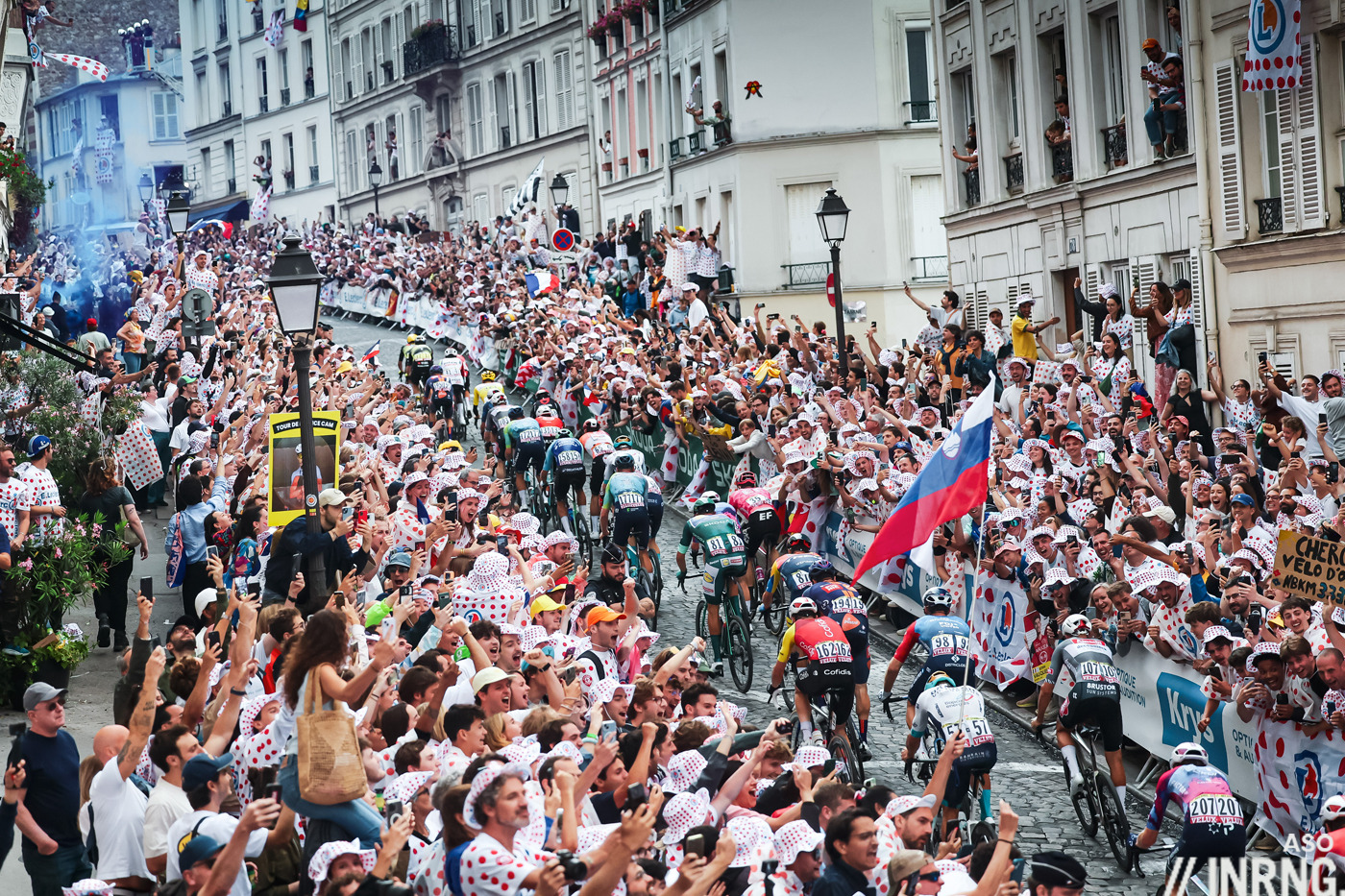
As ever choosing five highlights means leaving all the races out. The final pick is Stage 21 of the Tour de France, Montmartre course pips Paris-Roubaix in an end-of-year photofinish, with the hipster choice of the Tour of the Alps a bike length behind and there’s a short list of other races.
One of many reasons the 1989 Tour de France was so good is that the eight seconds separating first and second overall was the epilogue. It was all that happened up until that that was so good. Still the final time trial was special. It happened for a reason as it was the 200th of the French revolution and this was a big deal at the time. The Tour went from the former royal palace in Versailles to Paris to commemorate the change. On the day the yellow jersey changed shoulders to make a thrilling finish to the race.
The final stage in Paris has since been a parade. It might still have the blue riband sprint to conclude but it’s become a fixed menu. Eddy Seigneur slipped away from the sprinters in 1994. In 2005 Aleksandr Vinokourov grabbed a time bonus to take fifth place from Levi Leipheimer.
This all changed in 2025 with a revised route. It reprised the climb of the Rue Lepic to Montmartre seen in the Olympics road race and tackled it three times. And it delivered with lively racing.
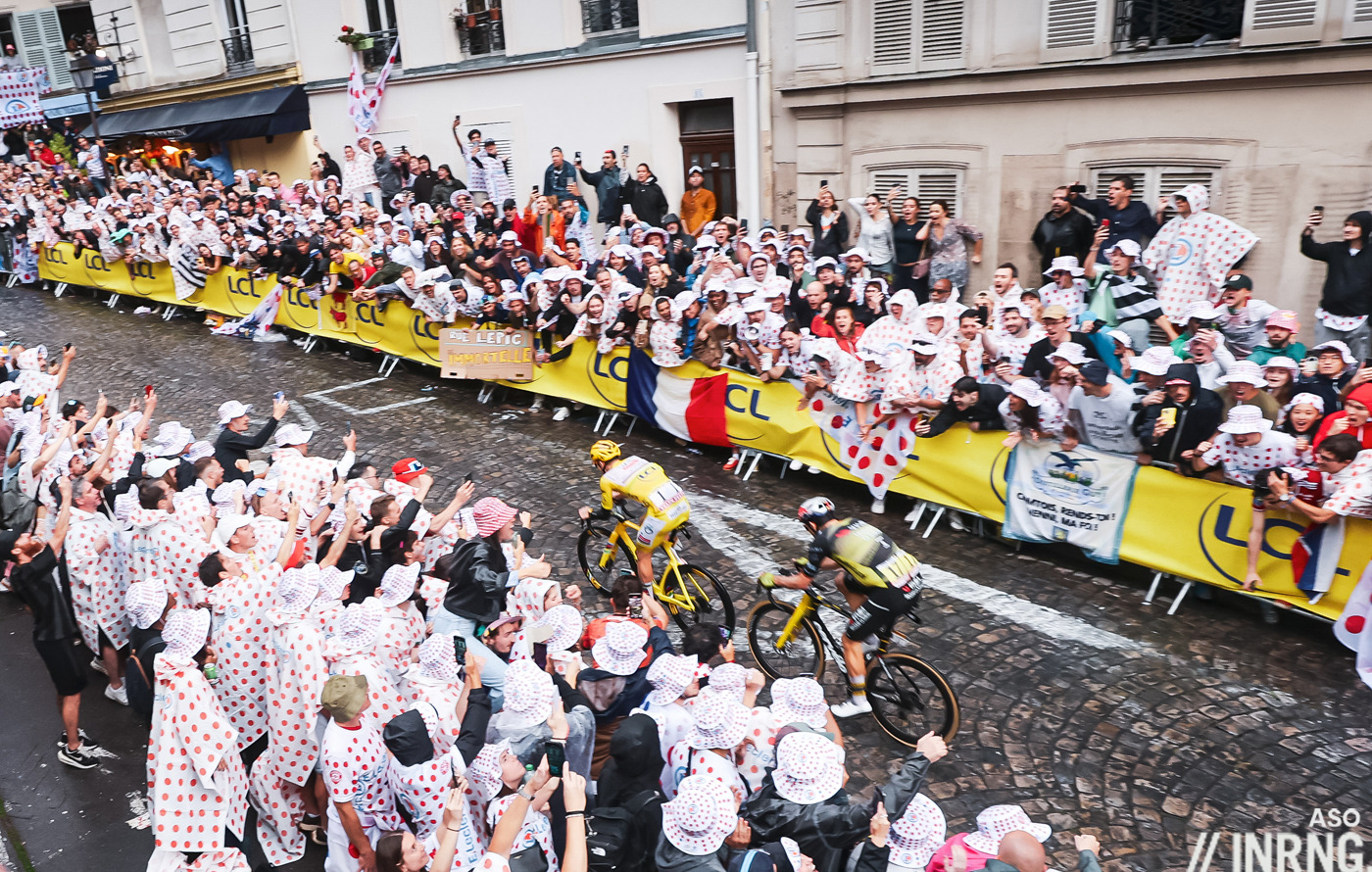
Julian Alaphilippe attacked the first time up the Rue Lepic, Tadej Pogačar shredded the group in person the next time and then Wout van Aert surged to depose the yellow jersey and take a solo win.
Why the highlight?
This had great racing and more. It had been a long Tour, like a party that had lasted too much, even Pogačar was out of joy. But the Rue Lepic was the DJ that had everyone on the dancefloor one more time, even if the wet conditions meant Van Aert wasn’t en danseuse.
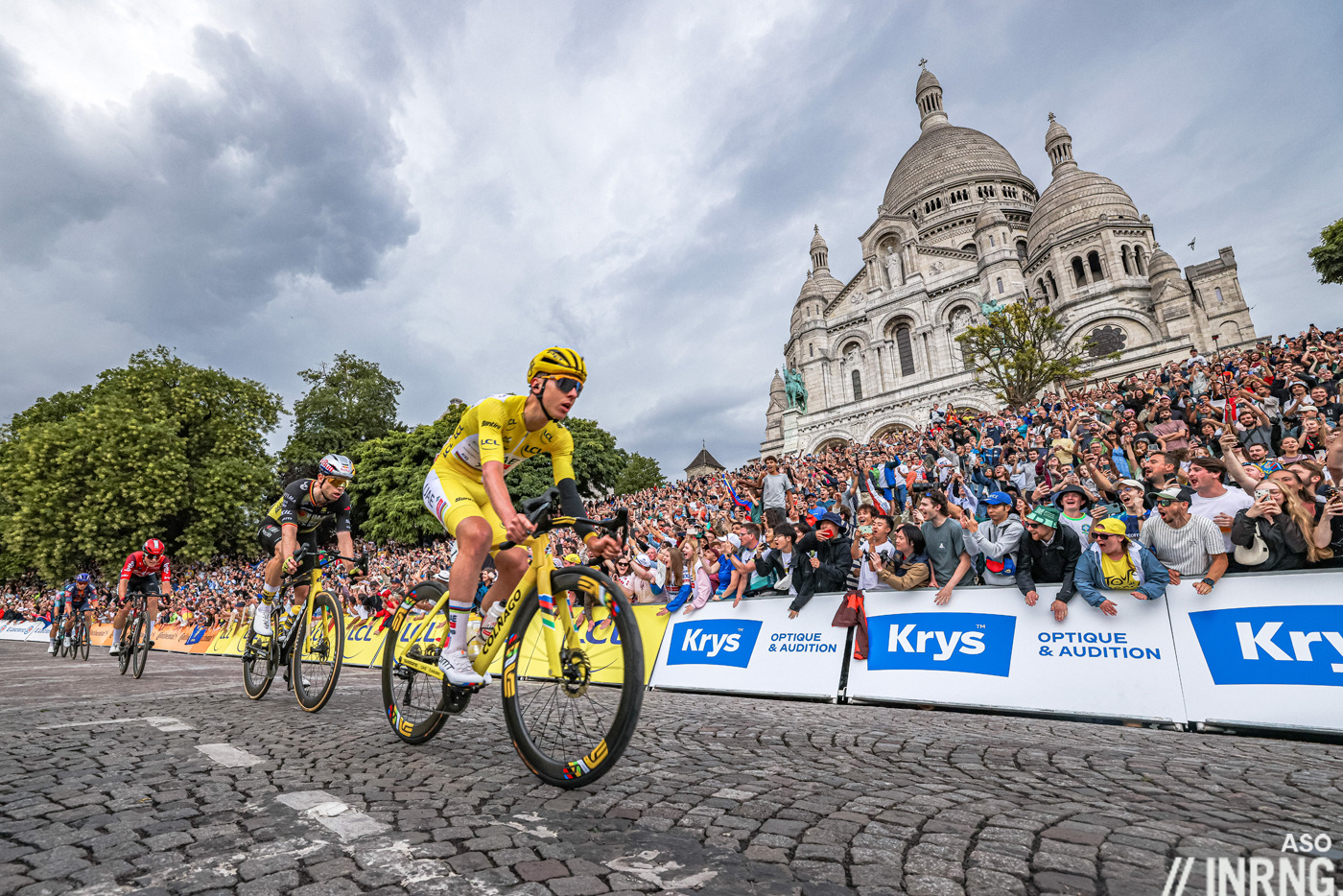
The size of the crowds was pleasing, and within touching distance of the riders. The new format gives the racing to Parisians who are more used to the VIP event on the Champs-Elysées and kept at a distance from the riders, this was a communion. And it was all recognisably Parisian too.
It’s also refreshing to change the format. Closing the Champs-Elysées for the Tour is a privilege normally reserved for heads of state so to do this and block off part of Montmartre is a big ask.
The combination of sport, the willing crowds and the structural and organisational work made it a success.
With hindsight
An instant hit and it’ll feature again next summer, although with a longer break between the climbs to reduce the intensity a touch.
Remember the decision to neutralise the GC standings? This was taken because it was raining. It’s happened before in Paris when the cobbles are wet but was more significant as it let riders sit out the racing instead of easing off the final sprint. Ot’s worth reprising because it was material to the moment but didn’t alter the racing and outcomes much. But it could if things had been different and so needs consideration. Look at the Tour of Rwanda where a similar ruling applied (as the rain fell, rather than before the stage started) and it was contentious, but imagine if this happened at the Tour with the media attention. Let’s hope it’s sunny next time.
That was it for Van Aert and the 2025 season in terms of wins and performances. Understandable given he’d done a spring classics campaign, the Giro and Tour. In dropping the whole field, including riding Pogačar off his wheel, provides for a full recovery story and you can imagine his entourage at Visma-LAB mentioning Paris from time to time to subtle remind him what he is capable of as he resumes the quest to win a Monument next spring.
Van Aert later mentioned he went for very low pressure in his tires to get maximum grip and stability on the cobbles and the descents. As good as Tadej Pogačar is, UAE still feel like a team where “pump it to the max” is more likely. As rivals search for ways to beat the Slovenian, the weakness could be in the team car and the mechanic’s truck more than the rider and avenues to explore.
The sprinters have it hard. They’ve traditionally hauled themselves over the mountains just to have a chance at the win in Paris. Now this opportunity is drying up, even if the 2026 route is designed to give them some hope of holding on or at least getting back on. The next thought is how sprinters are having it harder all season, organisers are going out of their way to add a climb or other jeopardy to prevent an inevitable bunch sprint. But this is leading to evolution of sorts with today’s sprinters thriving if they can handle this.
Alaphilippe sparked the attacks. There’s a glass half-full and a half-empty version of his move to Tudor. He won the GP de Québec, a rare victory for anyone in a race started by Pogačar, and one to file away the next time someone says a rider who leaves Quick Step fares worse; plus he’s been valuable in ways that don’t show on results websites, securing a wildcard to the Tour for Tudor and helping set up wins for team mates, like Michael Storer on the final day in Paris-Nice.
Rue Le Peak
Looking ahead, could the Giro and Vuelta copy? They currently have the parade-and-criterium format. The Tour’s Montmartre format shows you can still have the parade component to salute three weeks of racing, but then put on a compelling show for TV audiences. Certainly in France this was the most watched moment of the Tour de France, drawing an audience not seen in 20 years and this today in an era of multi-channels and alternative media.
All the other days
The Tour of the Alps had sport and scenery. Giulio Ciccone won Stage 1 with Paul Seixas third, Michael Storer won the following day, with Seixas second. Thymen Arensmen did a big ride to win Stage 4 and take the lead off Storer. Then final stage saw Seixas gift the win to team mate Nicolas Prodhomme from the breakaway, while behind Storer went solo to sack Arensmen with a long range move and win the race overall.
Paris-Roubaix was reduced to a duel before Mathieu van der Poel rode away but it had a lot going on until then with action before the Arenberg. Mads Pedersen’s puncture was one of the cruellest sporting moments of the year and Pogačar’s crash on the Carrefour de l’Arbre was a rare mishap for him and left many questions open, except you could tell on the day that he’d have to come back and try again.
The Amstel Gold Race was lively because Pogačar over-reached and paid for it, overhauled by Evenepoel and Mattias Skjelmose won. The “anything can happen” card still exists when Pogačar races, just
Dwars door Vlaanderen for both the win by Neilson Powless and the post-race interview by Wout van Aert
The Tro Bro Leon was hectic and Bastien Tronchon was like John Wick in an action movie, nobody or nothing was getting in his way
With hindsight we got the last “proper” Tour de Suisse with eight stages. In the moment there was the hare and hounds scenario of Kévin Vauquelin being chased down for the overall lead
Jan Christen’s win in the Trofeo Calvià was fun, the Majorcan race comes at the start of the season and so seeing UAE all over a race hadn’t been repetitive and we saw XDS-Astana score points
Stage 8 of the Giro won by Luke Plapp was lively and the hindsight touch was that Plapp eased up from following the leaders at first, all the better to mow them down and pass them half an hour later
Pauline Ferrand-Prévôt’s win on the Madeleine was impressive and generated a lot of deserving headlines but wasn’t sizzling sport, she seemed to ride away unopposed
Having picked two Tour de France stages, it’s still worth citing Stage 4 for having a lively finish both for the riders and the course designers deserve applause. Stages 6 and 10 being great to watch from the start
Stage 16 of the Tour to Mont Ventoux supplied plenty too with a lot of action to get in the break, a series of attacks before sprint for the win and behind Jonas Vingegaard made a flurry of attacks to try and shake Pogačar. Plus as the winning breakaway pulled away a bookmaker got the Paret-Peintre brothers mixed up and lost several thousand Euros later that afternoon
The Clasica San Sebastian looked to have an established scenario but it got overturned and then that version looked settled until it wasn’t. It’s often a hard act to follow the Tour but it’s got a rewarding finale
The Renewi Tour changes its name more often than someone in a witness protection scheme so struggles for identity, but the final stage was a good one with Mathieu van der Poel and Arnaud De Lie going to the line for time bonuses and the overall with De Lie getting a big win
The promotion-relegation race added an extra plot line to the season
Less than a month to the Tour Down Under…
Highlights of 2025 – Part I
Highlights of 2025 – Part II
Highlights of 2025 – Part III
Highlights of 2025 – Part IV