
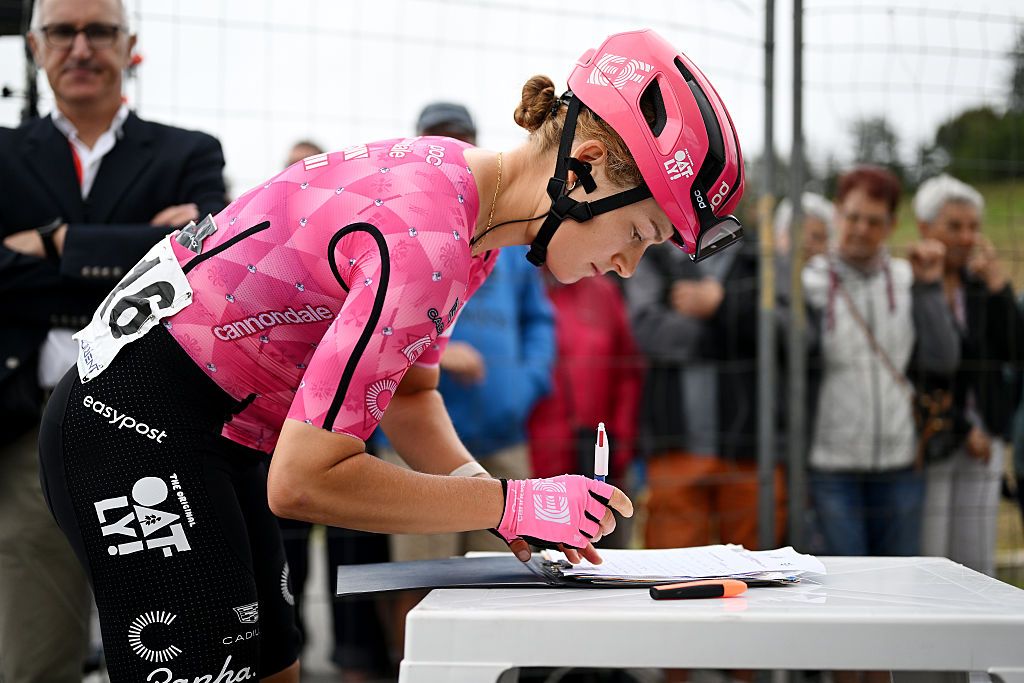
Last week, world champion Magdeleine Vallieres revealed that her stomach had once been grabbed in an attempt to curtail her eating, and that she had been “blackmailed” with food.
After the Tour de France Femmes, Pauline Ferrand-Prévot’s weight loss was headline news. Last week, Veronica Ewers told Cycling Weekly that a physician had told her that the loss of her period was “normal”.
You may like
REDs, or Relative Energy Deficiency in Sport, has become one of the most talked about problems in contemporary cycling. It occurs when an athlete doesn’t sufficiently fuel, and the body is forced to run on energy reserves for extended periods of time.
REDs can lead to lost periods, extreme fatigue, depression, anxiety and low bone density, among other long-lasting symptoms. Until 2014, it was referred to as the ‘Female Athlete Triad’, despite also impacting men.
“I easily could have died if I’d not been brought in,” she revealed in the post. “I’d hit rock bottom.”
Fuelling
“I think in general, people underestimate how much energy they need,” Deena Blacking of The Cyclists’ Alliance says of the knowledge-gap in professional cycling when it comes to fuelling and nutrition.
“One of the biggest things is that, in cycling, you burn through an enormous amount of energy, and you can’t rely on eating to hunger, because that cue becomes slightly irrelevant once we’re talking about thousands of calories, over several hours.”
You may like
During a high-pressure race, the onus is on the team’s nutritionists and coaches to be working with the athlete to ensure they get the right amount of sustenance to keep their body functioning at a healthy level – there is a degree of vulnerability when a rider sets out to race, a trust that the coach and nutritionist will fill in where the natural hunger triggers are absent.
“As athletes, we do tend to ignore our intuition,” Veronica Ewers explains, “or we sort of lose our intuition in a lot of ways. It’s a lot of just forcing ourselves to eat when we need to for recovery and healing purposes and energy. Especially at a grand tour, you’re six days into a stage race, and you feel like you just want to stop eating because you’re not hungry at all. But obviously you need so much fuel at the time.
“It’s a lot of listening to what our nutritionists have to say. And that’s also really important for teams to have nutritionists that are on board with female reproductive health and men’s reproductive health, and ensuring that they’re prioritising a healthy human rather than a thin one.”
“There are still team doctors and teams where they probably encourage riders not to eat enough, where they have these toxic practices,” Blacking adds. “But those people are [gradually] leaving the sport, they’re growing old. And there are more people coming through – I can think of like a bunch of really thoughtful, progressive nutritionists working in cycling, both in the men’s and the women’s peloton, who are definitely not promulgating these antiquated ideas about what you should do for fuelling.”
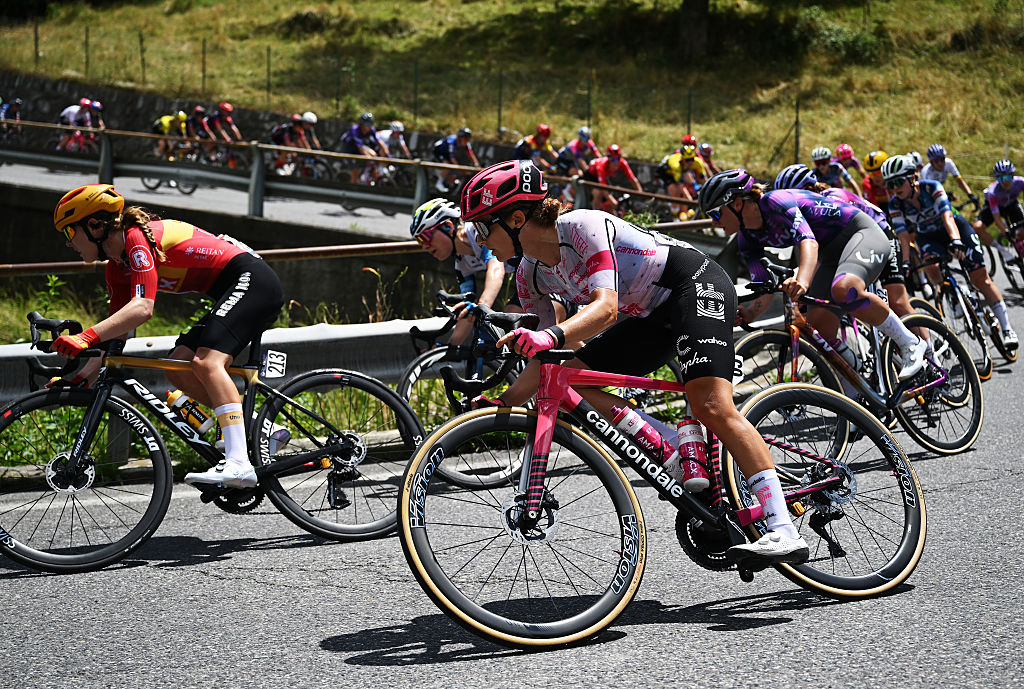
(Image credit: Getty Images)Wider pressures
The fight against REDs is multi-faceted. It needs to come from teams, from governing bodies making decisions about how the sport is regulated, and from riders themselves.
But the pressures all riders – and particularly female riders – are put under from a wider societal perspective, is harder to control.
“How we interpret what society has put on women comes in different ways,” Ewers says. “I think I interpreted it, especially being an athlete from such a young age, that [athlete] was my identifier. And so it was – what did being a woman look like, but also what did being a female athlete look like?
“Still feminine, but muscular and thin and all of these things that are not true, but that’s what I honed in on, because being an athlete was my identity, but I also wanted to be that ideal woman and have the thinness and the femininity.
“Coming into cycling, I think I was more triggered by the watts per kilo focus and the undertone that being smaller means you’re faster, and so that just further triggered where my head was at already.”
“I think it’s very difficult to be a young woman now,” Blacking stresses. The pressures to look a certain way, to eat the necessarily large portions needed to sustain the energy-output demanded of professional cyclists while not appearing “unladylike”; to be strong but thin, muscular but “not too bulky” – these are standards of beauty that underpin the additional title of “athletic,” that ripple in the unconscious, that can be heightened by strictly catalogued meals and bodies that can lose connection with their hunger signals.
“I definitely was in such a stubborn mindset, and eating disorders tend to be quite sneaky,” Ewers says. “I could eat really well at races in front of everyone, but then when I was back home, I was continuing the behaviours I’d had before. I was in a really bad place.”
I ask Ewers what interventions may have helped her, now that she has decided to dedicate 2026 to her recovery.
“I think that would have looked like more education around the repercussions of what I was doing, more serious professional help once I started going further down into a hole,” she says. “I think there should have been a point when I was not allowed to race until I was able to recover more.
“I was at a place where I was just seeking advice that would confirm what I wanted, rather than going with the professionals that were challenging my irrational beliefs. But I think being able to continue in the sport when it was doing more harm was not beneficial.”
“EF were incredible in the sense that they did see that there was something wrong, and they helped me get the support I needed,” Ewers continues. “I think EF are one of few teams that really cares that they don’t burn out their athletes. But I do think there are a lot of teams that still exist in they will burn out their athlete for their contract, and that will be it for them.
“They don’t really think about what the athlete’s life will be like after the sport.”
Ewer’s believes that closer monitoring of an athlete’s menstruation could be a way to keep track of the development and treatment for REDs, in a similar way to how anti-doping system is carried out.
“We already have the anti doping system, which is, I think, completely necessary,” she says. “It’s also very invasive with our privacy: we have to say where we are every single day and where we’ll be sleeping every night, and have a one hour window every single day where we know where we’ll be, so that they can show up and do drug testing. That’s a completely necessary part of being an elite competitive athlete.”
Ewers also suggests that a flag system to monitor eating may have been helpful during her own time on the pro circuit: a yellow flag if someone is consistently under-eating, with protocols to take once this is noticed. On the topic of implementing a minimum body fat per athlete, Ewers is more sceptical, a sentiment shared by Blacking.
(Image credit: Getty Images)
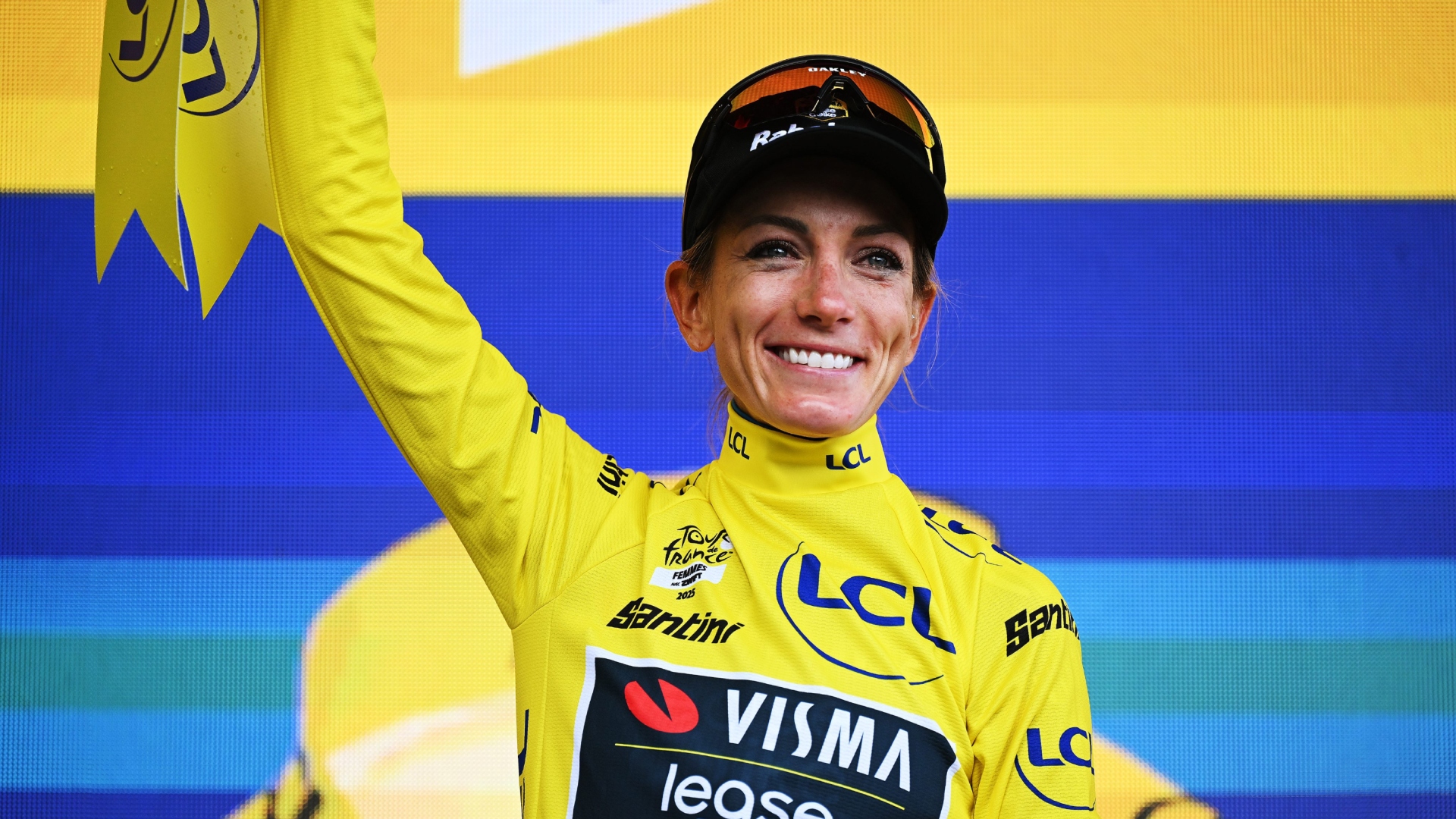
“It’s a shame that in women’s sport, we always focus on women’s bodies,” she explains, casting back to Pauline Ferrand-Prévot’s Tour de France Femmes win, and the criticism of her weight loss that ensued. “We had members on our rider Council who were really upset by the idea that we might normalise drastic weight changes when they might not want that to be a tool they use in their performance toolbox.”
“There’s so much opportunity in the cycling world to prevent eating disorders and disordered eating and have a positive relationship with food, while also competing at an elite level,” Ewers reiterates. “Yes, you do need to be meticulous in some ways, and it is a performance enhancement to be dialled in nutritionally.
“But there is a way to do it in a non disordered way, and I think the education needs to be more clear in that way, and to find or be able to point out if somebody is in a red zone when it comes to disordered behaviours, being able to intervene and get that person help earlier than later.”
In August, the Cyclists’ Alliance renewed calls for the UCI to implement mandatory annual screenings for REDs and bone mineral density testing. A month later, the UCI Medical Commission revealed that new screening tools designed to help teams diagnose risks associated with under-fuelling and excessive weight loss were in development. But, for now, making REDs and the behaviours contributing to its development topics of conversation is a big first success.
“One of the biggest things around this topic is that people don’t talk about it,” Blacking says. “So the more we talk about it and normalise it, the hope hopefully, the more riders we can impact positively.”