
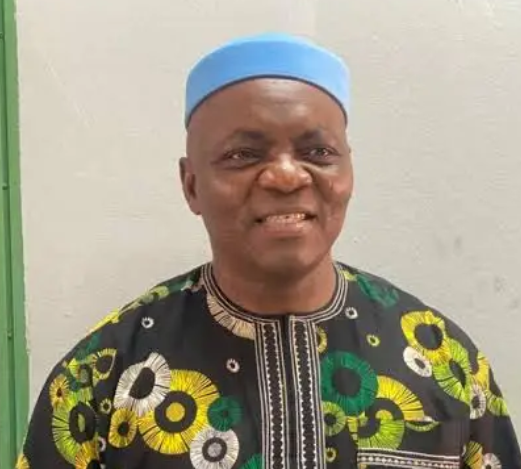
Nigeria has reached a significant global milestone in natural medicine governance.
This followed the appointment of the Director-General of the Nigeria Natural Medicine Development Agency (NNMDA), Prof. Martins Emeje, as the Co-Chair of the newly established Strategic and Technical Advisory Group on Traditional, Complementary and Integrative Medicine of the World Health Organisation (WHO).
The appointment places Emeje at the centre of the WHO’s efforts to strengthen health systems worldwide through evidence-based traditional and integrative medicine, under its Global Traditional Medicine Strategy 2025.
Emeje was named the Co-Chair alongside Dr. Susan Wieland (Director at Cochrane Complementary Medicine), following the formal unveiling of the 19-member advisory group by the WHO.
The group is expected to provide a high-level technical and strategic guidance on policy frameworks, research priorities, standards and best practices for the safe and effective integration of traditional medicine into national health systems.
Announcing the creation of the group, the WHO described it as “a decisive step in applying a scientific response to traditional medicine”.
The global health regulator noted that the rapid global expansion of traditional and complementary medicine had outpaced the development of strong evidence, standards and regulatory systems.
At the inaugural meeting of the advisory group, held alongside the Second WHO Global Traditional Medicine Summit in New Delhi, India, the organisation’s Assistant Director General for Health Systems, Access and Data, Dr. Yukiko Nakatani, said the moment marked a turning point for traditional medicine globally.
“This is a pivotal moment for traditional medicine as it embodies cultural heritage, national health identities and a vital component of policy healthcare strategies,” Nakatani said.
She explained that the advisory group would help the WHO and its member-states move from fragmented approaches to a more coordinated, science-driven framework that recognises both the cultural relevance and public health potential of traditional medicine.
The WHO’s Chief Scientist, Dr. Sylvie Briand, underscored the urgency of the initiative, warning that appropriate safeguards had not matched the sector’s rapid growth.
“The situation whereby the rapid growth of traditional medicine has not been matched by strong evidence, standards, regulatory frameworks or sustainable governance underscores the urgency of this initiative,” Briand said.
Emeje’s appointment is widely seen as a recognition of Nigeria’s expanding role in research, innovation and regulation of natural medicines.
As the Director-General of the Nigeria Natural Medicine Development Agency, he has led efforts to promote the scientific validation, regulation and commercialisation of natural medicine products.
Emeje has also pushed for stronger quality assurance and evidence-based practice in the sector.
His election as the Co-Chair of the WHO advisory group signals growing confidence in Nigeria’s institutional capacity to contribute meaningfully to global health policy discussions, particularly in areas where traditional knowledge intersects with modern science.
The Strategic and Technical Advisory Group on Traditional, Complementary and Integrative Medicine is expected to advise the WHO on integrating traditional medicine into national health systems without compromising safety, efficacy and quality.
Its work will include guidance on research methodologies, regulatory standards, innovation pathways and governance models that align traditional practices with contemporary public health goals.
WHO said the establishment of the group is a core component of its Traditional Medicine Strategy 2025, which seeks to harness the benefits of traditional medicine while addressing long-standing concerns around unverified claims, inconsistent standards and weak oversight.