
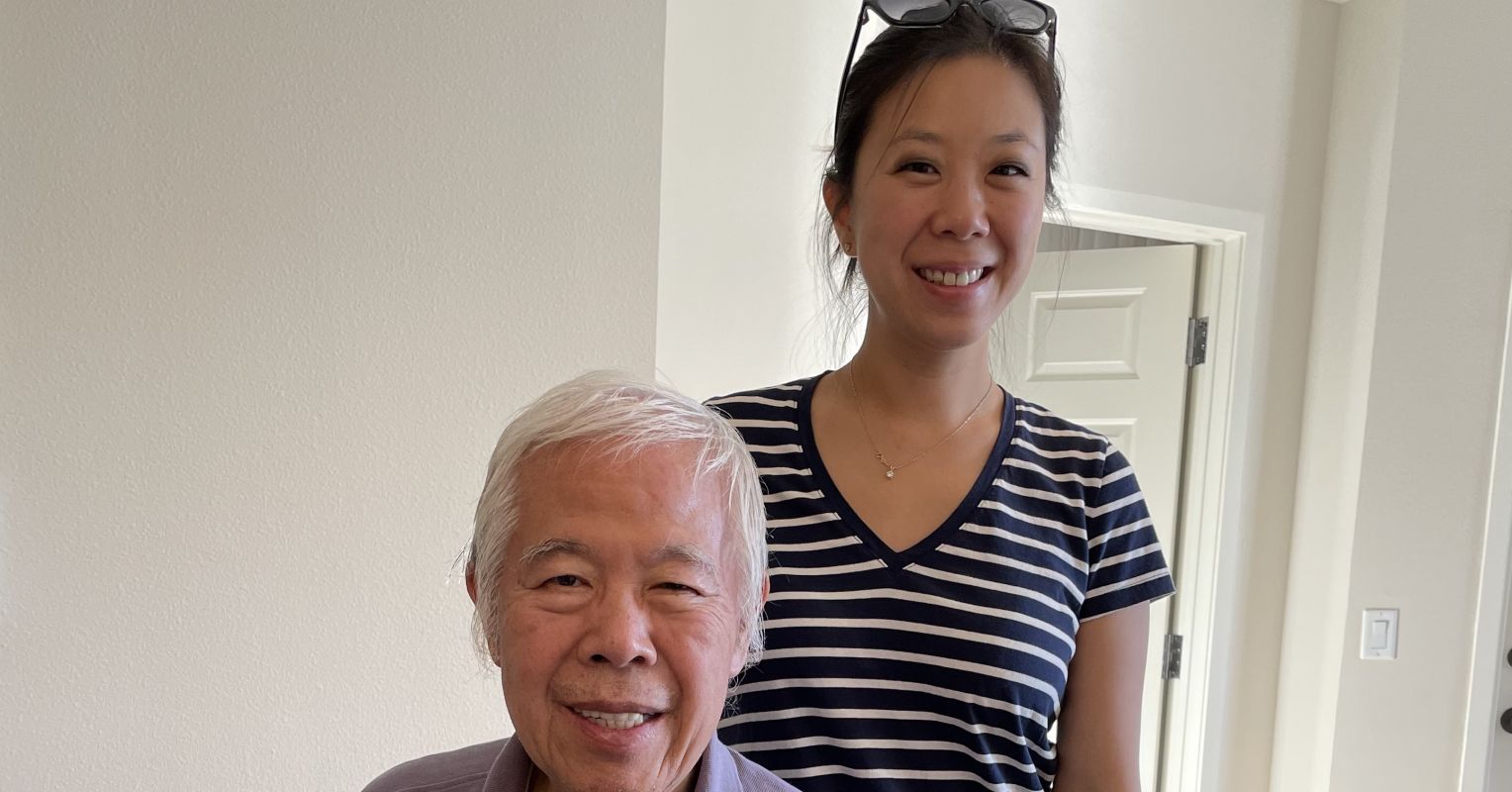
In the U.S., we spend enormous amounts of energy keeping people alive, curing, fixing, and prolonging life at all costs. What we rarely talk about is how people die. And more importantly, how poorly our system supports them when the end is clearly approaching.
My Dad died over 6 months ago.
He had Parkinson’s Dementia. His slow decline for over a decade was painful to witness. Any doctor knows that the average life expectancy after diagnosis is around ten years. My father lived thirteen, thanks to my mother’s unwavering devotion. She was his caregiver, his advocate, his constant companion. She watched him slowly slip away. There were days he didn’t recognize her, or me even, and my Mom faced them all with love.
As a physician, I recognized the signs and knew we were approaching his final chapter. He was eating less, sleeping more, and became completely bedbound. I also knew what he needed, which was hospice. What I didn’t anticipate was how hard it would be to get it.
While the individual doctors we encountered were compassionate and responsive, they were working within a system that was fragmented, rigid, and focused more on efficiency than humanity — a system that too often missed the bigger picture.
It began with missed follow-ups. My father was asked to come into the clinic for labs, even though he was bedbound. When my mother tried to explain, she was told he didn’t “qualify” for a telehealth visit. Only after I intervened as a physician was an exception made.
Then came our request for hospice. After an evaluation, we were told he didn’t “qualify” because he had gained some weight and his albumin levels were “too high.” An arbitrary checklist, based on labs values, prevented him from getting into hospice.
So we tried for palliative care instead. I made call after call, only to be bounced between departments, many unclear on the difference between hospice and palliative care, or unsure of the process to guide us. Even as a physician, I was stunned by how many barriers we encountered simply trying to do the most humane thing: to advocate for dignity, comfort, and respect at the end of my father’s life.
Then came the day that my mom called 911.
On the way to the hospital, my Dad coded. He was resuscitated and intubated, which was exactly what we were trying to prevent. When I arrived at the hospital, I asked to see his labs. His albumin was still “too high”.
I spoke with the hospitalist and immediately recognized the conversation he was trying to have. As a doctor, I’ve had countless end-of-life discussions with patients and families. I knew what my father would have wanted. I watched my mother wrestle with the decision to withdraw care. I explained everything to her, the way I had for so many others. But this time, it was different. This time, it was my dad. Even though I knew what the kindest, most compassionate choice was, it was still the hardest decision of our lives.
We chose to proceed with a compassionate extubation and comfort care. We stayed by his bedside through the night as his vital signs slowly declined. We took turns going home to gather his belongings and items needed to help guide him into the afterlife, honoring our Chinese cultural traditions around death. In the early morning, just minutes after I returned, he passed quietly and peacefully. My mom held one hand, while I held the other.
This was the death we had hoped for all along, one grounded in love, presence, and dignity.
Yet, I cannot forget that we advocated for this death despite the system. Even on his deathbed, my dad did not qualify for hospice because he failed to meet arbitrary criteria. These metrics do not account for the nuance of dying. They do not measure suffering, nor do they reflect the heartbreak of watching someone you love pass.
At the end of life, we did not need more rules or checkboxes. We needed compassion and understanding from a healthcare system that has become so bound by policy, protocol, and paperwork that it has lost sight of the very purpose of medicine: to care… not just to treat or prolong life, but to honor the dignity of life even as it ends.
This reveals one of the most painful truths about end-of-life care in America: Access to meaningful support often depends more on numbers than on lived reality. End-of-life care in this country is poorly prioritized, integrated, and understood. Death is treated as a failure or an inconvenience, something to be avoided until the very last moment, rather than a natural transition that deserves thoughtful preparation and support.
Hospitals and healthcare systems must do better
We must integrate palliative care earlier in the disease course and clarify hospice pathways so families are not left overwhelmed, confused, or denied timely support due to rigid interpretations of eligibility. End-of-life care should be guided by clinical reality and patient values rather than arbitrary laboratory thresholds. When hospice is not appropriate, patients and families deserve guidance about alternative forms of support. This requires training healthcare professionals at every level to understand hospice and palliative care, initiate these conversations early, and support families with empathy.
I don’t believe death is a failure of medicine. As physicians, we do everything we can to help people live well and with meaning. The truth is every one of us will die. In that sense, death is a natural part of life.
What is a failure, though, is how often we fall short in caring for people as they die.
That’s something we can — and must — change.
Dying with dignity should never be something families have to fight for. It should be the standard of care and a reflection of the Hippocratic oath we took when we became doctors: to do no harm, respect autonomy, preserve dignity, and recognize our limits.
The end of life is part of life’s full arc and one of the most sacred moments we are called to witness. When we fail to meet that moment with humanity, we fail not only our patients, but their families and the very purpose of our profession. How we care for people at the end of their lives reflects who we are as a healthcare system and as a society, including whether we are willing to honor death not as a failure or inconvenience, but as a sacred transition deserving of dignity and compassion.