
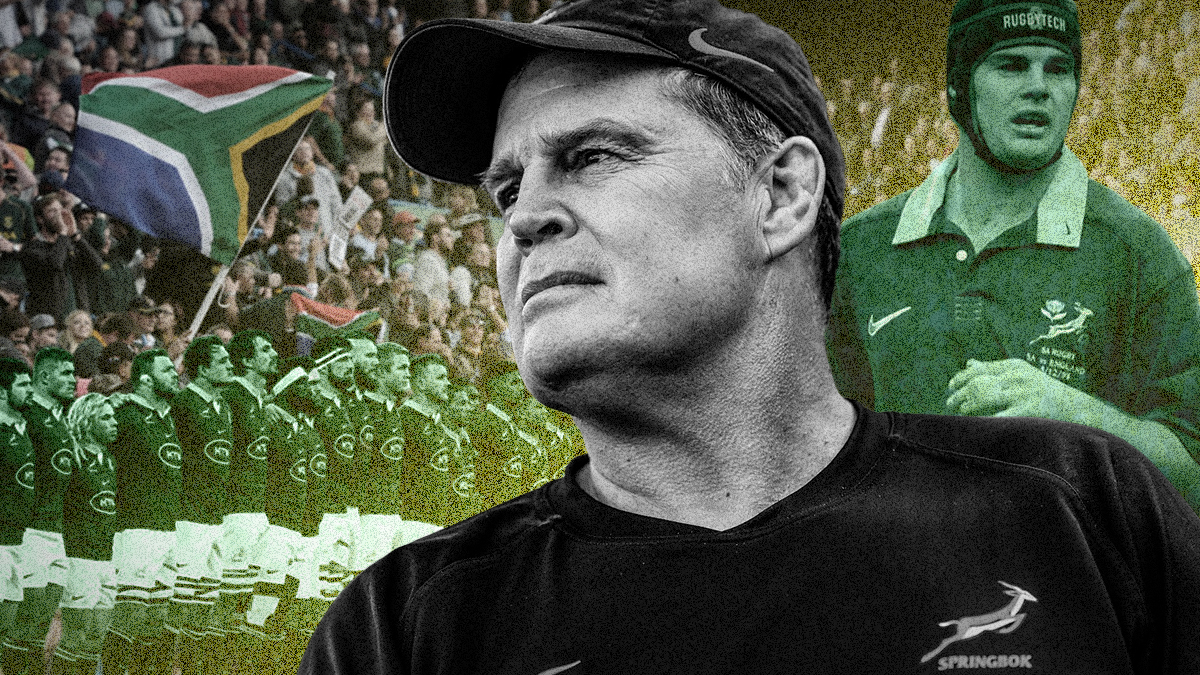
In early 2018, the national rugby team of South Africa, the Springboks, were in crisis.
They had slumped to an all-time low of 7th in the World Rugby rankings, fresh off a humiliating 57-0 loss to New Zealand in 2017 under previous coach Allister Coetzee.
Internal divisions, inconsistent performances, and a lack of clear direction had eroded confidence, leaving a nation of Springbok supporters with much to be desired.
Enter Johan “Rassie” Erasmus, appointed head coach in March 2018 while also serving as Director of Rugby for SA Rugby.
A former Springbok flanker with 36 Test caps, Erasmus had honed his coaching craft at the Cheetahs, Stormers, and Munster, where he built a reputation for innovative, no-nonsense leadership.
What followed was one of rugby’s most extraordinary turnarounds: from near-collapse to winning consecutive Rugby World Cup titles in 2019 and 2023, Rugby Championship victories in 2024 and 2025, and a steady position as the world’s top rugby team.
Born in 1972, Erasmus grew up in the small town of Despatch in the Eastern Cape Province, not far from Port Elizabeth, where he fist developed a love for rugby.
His autobiography, Rassie: Stories of Life and Rugby, Erasmus shared how his childhood was overshadowed by his father, Abel Hermanus Erasmus, who battled severe alcoholism.
He described how his father would drink cane spirits to the point of self-harm and how he, as a young boy, would lie next to him, holding his hand in an attempt to protect him.
The situation created a turbulent home life and a sense of shame, with Rassie often trying to keep others away from the house to avoid embarrassment.
Rugby became a major part of his life from a young age, offering both an escape and a path to recognition.
Erasmus attended Hoërskool Despatch. After completing his high school education, he pursued higher education at the University of the Free State (UFS), which he attended for three years, graduating in 1994.
Playing career
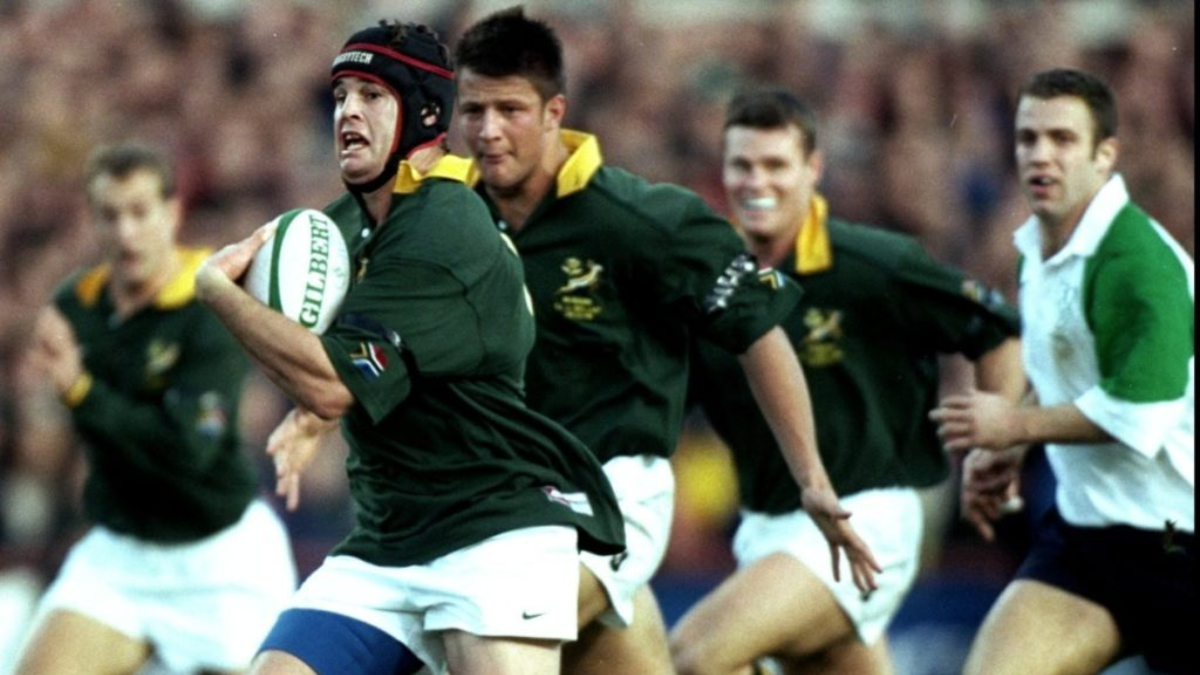
He started his elite rugby career with the Free State during the 1994 Currie Cup.
By the turn of professionalism in rugby union in 1995, Erasmus continued to develop as a leading loose forward for his province, and was selected for the Free State’s debut season in the 1997 Super 12.
Even as a young player, teammates remembered how he displayed an unusual dedication to the analytical side of the game.
He would spend hours watching game footage and devising strategies, a habit that marked him as “ahead of his time”.
Erasmus made his Test debut against the British & Irish Lions at Ellis Park on 5 July 1997, and scored the first of his seven Test tries a month later in the Boks’ 61-22 demolition of the Wallabies at Loftus.
By 1998, Erasmus had cemented his place in the Bok back row, playing a key role in their Tri-Nations title-winning campaign that year.
After establishing himself in the Springboks, Erasmus played for the Cats from 1998 to 2001, serving as captain from 1999 to 2000.
He led them to the 2000 Super 12 semi-finals, but his tenure ended following a controversial removal of captaincy by coach Laurie Mains in 2001.
In 1999, Erasmus captained South Africa for one Test and was a key player in their Rugby World Cup campaign, where the team finished third.
Following his departure from the Cats, Erasmus returned to the Free State and briefly played for the Stormers in 2003 before retiring at the end of that season after a decade-long professional career.
Coaching career
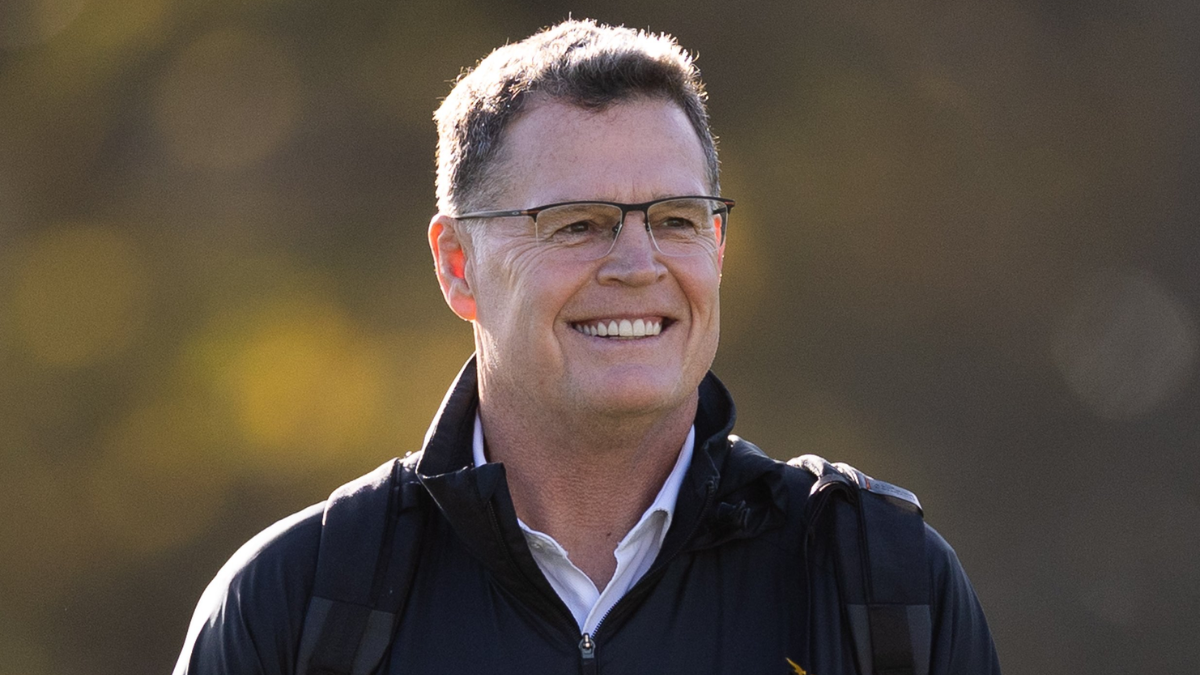 Image: SA Rugby
Erasmus began his coaching career in 2004 with his former union, the Free State Cheetahs, initially overseeing their Vodacom Cup side before quickly rising to head coach.
He delivered immediate success: in 2005 the Cheetahs won their first Currie Cup title since 1976, and in 2006 they retained the trophy, sharing it with the Blue Bulls after a draw.
That same year, Erasmus also guided the franchise into its debut Super 14 campaign, establishing the Cheetahs as a competitive force in both domestic and international provincial rugby.
He left the Cheetahs setup in 2007 to join the Springboks as a technical adviser ahead of South Africa’s successful Rugby World Cup campaign.
Soon after, he took charge of Western Province and the Stormers as Director of Coaching and head coach between 2008 and 2010, helping stabilise and improve the franchise during a period of transition.
Erasmus returned to the Springboks in 2011 as a technical specialist for the Rugby World Cup, and from 2012 to 2016 he moved into a senior high-performance management role at SA Rugby, shaping elite player pathways and national team structures.
In 2016, Erasmus made a significant career shift when he became Director of Rugby at Munster in Ireland.
Following the sudden death of head coach Anthony Foley, he assumed both coaching and managerial responsibilities, leading Munster to a powerful 2016–17 season.
Erasmus returned to South Africa at the end of 2017 as SA Rugby’s Director of Rugby and, in March 2018, took on the additional role of Springbok head coach.
His impact was immediate: South Africa claimed a landmark win over New Zealand in Wellington in 2018, captured the 2019 Rugby Championship, and went on to lift the 2019 Rugby World Cup after a commanding victory over England in the final.
As planned, he stepped back from the head-coach title after the tournament but continued to oversee national structures and strategy in his Director of Rugby role.
Under his broader leadership, the Springboks again became world champions in 2023, securing back-to-back World Cup titles.
In February 2024, Erasmus formally returned as head coach, leading an updated coaching group while retaining strategic oversight of South Africa’s rugby system.
His influence remains central to the Springbok setup, and in December 2025 SA Rugby extended his contract through to the 2031 Rugby World Cup.
You have read 1 out of 5 free articles. Log in or register for unlimited access.