
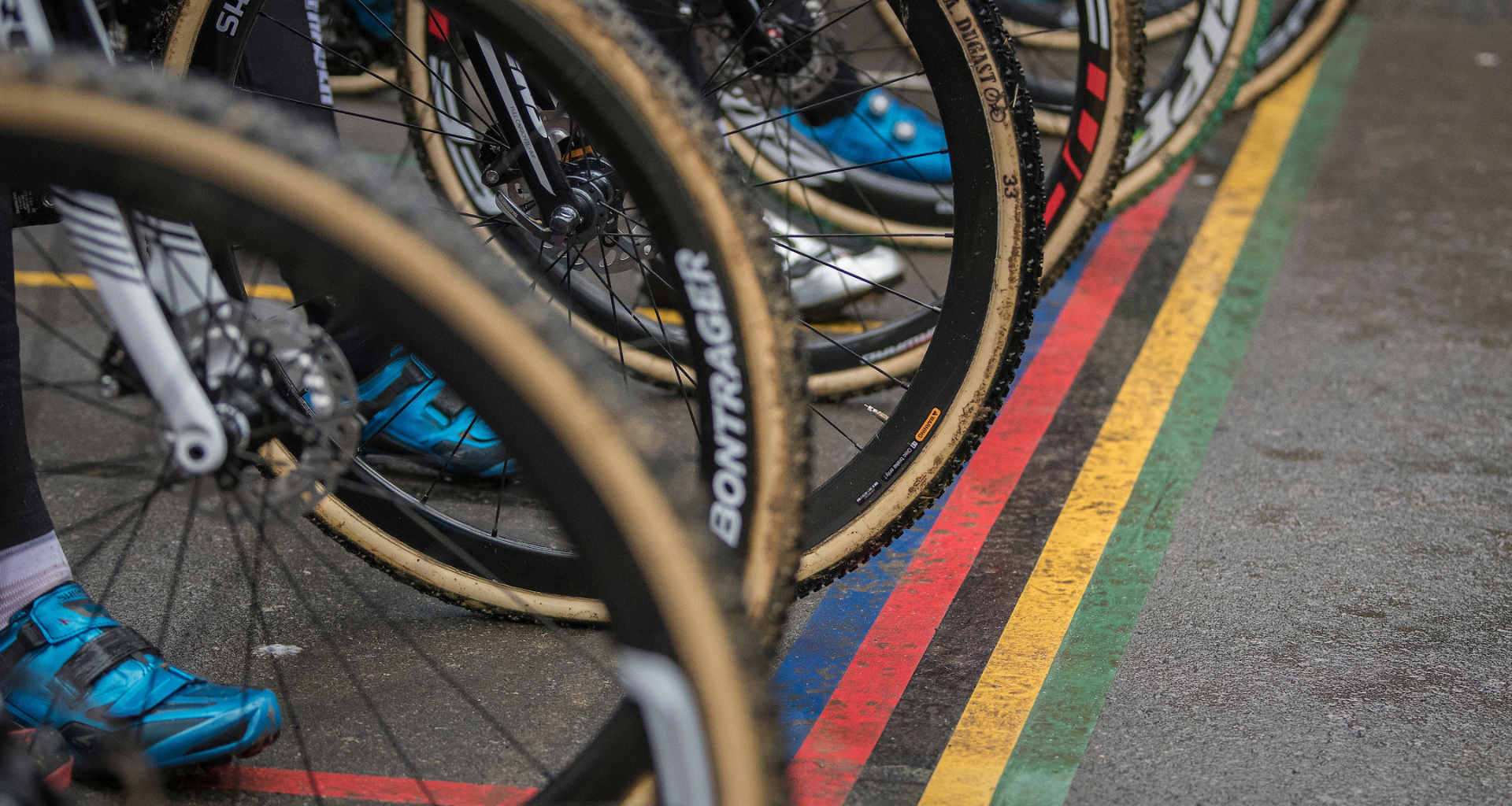
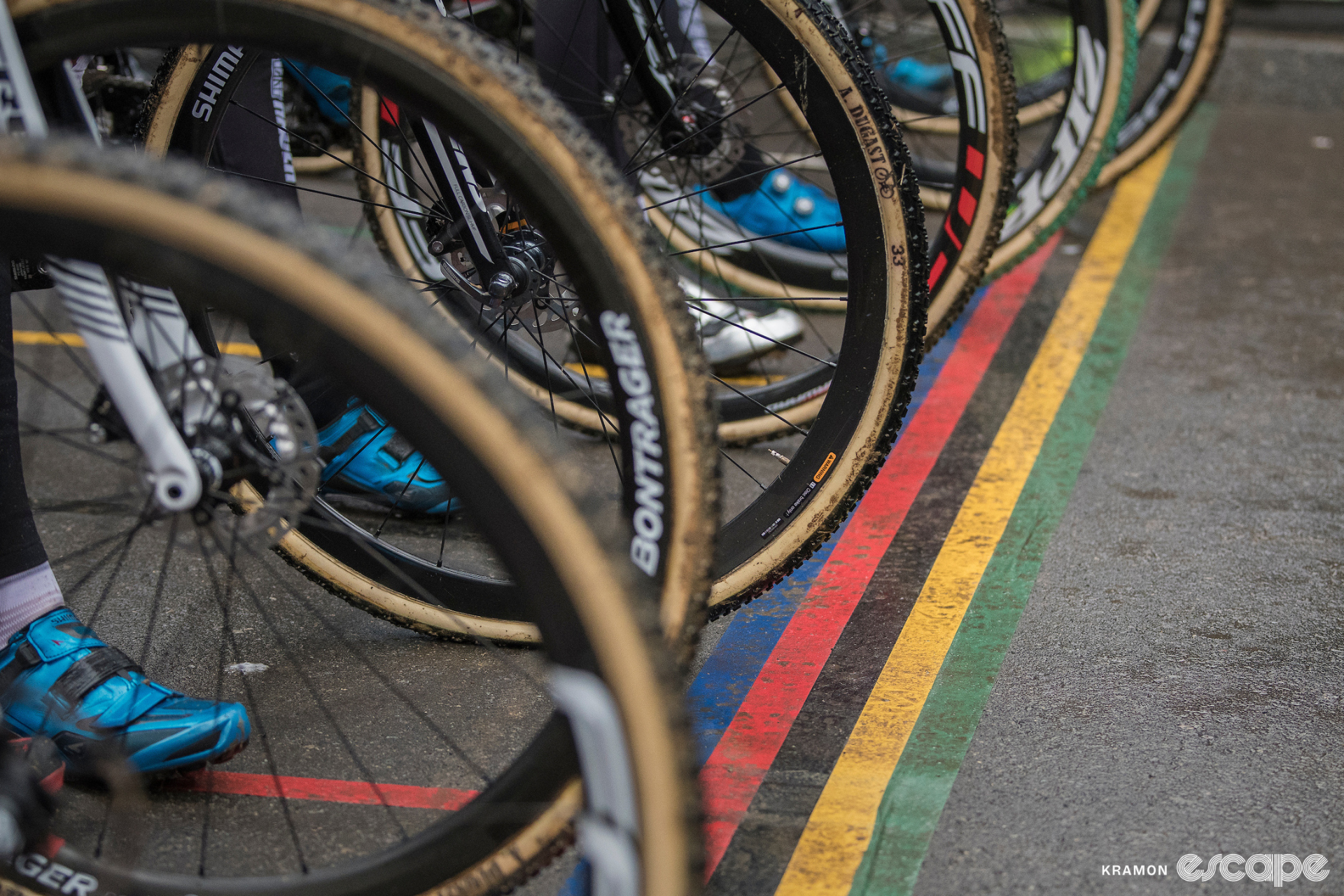
Does cyclocross need to follow in the tyre tracks of other disciplines, or does it stand alone?

Kramon
2025 was another year for wider tyres. The professional road peloton barely got on their bikes with anything narrower than 28 mm, while gravel tyres ballooned toward mountain bike territory – and even mountain bike tyres continued to expand across sub-disciplines. Amid this evolution, one outlier has remained steadfast: cyclocross. Tyre widths have grown so fast that it seems the muddy winter discipline is being left behind to squirm through sand pits with 33 mm tyres. And that begs the question: why?
At Paris-Roubaix last year, 32 mm tyres were the go-to width for almost all participating teams. There were a few exceptions with Bahrain Victorious, Canyon-SRAM zondacrypto, and some members of SD Worx-Protime using 35 mm tyres. This resulted in the bikes looking closer to gravel bikes than road bikes of 15 years ago. Of course, Roubaix is a race in its own class, but 32 mm tyres have popped up at more races throughout the season than just at France’s cobbled Monument.
The race calendar is changing; events like Strade Bianche, Tro-Bro Léon, and Clásica Jaén all include gravel sectors, and it is becoming routine in Grand Tours to include a gravel stage. Events that call for wider tyres are becoming more frequent, and this can bring cyclocross’s regulations around tyre width into question.
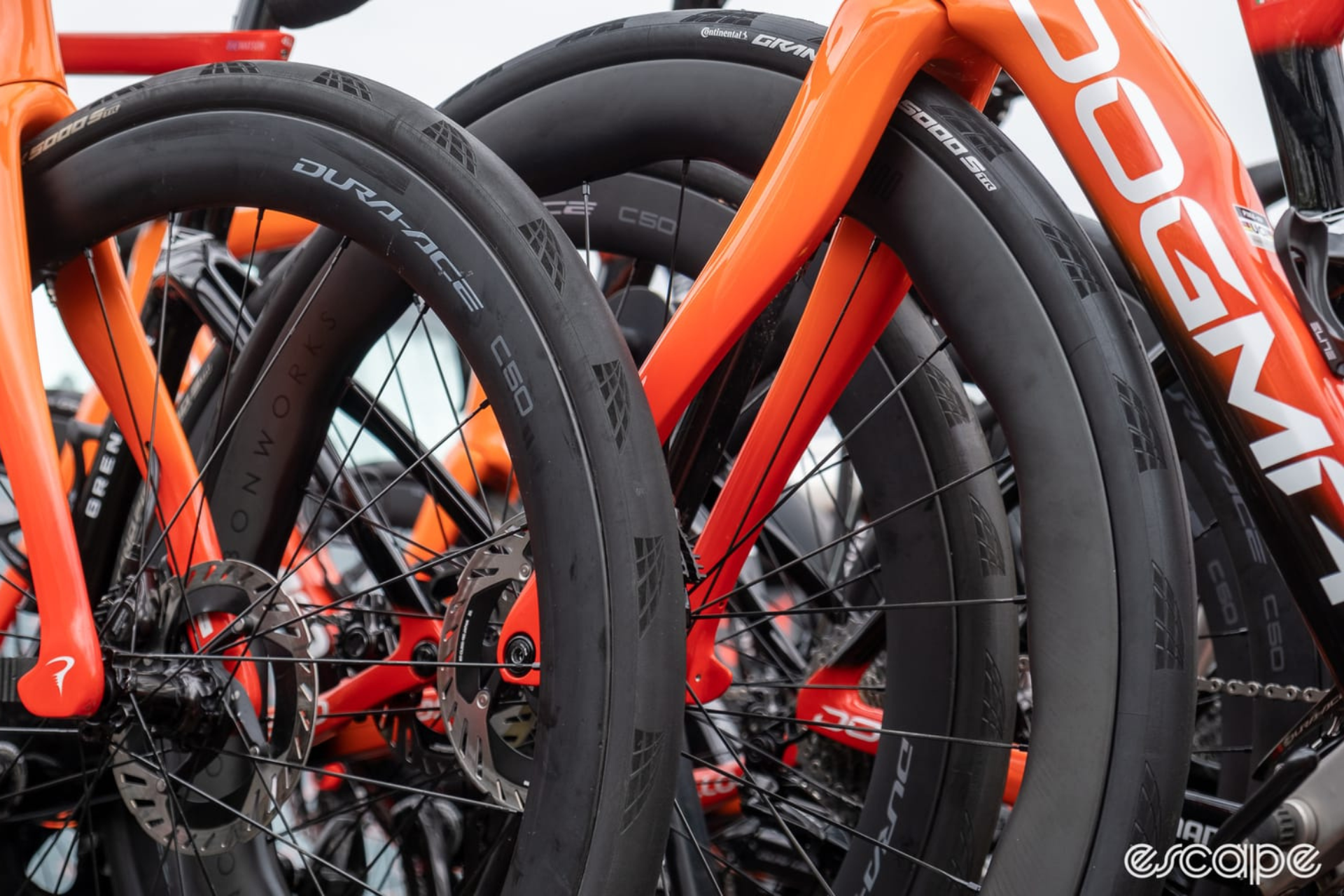 In the Classics, and races with gravel sections, 32 mm tyres have quickly become the norm.
To understand why the sport has resisted change, and more importantly, whether it should, I spoke with cyclocross legend Sven Nys – who has seen the discipline shift from 40 mm tyres to today’s strict 33 mm limit – and former U23 world champion Puck Pieterse. While Nys brings the long historical view of tyre evolution, Pieterse represents the modern generation – athletes who’ve grown up entirely within the 33 mm era.
33 mm and no wider, but why?
On the road, tyres have jumped from 21 to 23 mm, then 25, 28, 30 and in some cases 32 mm or wider. The same has occurred in XC mountain biking, where 2.4” tyres are now widely used, up from 2.0” in the early 2000s.
In this respect, gravel has experienced an even more radical wide-tyre-awakening in a relatively short period. Starting from its relatively modest origins, where 32-35 mm tyres were standard, it has jumped to 50 mm or even more in recent years.
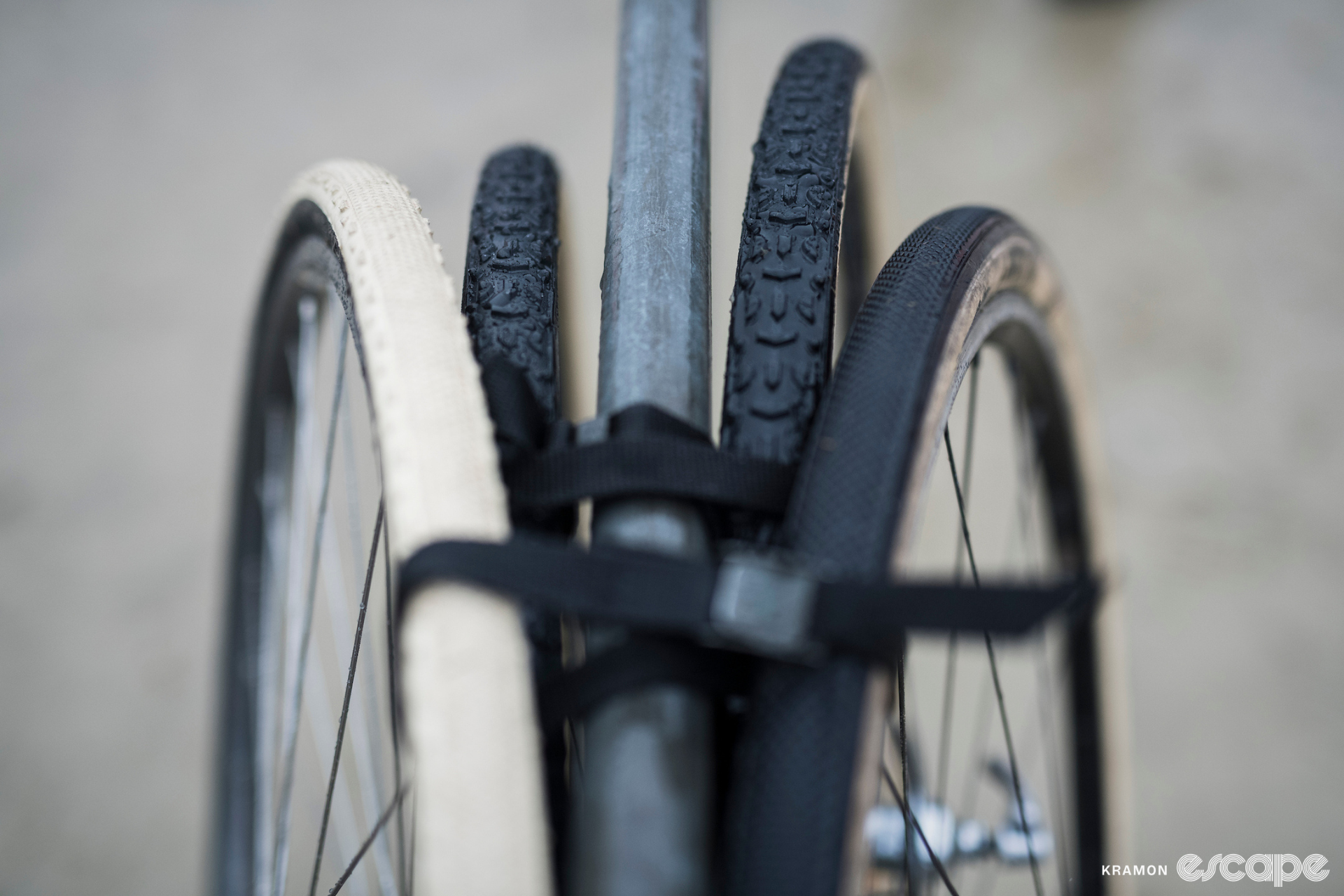 The limit on tyre width was brought in to try to curb the cost of equipment in the sport, something that can’t be said about other disciplines.
Cyclocross, meanwhile, hasn’t just stagnated; it’s actively gone backwards, not once, but twice. “When I started as a professional cyclocross rider, there was no limit,” Nys said. Recalling the early part of his career, he explained that he rode 40 mm tyres at the 1997 Junior World Championships. However, the UCI brought in a cap to tyre width, settling on 35 mm.
This limit didn’t stand the test of time, being reduced again in 2010. From 2010 onwards, any UCI-sanctioned cyclocross race has been governed by equipment regulations prohibiting the use of tyres wider than 33 mm.
“When I was in the UCI’s Cyclocross Commission, we discussed lowering costs for young riders,” Nys explained. “They were coming in with three pairs of 32s, 34s, 30s; that was a lot of equipment and budget. That’s why the limit was set at 33 mm.”
This post is for paying subscribers only
Subscribe now
Already have an account? Sign in
Did we do a good job with this story?
👍Yep
👎Nope