
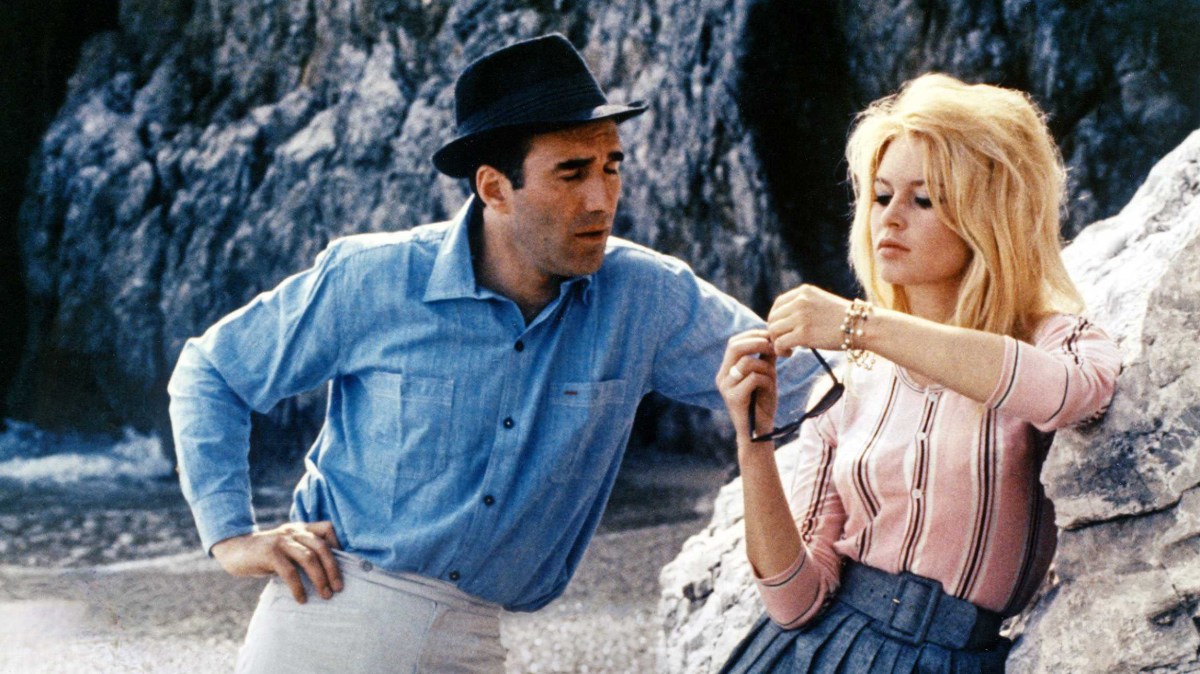
There is no greater illustration of the differences between Hollywood and European cinema than how they positioned their respective “blonde bombshells”. Marilyn Monroe was sexy, and kittenish, and va-va voom, and made guileless patsies drool with desire. Brigitte Bardot, conversely, was dangerous and primal, and her characters drove young French bucks into murderous frenzies. And when that proved futile, her screen protagonists invariably died, or killed themselves, or sold their souls by settling for rich but cruel older men.
It’s the difference between Monroe’s cute comedy Bus Stop and Bardot’s discomfiting And God Created Woman, both made in the same year. To generations of casual movie watchers, Bardot was — and, to some, still remains — “the French Marilyn Monroe.” They couldn’t be more wrong.
5. And God Created Woman (1956)
Bardot’s breakout sex comedy peaks with a trance-like mambo routine, late into a movie about how her 18-year-old Saint-Tropez siren, Juliette, is being pulled in three directions by three wildly different yet equally besotted men. Here in a midday bar, and after several double brandies, Juliette launches into a hip-swaying, skirt-splitting, number that was once labelled as “raunchy” and “controversial” but is really about the character’s refusal to obey the weak-willed menfolk around her. The scene ends with wobbly-lipped husband Michel (Jean-Louis Trintignant) half-crying for her to stop, with, “Juliette, please!” Of course, she doesn’t.
4. Shalako (1968)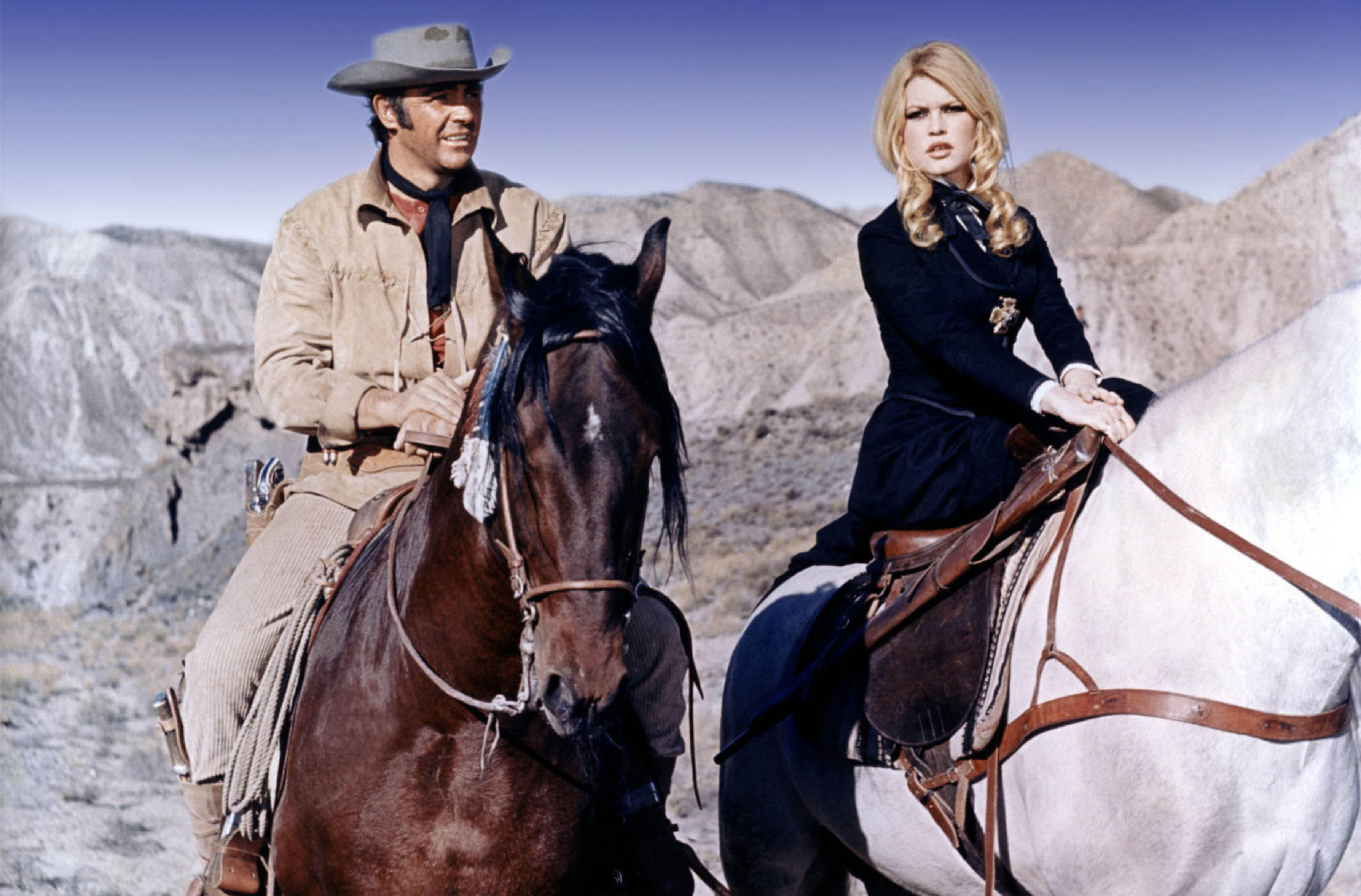
With Sean Connery in Shalako
ALAMY
One of only a handful of Bardot’s English-language movies (see also the Dirk Bogarde comedy Doctor at Sea), this lavish Western stars a suitably laconic Sean Connery, then in-between Bonds, as a former US cavalry officer, but is mostly notable for Bardot’s turn as a gun-toting countess. She plays Irina Lazaar, and is introduced wearing all black — including fetching top hat — and besting her rivals in a New Mexico (actual location: Spain) shooting contest. A slack-jawed ambassador comments wryly that she is, “charming, beautiful, and hits whatever she aims at. Whoever he is.” Later, when wracked with guilt after killing an Apache warrior, she is consoled that he was “just a Red Indian”. Horrified, she fires back, “He was a man!”
3. La Vérité (1960)
Bardot is at her bravest, her most emotionally exposed, brittle and beaten down here as Dominique Marceau, the accused in a murder trial that’s really an excuse to flash back through a life of abuse, suicide attempts and near-Dickensian misery. The film, directed and co-written by Henri-Georges Clouzot, was nominated for a best foreign language film Oscar and it’s entirely built around Bardot’s complex and increasingly frazzled turn while Dominique drifts in and out of relationships, becomes homeless, turns to prostitution and finally, in a scene that still shocks today, shoots dead her abusive boyfriend Gilbert (Sami Frey). Not for the faint-hearted.
2. Vie Privée (1962)
Somewhere in the intersection of Being John Malkovich, Blonde, Amy and A Star is Born sits this bleak and highly prescient analysis of celebrity culture, as embodied by Bardot at her professional peak. She stars essentially as herself, here called Jill, in a fable that’s co-written and directed by Louis Malle and traces Jill’s progress from aspiring ballerina to Parisian starlet to global “sex symbol”, forever hunted by a phalanx of rapacious paparazzi who eventually decimate her personal and professional life. Bardot is effortlessly naturalistic throughout, though questions inevitably abound concerning how much of Jill is an actual performance or simply a lead actress who is “being Brigitte Bardot”.
1. Le Mépris (1963)
This is it. The Bardot film that matters most. It straddles everything, from Hollywood to Europe, from Homer to the French New Wave. And there at the centre of it all, Bardot. No, really. It’s that important. She plays Camille, the wife of a jaded screenwriter (Michel Piccoli) who’s attempting to adapt The Odyssey for Hollywood legend Fritz Lang (playing himself) and his odious producer Jeremiah Prokosch (a brilliantly seedy Jack Palance). Camille, typically, is the object of everyone’s desire and yet here, in a devastatingly sad film from by New Wave giant Jean-Luc Godard (Breathless), she is aware of the hopelessness of her situation, and of her crude currency among venal, thin-skinned men. It’s a towering performance. The ending is suitably tragic. No follow-up needed.