
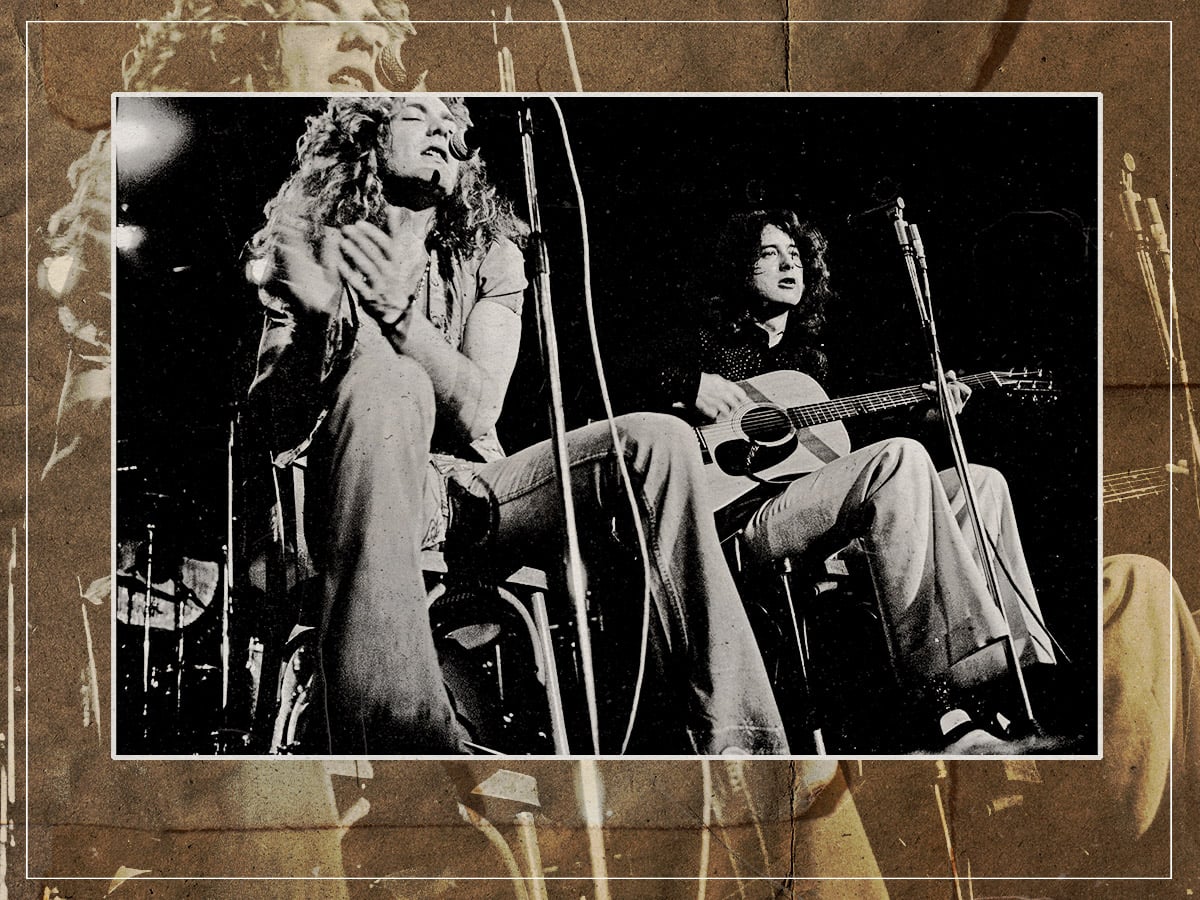
(Credits: Far Out / Heinrich Klaffs)
Tue 30 December 2025 18:15, UK
A band like Led Zeppelin is such an alchemic sum of its parts; it’s impossible to imagine their continuing after the loss of drummer John Bonham.
Some of their peers decided to soldier on under similar circumstances, to varying success. AC/DC pulled off an effortless frontman swap between Highway to Hell and Back in Black, jumping from the brawny prowess of Bon Scott to Brian Johnson’s Geordie bellow without breaking a sweat. You won’t find anyone, however, who doesn’t think Keith Moon’s passing marks the end of The Who’s classic tenure, as good as former Faces drummer Kenney Jones was.
The closest Led Zeppelin ever got was their one-off show in 2007, recruiting Bonham’s son Jason behind the kit for their Ahmet Ertegun Tribute Concert at the O2 Arena, a fitting channel of their founding percussionist’s spirit on that special night. But regarding the studio, it was over the moment Bonham was found unresponsive on September 25th, 1980, a downing of as many as 40 shots of vodka the previous day, fatally getting the better of him.
Like many of their arena rock peers, the rapidly shifting climate had pulled the rug from under their feet. Punk’s whirlwind upend had its effect on Led Zeppelin’s latter output, 1976’s Presence and In Through the Out Door two years later, gleaming pearls of brilliance amid bouts of unfocused creativity and going through the synthy motions. As a live behemoth, the quartet was still going strong, gearing up for a North American tour mere weeks away when Bonham died.
Honouring their scheduled dates was out of the question once Bonham passed, let alone the very idea of new material with someone else behind the drum kit. Trouble was, contractual obligations to Atlantic Records required one more record before they could legally part ways.
Plagued with a litany of bootlegged live cuts and studio outtakes, guitarist Jimmy Page thought to give the fans what they’d always wanted. Reigniting his extensive background as a session musician, Page sifted through the remaining overdubs, on-stage performances, and studio jams to unearth much lauded numbers like their ‘We’re Gonna Groove’ Ben E King cover and ‘Bonzo’s Montreux’ percussion extravaganza to the official light of day.
Such gems were manna from heaven to hardcore Zeppelin fans, compiled on the 1982 Coda quasi-album and the band’s farewell LP. Yet, everybody knew the record was a live compilation at heart, no less than Atlantic, who were expecting a fully-formed, studio return. Page’s hand was forced into just a little dishonesty to keep the suits happy, instructing early pressings of Coda to incorrectly detail ‘We’re Gonna Groove’ as recorded at London’s Morgan Studios in June 1969 rather than their actual Royal Albert Hall show as recent as January 1979.
“Jimmy Page didn’t make a mistake,” the notes to Centennial Media’s Legends of Music Spotlight: Led Zeppelin make clear. “This was his sleight of hand. The contract with Atlantic called for a studio album. Lacking enough material for one, the guitarist cleverly doctored the live performance to make it sound like it was done at Morgan.”
What Atlantic didn’t know didn’t hurt them. Honouring the memory of their departed friend while tying up various loose session ends, Coda’s apt title gave fans and the wider rock world a fitting close to the Led Zeppelin chapter, a concluding send-off reminding what made the quartet so special as the 1970s were fast becoming a distant musical memory in the new wave era.
Related Topics
The Far Out Led Zeppelin Newsletter
All the latest stories about Led Zeppelin from the independent voice of culture.
Straight to your inbox.