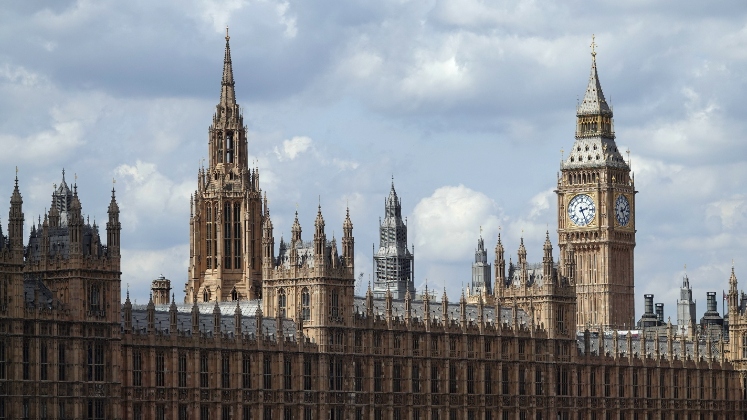
Perhaps the defining aspect of British politics in 2025 has been the rise of Reform UK as the leading Party in polls. There is a certain sense of inevitability of a Reform government, but there is still a long way to go until the next general election and Nigel Farage’s Party is coming under increased scrutiny as it edges towards power. Perhaps unsurprisingly, the other key feature of UK politics this past year had to do with Donald Trump. Whether through the meddling with the country’s politics by Trump’s once close associate Elon Musk, or whether through the tariffs imposed on global trade, UK domestic politics seems to dance to the tune of American politics. One of the reasons for this has to do with the fact that the US economy has vastly surpassed the UK’s over the past 20 years. Productivity stagnation is largely to blame for this, as well as the country’s demographic reality. Rapid economic growth, the Government’s explicit priority and best bet for re-election, might just be impossible for the country.
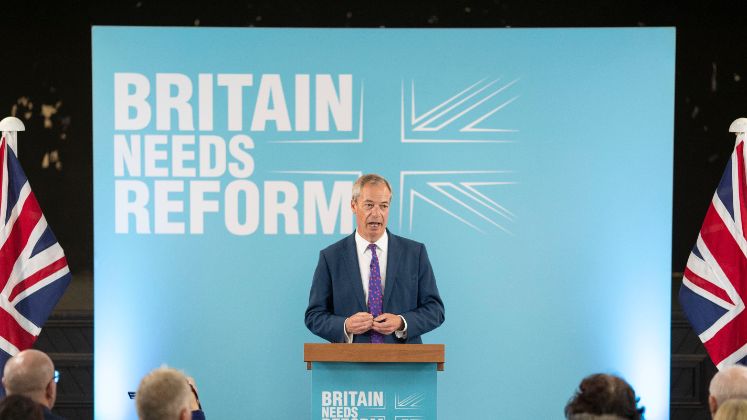
A number of recent polls place Reform UK at first or second place. The electoral system makes it difficult for this surge to translate into power, but the volatility of the electorate makes it possible. Laura Sera and Jenevieve Treadwell highlight the gender and age dynamics of Reform’s would be voters.
Reform UK is continuously leading in polls, and given the unpopularity of Labour and the Conservative parties, many are beginning to see a Nigel Farage government as inevitable. Joanna Bale interviews Tim Bale about the prospect of Reform UK ending up in power, the obstacles along the way and the way the far right has reshaped British Politics.
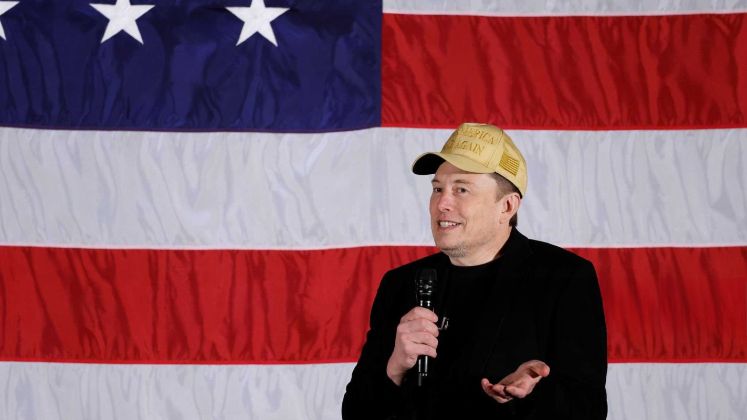
Elon Musk’s recent interest in disrupting EU and UK politics can seem a bit of mystery. But as Damian Tambini argues, what lies behind it is the same reason Musk has formed an alliance with Donald Trump: not some deep-seated ideological affinity but blatant economic interest.

The Government is considering adopting the proposal of Labour Together to introduce mandatory digital ID cards in an effort to tackle irregular migration and visa-overstayers. But Margie Cheesman, Aaron Martin, and Keren Weitzberg warn that the lessons from past attempts at introducing a national identity card point to a moral minefield and argue that tackling immigration does not lend itself as a problem to be solved by a digital ID.

With Donald Trump’s inauguration imminent, there are questions over the potential consequences of one of his signature policies: tariffs. While during the first Trump administration the UK wasn’t too affected by the imposition of US import tariffs, a potential geopolitical escalation of a tariff war could have serious consequences for a British economy forced to choose between the EU and the US, writes Adam Butlin.
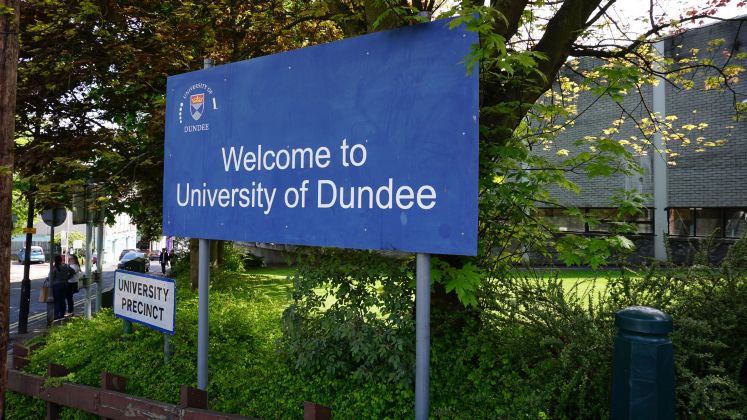
More than 40 per cent of UK universities are facing a financial crisis, leading to staff redundancies in several institutions. Bulent Gokay and Farzana Shain offer two policy proposals that would help out universities at no-cost to the Government, but argue that an alternative funding model is ultimately needed to ensure the future financial stability and educational excellence of the UK’s higher education.

The gap in living standards between the UK and US has widened sharply in recent years. Aadya Bahl argues that reversing this trend means confronting the UK’s deep-rooted productivity and investment challenges.
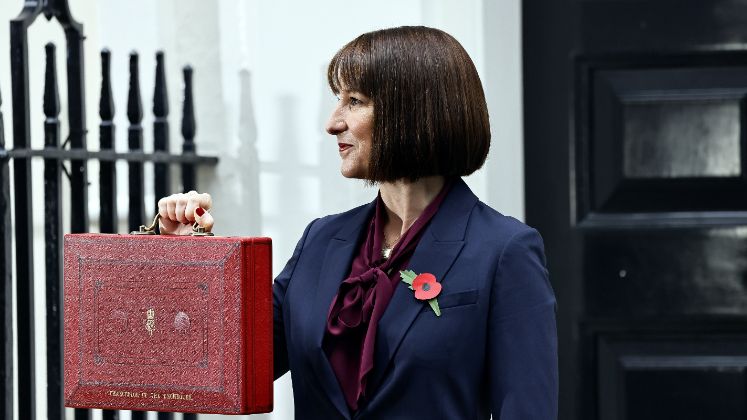
The Labour Government has put all its eggs in one basket: the promise of economic growth. This is proving hard to achieve. As the Chancellor Rachel Reeves prepares to make more policy announcements meant to boost growth, Victor Bulmer-Thomas argues the UK, along with other developed economies, is likely facing a future of zero growth due to one key structural feature: population decline.
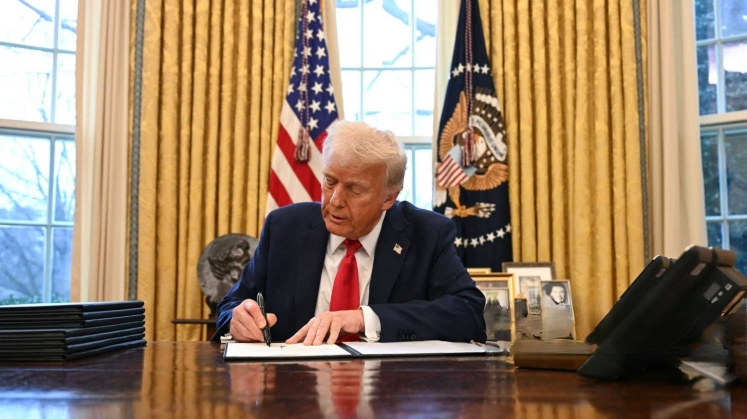
Trump presents tariffs as a way of protecting the American economy from external dependencies. But look closer to the way he uses them and you will find no cohesive protectionist strategy. Angelos Chryssogelos and Monika Brusenbauch-Meislova argue that Trump’s use of tariffs can best be understood as a feature of his populism, reinforcing the rhetoric of defending the “people” against the free trade “elites”, rather than as an economic strategy.
How Quantitative Easing went from temporary crisis-response to permanent policy change

Quantitative Easing was supposed to be a temporary tool used to stabilize the UK economy in the aftermath of the 2008 Global Financial Crisis. The policy worked, but had several negative unintended consequences included asset inflation and distortions in the housing market. Tami Oren and Ronen Mandelkern expose how a temporary policy can become a permanent fixture, even when it becomes counterproductive.
All articles posted on this blog give the views of the author(s), and not the position of LSE British Politics and Policy, nor of the London School of Economics and Political Science.
Image credit: Nigel J. Harris in Shutterstock