

If Britain had a national hobby, it wouldn’t be queuing or moaning about the weather. It would be not quite getting what we need from our food, then wondering why we feel like a phone on 12% battery by mid-afternoon. Enter the new M&S Nutrient Dense range, a new Foodhall range built for people who don’t eat much during the day, have a low appetite, or simply want every bite to work harder.
That matters because the numbers are blunt: 96% of the UK population are not meeting the recommended 30g daily fibre intake and many people are also falling short on key micronutrients. Add in the reality that 3–4% of the UK are taking weight-loss medication such as Mounjaro, and you’ve got a growing group of shoppers trying to do “smaller portions” without accidentally doing “smaller nutrition,” too.
The basic problem: we’re under-fuelling, then blaming ourselves
Traditionally, British meals had a rhythm: breakfast, lunch, dinner—something steady, something sensible, something that kept you upright. Modern life has other ideas. People skip meals, graze on convenience, and end up with a diet that’s light on fibre and short on essentials.
M&S Food is aiming straight at that gap with Nutrient Dense: a range of 20 products across salads, drinks, snacks and meals designed so “every mouthful and calorie is packed with fibre, vitamins, minerals and other nutrients that are important to our health.”
What “nutrient-dense” actually means (in plain English)
“Nutrient-dense foods are those that provide a more concentrated source of vitamins, minerals, fibre, healthy fats and protein relevant to their calorie content.” In other words: more nutritional return per bite—useful if you’re time-poor, appetite-poor, or trying to be more deliberate with what you eat.
The M&S Nutrient Dense range has been developed using a “curated larder” of 250 purposeful ingredients, selected by in-house nutritionists and chefs, then combined into products intended to feel like proper food, not a science experiment.
Fibre first, but not fibre only
Fibre is the headline act for good reason. It supports digestion day-to-day, and long term it’s associated with reduced risk of bowel cancer and other diseases. The point is not to chase a number for bragging rights—it’s to stop running on empty.
According to M&S, each product contains at least one of 10 micronutrients many people lack, including vitamin D, iron, folate and vitamin B12. Products are also positioned as high in or a source of fibre, calorie-controlled, and carry an Eat Well seal. The brand says it developed its Nutrient Dense criteria “in consultation with the British Nutrition Foundation (BNF).”
Why this range is being timed for now: smaller portions are becoming normal
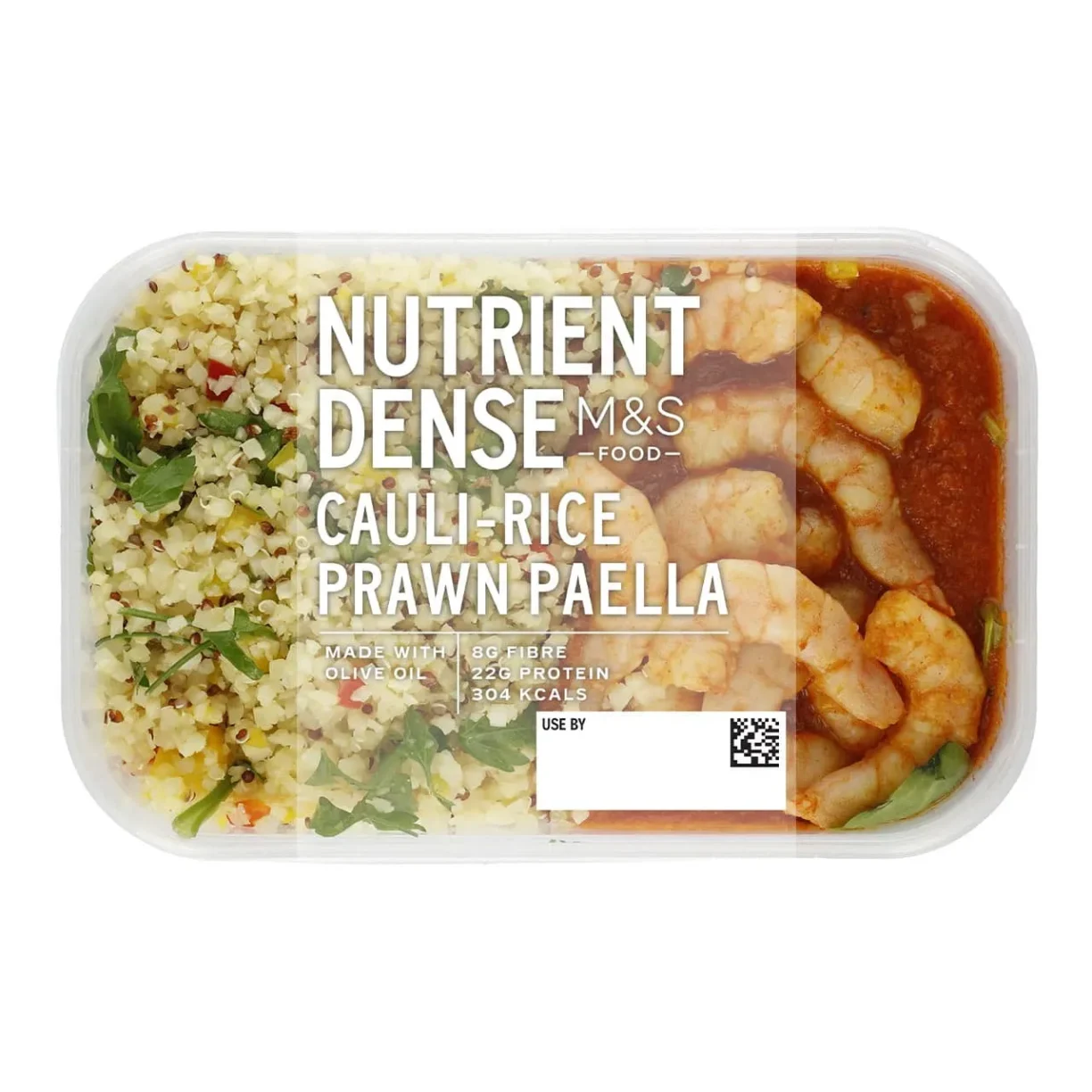
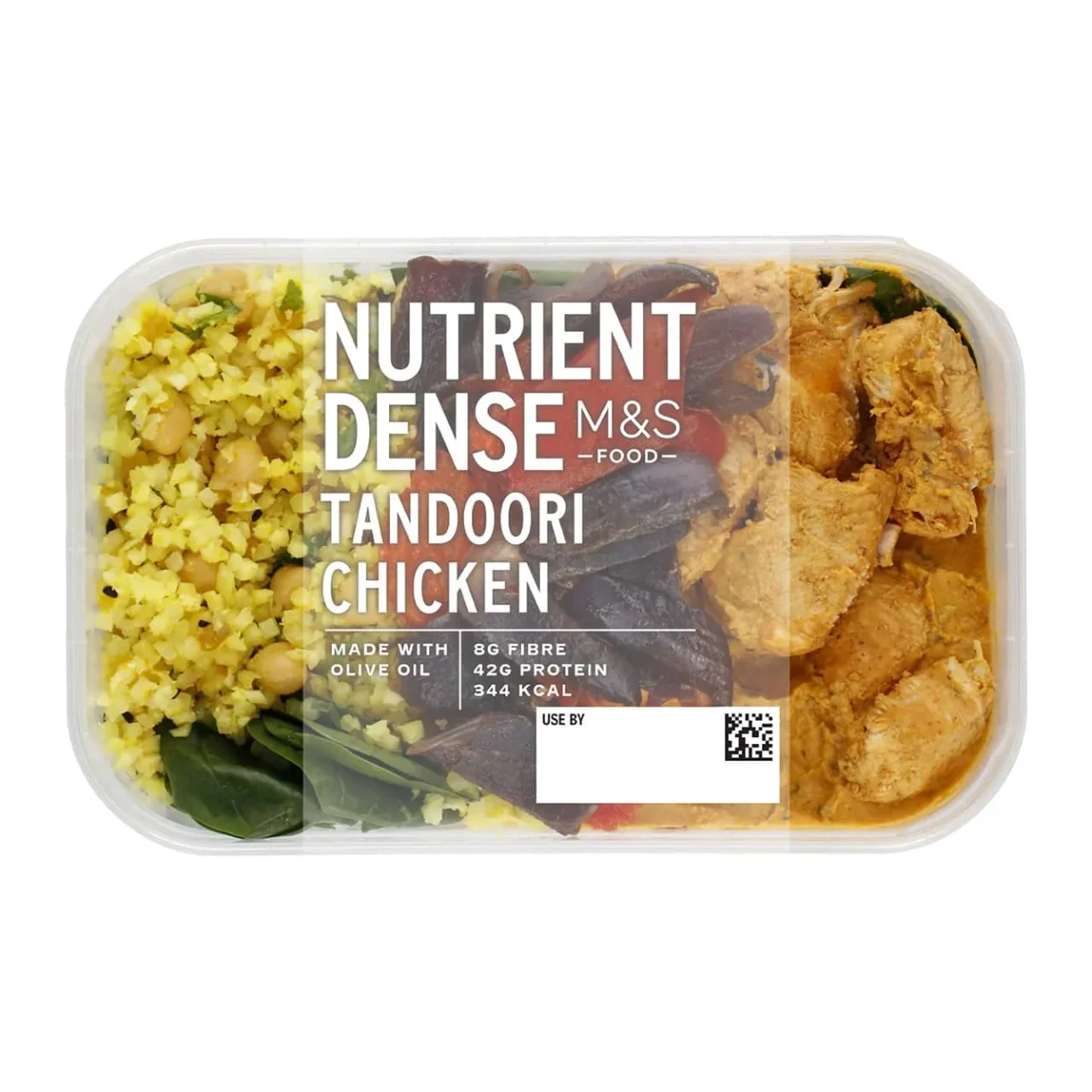
This is where the M&S Nutrient Dense range leans into a reality many brands skirt around: more people are intentionally eating less—sometimes due to lifestyle change, sometimes with medical support—and they still need to cover nutritional basics.
M&S Head of Food Trends, Annette Peters, says: “The Nutrient Dense range is so exciting and is also incredibly useful for anyone trying to hit their nutritional targets. It is also great if customers are reducing their food intake, such as those using weight-loss medication.
We know the use of GLP-1 medications is growing, so it’s more important than ever to ensure that even if people are eating smaller portions, we help provide them with the right level of nutrients. We have challenged ourselves to make products that are denser in nutrients than calories, so every single mouthful is packed full of more of the good stuff we all need.”
She continues: “The importance of us all eating enough fibre cannot be overestimated. As well as helping day to day with effective digestion, long-term it is important to reduce the risk of bowel cancer and so many other diseases.
Products such as our Nutrient Dense Super Seeded Bread, which has 13g of fibre in two slices, are aimed at making it super easy for customers to reach the recommended 30g a day.”
What’s in the range, and when it lands
The M&S Nutrient Dense range is due in M&S Foodhalls from January 5th 2026, featuring salads, meals, bread and a standout drink format: the H₅O shot.
The H₅O shot: what it is
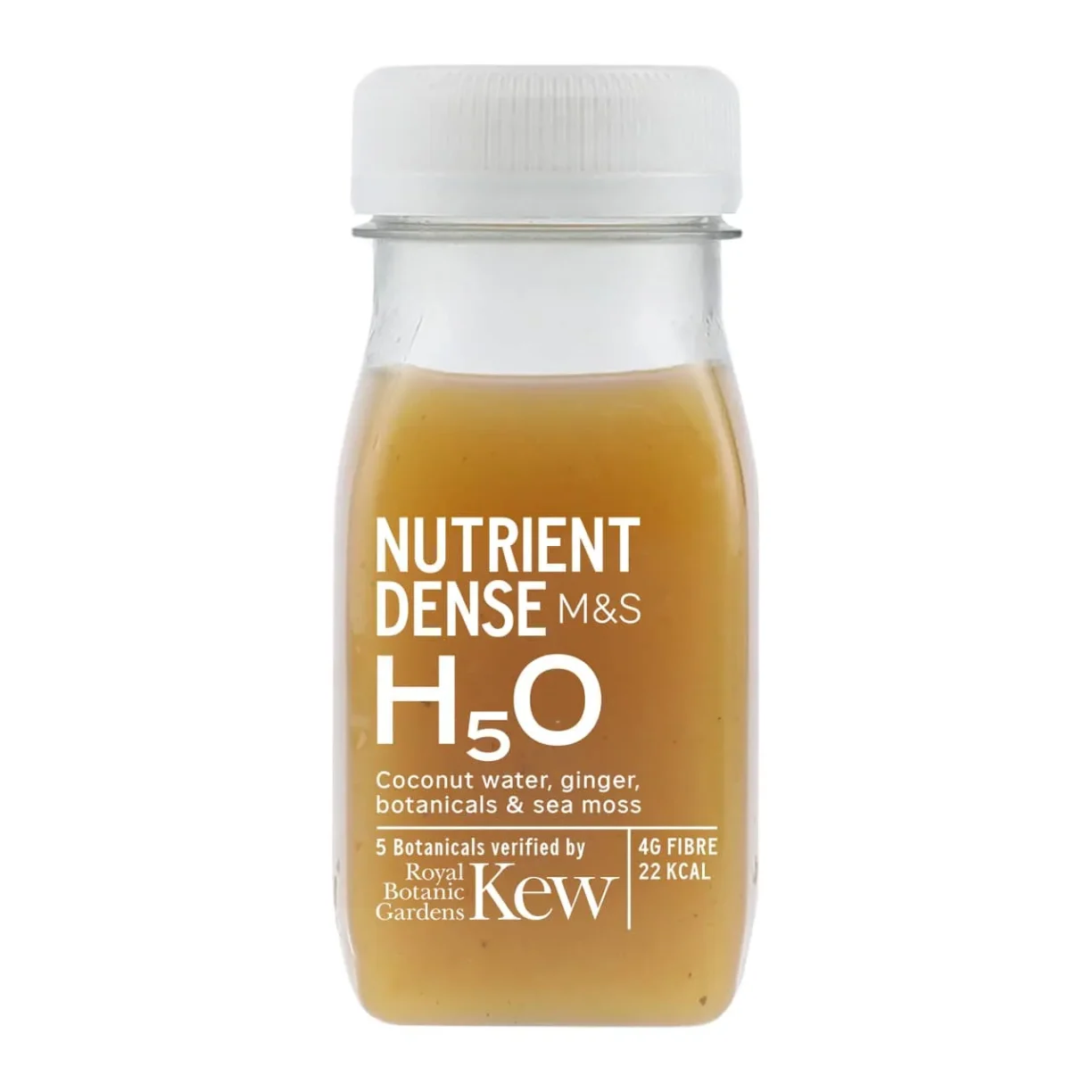
M&S says the H₅O shot is made with coconut water (a source of naturally occurring electrolytes), blended with cold-pressed ginger juice, fruit and vegetable fibres, sea moss, and botanicals including panax ginseng, Japanese honeysuckle, ginger, yellow passionfruit and green cardamom.
It’s called H₅O because of those five botanical ingredients, which M&S says were “selected and verified by scientists at the Royal Botanic Gardens, Kew.” The shot also contains 4g of fibre from baobab and Jerusalem artichoke and is described as high in iodine from sea moss.
Practical advice for people who struggle to eat much
If you’re the sort of person who forgets lunch exists until 4 pm, don’t try to overhaul everything overnight. The old rule still applies: steady wins.
Increase fibre gradually (going from low to high overnight can upset your gut).
Drink more fluids as you increase fibre.
Aim for “fibre anchors”: bread, grains, beans/lentils, veg-heavy meals, fruit.
If you’re using weight-loss medication, consider discussing nutrition basics with a clinician or registered dietitian—smaller portions can mean smaller nutrient margins.
A simple fibre-focused day (M&S says this is not a meal plan)
M&S also shared an example day built around the range to show how quickly fibre can add up:
CRUSH YOUR DAILY 30g OF FIBRE WITH EASE WITH THE M&S NUTRIENT DENSE RANGE (NOT A COMPLETE MEAL PLAN)
BREAKFAST:
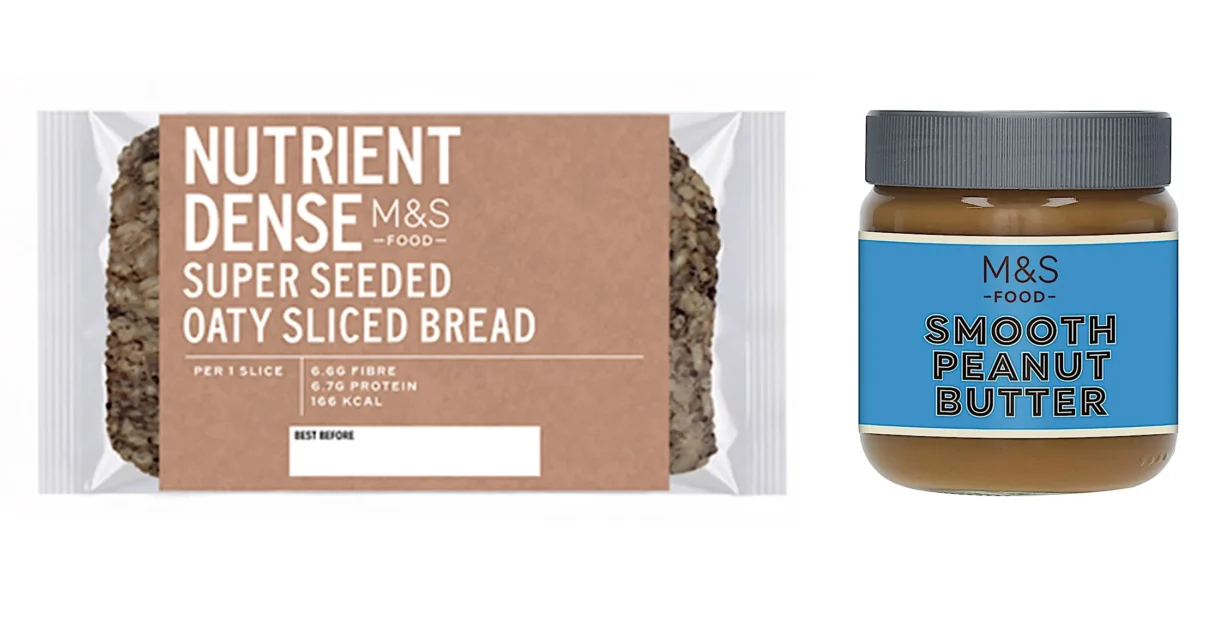
2 slices of Nutrient-Dense Super-Seeded Oaty Bread with peanut butter – 15g fibre
LUNCH:
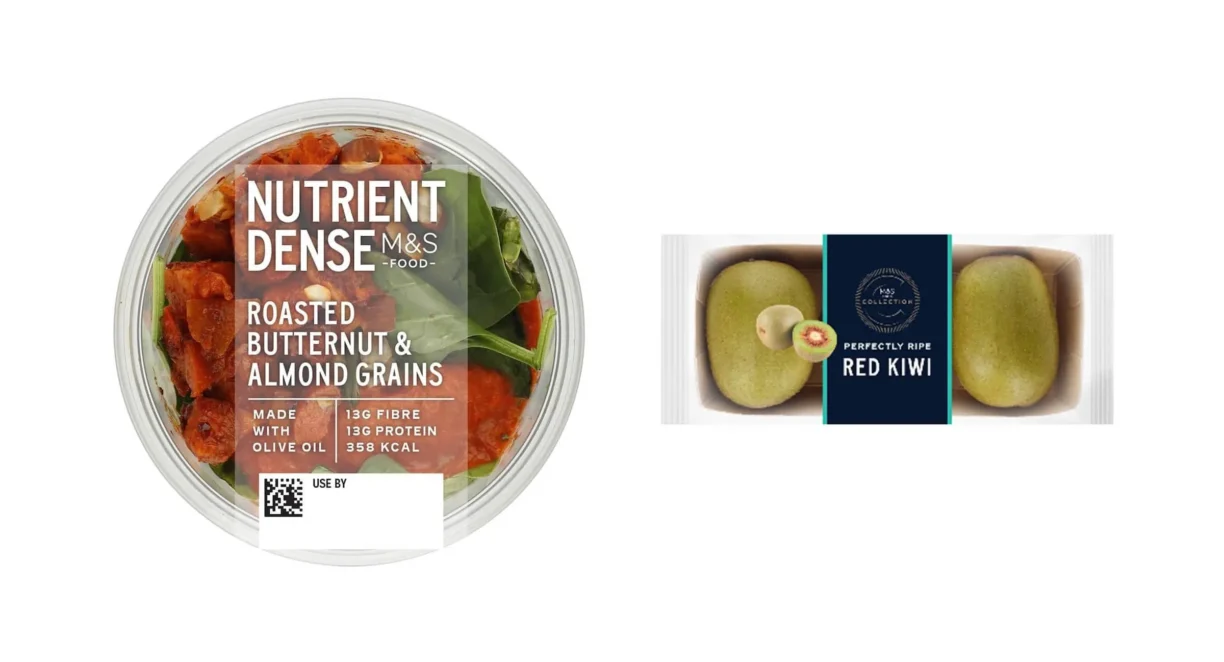
Nutrient-Dense Roasted Butternut & Almond Grains Pot – 13g fibre
1 M&S Red Kiwi Fruit – 2g fibre
DINNER:
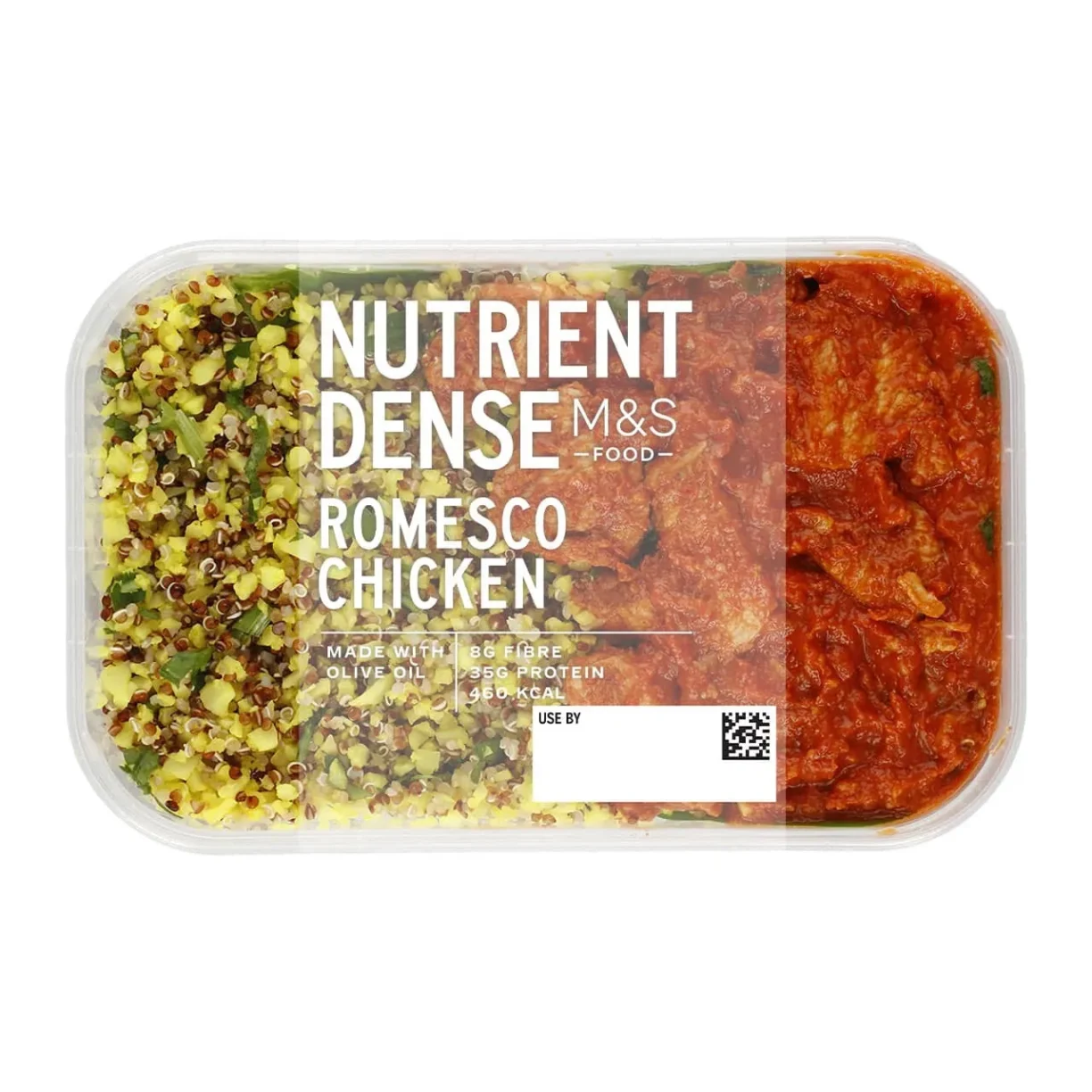
Nutrient-Dense Romesco Chicken – 8g fibre
Bottom line
The pitch behind M&S Nutrient Dense is straightforward: if you’re eating less—by choice, by schedule, or by circumstance—your food has to do more work. If the range tastes as good as it’s meant to, it could be a helpful on-ramp for people who want higher fibre and better micronutrient coverage without turning every meal into a project.
All
🥤 Drinks
🥗 Salads
🍗 Mains
🥣 Snacks
🍫 Desserts
🍞 Bakery
🥗
Satay Chicken, Black Rice & Mango Salad
Salad
🥗
Salmon & Green Goddess Crush
Salad
🥣
Dukkah Chicken & Five Bean Houmous
Snack / Protein pot
🥣
Cauliflower Shawarma & Five Bean Houmous
Snack / Plant-based
🥣
Roasted Butternut & Almond Grains Pot
Grains pot
🥣
Nutty Super Whole Food
Snack
🍞
Super Seeded Oaty Bread
Bakery
🫓
Super Seeded Crackers
Bakery
FAQs
What does “nutrient-dense” mean?
Foods that provide more vitamins, minerals, fibre, protein and healthy fats relative to calories.
Why is fibre intake important?
Fibre supports digestion and is linked to better long-term gut health outcomes; many people fall short of 30g/day.
Who is the M&S Nutrient-Dense range aimed at?
People with low appetite, busy routines, or those eating smaller portions—including some using weight-loss medication.
When is the range available?
It launches in M&S Foodhalls on January 5th 2026.