
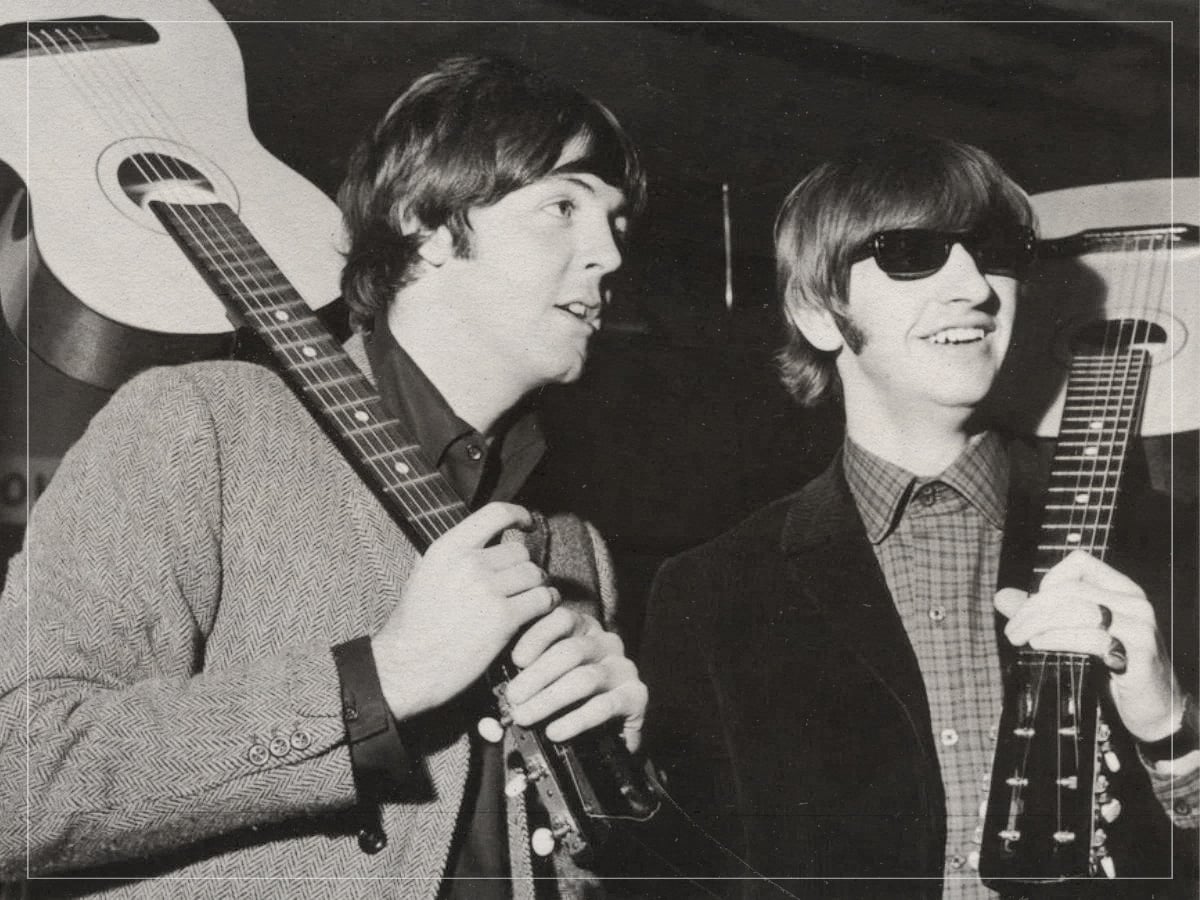
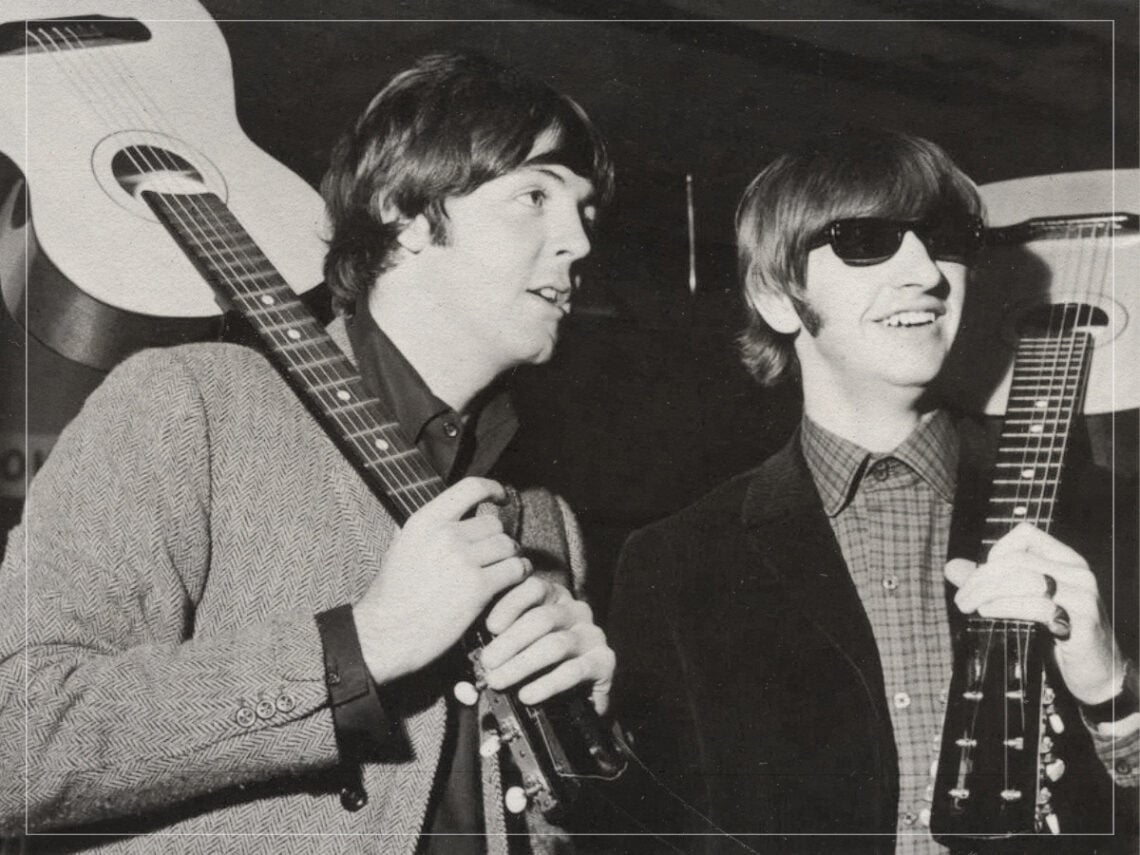
(Credits: Far Out / Alamy)
Thu 1 January 2026 16:25, UK
When the curtain was coming down on The Beatles, Paul McCartney knew they had to go out with a bang.
Although Let It Be was the last album completed before the quartet broke up in April 1970, the final album they recorded was 1969’s Abbey Road. Notably, the second side of Abbey Road is comprised of an extended medley of songs that affirmed that the group still had it, whatever magic ‘it’ was, despite things seemingly winding down in despair.
Composed by Paul McCartney, the conclusive song of this medley is the aptly titled ‘The End’. Credited to the Lennon-McCartney partnership, the song arrived at a significant moment, given that it was the final song all four band members recorded collectively. As is well-known, the time spent together in the studio became increasingly diminished as the interpersonal relationships started to fray, and their energy levels finally waned.
In frontman John Lennon’s final interview before he was killed in December 1980, compiled into David Sheff’s book All We Are Saying, he unfalteringly reflected on ‘The End’, explaining, “That’s Paul again, the unfinished song, right? We’re on Abbey Road. Just a piece at the end.”
Before ever so slightly more poignantly adding, “He had a line in it [sings], ‘And in the end, the love you get is equal to the love you give [sic],’ which is a very cosmic, philosophical line. Which again proves that if he wants to, he can think.”
 Cheers. Ringo Starr and The Beatles. (Credits: Far Out / Alamy)
In the 2021 project The Lyrics: 1956 to the Present, McCartney also looked back on the couplets his old songwriting partner backhandedly praised, when he said: “This is one of those couplets that can keep you thinking for a long time. It may be about good karma. What goes around comes around, as they say in America.”
Apart from the candid sentiment McCartney imbues in the track, it is also consequential for another reason. ‘The End’ features the only drum solo recorded by Ringo Starr with the band, in what McCartney has since described as a “token” feature, given the drummer’s well-recorded aversion to such creative turns.
In Mark Lewisohn’s 1988 reference book, The Complete Beatles Recording Sessions, McCartney explained how the Ringo solo materialised. He said: “Ringo would never do drum solos. He hated drummers who did lengthy drum solos. We all did.”
He continued, “And when he joined The Beatles, we said, ‘Ah, what about drum solos then?’, thinking he might say, ‘Yeah, I’ll have a five-hour one in the middle of your set,’ and he said, ‘I hate’ em!’ We said, ‘Great! We love you!’ And so he would never do them. But because of this medley, I said, ‘Well, a token solo?’ and he really dug his heels in and didn’t want to do it.”
However, the point of the medley, in part, was to reflect all aspects of the band in a single flourish, and a drumming solo was the most perfunctory way to bring Ringo to the fore. So, McCartney proved persistent. “After a little bit of gentle persuasion, I said, ‘Yeah, just do that, it wouldn’t be Buddy Rich gone mad,’ because I think that’s what he didn’t want to do,” he recalled.
Interestingly, Starr’s solo on ‘The End’ was recorded with 12 microphones placed around the drum kit – when he went for it, he really went for it. In Kenneth Womack’s The Beatles Encyclopedia, it is reported that the drummer copied a section of Ron Bushy’s performance on Iron Butterfly’s proto-metal classic, ‘In-A-Gadda-Da-Vida’ for the recording, holding no punches over how ambitious he should pitch his only solo in the Fab Four.
The take that Starr performed the solo on also had guitar and tambourine as the accompaniment, but they were muted during the mixing stage, thus giving the effect of a solo cut in isolation. This means that even by giving in to McCartney’s request, Ringo still just about had it his way.
Why was Ringo so reluctant to solo?
In short, Ringo’s attitude was, ‘Why should I’? As he once said himself, “At the beginning, because of the songwriters, which is a very powerful force in The Beatles and John and Paul mainly as the singers and I was just playing the drums and nodding my head so I didn’t get noticed.”
Continuing: “You look at Charlie Watts in the Stones, and there is nothing really said, and he’s an amazing drummer, but the drummers tended not to get the writing. The drummer is the driving force, but when you have songwriters of that calibre and singers who much prefer to talk about the songs and the writers.” After all, why would you want someone to thrash their way through ‘Blackbird’?One of his finest assets as a drummer is that he recognised his key place in the composition. And that’s even aptly displayed in the subtle way he does eventually solo in a manner that complements the mix rather than showing off in ‘The End’.
Related Topics
The Far Out Beatles Newsletter
All the latest stories about The Beatles from the independent voice of culture.
Straight to your inbox.