
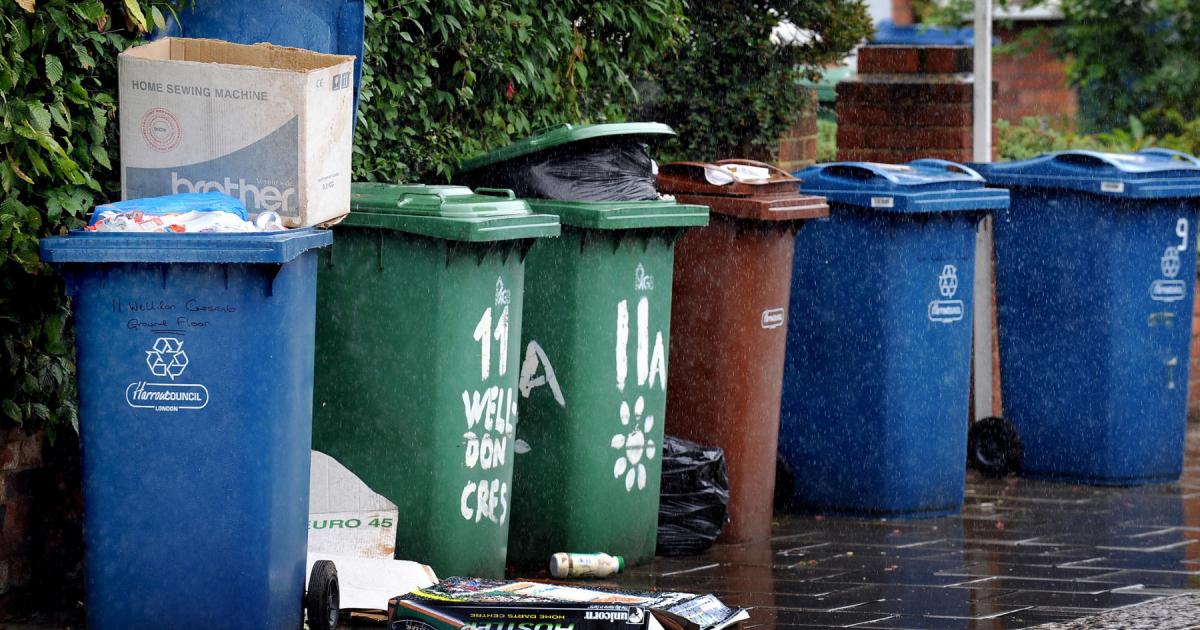
This is due to the government’s new Simpler Recycling initiative, which will come into force in April.
All local councils will be required to collect four different types of waste separately, meaning every household will now have four different bins.
These will be split up into:
residual (non-recyclable) waste
food waste (mixed with garden waste if appropriate)
paper and card
all other dry recyclable materials (plastic, metal and glass)
What are the current rules for recycling?
Currently, local councils have different approaches for recycling, as some have an all-in-one policy which requires no separation at all.
On the other end of the spectrum, some require glass, metal and plastic to be kept separate.
Additionally, some councils may already be complying with the new rules, so households in those areas won’t see any changes.
The new changes for the four different types of waste will aim to simplify the system and make it consistent across England.
The Department for Environment, Food and Rural Affairs (Defra)’s policy paper on the changes said: “We will make recycling easier: citizens will be able to recycle the same materials across England, whether at home, work or school, and will no longer need to check what is accepted for recycling in their local area.
“A universal standard will ensure that everything that can be collected for household recycling is collected in every region.
“Simpler Recycling will also end the ‘postcode lottery’ of bin collections in England, whereby councils collect different materials for recycling, causing confusion for households.
Recommended reading:
“We will maintain flexibility for local authorities to deliver these changes in the most appropriate way for their area.”
Additional changes are also expected to be introduced by the government by March 2027, expanding the list of materials which waste collectors will have to collect.
From this date, waste collectors will also be required to collect plastic film packaging and plastic bags along with plastic recycling.