
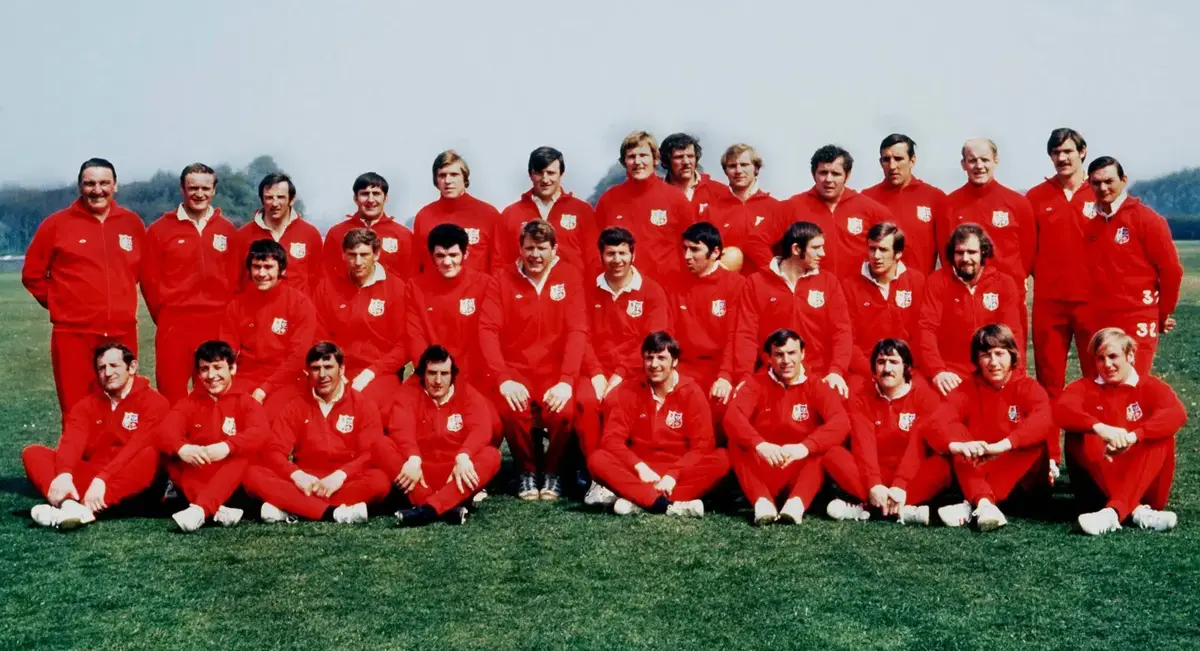
Every great rugby side is remembered for more than results. Some changed how the game was played, others gathered once-in-a-generation talent and bent matches their way through force of will.
Join RUCK’s Instagram broadcast channel and get the latest rugby news straight to your phone.
Balancing legacy with ability, here are teams that dominated their era and still feel relevant now. They weren’t just successful in their moment, they left fingerprints on the sport that never quite faded.
10 1973 Barbarians
It was meant to be a celebratory fixture at the end of the All Blacks’ tour. Instead, it became the most famous invitation match rugby has ever seen. Played in Cardiff, this Barbarians side brought together a remarkable collection of talent, including a core of players who had beaten New Zealand with the Lions two years earlier.
What followed felt less like a Test and more like rugby at its purest. Gareth Edwards’ try in the opening minutes set the tone and still stands as the game’s defining image. Phil Bennett ran the show with calm authority, while the pack matched the All Blacks physically. Winning 23–11, the Barbarians handed New Zealand their first defeat against the club.
9 1974 British & Irish Lions
South Africa was an unforgiving place to tour, and few visiting teams even hoped to survive intact. This Lions squad went further, leaving unbeaten. Led by Willie John McBride, they won 21 of 22 matches and never lost a Test, earning the nickname “The Invincibles.”
The physical edge of the forwards defined the tour, backed by a refusal to be intimidated in hostile environments. It was also a deeply pragmatic side, happy to win ugly if required. South Africa had dominated at home for years and were still widely feared, even if they had not played Test rugby for a while. The Lions dismantled that aura.
8 1995 South Africa
This Springbok side carried more than tactical expectations. Hosting the World Cup so soon after rejoining international sport, they became symbols of a country trying to redefine itself. Seeded ninth, they were not favourites, but they grew into the tournament match by match. Victories over Australia and France showed resilience and control, while the final against New Zealand was tense and brutal.
Joel Stransky’s drop goal in extra time sealed the win, but the lasting image came after. Nelson Mandela, wearing the green jersey, handed the trophy to Francois Pienaar in a moment that went far beyond rugby. On the field, this was a disciplined, physical team that executed its plan under pressure.
7 1984 Australia
Australian rugby changed on one tour of the British Isles. Before 1984, the Wallabies were respected but inconsistent. By the end, they had completed a Grand Slam and announced themselves as a genuine world power. The style was bold and confident, built around Mark Ella’s control at fly-half and a backline that played with rare fluency.
Records fell quickly, including scoring 100 Test points across the Home Nations. Wales conceding a push-over try in Cardiff summed up how unsettling this team could be. What made the tour special was its balance: ambition without recklessness, flair grounded in smart decision-making.
6 2002–2003 England
This England team had been building for years, and by the time the World Cup arrived, they carried the weight of expectation better than any side before them. Their strength came from control: a dominant pack, relentless defence, and a kicking game that squeezed opponents dry. Jonny Wilkinson was the public face, but this was a squad effort, driven by leaders across the field.
The final against Australia was tense, attritional, and finely balanced. Wilkinson’s extra-time drop goal is replayed endlessly, but it worked because England had imposed themselves for 80 minutes already. Winning the World Cup made them the first northern hemisphere champions.
Like this:
Like Loading…