
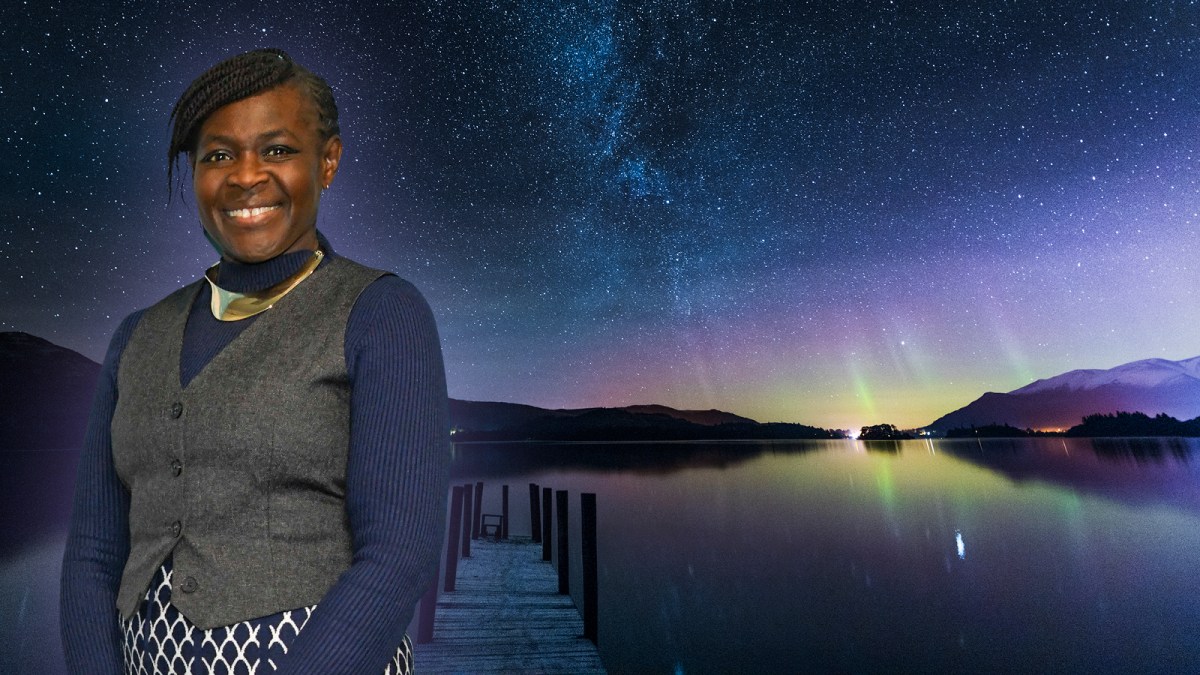
Maggie Aderin-Pocock is the space scientist and BBC Sky at Night presenter who gave the 200th anniversary series of the Royal Institution Christmas Lectures (on iPlayer now)
Just look up. Most of us rush through our days without paying attention to the quiet spectacle unfolding above us. I find it deeply calming to know that the stars have witnessed every moment in human history. When I was a child in London I would stargaze with my father from our flat. Even as his eyesight began to fade, we continued our ritual: I described the constellations I could make out and he shared memories of the brilliant African skies of his youth. Now I stargaze with my daughter and we create dot-to-dot pictures of the constellations — such as those shown overleaf.
What do I need?
My neighbours are used to seeing me in my garden in wellies and a dressing gown. But if you’re lingering outdoors at night, dress warmly. Take a torch too — one with a red light option is less disruptive to night vision than white light. For comfort while gazing up, a deckchair works wonderfully, but I sometimes like to lie on my daughter’s trampoline — I find its gentle bounce strangely soothing.
I used to rely on star charts and planispheres to navigate the heavens, but now there’s a wealth of apps that can identify celestial objects the moment you point your phone at them. Lately I’ve been using Star Walk 2.
If you want to go beyond naked-eye observing, consider a solid pair of astronomical binoculars (which start at about £50) before leaping to an expensive telescope. A set with a magnification of seven to ten times and an aperture of at least 35mm is a good starting point.
What do I look for? The moon 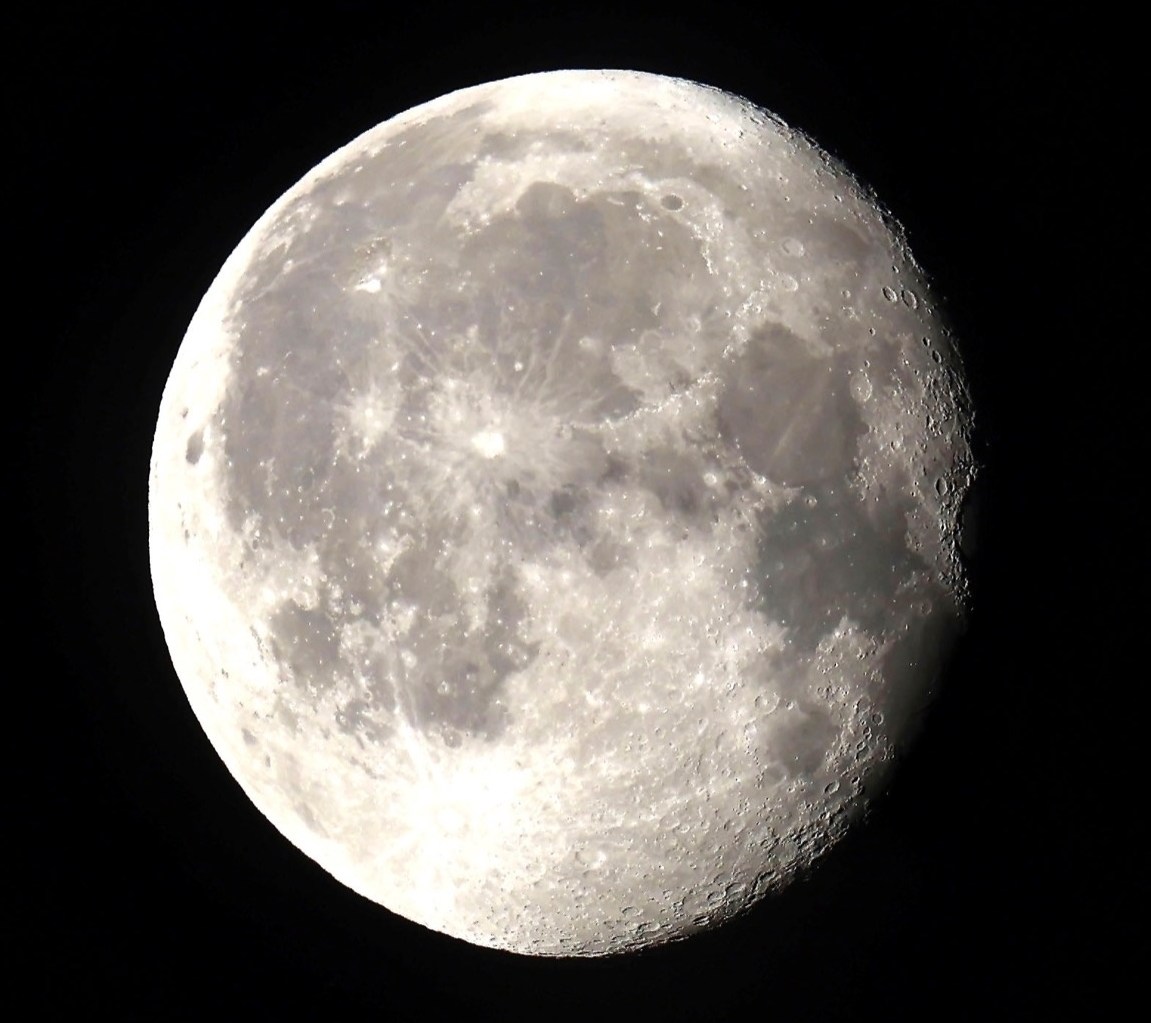
As a self-certified lunatic, I always make the moon my first recommendation for new observers. It’s reliably visible and its shifting phases offer something different to notice every night. Tonight it’s in its “waning gibbous” phase (above). Though waning (decreasing from full), it’s still 98 per cent illuminated. “Gibbous” means bulging.
Stars and planets
On a clear night in a good location, as many as 3,000 stars can be seen. Stars twinkle because their light travels so far before hitting Earth’s atmosphere. Apart from Uranus and Neptune, the planets of our solar system are also visible to the naked eye but they hardly twinkle at all. Through binoculars or a telescope stars appear as pinpoints of light, whereas Mercury, Venus, Mars, Jupiter and Saturn look like discs.
This month is a fantastic time to observe Jupiter. It reaches peak brightness on January 10 on its closest approach to Earth while opposite the sun. You can see it with the naked eye, but with binoculars you might pick out its four largest moons.
Man-made structures 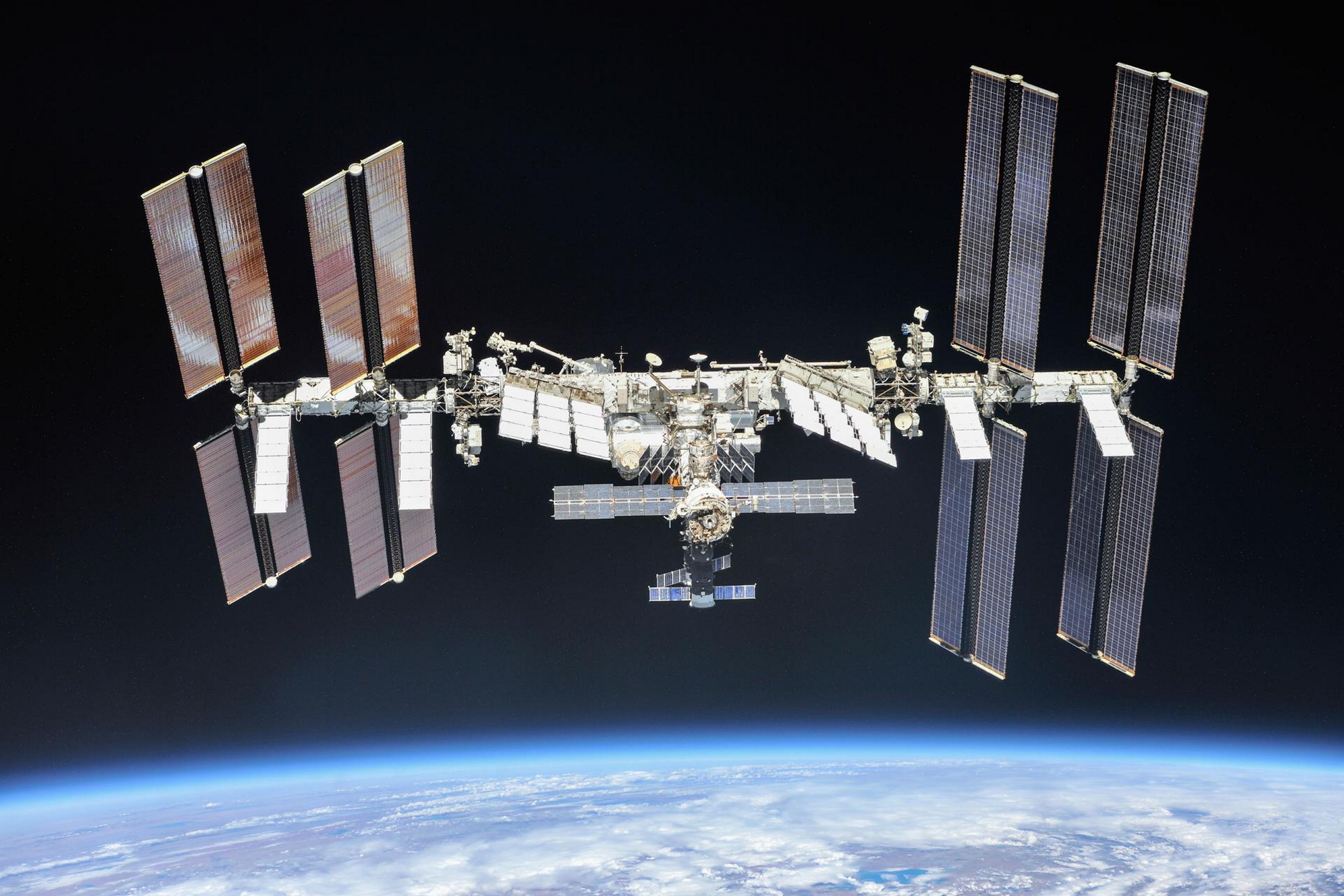
To spot the International Space Station — which currently has seven astronauts floating about in it — can be quite a thrill. Sunlight reflecting off its solar panels (above) enables us to see it sail overhead as a bright dot. To find out when it passes where you live, download the Spot the Station app from Nasa’s website.
You might make out Starlink satellites reflecting sunlight too — especially when they’ve just been launched in a “train” and look like a string of bright lights before they disperse. Websites such as satellitemap.space show their locations.
Comets
These are small bodies made of dust and ice that travel around the sun in large elliptical orbits. Although they measure only about six miles across on average, their tails can stretch 500,000 miles as they approach the sun and they’re breathtaking to see.
Comet 24P/Schaumasse is our current comet visitor, making its return after eight years away. Its next close approach to the sun, called perihelion, will be on January 8. Around then, it should be bright enough to see with a good pair of binoculars. You’ll find it moving from just south of the star cluster Melotte 111 into the constellation Boötes. If you want a handy reference, look near the bright star Arcturus.
Meteor showers and shooting stars
A shooting star is a misnomer — streaks of light across the sky are caused by particles, some as small as a grain of sand, burning up in Earth’s upper atmosphere. A meteor shower occurs when the Earth passes through a fixed cloud of this debris, usually left behind by the passing of a comet or asteroid (a rocky, metallic object). The Quadrantid meteor shower, renowned for its intensity, peaks tonight, when you may see up to 120 meteors an hour. The Quadrantids appear to radiate from the constellation Boötes, near the Big Dipper (part of Ursa Major).
Northern lights or aurora borealis
These dazzling light shows happen when charged particles from the sun collide with Earth’s magnetic field and upper atmosphere. We see them as shimmering colourful waves. The sun is coming to the end of its peak phase of activity, called solar maximum, during its roughly 11-year cycle. This is when the auroras are brighter and reach further south than usual — even London might get to witness some of the magic.