
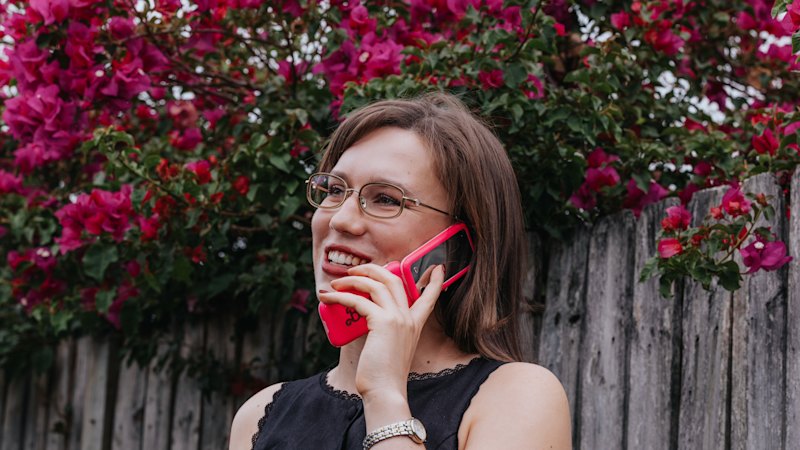
Long ditched her iPhone earlier this year because she felt she was wasting her life on a phone addiction.
“I’d established that really the only reason that we have phones is to talk to people.
“And I was like, well, what is something that I could replace with this, you know, slightly devilish piece of technology that still fulfils that function?”
Long is proud of her quirky phone, bringing it to her work as a paralegal.
She gets some questions, of course, but says most people envy her self-restraint.
University of Sydney PhD student Isaac Gill decided to ditch his smartphone for a black Nokia after years of sometimes deleting his social media apps, or turning his notifications off.
Loading
“Then eventually I read this book that really pushed me to do the switch,” he says, urging others to also approach the change slowly.
“It takes, I think, years to comfortably do it.”
For his first week with a flip phone, Gill also carried his iPhone to fill in any unexpected gaps, such as two-factor authentication.
While both Gill and Long recommend dumb phones, they are realistic. Both have taken their smartphones on international holidays.
Online, Generation Z’s love of dumb phones has been criticised as “performative” and attention-seeking.
Fares thinks these critics are missing the point.
“In all of these trends, there is consistently a performative element, and that is fine,” he says. “As long, though, as the push is towards something healthy.”
Start the day with a summary of the day’s most important and interesting stories, analysis and insights. Sign up for our Morning Edition newsletter.