
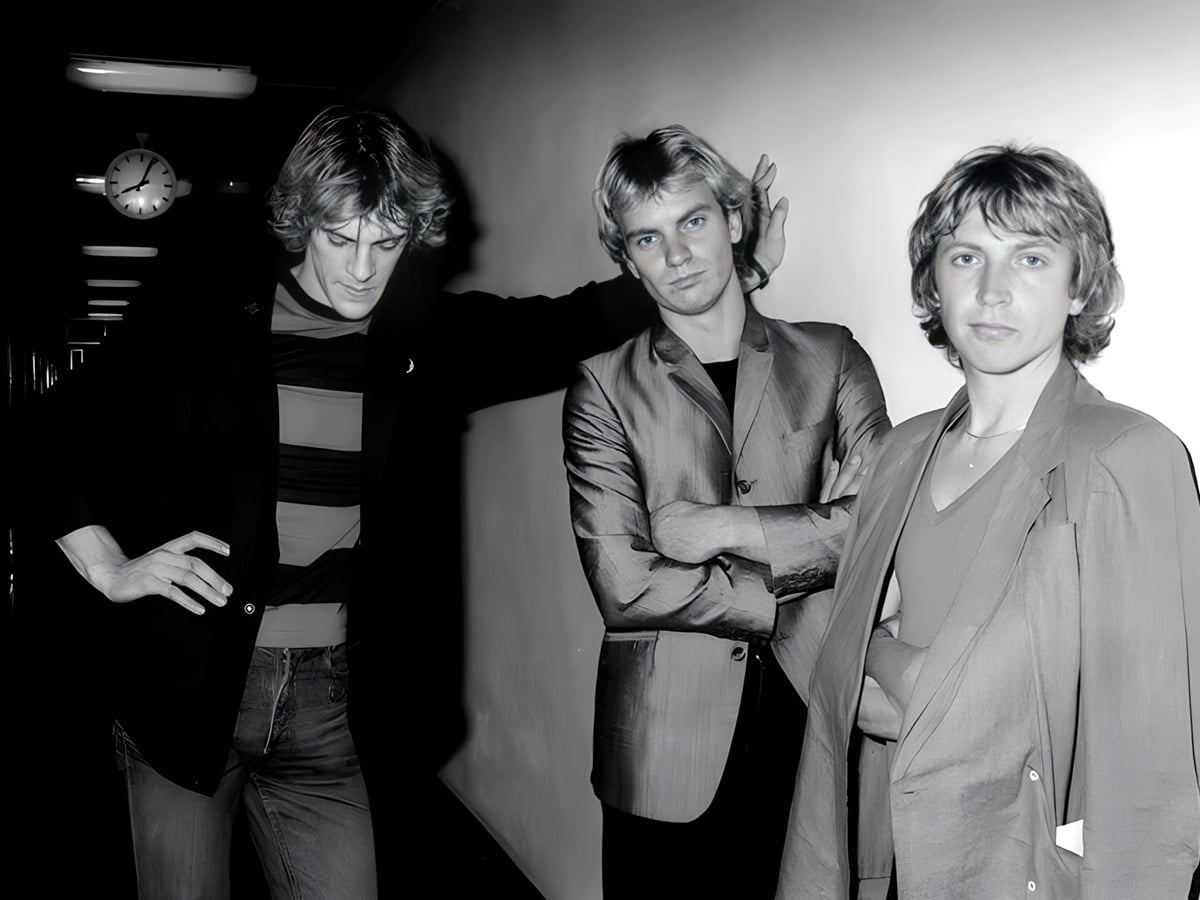
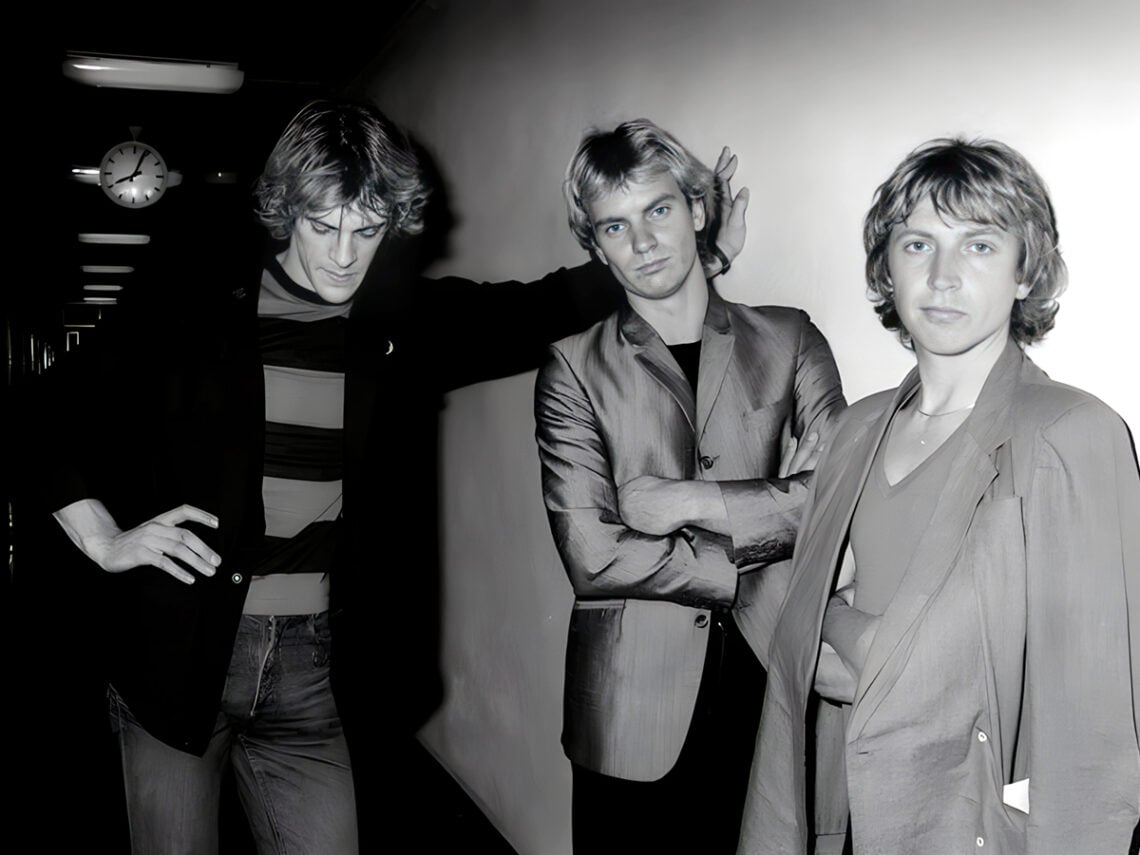
(Credits: Alamy)
Sun 4 January 2026 12:53, UK
Every member of The Police tended to be a virtuoso in their way. Being a trio, most people would have to do a little extra to hold up their end of the sound lest everything fall apart. Although Stewart Copeland has carved himself out as one of the greatest drummers of his generation, he tended to be hard on himself when making the first handful of Police recordings.
Since most of their career was made from the early punk scene, most of the material on albums like Outlandos D’Amour featured songs that were nervier than they would become, with Copeland channelling his punk fury into songs like ‘Next To You’. On the second album, Sting came through with a song that ultimately knocked him out with ‘Message in a Bottle’.
When asked about the song later, Copeland described the track as one of his favourite Police songs, telling uDiscover Music, “‘Message’ has some of the favourite ingredients of The Police. It has a driving beat. It’s one of the aggressive ones. It has all of the signature elements of the band that somehow come together into that one tune.”
The track has become a classic for radio play. The kind of tune you expect to hear in the background of every motion picture you have ever watched, for the group it represented another moment when they broke into the mainstream with aplomb. But it also holds a degree of wincing embarassment for Copeland.
On the raw performance, though, Copeland was embarrassed by the original take he laid down for the song, telling Ultimate Classic Rock Nights, “There’s some things I woulda done a little different now. At the end of ‘Message in a Bottle’, there’s too many drum overdubs. It’s such a great song, and then it comes to the end, and I switch over to another station because I screwed up.”
 Stewart Copeland in full flow. (Credits: Far Out / Alamy)
When listened to in the proper context, that overplaying that Copeland is talking about is one of the signature elements of the tune. Since Sting’s melody is fairly sparse, gliding over the rest of the band, Copeland is the kinetic energy that holds the whole thing together as Andy Summers lays down the now-iconic guitar riff.
If Copeland had his way, Summers would have been in charge and told him to reel things back, continuing, “Where was Andy at that moment? He was a really good filter for all that, because we all overdid it; and then usually Andy would say, ‘No, too much. Less is more.’ And he was right, usually. Where was he when I needed him at the end of ‘Message in a Bottle’?”.
Then again, that kind of creative tension in the studio fueled the band in Copeland’s mind. When discussing the group’s chemistry, Copeland would say, “Although we loved each other and admired each other dearly, it was never an easy fit. I often compared the band to a Prada suit made out of barbed wire. We were happy with the results, but we got there through pain.”
That one bit of overplaying on Copeland’s part would soon become the springboard for where things were headed. Over the next three albums, the band would begin experimenting with every genre under the sun, from reggae-style grooves to the sounds of world music, before making the greatest pop music of the 1980s on albums like Synchronicity. Copeland could quickly go back and rerecord the song if he wanted to, but building a legacy with the tune doesn’t necessarily hurt.
But, what does the song mean?
A simple but effective metaphor, the tracks put a man stranded on a deserted island only to find a message in a bottle to prove that he isn’t all on his own. This then increases when millions of bottles show up on the shoreline.
Sting said of the lyrics, “I think the lyrics are subtle and well-crafted enough to hit people on a different level from something you just sing along to. It’s quite a cleverly put together metaphor. It develops and has an artistic shape to it.”
Sting wrote in Lyrics By Sting: “I was pleased that I’d managed a narrative song with a beginning, a middle, and some kind of philosophical resolution in the final verse. If I’d been a more sophisticated songwriter, I would have probably illuminated this change of mood by modulating the third verse into a different key. But it worked anyway.”
Related Topics