
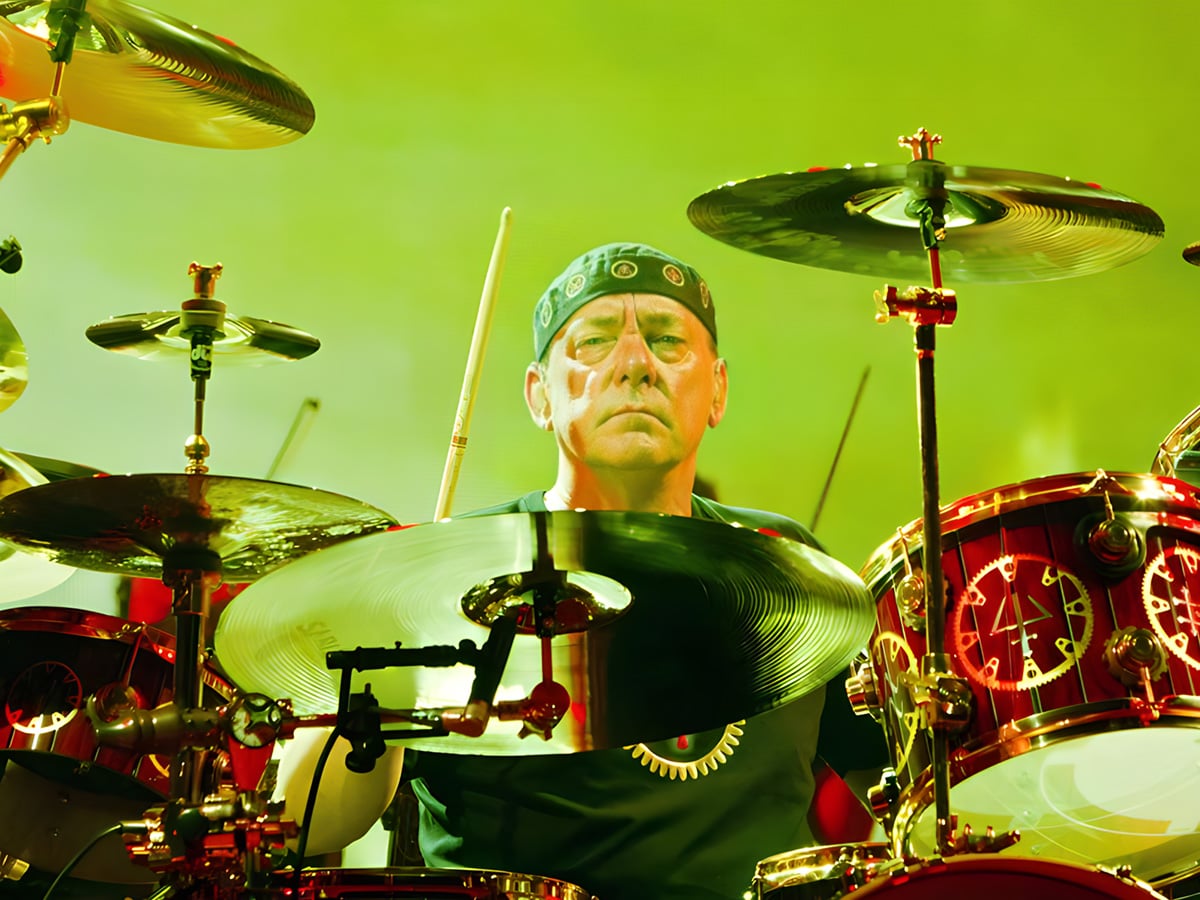
(Credits: Alamy)
Sun 4 January 2026 15:30, UK
Any drummer knew that it was going to take a lot for anything to impress Neil Peart.
Even in a genre that birthed powerhouses like John Bonham and Keith Moon, Peart stood apart from everyone by playing everything with the kind of laser-precision that made you wonder if Rush actually hired a machine behind the drumkit. That kind of player doesn’t normally give out praise for just anybody, but listening to him talk about his craft, ‘The Professor’ was far more humble than nearly any of his colleagues.
Whereas most people get into the industry for wealth or fame, all Peart wanted was to be a good musician at the end of the day. He figured that his job was done when he served the song to the best of his ability, which probably explains why a lot of his favourite drummers run the gamut from being absolute monsters behind the kit to the kind of percussionists that leave space and know exactly when to play.
That’s usually what separates a prog rock drum aficionado from a drummer like Ringo Starr. The former might have a thousand chops and can come up with the greatest tricks anyone has ever seen, but a lot of it comes down to the way that Starr plays the drums for the rest of the band, which makes him one of the best in the world. He’s always listening to what his fellow players are doing, and Peart’s own favourites were the ones that could add some sonic texture to the song no one would have anticipated.
Phil Collins and Bill Bruford may have been the gold standard for that in the progressive world, but there were also the biggest names in jazz who had come before them. Buddy Rich and Gene Krupa were among Peart’s biggest influences when he first began working out the mechanics of drumming, but a player like Omar Hakim came into every studio with a much different mindset when they stepped behind the kit.
In the age of jazz fusion, Hakim already had his credentials solidified in Weather Report. Being in the same band that introduced Jaco Pastorius to a wider audience was already going to be loaded with the greatest technicians in the field, but a lot of what Hakim was doing was having a conversation ith his fellow players, usually filling in the gaps and creating the kind of musical cocktail that no one else would have ever thought of had they gone with a typical rock and roll approach.
Most drummers would have seen that as competition, but all Peart remembered was falling in love with Hakim from the first time he started hanging out with him, saying, “Omar and I first met at the Buddy Rich scholarship concert in ’91. He is one of those people who I felt an immediate affinity for. I love his playing—the fluidity of it. It’s smooth and yet it has a snappy excitement to it, and he plays with such a good feel.”
That fluidity is also half the reason why Peart felt the need to improve after so long in the electronic drumming field. Any drummer can feel stagnant now and again, but the idea of him working with Freddie Gruber to improve his sense of rhythm helped him develop a more sturdy backbone for the band, especially when they began working on their later records like Vapor Trails and Snakes and Arrows.
Hakim was never going to be taking over for Peart any time soon or anything, but learning another musical language was always fascinating for someone like ‘The Professor’. It’s one thing to plateau as an artist, but the idea is always about trying to get better at your craft, whether that’s developing a new genre palette or thinking outside the box when working on a new song.
https://www.youtube.com/watch?v=wlKxy0h1-3Y
Related Topics