
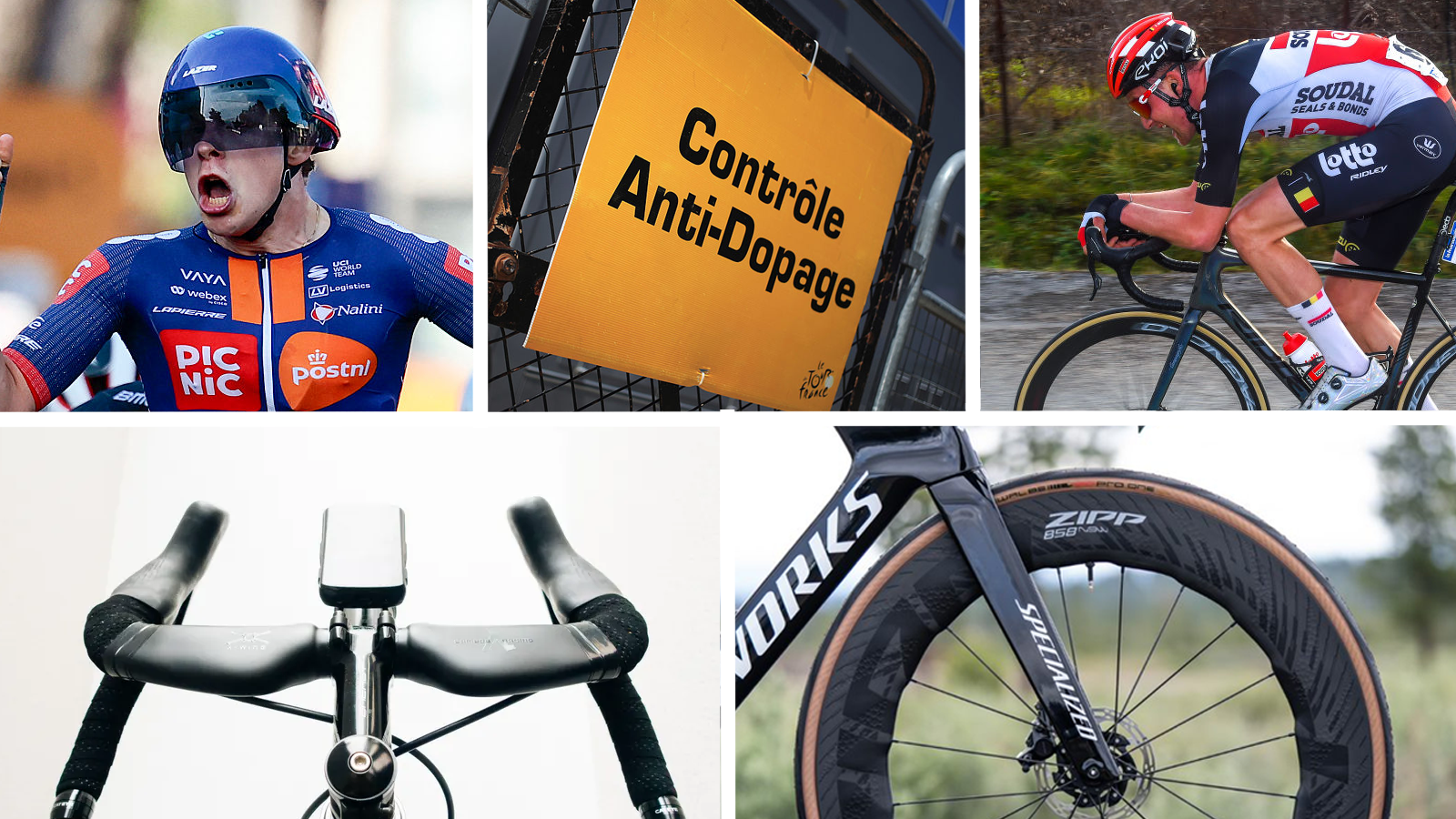
How time flies. Christmas has been and gone, a new year is upon us, and there’s now just a couple of weeks until the WorldTour season kicks off at the Tour Down Under.
January 1st marks the day when teams frantically take to social media to announce their new signings and sponsors, such as EF’s switch to Assos clothing and Remco Evenepoel’s transfer to Red Bull-Bora-Hansgrohe.
You may like
Handlebars
(Image credit: Future)
Starting with handlebars, where the UCI has focussed plenty of attention, making some changes to existing rules and introducing a few new ones at the same time.
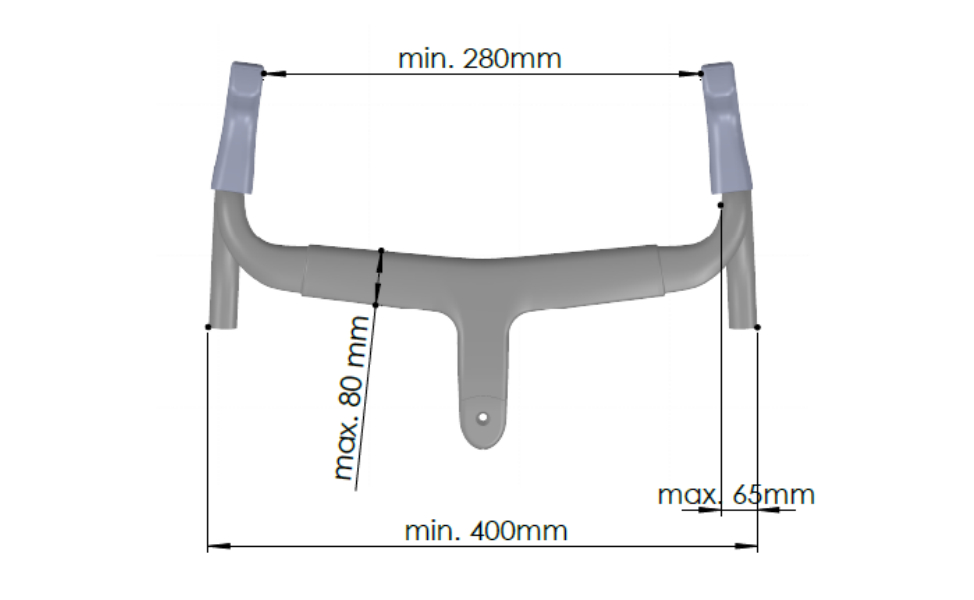
The minimum overall width is now 400mm
You may like
If you measure the width of your handlebars at their widest point – including bar tape – they cannot measure any less than 400mm. This is an increase of 50mm from last year’s 350mm limit, and means some of the more progressive narrow bars used by a select few riders in the peloton will now be deemed illegal.
The gap between your brake levers must exceed 280mm
This rule states “the minimum measurement between the inside of the extremities of the brake levers shall be 280 mm” and thanks to some visual clarification, actually refers to the inner-most point of your shift/brake hoods, rather than the outside of the lever itself.
In slightly clearer English, it means the gap between your brake hoods at their narrowest point must be 280mm or more. This is a new rule and loosely replaces the UCI’s rule on how angled a shifter hood can be (although a 10° limit remains) here.
In the UCI’s initial announcement of this rule in June, it set the limit at 320mm, but riders – and almost everyone else in the industry – pushed back. The International Bike Fitting Institute, for example, issued a statement claiming that they lacked “adequate consideration of human biomechanics and rider safety,” and the UCI later backtracked, narrowing the limit to the 280mm now in force.
The ‘box’ in which your drops are designed mustn’t exceed 65mm wide
This one’s a little more complicated to picture, so we’ll include the UCI’s diagram below, but in simple terms, the ‘drop’ portion of your handlebars cannot exceed more than 65mm laterally.
Image 1 of 2
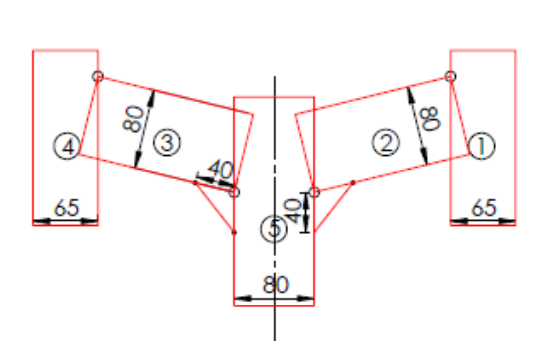 Sections 1 and 4 shown here affirm that the lateral width of the ‘box’ into which a handlebar’s drop can fit, when viewed from above, is a maximum of 65mm wide. (Image credit: Future)
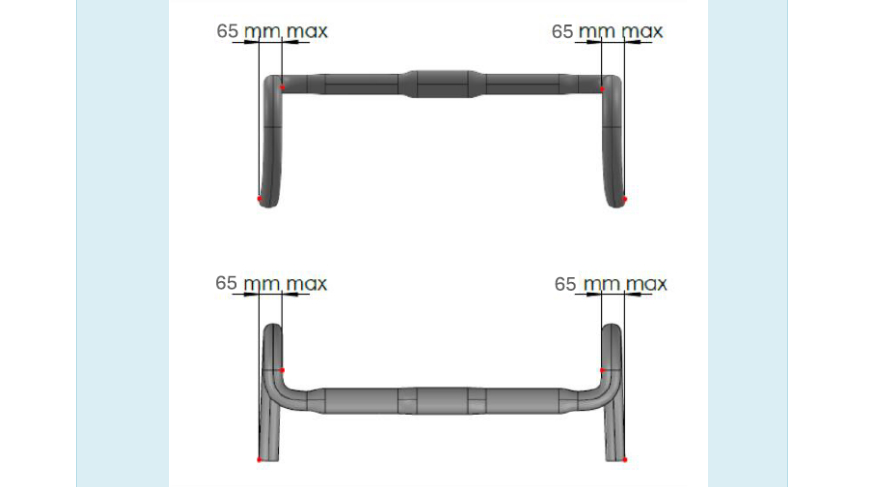 Here, another diagram shows the limit’s application more clearly(Image credit: Future)
This is a new limit, while track handlebars are given an 80mm limit. It effectively limits riders from running wildly flared handlebars. Not that they would be able to, given the new 280mm rule above.
Wheel depth
(Image credit: Future)
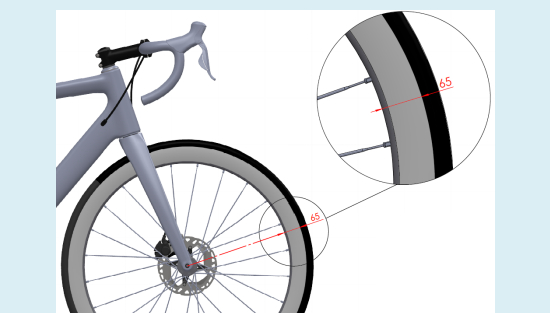
Your rims cannot exceed 65mm deep, except in time trials
This one’s fairly simple, but when measuring the depth of your wheels’ rims, they cannot exceed 65mm at any point.
This means wheels like Swiss Side’s Hadron³ 680 wheels at 68mm deep, and Zipp’s 808 at 80mm, are no longer legal in UCI-sanctioned bunch race events.
The rule also applies to wheels with a wavy profile that exceed 65mm at any point, even if their average or lowest depth is below 65mm.
This rule only applies to mass start races, though. Deeper and disc wheels are still permitted in individual time trial and team time trial events.
The UCI has made no secret that it wants to find ways to slow down the riders to make the sport safer, and while not everything the UCI does aligns with this goal, enforcing shallower wheels will make a small difference.
New helmet categories

(Image credit: Getty Images)
Helmets are now categorised as ‘traditional’ or ‘time trial’ and limited in their use
Recent years have seen the rise of pro riders using time trial helmets in road races. It started with Uno-X using an adapted Sweet Protection Tucker 2Vi helmet – essentially its visor removed – and was popularised a year later by Visma-Lease a Bike using the Giro Aerohead in a similar way.
At the 2025 Giro d’Italia, Casper Van Uden took things a step further, with him and his entire leadout train using Lazer’s Victor time trial helmet, complete with its visor.
When the CN Labs team went to the wind tunnel to test over 40 helmets, the reasoning became clear. The three time trial helmets on test claimed all three spots of the podium, around three watts faster than the best ‘aero’ road helmet, and seven watts faster than an average helmet at 40km/h. In a pro sprint where speeds can be close to double this, the potential benefits are enormous.
There’s no denying they look ridiculous, though.
Aware of the available savings, POC launched the Procen Air helmet, complete with an up-front visor and shrouds over the ears, and Kask launched the Nirvana, which partially covered the ears too.
Whether for the same speed-reducing reasons as the wheel rule, or as a means to preserve the aesthetic of the sport, the UCI has also introduced a helmet categorisation.
The two categories are as follows:
Swipe to scroll horizontallyHeader Cell – Column 0
Traditional
Time Trial
Maximum dimensions
450mm x 300mm x 210mm
450mm x 300mm x 210mm
Vents
Minimum three
No restrictions
Ear covering
Must not cover ears
No restrictions
Visor
No visor permitted
No restrictions
On the road, the only events in which a Time Trial helmet can be used is for an individual time trial (ITT) or team time trial (TTT).
Time trial helmets can be used in all events on the track, albeit this is set to change in 2027.
Time trial helmets cannot be used in cyclo-cross.
Frame design
(Image credit: Will Jones)
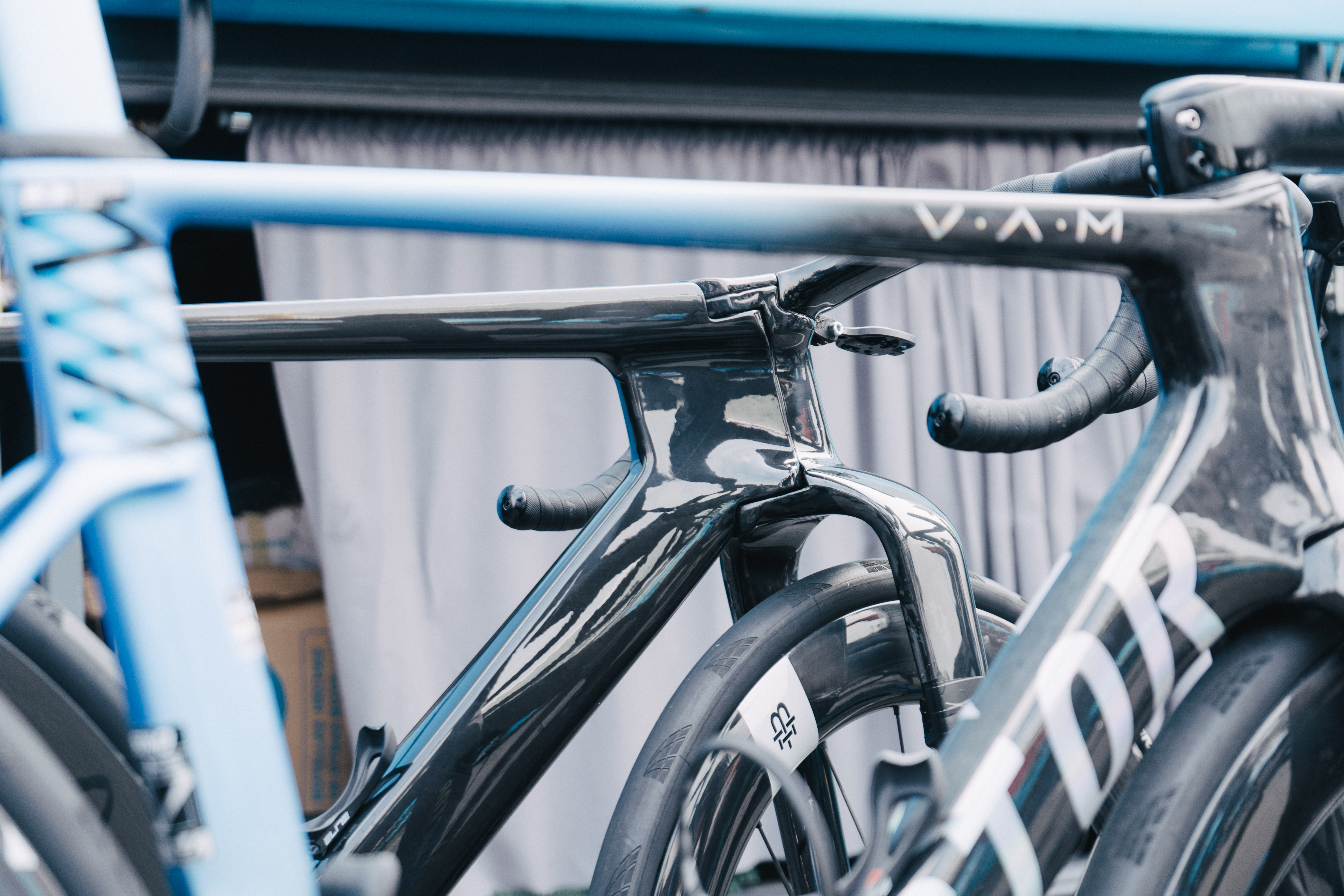
Forks cannot be wider than 115mm; rear triangle cannot be wider than 145mm
Another rule that likely comes from a combination of aesthetics and aerodynamics is the announcement of maximum width limits between the fork legs and the frame’s seatstays in the rear triangle.
Specifically, for forks, the distance between the two fork legs, measured inside to inside, must not exceed 115mm.
At the back of the bike, the distance between the two seatstays or the two chainstays, both when measured inside to inside, cannot exceed 145mm.
For track frames, these limits only apply to the lower extremity, meaning bikes like the Hope HB.T remain legal for now, so long as the wide fork and stay curves back in to within the limit at the extremity, but this is set to change again in 2027.
Anti-doping
(Image credit: Getty Images Sport)
New additions to WADA’s Prohibited List and Monitoring Program
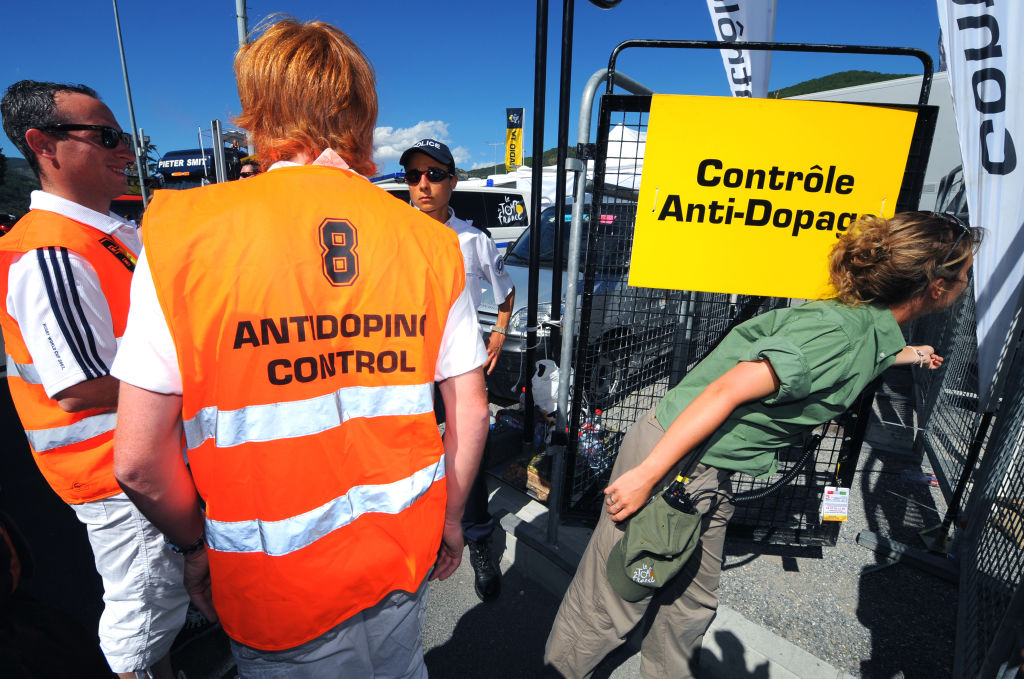
The new addition of the use of carbon monoxide as a performance-enhancing method to the World Anti-Doping Agency (WADA) Prohibited List began on January 1, 2026.
The agency announced its addition to the banned list in September, stating, “The non-diagnostic use of carbon monoxide (CO) was added to the Prohibited Methods as a new section, M 1.4,” WADA stated in its summary of the major modifications to the Prohibited List. “It can increase erythropoiesis under certain conditions.”
An initial report by Escape Collective on the use of carbon monoxide rebreathers by some of professional cycling’s top teams raised questions about whether they were using the gas to stimulate red blood cell production, but the teams clarified they were only using it for measuring blood gas volumes.
In other WADA developments, the use of weight-loss drugs such as Semaglutide and Tirzepatide (GLP-1 agonists) is being monitored alongside narcotics such as codeine and hydrocodone and stimulants like caffeine.
Puppy paws

(Image credit: Getty Images)
Puppy paws amendment
While not a big change, the UCI has also added clarification relating to the infamous ‘puppy paws’ position, which saw riders rest their forearms on their handlebars for a more aerodynamic but less safe position.
Previously, the rule stated: “Using the forearms as a point of support on the handlebar is prohibited except in time trials.”
However, given that time trials are occasionally raced on road bikes, such as the Tour de France mountain time trial on Stage 13, the rule has been amended to add clarity.
It now states: “Using the forearms as a point of support on the handlebar is prohibited except in time trials, where such support is only permitted on fixed additional time trial extension handlebars.”
Coming soon – UCI Rankings
Points scored off-road will soon count towards WorldTour road rankings
The UCI Team Ranking is crucial to teams as it is used to determine which teams meet the criteria to be given WorldTour licences every three years. Starting on October 19, 2026, the UCI will include points scored in disciplines other than road in the rankings. However, it will only apply to riders who are among the top 20 riders on the team, as only those riders are included in the team rankings.
The points from the UCI World Championships in track, mountain bike, cyclo-cross and gravel, as well as the final standings of the major UCI series (World Cup or Nations Cup), “may be added based on a specific points scale” that has yet to be announced. The rule applies to both men’s and women’s teams; except for women, where only the top eight riders count toward team rankings.
The multi-discipline points also count toward elite and under-23 men’s Continental rankings for teams, but not for the individual UCI rankings.
This could spell good news for the likes of Pinarello-Q36.5, for whom their star rider, Tom Pidcock, will undoubtedly score points in XCO races that could benefit their bid to secure WorldTour status in 2029.
It could also lead to more riders being given the freedom to cross over into other events, and lead to more multidiscipline riders such as Marianne Vos, Pauline Ferrand-Prevot, Mathieu van der Poel and Wout van Aert.
No news on gear restrictions
Gear restriction trials remain unknown
When the UCI announced the bulk of these new rules in summer last year, there was one more proposal that, as yet, hasn’t made it to fruition.
Specifically, the gear restriction trials that were slated to take place at the Tour of Guangxi.
According to the UCI, this was another tool in its bid to slow down the peloton, but soon after the announcement, engineering expert Dan Bigham proved it would make no material difference to rider speed, nor indeed to rider safety.
Soon after, SRAM launched a legal challenge via the Belgian Competition Authority (BCA), claiming it unfairly harmed its reputation given its use of a 10-tooth cog effectively made it noncompliant by default.
SRAM secured a preliminary victory soon after, which in turn meant the trial was suspended after ‘interim measures’ were imposed by the BCA.
The UCI has since been quiet on the subject, so it’s unclear whether the gear restriction idea as a whole has been shelved or whether it’s simply been put on ice.