
(Credits: Far Out / YouTube Still)
Mon 5 January 2026 19:30, UK
By 1974, Leonard Cohen was a bit of a phantom in the pop music landscape; a mysterious outsider looking down on the whole scene from above, and yet still inarguably a participant in it. He’d released four studio albums by this point, and two of them had been top five records on the UK charts. But having just turned 40, Cohen was hardly a pop star.
“I feel totally separate from it,” Cohen told Zig Zag magazine in ‘74. “I love the phenomenon, but I don’t live as one of those figures. My own personal style is very, very different. I don’t perform in the same kind of field. My life is completely different and it developed on different grounds that came to my mind much earlier than the pop movement. My lifestyle was formulated in the middle ’50s and has changed very little since then.”
When Cohen spoke of the “phenomenon” he loved, it’s unlikely he had ‘70s radio staples like David Essex or the Osmonds in mind. It was the rock ‘n’ roll phenomenon, now twenty years old in its own right, that he seemed to have a soft spot for, having met many of its central figures since beginning his own music career in 1967.
Unsurprisingly, the more lyrically gifted songwriters were usually the ones that earned his respect, with Lou Reed and Van Morrison among them. As was typical of men of Cohen’s generation, though, praise often came packaged with a subtle jab.
“I thought [Lou’s songs] were excellent; really fine,” Cohen said of Reed’s early work with the Velvet Underground. “I used to praise him. . . . In those days I guess he wasn’t getting very many compliments of his work and I certainly wasn’t. So we told each other how good we were. I liked him immediately because Nico liked him.”
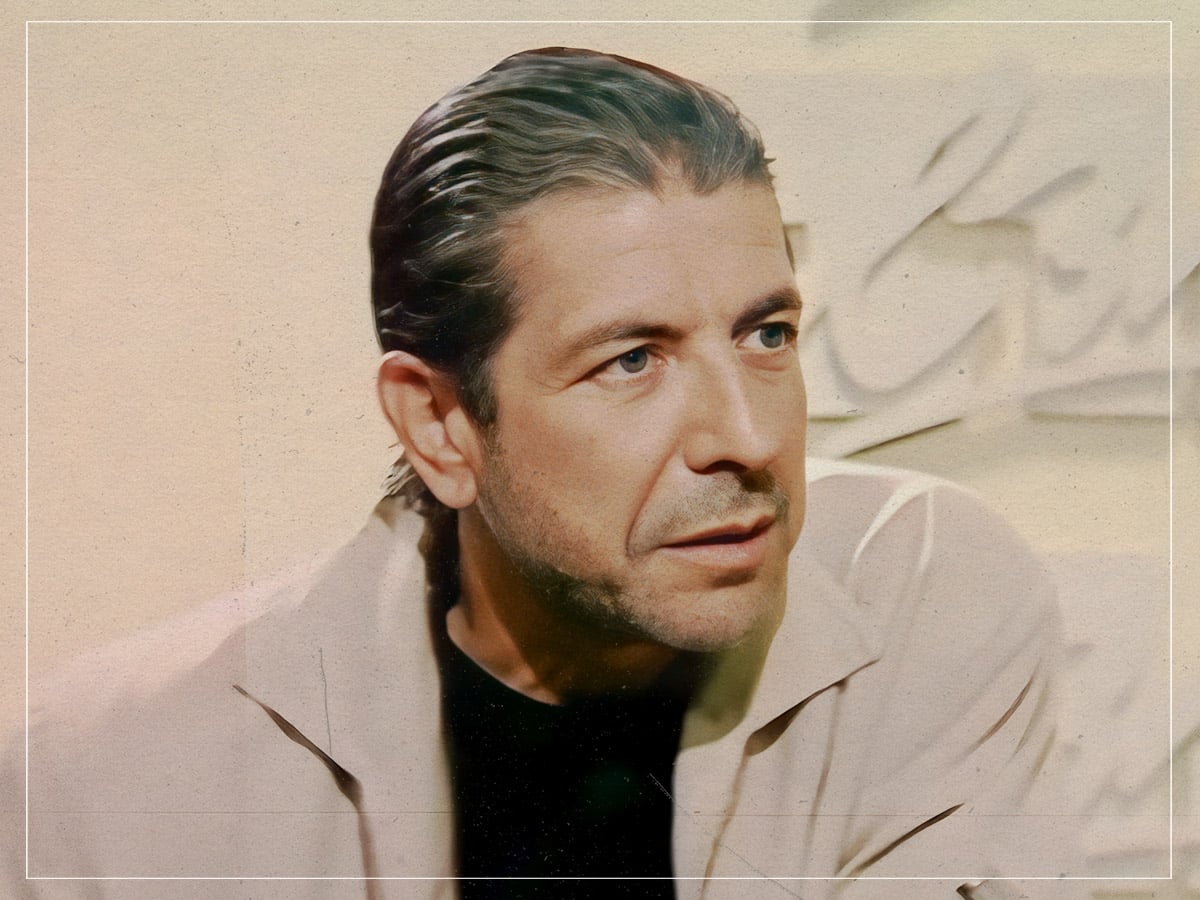
 The happy smile of Leonard Cohen. (Credit: Alamy)
Cohen had far less personal history with the artists still reigning in 1974 as the biggest band on Earth, the Rolling Stones. “I met Mick Jagger once in the lobby of the Plaza Hotel,” Cohen recalled, “and he said, ‘Are you in New York for a poetry reading?’”
That was the full extent of the Mick-Leonard relationship, but it didn’t stop Cohen from developing a certain perspective on the Stones, which one might call respectful, if coolly detached.
“There’s some of their songs I like very much,” Cohen told Zig Zag in 1974, during a period when ‘It’s Only Rock ‘n Roll’ was climbing the charts. “I think it’s wonderful, the phenomenon of the Rolling Stones—the figure of Mick Jagger. They are the bread and wine of the pop groups.”
Perhaps sensing he was granting them too many kudos, though, Cohen again clarified that the Glimmer Twins’ kool-aid was never going to work on a gentleman of his own age and sophistication.
“I was a little bit older than other people when I came into contact with these figures,” Cohen explained, “and I’d already had my mind blown by older and much more outrageous people that I’d met in my youth, so I wasn’t about to succumb to the kind of fever that they produce in younger people. But I’ve always admired them from the slightly humorous point of view. I never did seriously ask myself if Mick Jagger was the Devil. But I think as figures they’re quite interesting.”
And there you have it—in the span of 20 seconds, Cohen’s assessment of the Rolling Stones went from “wonderful” to “slightly humorous” to “interesting.” But then again, as Cohen acknowledged in the same interview, “I’m not too interested in music. . . . I don’t have a record player most of the time.”
Related Topics