
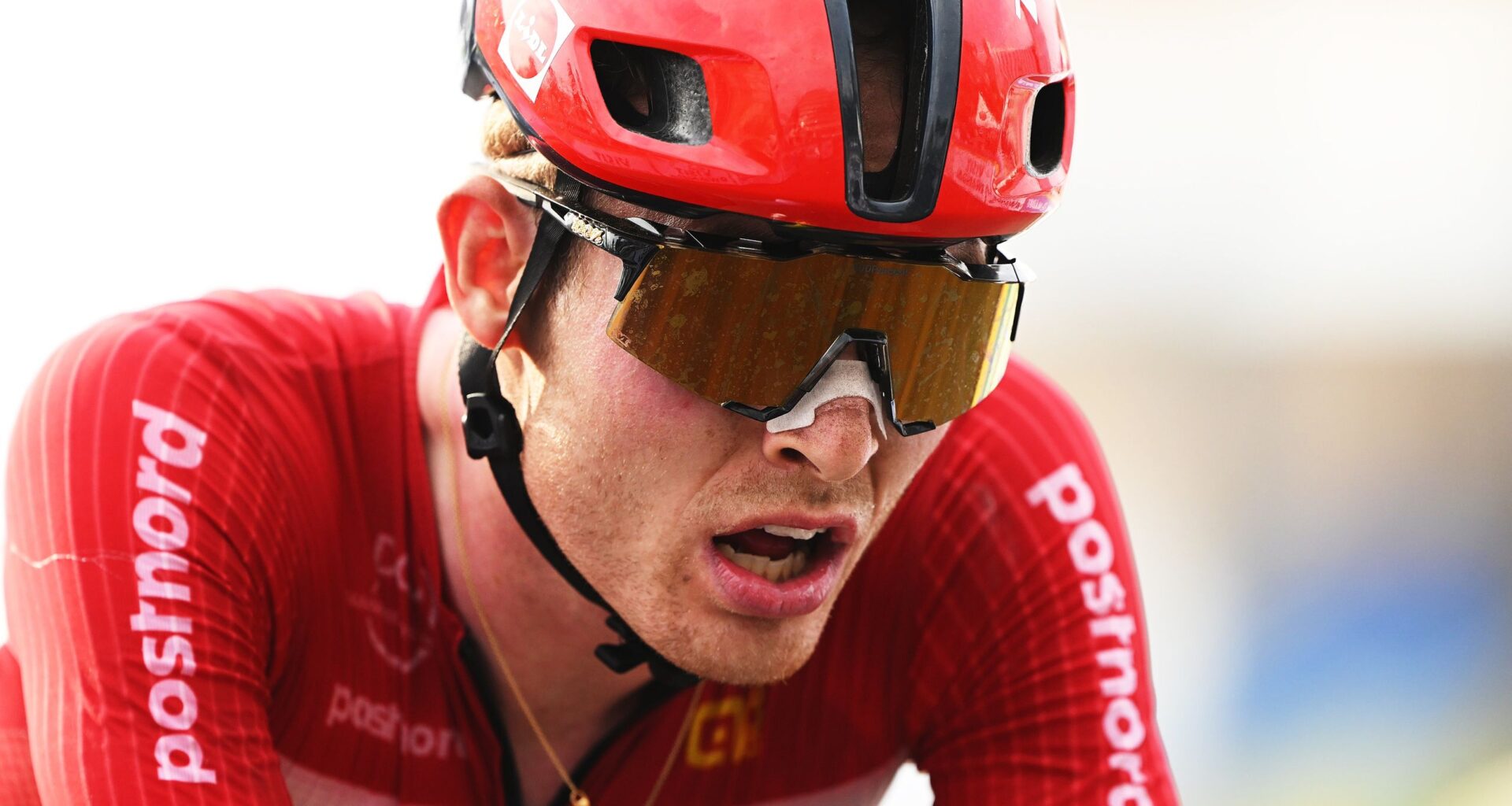
You’ve probably noticed while watching the professional road races lately that an increasing number of riders have been wearing brightly coloured strips across their noses. As part of the latest ‘in vogue’ training trend, where there’s an added emphasis on breathing efficiency, nasal strips are back in style. These have been an in-and-out performance gain over the last couple of decades. From the snore-stopping skin coloured strips of the 2000-2010s, to the in-nose turbine that Chris Froome was briefly sponsored by, and then Peter Sagan‘s magnetic nose-widening 100% sunglasses.
Nose strips are nothing new in cycling, but in 2025 they seemed to become the latest must-have training gain and influencer-plugged fitness-booster. Go onto Instagram as someone who follows cycling, and you will almost certainly have seen influencers and bike racers wearing Zone8 or HiStrip nose strips, often in bright pink for that added visibility. But just how do they claim to work, how do they actually work in practice, what does the scientific research and literature say, and are they worthwhile for us to invest in?
You may like
I’ve purchased them myself, so there has been no input from any nose strip brand. Instead, I have taken the information that they provide, analysed the studies to see if they truly support the claims, and seen what my own personal experiences suggest the benefits are. I went into this test admittedly a bit sceptical, but open-minded – here’s how it went.
What are nasal strips?
Nose strips are small, adhesive patches typically composed of several layers of material. Strips from the brand Zone8, for example, feature an outer layer of lightweight, breathable silk, three flexible strips that serve as the component that pulls the nostrils apart, and an adhesive that attaches to the nose. You can buy over-the-counter versions at a pharmacy developed for assistance in sleeping, but these ‘athletic’ ones feature a stronger adhesive to stay attached in the presence of sweat, as well as a more sprung tensile system to open the nasal passages further. Both kinds usually claim to work for up to 24 hours without discomfort.
They are worn over the bridge of the nose with the aim of expanding the nasal passages to improve the capacity to breathe through the nose, be that at rest or during exercise. The cost is generally around £20-23 for a pack of 30, so less than £1 a day of wear.
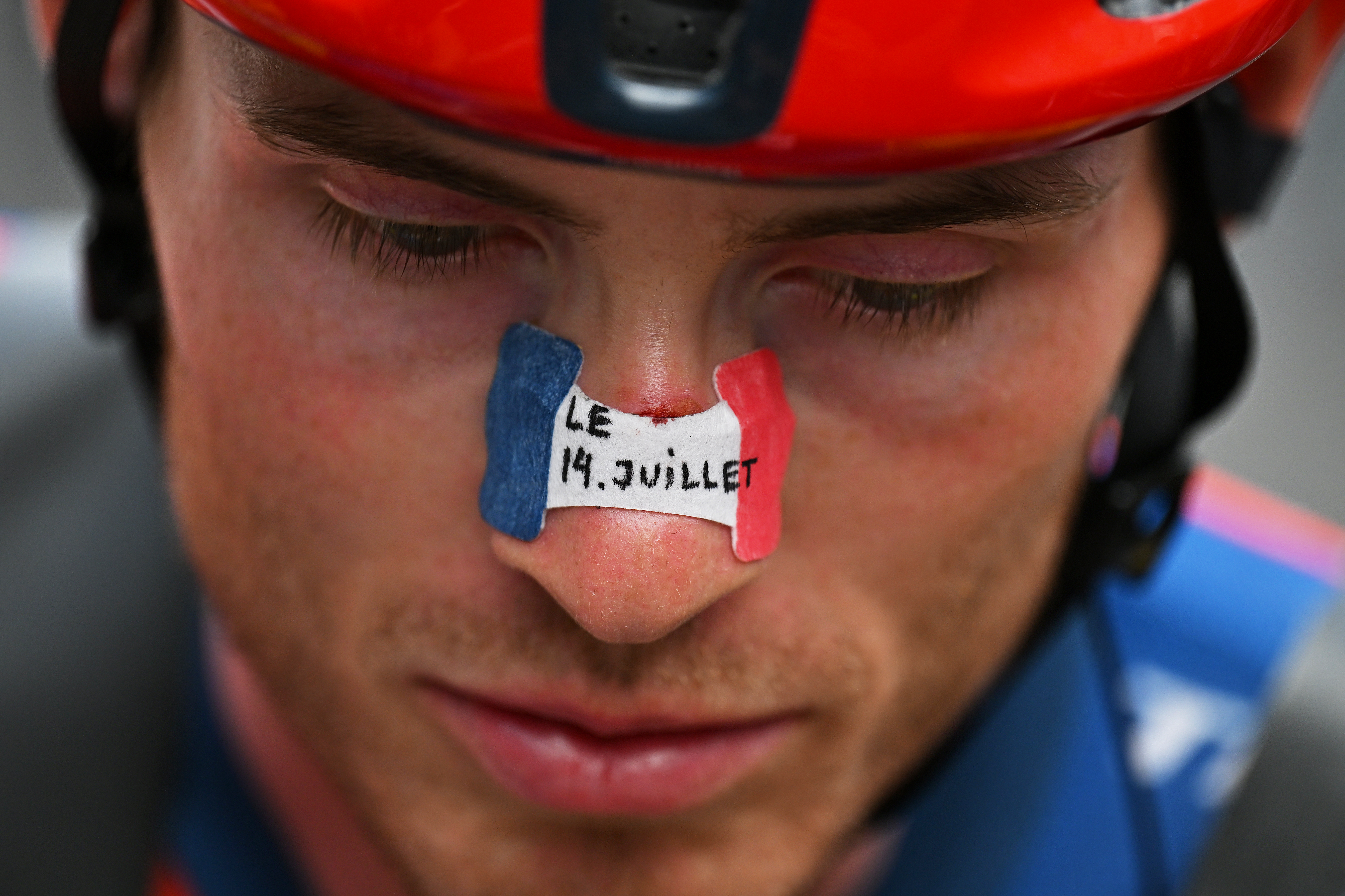
Mattias Skjelmose of Lidl-Trek often decorates his nasal strips – but the purpose is functional (Image credit: Getty Images)What do they actually claim to do?
Like anything, it can be difficult to properly research the claims of benefits of nasal strips, because a quick Google search may well offer up misleading AI-summarised information, synthesising statements from fitness magazines, poor quality or irrelevant science websites, or non-peer-reviewed research papers.
So, for the purposes of my investigation into the facts and science, I’m going to consider only peer-reviewed scientific research papers, given that their contents require vetting and validation to be able to be published. In a world of unsupported or misinformed claims and disinformation, this is incredibly important to differentiate between.
Disclaimer out of the way, let’s go through some claims and break down the facts behind nasal strips and their use: both what the science says, how applicable that is to situations on the bike, and how this has been interpreted in the marketing of these nose strips.
In this instance, I headed to the websites of several popular nasal strip brands – Zone8 and HiStrips – and considered several of the claims they make, one by one, to see how they stack up against the science.
You may like
Claim: Improved oxygen uptake (Zone8 and HiStrips)
“40% more oxygen” is the headline claim from HiStrips about using nasal strips, and it’s one of Zone8’s top sells, too.
There are some interesting mechanisms behind this claim, mainly that reduced breath expiration rate increases blood carbon dioxide (CO2), which enhances uptake of blood oxygen (O2) or oxygen saturation of the blood. Essentially, slower and more controlled breathing results in greater oxygen uptake. At lower level intensities, this is actually true in some instances. Nose breathing has been found to be more efficient than mouth breathing, and as nasal strips promote the former, many claim they can improve oxygen intake.
However, a 2024 study by Lörinczi, F et al found that there was no difference in muscular endurance performance regardless of nose or mouth breathing. This included no difference in blood oxygen saturation, whereas an increase would be expected if the uptake of blood oxygen was increased via nose breathing. This was tested using bench press repetitions, but is still somewhat applicable to lower intensity sub-maximal intensities or non-maximal ventilation exercises such as low intensity cycling. So the jury is somewhat out on this one.
A key consideration here, though, is that as intensity ramps up to levels such as 80%+ VO2max, it’s not about just efficiency but total oxygen consumption. Nose breathing may be more efficient in some scenarios, but total air intake and oxygen uptake will not match the demands at the highest of intensities. This is supported by a 2017 study by LaComb, C. O et al.
Claim: Increased nitric oxide production (Zone8)
Again, this is factually true, but the application has been misused when it comes to claiming the benefits of nasal strips for cyclists.
Breathing air through the nose increases the amount of nitric oxide (NO) in that air that is then inspired and goes to the lungs. This is supported by a 1997 study by Yasuda et al, but was conducted at 60w, significantly lower than most higher-level riders would expect to perform at. However, it had no effect on cardiorespiratory measures, so the actual performance benefits are a bit up in the air. NO has been found to be a vasodilator, increasing the diameter of the veins for supposed enhanced venous return – the flow of blood back to the heart – and enhanced blood circulation and oxygen delivery, but research around this is mixed.
An issue, though, is that a greater performance enhancer, caffeine, is a vasoconstrictor. Using the two in conjunction somewhat limits those benefits of NO, but caffeine has a greater potential performance-enhancing effect, rendering vasodilation as a performance enhancer slightly redundant.
Claim: Stronger breathing mechanics (Zone8)
“Breathing through your nose engages the diaphragm. That means better posture, stronger core activation, and cleaner movement under load,” Zone8’s website says.
This is again mixed, as at lower intensities or at rest, the greater pressure through nose breathing required to extract the same amount of air does increase the use of the diaphragm for breathing.
However, at higher cycling intensities, the pressure created in the lungs to take in maximum volumes of air requires peak diaphragm engagement regardless of mouth or nose breathing.
Claim: More efficient breathing economy (Zone8)
Again, another subjective statement. Greater pressure, humidified air, filtered, and more NO can result in certain measures being recorded that provide a reading of higher efficiency. A lot of this is subject to the intensity of exercise.
Again, the 2017 study by LaComb, C. O et al states that nasal breathing can be more efficient, but total performance is not based purely on efficiency, but on multifactorial elements.
In this study, the expired CO2 was higher in mouth vs nose breathing, while breathing rate was also higher in mouth. The ventilatory equivalent, the amount of oxygen uptake taken per breath, was higher in nose breathing. However, at higher intensity demands, nose breathing was not adequate to achieve the necessary total oxygen uptake. Mouth breathing resulted in a higher total intake of air and oxygen uptake, even if less efficient. So yes, nose breathing is more efficient, but not more effective for higher intensities.

Riders like Victor Campenaerts are always trying new innovations, including nasal strips (Image credit: Getty Images)Claim: Better CO2 tolerance (Zone8)
This is an interesting one, and a new claim to me. Low CO2 tolerance, which refers to how the body deals with rising carbon dioxide levels, has been linked to increased fatigue rate, but there are links to higher maximal power production as well. Meanwhile, high CO2 tolerance has been suggested to improve fatigue resistance and endurance performance.
Studies are limited on this in terms of sporting applications. A 1995 study by McGurk et al., found the differences inconclusive. Across this testing, two sprint tests and two endurance tests were used. In one of each, there was no difference, while in the other tests, the low tolerance group performed better, while in the other test, the high tolerance group performed better. So this is inconclusive based on the scientific research available.
“During threshold work, nasal breathing keeps your rhythm steady and lactate levels in check. This means faster recovery between efforts,” Zone8 says.
Lactic acid is a bugbear of mine, with pundits and athletes alike claiming it to be the cause of fatigue and burning sensations. That requires another article to delve into, but long story short, that is incorrect.
As already stated, studies have found nose breathing to be more efficient, but not more effective.
Additionally, this has only been found in lower intensity exercise, again for those previously mentioned efficiency mechanisms. But at higher intensity, this becomes inadequate, and mouth breathing results in a greater total oxygen uptake required to remove fatigue metabolites such as Hydrogen Ions and Inorganic Phosphate, which do contribute to fatigue.
Claim: Sharper focus and nerve control (Zone8 and HiStrips)
“Nasal breathing activates the parasympathetic nervous system,” Zone8’s page says, while HiStrips claims “sharper focus”.
A 2023 study by Watso et al., does actually support this claim, and indeed, this could be a marginal benefit at lower intensity sections during a bike race, for example, to stay more relaxed before the spark ignites and the attacks start flying. So there are potential psychological benefits here that, in turn, can have a small and circumstantial physiological boost.
Claim: Deeper, slower inhales = better gas exchange (Zone8)
Again, this is true. Greater pressure build-up via nasal breathing can actually improve the gas exchange and ventilatory equivalent as already mentioned. But at higher intensities this does not meet the demands required for sustaining those intensities. In the same way a Ferrari is less fuel efficient than a Honda Jazz, but the Ferrari produces more power.
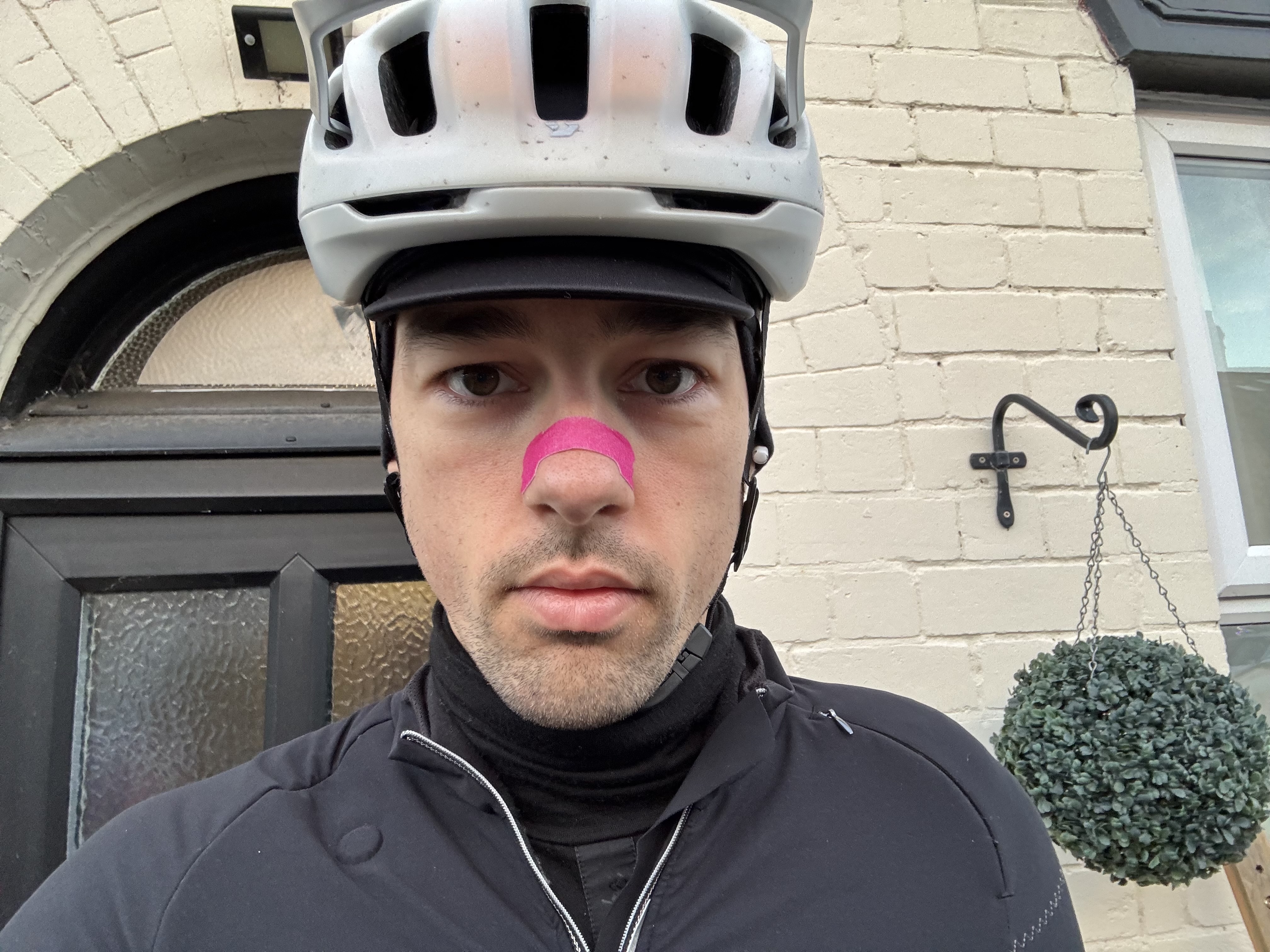
I tested the HiStrips adhesive nose strips. The bright pink colour stands out well as it has done on the Visma-Lease a Bike team (Image credit: Future – Andy Turner)Claim: CO2 makes oxygen work harder (Zone8)
This relates to the rate of oxygen uptake in the muscles, and again, this is true. The Bohr effect states that CO2 is required in the bloodstream to allow the haemoglobin to release the oxygen. Mouth breathing removes more CO2 and reduces this effect, which is why breathing into a paper bag for increased CO2 rebreathing is used to combat hyperventilation. But again, this is more relevant at lower intensities as the total O2 requirement at higher intensities requires that greater airflow rate only achievable via mouth breathing.
Claim: Better sleep (Zone8 and HiStrips)
For all the previously mentioned benefits of nose breathing and efficiency, nose breathing has certainly been found by various research studies to be beneficial for sleep. Sleep is vital for recovery, day-to-day performance, and training adaptations. This one is a genuine performance benefit – but not while wearing nose strips on the bike, for obvious reasons.
Claim: Boosted immune system (Zone8)
In a similar vein to the previous one, sleep improves immunity. But the nose is also our filtration device. The nose is filled with hairs, scientifically called vibrissae, tiny whiskers. These collect mucus, which is released by the sinuses, which then works to trap particles and prevent them from entering the airways. The vibrissae then move this mucus filled with particles to the throat for expulsion by swallowing rather than entering the respiratory system. Smaller cilia deeper in the nasal cavity deal with the smaller particles.
As a side note, this is why you should never epilate your nose hair or pluck it out, as Victor Campenaerts did at the 2025 Vuelta a España. A big proponent of nose strips for performance, his claim that removing nose hair reduces friction during nose breathing is limited in validity at best, and is a sure-fire way to make it more likely you will get a nose infection or illness. He withdrew from that race with illness…
Putting nasal strips into practice
Outside of the lab, my testing of nasal strips doesn’t provide specific data on oxygen uptake or metrics such as that, but there are several interesting and anecdotal considerations for nose strips, where it turns out there are some more indirect performance gains to be had.
Looking first at the more subjective and during-rest performance metrics, better sleep is the one that stands out most. Sleep is the ultimate recovery tool in cycling, and recovery is needed for training adaptations to occur, along with recovery from day to day of training or events. Sleep gains are genuine performance gains, and I think there is some truth to nose strips assisting in getting better sleep. It’s marginal, but if you’re willing to spend thousands of pounds on a new bike frame to save five watts at 40kph, then £1/day nose strips are likely a better value performance boost.
It’s hard to assess the improved immune system response. It’s been a brutal cold season, and I’ve had several bouts of colds – I can’t tell if I’d have had fewer with the nose strips or not. However, the science behind this is sound. Breathing through your nose helps filter the air and can reduce the incidence of picking up airborne viral infections such as the common cold. If this prevents you from requiring a week off training, that in itself is a big performance gain, as you can train more effectively and improve more.

Putting the HiStrips adhesive nose strips through their paces during a winter ride recently (Image credit: Future – Andy Turner)
In terms of perception, nose breathing is markedly enhanced with these nasal strips. It’s an odd sensation as you can breathe through your nose at higher intensities than you normally would without them. But it is still limited to around Zone Two type efforts, so it is only really useful below maximal intensities. However, this can still be quite beneficial. For riding around in the bunch at low intensities, or doing longer duration events where nose breathing is more prevalent, such as ultras or Audax, this can enhance certain performance metrics such as oxygen uptake or saturation.
It did reduce how stuffy my nose felt while riding around in the cold, while there was an element of feeling a bit more relaxed when able to nose breathe more throughout low-intensity sessions. This is purely perception-based, and maybe a bit of placebo effect thrown in, and is by no means a scientific reflection of what nose strips can do. But it still matters.
The biggest direct boost I’ve actually noticed was highlighted on a group ride. While riding at a solid intensity, I needed to eat something. In the cold, a fairly chewy flapjack-like bar required a lot of chewing. Just as I started to eat, the intensity ramped up. Normally, this would result in a horrible mix of trying to chew and mouth breathing simultaneously. However, with the nose strips, I was better able to breathe through my nose and was not as uncomfortable as would be expected. Again, this is a small performance gain, but it is a gain nonetheless, even if a circumstantial one.
Another way to look at it for those who race, missing a feed is not something you can catch up on in a race. If the intensity is high, and you need to eat, and this nose strip can improve your capacity to do that, it could be the difference between blowing up in the final few kilometres or not.
I would say that most of the benefits of nose strips are indirect rather than direct. There is no sensation of improved breathing at higher intensities, mainly because to get the maximal airflow into the lungs when going hard, you need to breathe through your mouth. Instead, there is enhanced nasal airflow, as long as that intensity is one where you can get enough air via nose breathing alone.

The benefits of nasal strips can be varied, and different from the marketing claims (Image credit: Getty Images)
Several of the direct performance claims from the brands are frankly based on the misapplication of scientific data and the misconstruing of it. There is truth behind them; there are no lies being made, but they are being applied in the wrong way. My go-to example is when wine is suggested as healthy due to antioxidants and Resveratrol, which help to reduce oxidative stress and lower blood pressure. That is true; however, alcohol in the wine has a larger negative impact on those factors, so the net total is a negative. These strips don’t create a negative, but the way in which they claim to offer some performance gains does not necessarily correlate with the environment where they actually assist.
I will also say that the adhesive performance has been highly mixed. After around an hour, either riding on the road or indoors, one side of the strip has regularly come loose, and that would be that. Cold temperatures and adhesives tend not to get on that well though, but neither does sweat. HiStrips advise cleaning and drying your nose before applying, then holding in place for a few seconds. I’ve been advised to use alcohol wipes before applying as well, and this has proven rather effective; perhaps I’m prone to more skin oil on my nose, which will impact adhesion. You still need to be very careful not to wipe the outside of your nose while wearing these, as that can dislodge them.
The ones I have been using, HiStrips – also the brand of choice for Visma-Lease a Bike – do claim a 24-hour hold, but the centre has a section that lifts with the bands inside, with two prongs on either side to remain stiff. Each time, it’s been the right-hand side adhesive sections that have come away. Zone8 does have a different design with adhesive across the entirety of the outside, which looks like it could be more secure. Zone8 also offers two versions: a 48-hour hold, less ‘sprung’ strip, and a 24-hour more sprung performance strip. HiStrips are 24-hour only with quite a high tensile spring.
Should you use nasal strips for cycling?
I admittedly entered this testing sceptical, mainly due to the physiological claims that some of the brands purported to be associating with the use of nose strips, such as enhanced VO2max, greater oxygen delivery at higher intensities, and a host of other dubiously attributed benefits.
The reality, however, has been rather interesting. Do these nose strips offer the high-intensity performance gains that they promise? The answer is a resounding no. Do they offer a host of other benefits, some not necessarily advertised? Yes.
Nose strips remind me a lot of altitude training masks. These are claimed to simulate altitude by restricting the rate of airflow, but that is not how altitude training works. It’s to do with the different partial pressures of the air affecting the rate of diffusion of oxygen in the lungs. However, these masks were useful respiratory muscle training devices, which in turn reduced muscular fatigue attributed to the metaboreflex effect. So they were beneficial, just not in the way that they were claimed to be.
If you are completing long-duration low-intensity events such as ultras or Audax, then nose strips will likely be highly beneficial. Equally, if you are racing long road races or stage races, then being able to eat solid foods while riding at a higher intensity may have a positive, indirect effect on performance.
Additionally, one of the big troubles a lot of high-level cyclists face is that when racing or training at a high intensity and or volume, the immune system can be compromised. Breathing through the nose rather than the mouth at rest, during travel, when cruising in the peloton, or when sleeping, might help with the filtration of particles in the air and reduce the likelihood of getting ill. Again, not a direct performance gain, the same as strength and conditioning for injury prevention, but an indirect performance gain nonetheless.
Then there is the sleep benefit itself. Sleep quality is very perception-based, but that does not make it any less important. Did this help with my sleep? Maybe. Did it reduce my snoring? Yes, according to my partner, which meant I likely did have improved sleep. I also felt a little bit fresher in the morning, which can impact the RPE (rate of perceived exertion) of tasks and exercises throughout the day. We’re getting into psychological benefits here, but in the same way that a placebo effect is a genuine effect, psychological benefits have genuine, real-world physiological effects too.
At the end of the day, the cost of nose strips is not particularly high. If you accept that they do not offer all of the performance gains that they claim, but instead offer more indirect performance gains that are just as valuable, then these are actually fairly good value and cost less than multivitamins that also claim to boost sleep or immune systems.
They may not be performance rocket fuel, but they definitely will bring some performance benefits, so it’s not all just a trend or fad.