
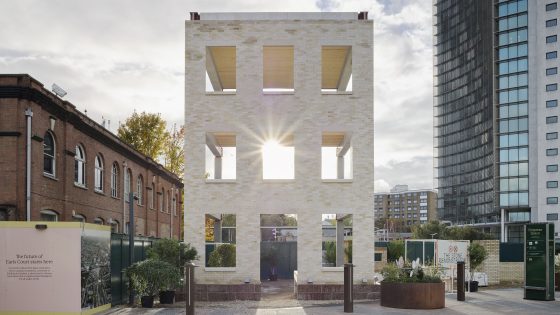
Full-scale prototyping of buildings as a means of research has always been – unsurprisingly – rare, but has often made a big impact. An example was Brighton’s Waste House, which was a trailblazer in more ways than one.
Built between 2012 and 2014 by architect Duncan Baker-Brown and the University of Brighton, it was shortlisted for the RIBA’s Stephen Lawrence Prize in 2015 and showed off the possibilities not just of ‘waste’ as a construction material but of prototypes in demonstrating sustainable design’s cutting edge.
The UK government estimates that £1 of civil public R&D investment generates £8 in net economic benefits over the long term. And larger architecture practices seem to be increasingly investing in sustainability R&D. In fact, 83 per cent of AJ100 practices engaged in this in 2023, compared with 77 and 72 per cent in the two previous years.
Large-scale prototyping in this area is less common. Yet it is moving steadily into the mainstream. In a construction industry that remains risk-averse – arguably more so in the UK than elsewhere – architects, designers and engineers are increasingly required to validate alternative, low-carbon materials and systems through built evidence.
Full-scale demonstrators are now essential research tools, providing the performance data and construction intelligence needed to shift the industry away from high-carbon and extractive practices.
Indeed, the Waste House itself has recently undergone a further research-based ‘regenerative’ refurbishment – turning it into the ‘Wild House’. Here, we look at three other recent prototypes testing emerging approaches with potential for wider application.
1. The Stone Demonstrator
The Stone Demonstrator being installed on site. Photo: Bas Princen
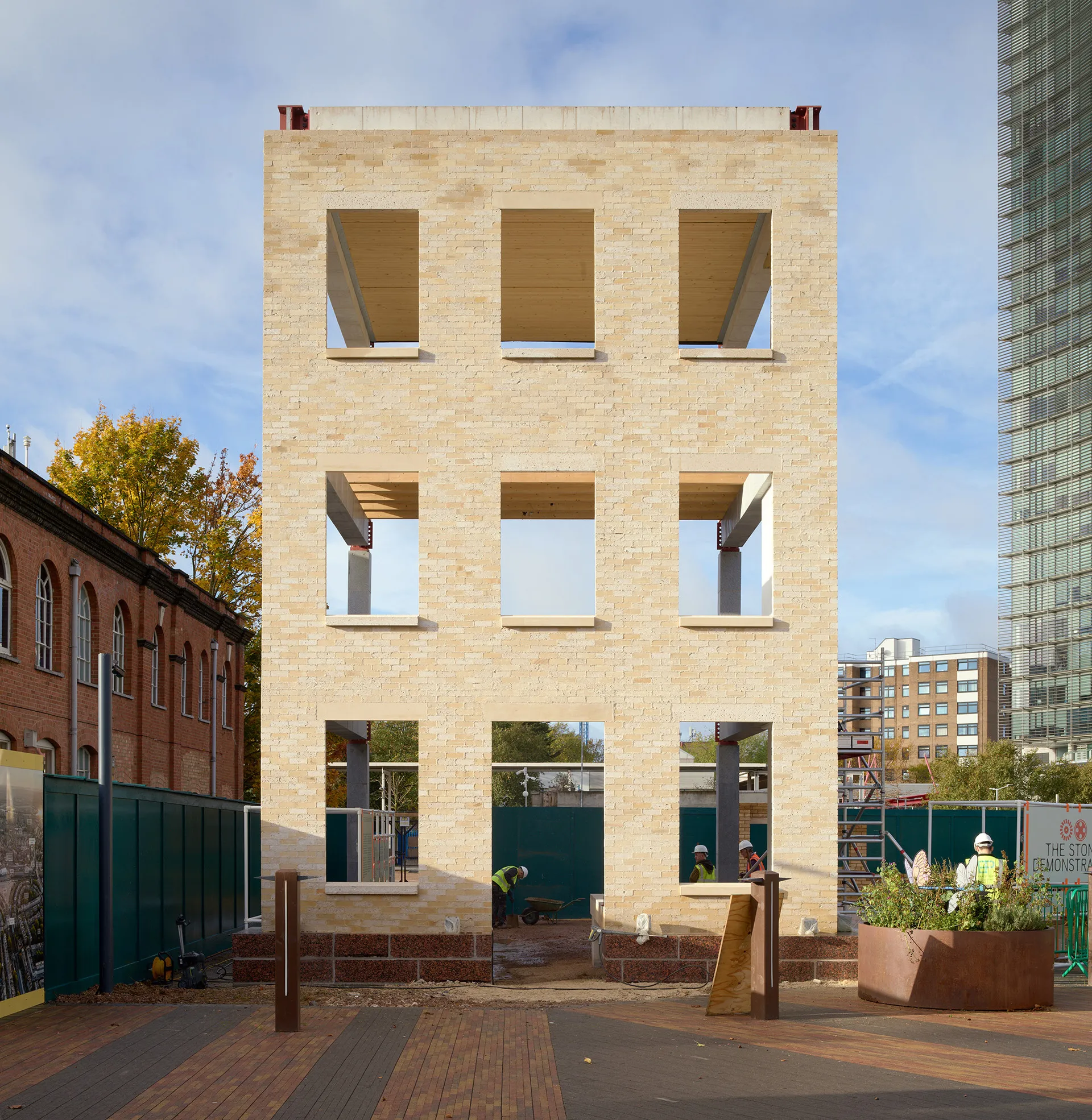
Future Observatory, the Design Museum’s research programme focusing on the green transition, unveiled the Stone Demonstrator in November at Empress Place on the Earls Court development site. Designed by Groupwork with Webb Yates and Arup, the three-storey, 6.5 x 6.5m open-air installation tests the viability of pre-tensioned stone structures as a low-carbon alternative to steel and reinforced concrete.
Set within central London’s largest cleared urban development zone, the 40-acre Earls Court site – now progressing through its early planning stages with Hawkins\Brown, Studio Egret West, dRMM, ACME and Haworth Tompkins among others on board – was deemed an appropriate platform for examining natural stone’s structural potential at scale.
The Stone Demonstrator being installed on site. Photo: Bas Princen
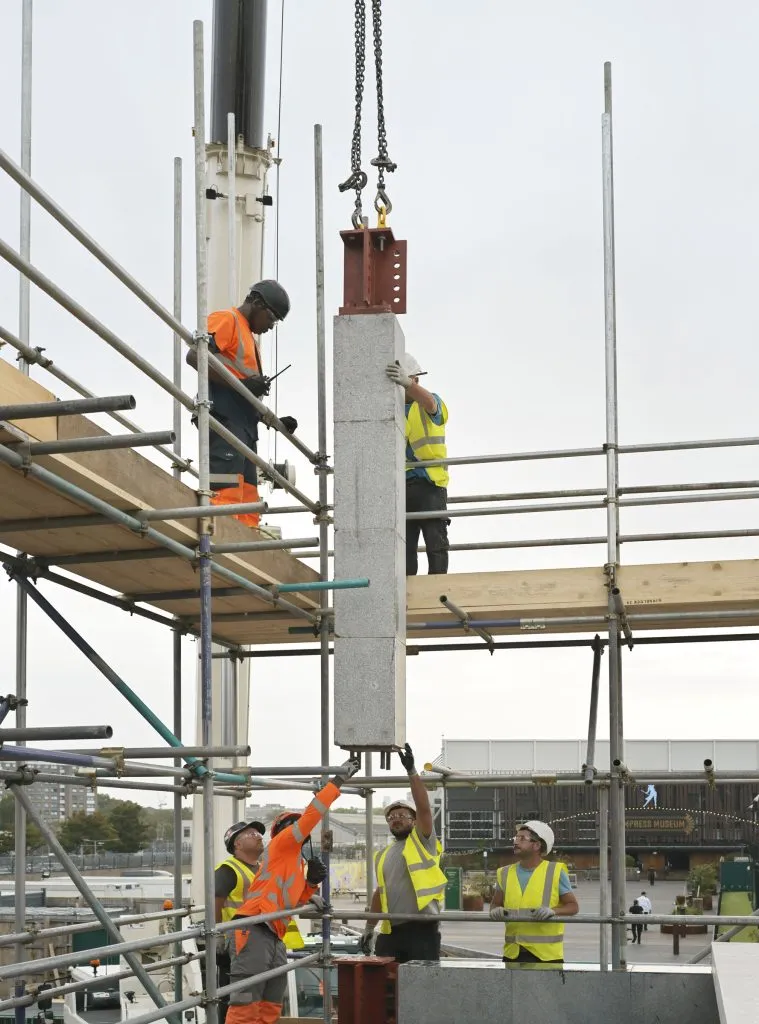
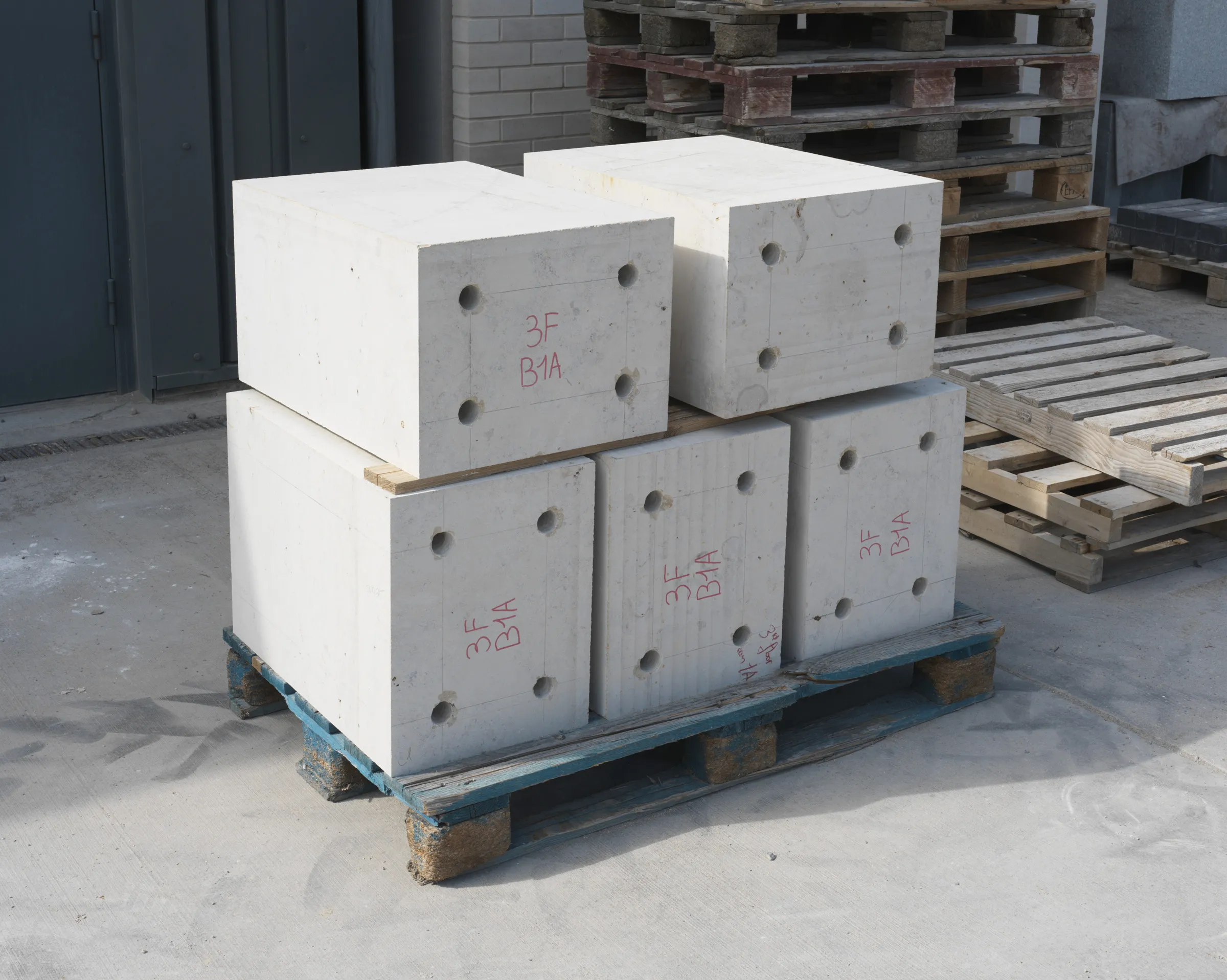
Funded by UK Research and Innovation’s Arts and Humanities Research Council, the demonstrator uses stacked stone blocks post-tensioned with steel tendons to form beams and columns. Floorplates combine pre-tensioned stone slabs with timber joists, and the roof is dowel-laminated timber.
Externally, a self-supporting stone brick façade – produced by The Stonemasonry Company and a product covered widely in AJ Specification this year – offers at least a 90 per cent reduction in carbon emissions compared with fired clay brick. At standard brick dimensions, such façades can reach six storeys without loading the primary structure, relying on ties back to timber or hybrid frames, which remain permissible below 11m under current Building Safety Regulator and fire regulations.
The Stone Demonstrator being installed on site. Photo: Bas Princen
Future Observatory’s analysis estimates that a steel frame with clay brick façade costs around 40,000kg of CO2e, and a reinforced concrete equivalent 32,000kg. By contrast, this demonstrator registers a mere 3,000kg. As Groupwork founder Amin Taha notes, ‘Its purpose is not to promote stone for sentimental reasons. It’s the ethical choice.’
2. Retrofit House
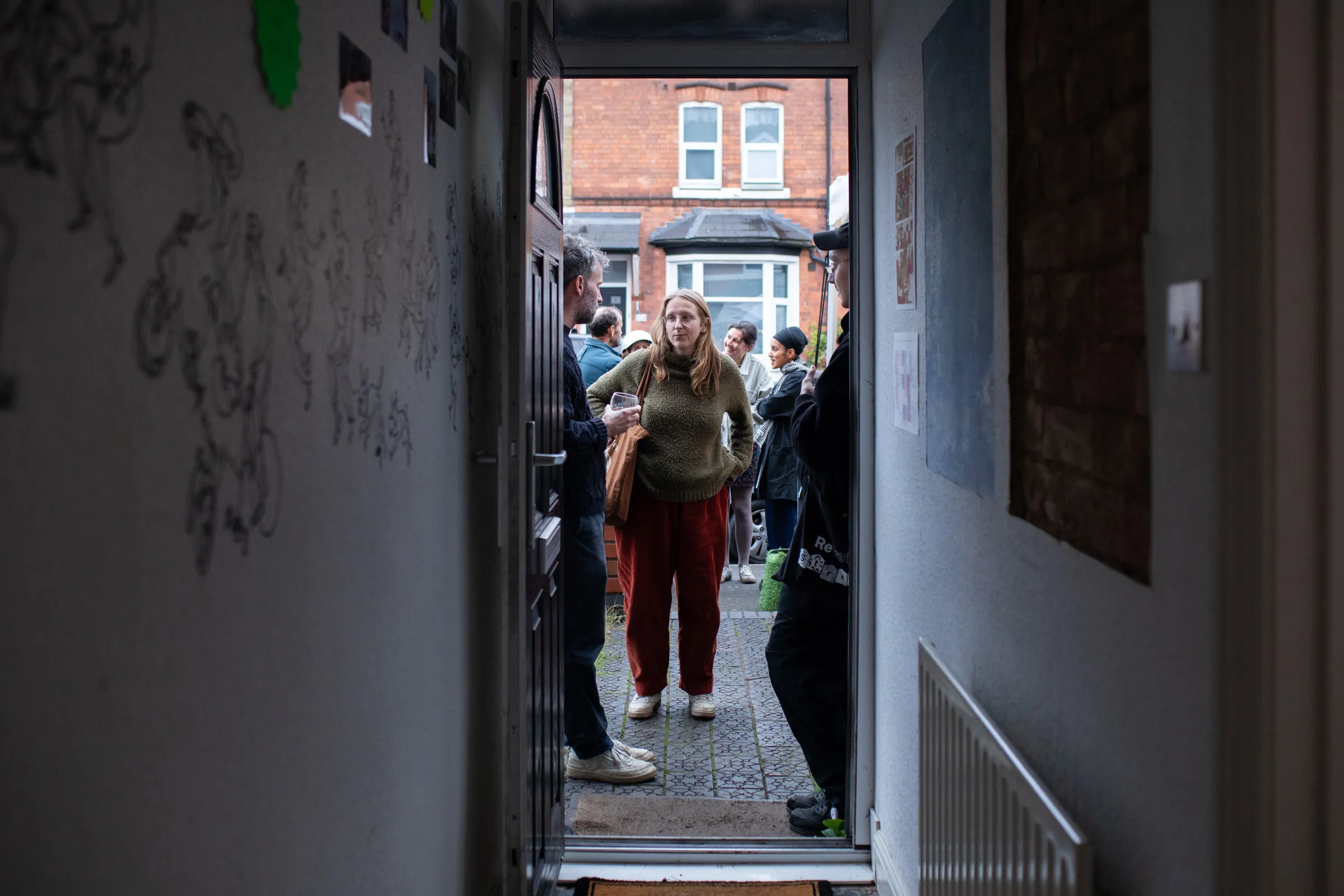
Workshops during the Open House week at Retrofit House. Photo: Paul Stringer
Community interest company Civic Square, working with Dark Matter Labs and Material Cultures, is developing Retrofit House in Edgbaston, Birmingham – one of several neighbourhood-scale demonstrators set up under the national Retrofit Reimagined movement’s auspices. The project uses a vacant Victorian terrace as a live testbed for retrofit materials, methods and governance structures essential to regenerating neighbourhoods.
Opened to the public for a week in November and for other periods in the future, the house serves as a platform for residents, builders, designers, activists and funders to examine the typically unseen processes of retrofit. The building had been selectively stripped out by Civic Square earlier in the year in preparation for co-design and construction with local SME contractors under Material Cultures’ guidance.
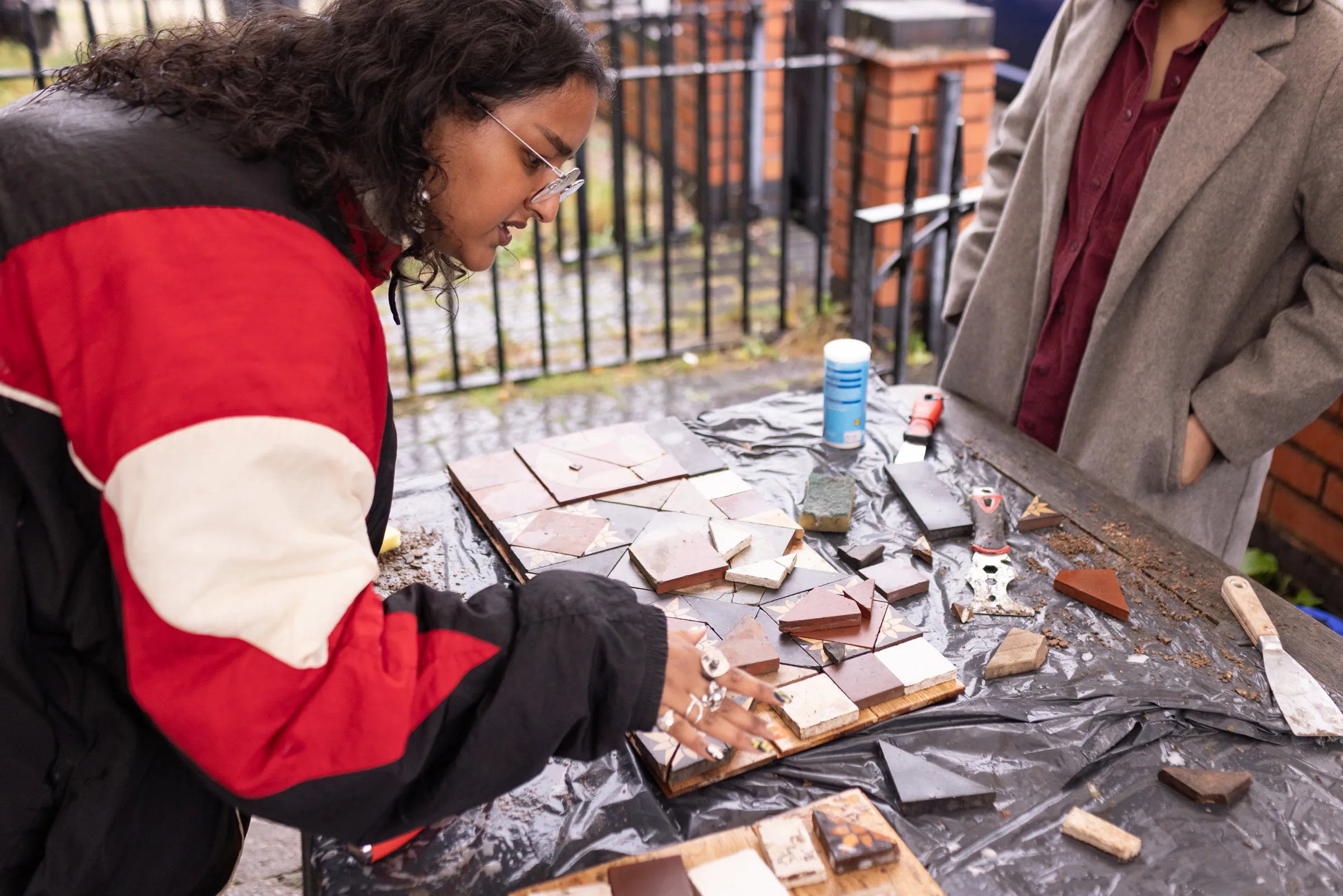
Workshops during the Open House week at Retrofit House. Photo: Paul Stringer
The upgrade programme will target thermal performance, damp remediation, air-quality improvements and biodiversity through a series of low-carbon interventions, with monitoring in place to record material performance and construction outcomes. In parallel, Dark Matter Labs is developing tools for collective decision-making at street scale, exploring how communities can determine retrofit priorities beyond single-property upgrades.

Workshops during the Open House week at Retrofit House. Photo: Paul Stringer
As a ‘system demonstrator’, Retrofit House will also host the second cohort of Re:Builders, a six-month applied learning programme (funded by Innovate UK) focused on regenerative construction for West Midlands SMEs. Participants will develop 1:1 prototypes, including lime-mortar repointing using waste aggregates, bio-based insulation systems and earthen floor assemblies.
Retrofit House is one of three active national retrofit demonstrators, alongside initiatives by We Can Make in Bristol and Retrofit Balsall Heath in south Birmingham.
3. HAUS
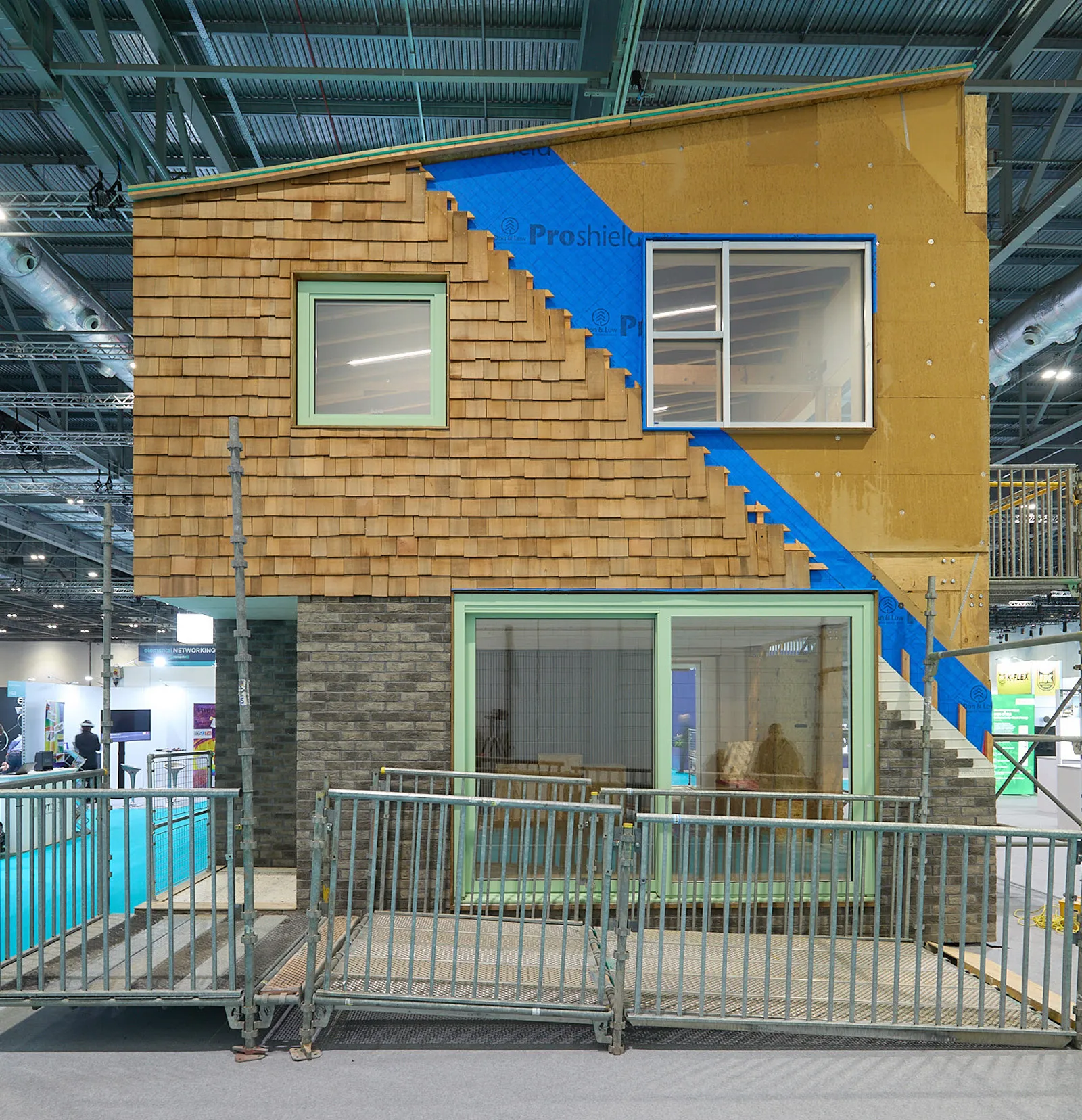
HAUS at elementalLONDON. Photo: Matthew Walder
Architect IF_DO and manufacturer Natural Building Systems have collaborated to produce HAUS, a full-scale installation demonstrating the ADEPT modular construction system. Shown at the elementalLONDON show at the Excel centre last month, the mono-pitched timber structure showcases how bio-based materials can be deployed in cost-effective, adaptable housing.
The prototype illustrates multiple external cladding options to demonstrate system flexibility, while the primary structure employs regenerative materials, including hemp, timber and wood fibre – producing breathable, moisture-buffering and recyclable assemblies. The approach minimises embodied carbon while locking up biogenic carbon within short-rotation biomass materials, effectively turning the building into a long-term carbon store.
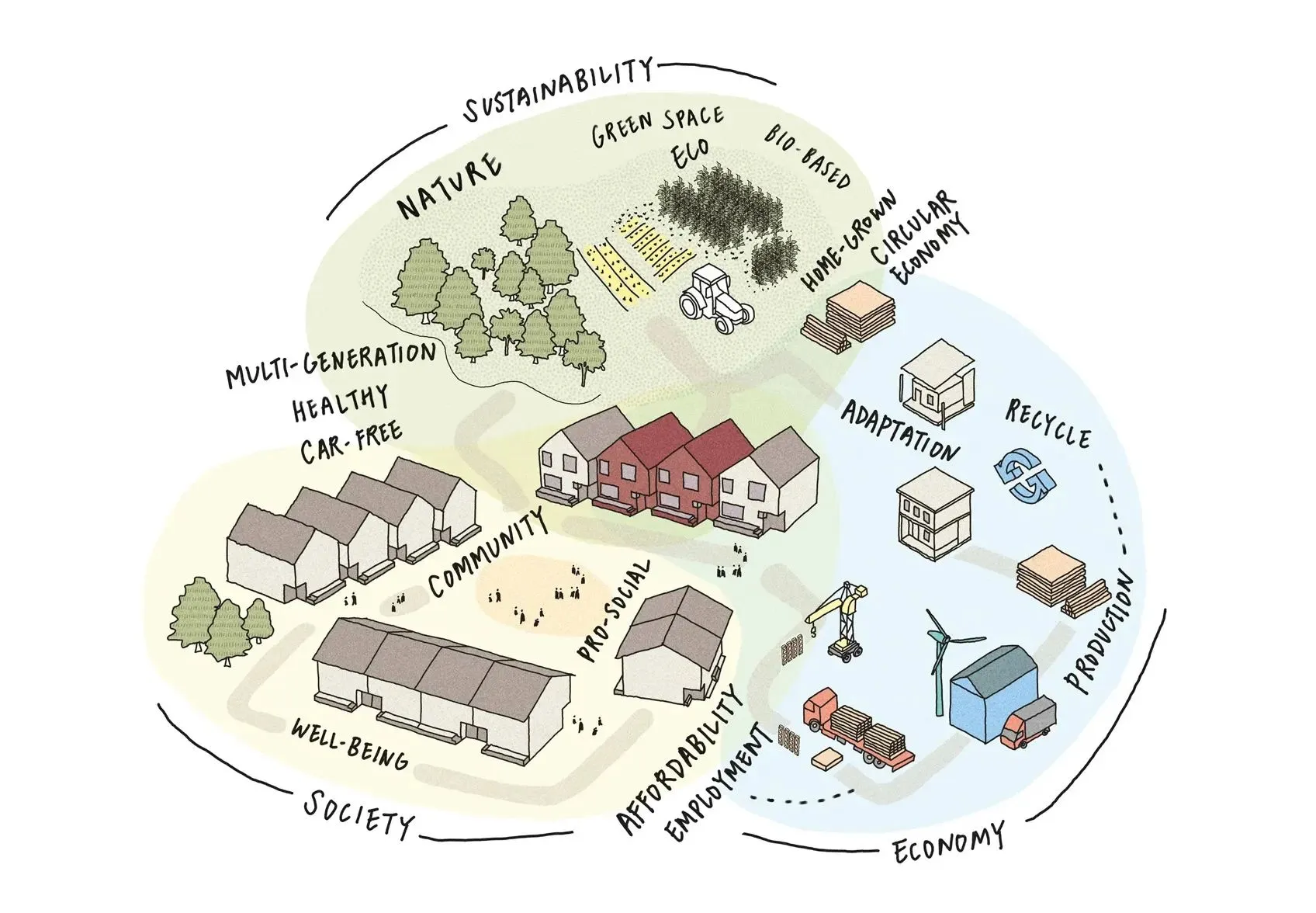
HAUS concept sketch and visualisation demonstrating the replicable housing typology. Image: IF_DO
Natural Building Systems says the ADEPT system links designers, makers, builders and suppliers in a regional supply chain that prioritises traceability and local employment and can produce homes at scale.
Through HAUS, IF_DO and Natural Building Systems aim to demonstrate a replicable housing typology capable of supporting local authorities and developers in meeting housing need with improved environmental performance – particularly in rural and lower-density contexts, where affordability and embodied carbon are critical factors.
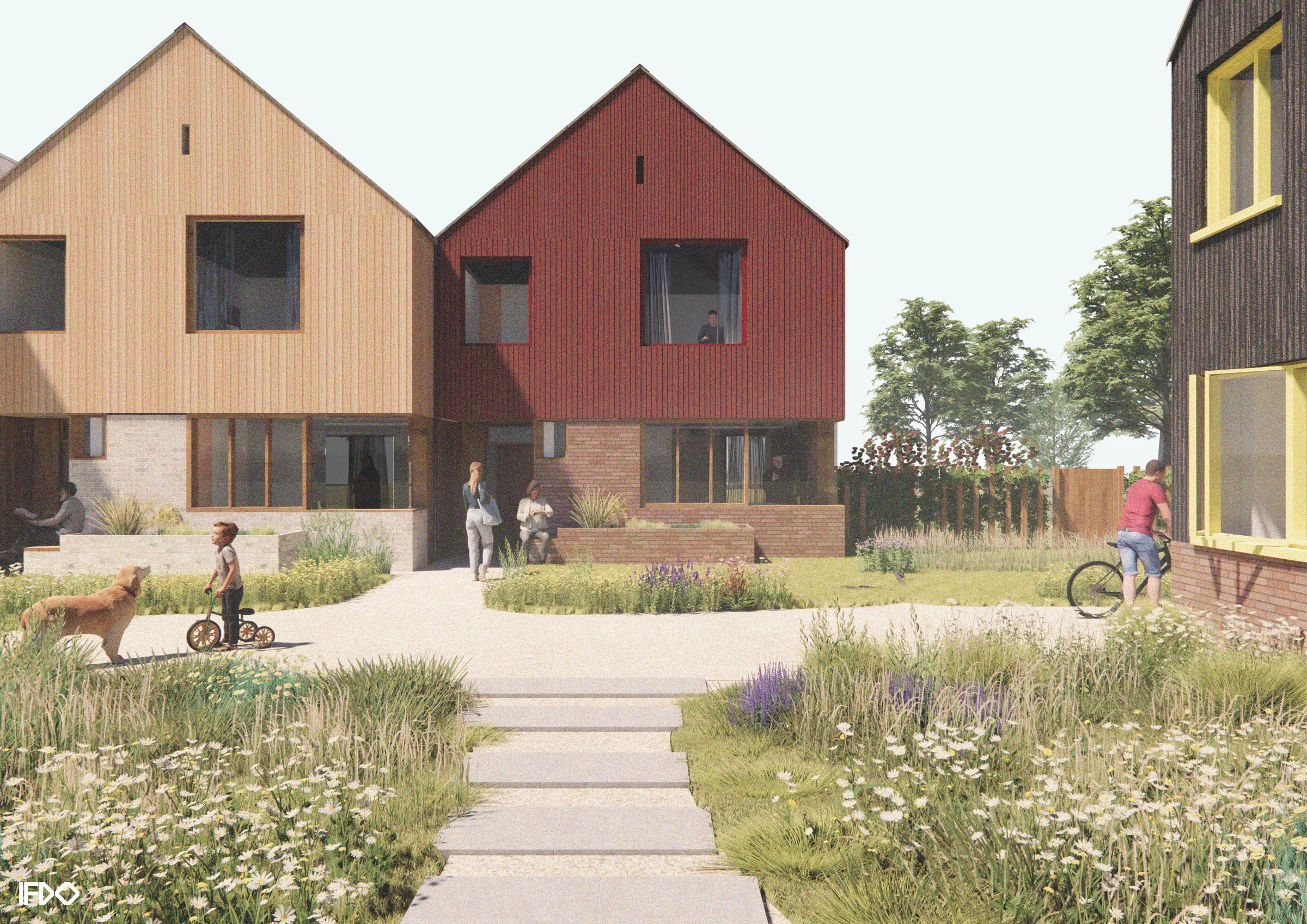
HAUS concept sketch and visualisation demonstrating the replicable housing typology. Image: IF_DO
‘There’s a persistent myth that green design costs more,’ notes IF_DO director Al Scott. ‘Good design should be accessible to everyone.’
HAUS has now been relocated to the University of Suffolk for live monitoring of its energy performance. The findings will inform future iterations of the ADEPT system.