
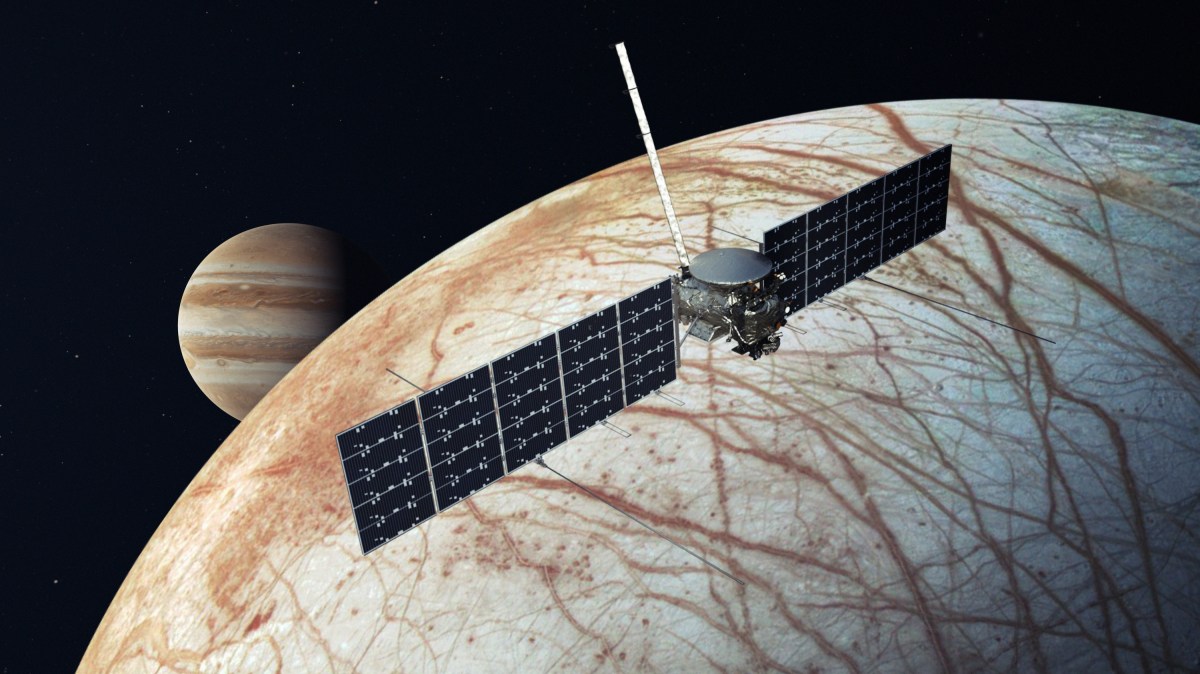
Two space probes are whizzing their way to Europa, an icy moon in orbit around Jupiter, to look for signs of habitability or even alien life.
However, a study suggests their search will be in vain and has quite appropriately poured cold water on the prospect of finding extraterrestrial microbes on the frigid world.
Europa is understood to have a thin crust of ice on its surface, masking a deep ocean of liquid water underneath containing more water than all the seas and oceans on Earth combined. This makes it one of the likeliest spots in the solar system beyond Earth to host extraterrestrial life.
The European Space Agency’s probe — the Jupiter Icy Moons Explorer, or Juice for short — launched in 2023 to study three Jovian moons and is due to perform a flyby of Europa in 2032. Nasa’s Europa Clipper spacecraft launched in 2024 but is expected to reach Europa first, flying by the moon in 2031.
For life to exist in the freezing conditions found almost 500 million miles from the sun, Europa would need to have some source of internal heat through volcanic or tectonic activity, perhaps providing some warmth to its ocean via hydrothermal vents similar to those seen across the seafloor on Earth.
However, a study published in the journal Nature Communications has cast doubt on whether this is possible.
A team from Washington University in St Louis in the United States has analysed the force exerted on Europa by the gravity of Jupiter, to see whether this could cause enough stretching and contraction of the moon to create significant internal heat through friction.
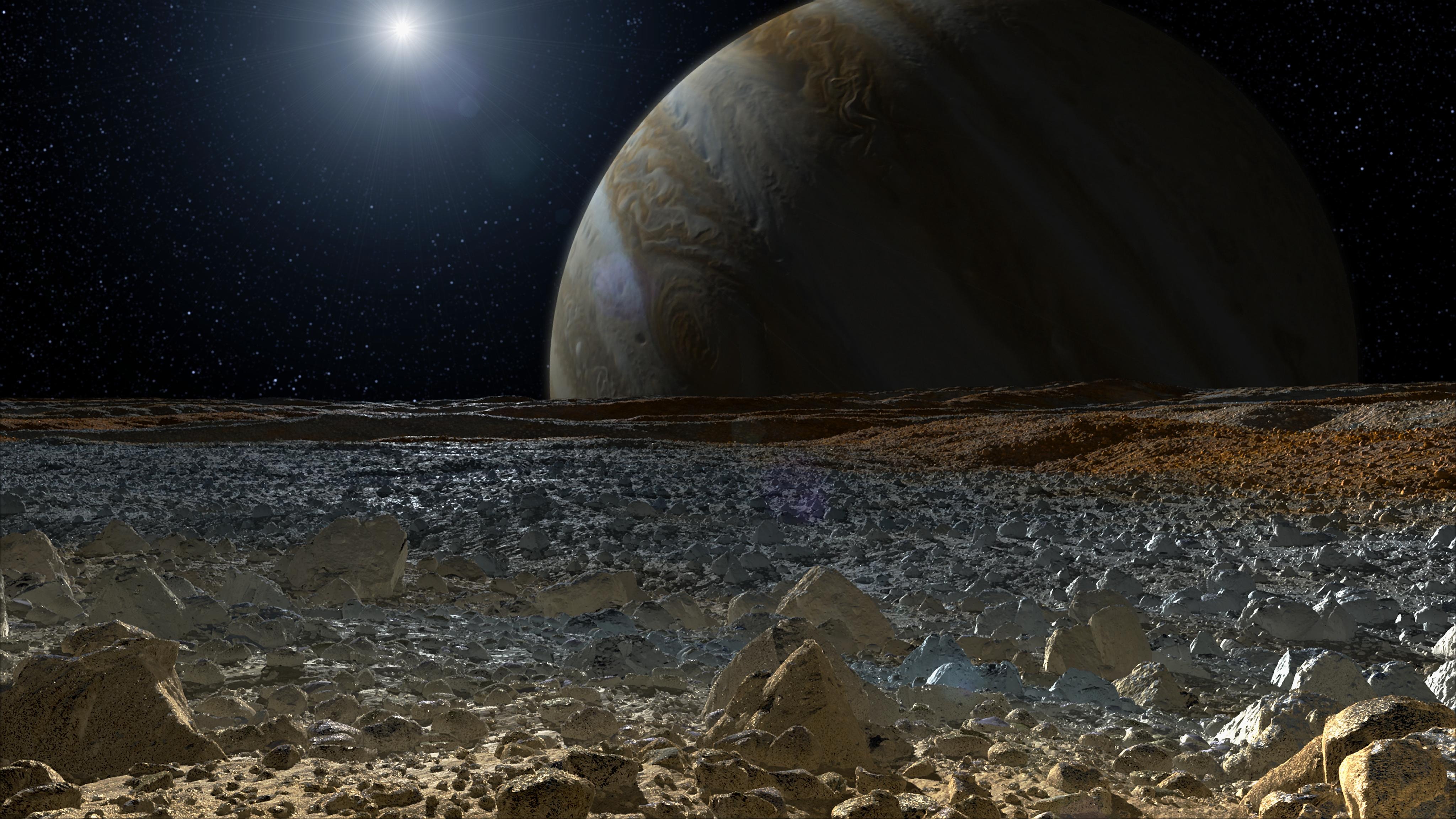
A Nasa rendering of the surface of Europa, which the authors of the report say is unlikely to be concealing tectonic activity
NASA/JPL-CALTECH
They also examined the moon for any signs of tectonic activity similar to that seen on other moons in the solar system, with active volcanoes visible on Io, another of Jupiter’s moons, and geysers of water spotted on Enceladus, one of Saturn’s moons.
“Europa likely has some tidal heating, which is why it’s not completely frozen,” said Paul Byrne, a professor of Earth, environmental, and planetary science. “And it may have had a lot more heating in the distant past. But we don’t see any volcanoes shooting out of the ice today like we see on Io, and our calculations suggest that the tides aren’t strong enough to drive any sort of significant geologic activity at the seafloor.
“For all of the talk about the ocean itself, there has been little discussion about the seafloor.”
This would mean that there is unlikely to be tectonic activity — with colliding plates of rock, active volcanoes or hydrothermal vents — on the seafloor in Europa, which is thought to lie at a depth of about 60 miles, almost ten times deeper than the deepest parts of the ocean on Earth.
“If we could explore that ocean with a remote-control submarine, we predict we wouldn’t see any new fractures, active volcanoes, or plumes of hot water on the seafloor,” Byrne said. “Geologically, there’s not a lot happening down there. Everything would be quiet … The energy just doesn’t seem to be there to support life, at least today.”
• The 50 Nasa projects facing extinction under Trump
He is still excited by missions such as Europa Clipper, however, which will be able to take precise measurements of the ice cap and estimate the size and depth of the oceans beneath.
“Those measurements should answer a lot of questions and give us more certainty,” he said. “I’m not upset if we don’t find life on this particular moon. I’m confident that there is life out there somewhere, even if it’s 100 light-years away. That’s why we explore — to see what’s out there.”