
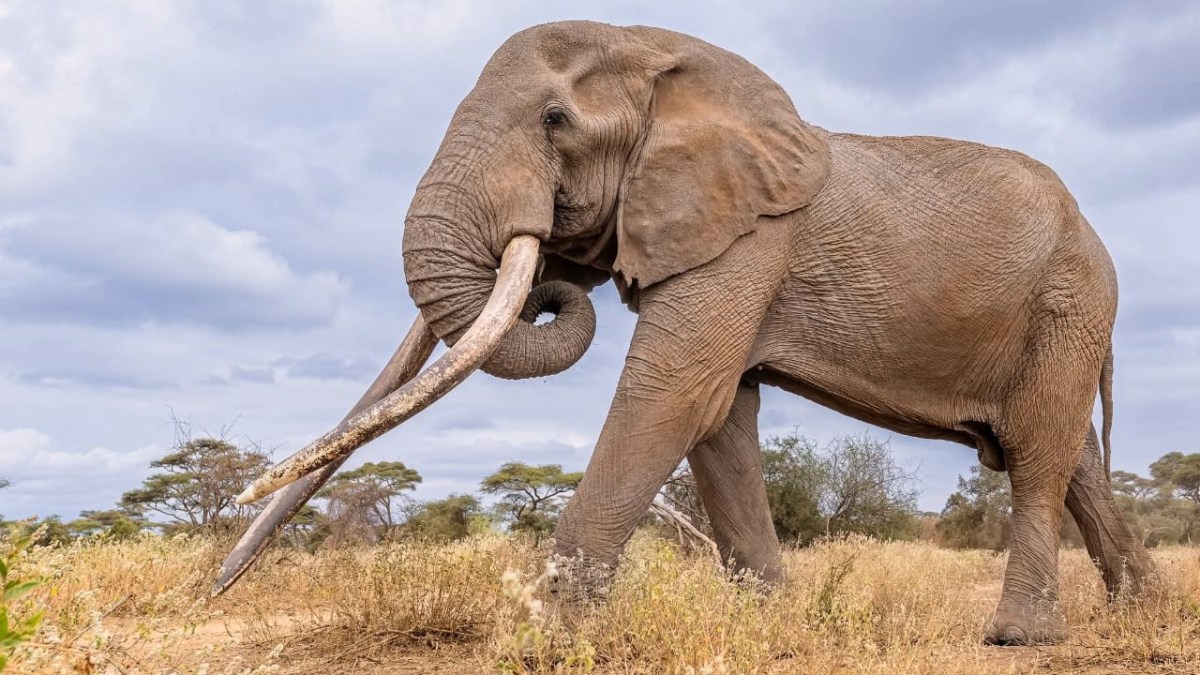
For more than half a century Craig the elephant was a tourist favourite who had a sideline in beer promotion.
Yet the greatest achievement of the so-called super tusker, conservationists said, could be the fact that he lived a long life and died not from a poacher’s bullet but from natural causes, aged 54.
His longevity was being celebrated as evidence of how conservation efforts have curbed ivory poaching. Know for his “ground-sweeping tusks and calm, dignified presence”, Craig died at the Amboseli National Park on Saturday, the Kenya Wildlife Service (KWS) said.
Craig was believed to be one of Africa’s largest super tuskers — rare examples of male elephants with ivory tusks weighing more than 45kg each — and was among the last such creatures on the continent.
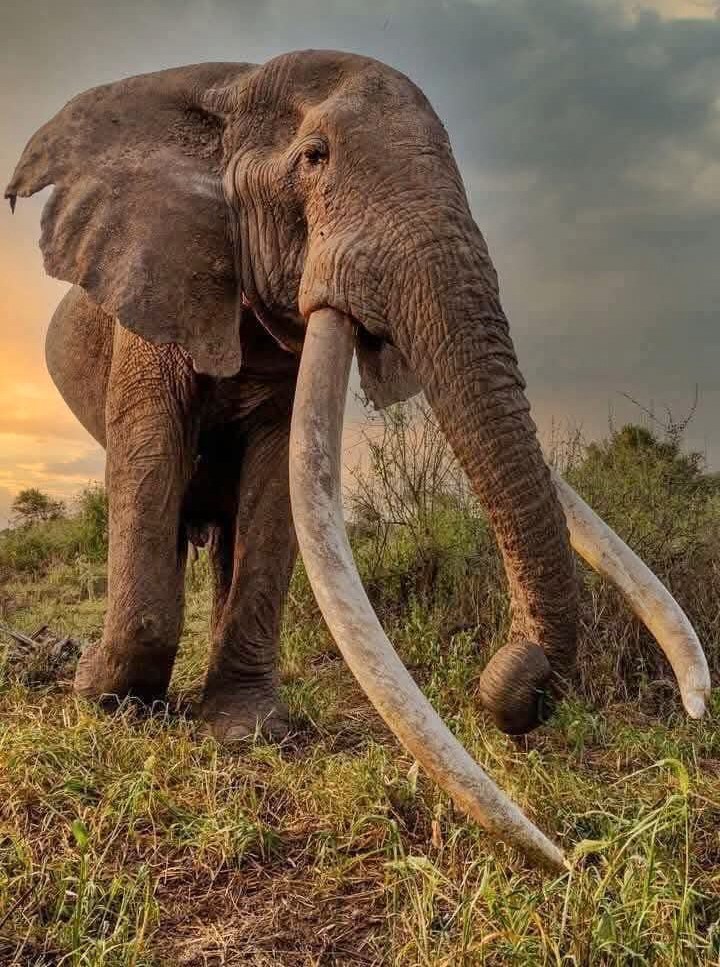
Craig “was deeply loved for his remarkably calm nature”
KENYA WILDLIFE SERVICE/AP
“It is rare for an elephant with ivory this large to die of natural causes in the wild. A huge debt of gratitude goes to [those] who guarded him day and night for years so he could live a full life,” Adventure Safari Africa, a tourism outfit based in Arusha, Tanzania, said.
Craig was one of Africa’s most photographed animals and in 2021 was made the ambassador of the Kenyan beer brand Tusker.

Craig’s likeness adorned Tusker beer bottles
ALAMY
“Beyond his extraordinary tusks, Craig was deeply loved for his remarkably calm nature,” the KWS said. “He appeared to understand his place in the world — often pausing patiently as visitors photographed and filmed him. Widely documented and admired globally, he became a true ambassador of Amboseli and a symbol of what successful conservation looks like.”
• In pictures: photographers support Kenyan elephant sanctuary
African savannah elephants are the world’s largest land mammals, with adult males weighing about six tonnes, and in the past creatures like Craig would have been a prized targets for poachers. During the peak of the modern global ivory trade in the 1970s and 1980s, about 70,000 African elephants were killed each year by poachers, according to the United Nations Environment Programme.
“Thanks to his many protectors [Craig] died peacefully,” the Amboseli Trust for Elephants said.
The KWS will decide what to do with Craig’s remains, including his tusks. The body of another of Amboseli’s super-tuskers, the elephant Tim who died in 2020, is preserved at the National Museum of Kenya in Nairobi.
Amboseli is one of Africa’s most dense elephant habitats, with as many as 2,000 roaming the fertile plains below Mount Kilimanjaro on the border with Tanzania.
• Conservation with Kalashnikovs — the wild life of a dictator’s zoologist
The park has been instrumental in Kenya’s successful campaign to rejuvenate elephant populations that suffered decades of poaching. The number of elephants in Kenya grew to 42,072 last year, according to government estimates, up from 36,280 in 2021.
“Craig sired many calves — his legacy lives on, strengthening the future of Africa’s endangered elephants,” World Wildlife Fund Kenya said.