
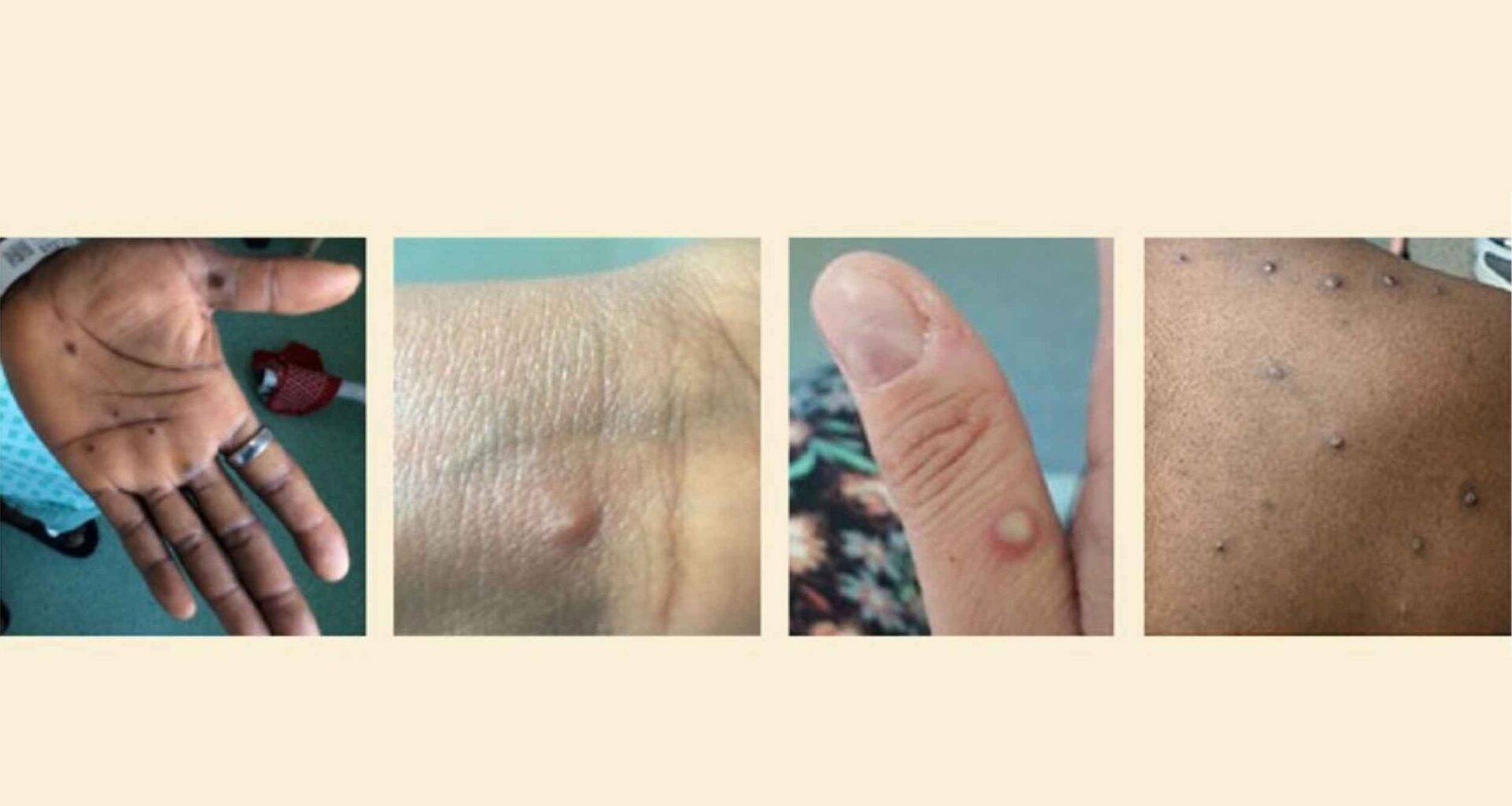
A new form of the mpox virus has surfaced in England, detected in a traveler returning from Asia and carrying a hybrid strain that blends genetic material from two different mpox lineages.
The finding arrives amid a busy year for the virus, with global health agencies reporting roughly 48,000 confirmed mpox cases worldwide.

Since 2022, mpox – a viral cousin of smallpox – has reshaped sexual health clinics across multiple continents.
What has scientists paying close attention now is not just the hybrid discovery itself, but what is happening alongside it.
A related strain, known as clade Ib, is appearing in people with no recent travel history, signaling that local transmission may already be underway in several countries.
Together, these developments suggest that mpox is still evolving – and that its next phase may be unfolding quietly, case by case.
Tracking a new mpox hybrid virus
Scientists describe the new virus as a recombinant, a hybrid strain formed when two related viruses mix genes.
The work of summarizing recent patterns was led by the World Health Organization (WHO), which published an update this month.
That report describes 43 new clade Ib infections found in several regions outside areas with long-standing outbreaks.
Clade Ib belongs to a clade, a genetic branch within the mpox virus family, that has recently appeared outside African hotspots.
The organization currently judges the risk as moderate for men who have sex with men and low for most other people.
From Africa to global spread
Scientists identified clade Ib after outbreaks in South Kivu, central Africa, where mpox spread through close contact.
From those beginnings, clade Ib has caused outbreaks in African countries and appeared in Europe, Asia, and the Americas through infected travelers.
More recently, countries such as Italy and the United States have detected clade Ib infections with no travel history, indicating local spread.
In some clusters, men who have sex with men account for most cases, but infections also appear among household contacts and children.
Differences between mpox clades
Animal experiments have found that infections with clade I viruses cause more severe disease than infections with clade II viruses.
Historically, infections with the older clade Ia form have killed several percent of patients in some African outbreaks.
In contrast, clade IIb viruses that spread in 2022 have produced fatality rates below one percent in countries with strong health systems.
Early data from outbreaks driven by clade Ib suggest its fatality rates are below one percent where patients can reach medical care.
When viruses swap genes
A genomic analysis documented recombination, the exchange of genetic material between related viruses, among mpox strains sampled during the global outbreak.
Recombination can occur when a person is infected with two mpox clades at once, allowing the viruses to swap pieces of DNA.
These analyses suggested that recombination was reshaping the virus before clade Ib emerged, making hybrid viruses a possibility rather than a surprise.
A genetic report found that clade Ib sequences show signs of recombination, creating hybrid lineages related to clade IIb viruses.
Detecting a recombinant virus
Genomic testing in England showed that the traveler carried a hybrid mpox virus made from clade I and clade II strains.
Genomic testing made it possible to detect the new mpox strain, and its emergence fits normal patterns of viral evolution, with further analysis expected to clarify how mpox is changing.
To date, officials have reported only this recombinant case, and there is no evidence it causes more severe illness than other clades.
The case highlights how global travel and circulation of mpox clades give the virus more chances to recombine and produce new variants.
Who faces highest risk
Men who have sex with men with multiple partners face risk of clade Ib infection, particularly if they have not been vaccinated.
People with weakened immune systems, including those with untreated HIV infection, are more likely to develop severe disease or die from mpox.
Children, pregnant people, and those with other serious conditions also face higher risks of complications and, in rare cases, death.
Complicating prevention efforts, some infections cause no symptoms, allowing people to pass the virus without realizing they are infected.
How doctors test for mpox virus
After exposure, symptoms usually begin within one to three weeks, often with fever, swollen lymph nodes, and a rash or genital lesions.
Doctors confirm mpox using polymerase chain reaction, a laboratory method that copies amounts of viral DNA, usually from swabs of skin lesions.
When no skin lesions are present, clinicians may test throat or anal swabs, although a negative result does not rule out infection.
Confirming that an infection belongs to clade Ib requires genomic sequencing, reading the virus genetic code so scientists can group related cases.
Travel, stigma, and staying informed
Health agencies are not calling for travel bans, but they urge travelers to know mpox guidance and seek testing if symptoms appear.
People who notice mpox symptoms, such as a rash or genital sores, should isolate, avoid sexual contact, and follow medical advice until lesions heal.
Experts stress that mpox is not limited to gay or bisexual men, and that stigmatizing communities can discourage testing and discussion of risk.
Community organizations, sexual health clinics, and digital networks share accurate information about mpox, promote vaccination, and counter misinformation without blaming any group.
Mpox in the year ahead
The spread of clade Ib and the appearance of a hybrid virus in a traveler suggest that mpox is adapting to humans.
Key questions remain about whether this hybrid will change how easily mpox spreads or how severe infections become in different groups.
Expanded vaccination, continued genomic sequencing, and strong HIV care will help determine whether mpox remains limited to clusters or grows into larger outbreaks.
Experts stress key steps: getting vaccinated if eligible, seeking testing for symptoms, and talking with partners so mpox transmission chains can be broken.
—–
Like what you read? Subscribe to our newsletter for engaging articles, exclusive content, and the latest updates.
Check us out on EarthSnap, a free app brought to you by Eric Ralls and Earth.com.
—–