
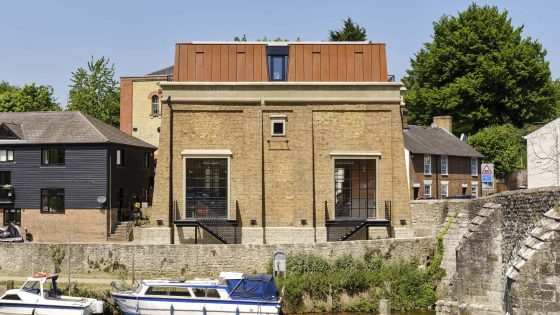
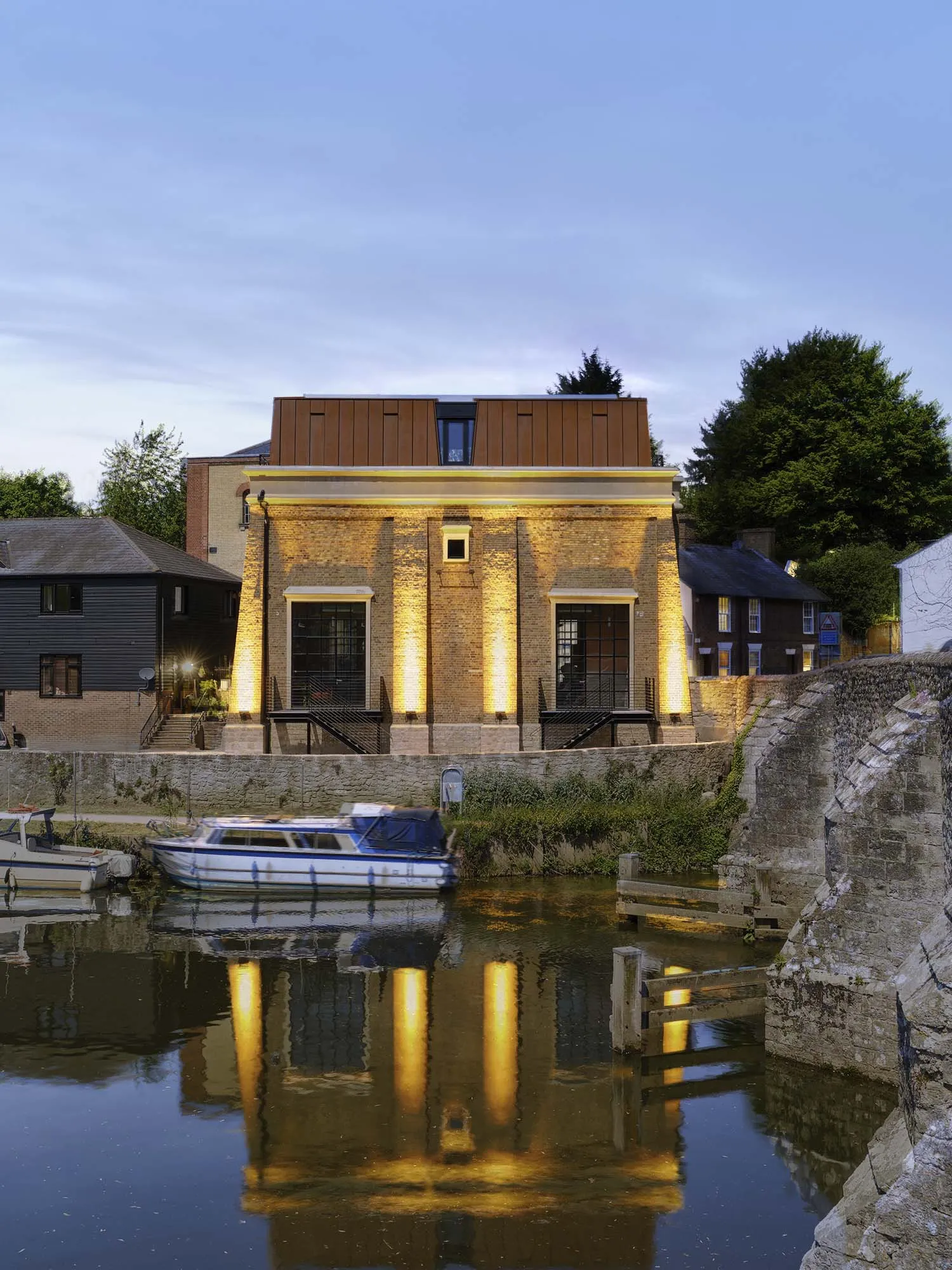
The conversion of the Grade II-listed landmark on the banks of the River Medway in Kent includes the addition of a new Cor-ten steel extension which echoes the distinctive tapered form of the original building.
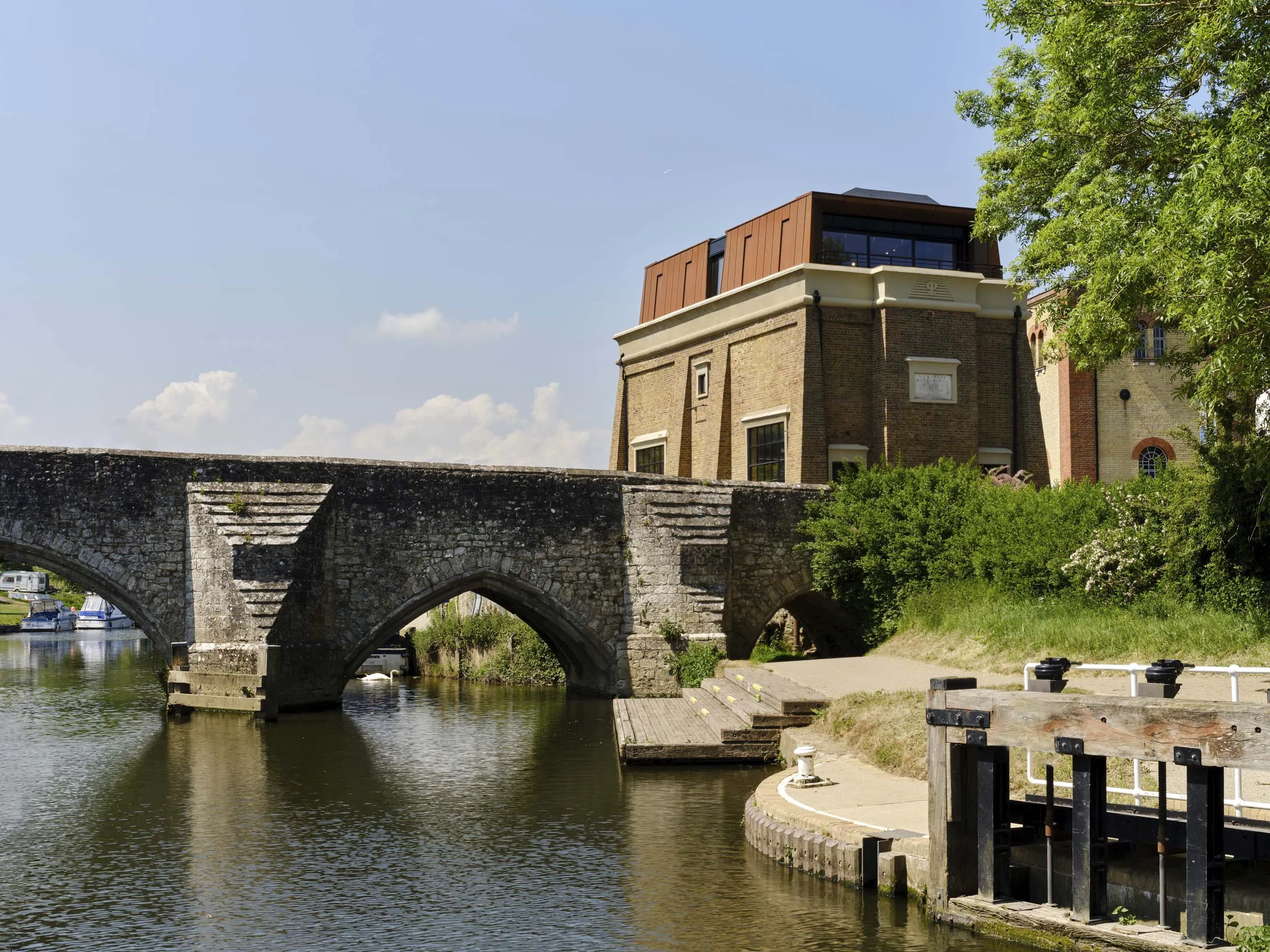
The Grade II-listed building was built in 1860 by James Pilbrow. Its form was inspired by Ancient Egyptian structures such as the Temple of Horus at Edfu on the banks of the Nile. The original design included a chimney in the shape of an obelisk, which has since been demolished.
The riverside location meant flood resilience was central to the design. The ground floor has been tanked and finished with robust terrazzo and tiling finishes to resist water ingress and damage. Electrical systems have been raised above potential flood levels, while the lower staircase run has been finished in durable exposed concrete. Lightweight, movable furniture allows spaces to be quickly reset after a flood.
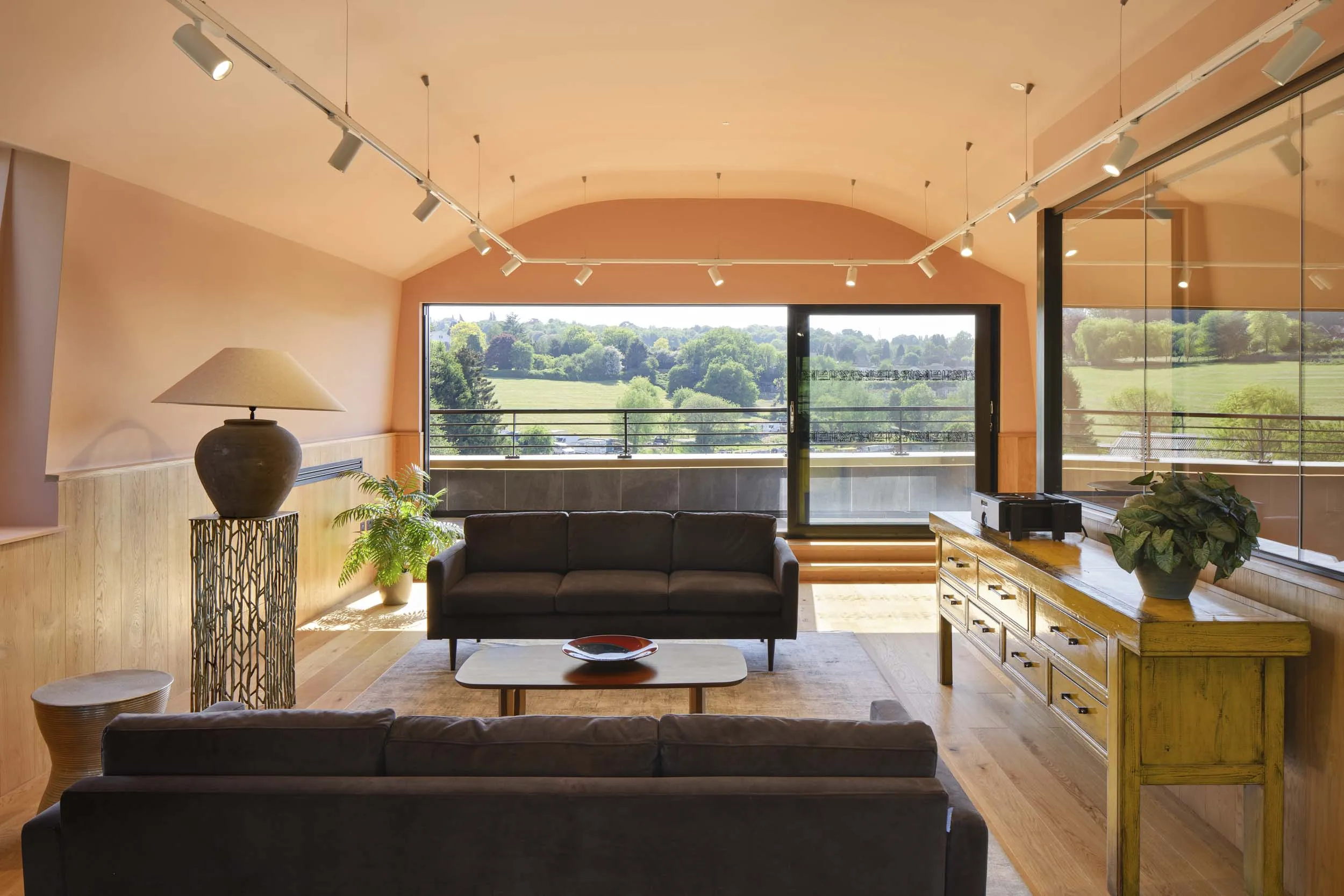
The most visible intervention is a new roof extension, clad in Cor-ten steel, which accommodates an executive suite. It has a tapered, sculptural profile inspired by that of an Egyptian pylon or monumental gateway. A slim light slot divides the new volume, echoing the original façade rhythm and allowing daylight deep into the upper floor.
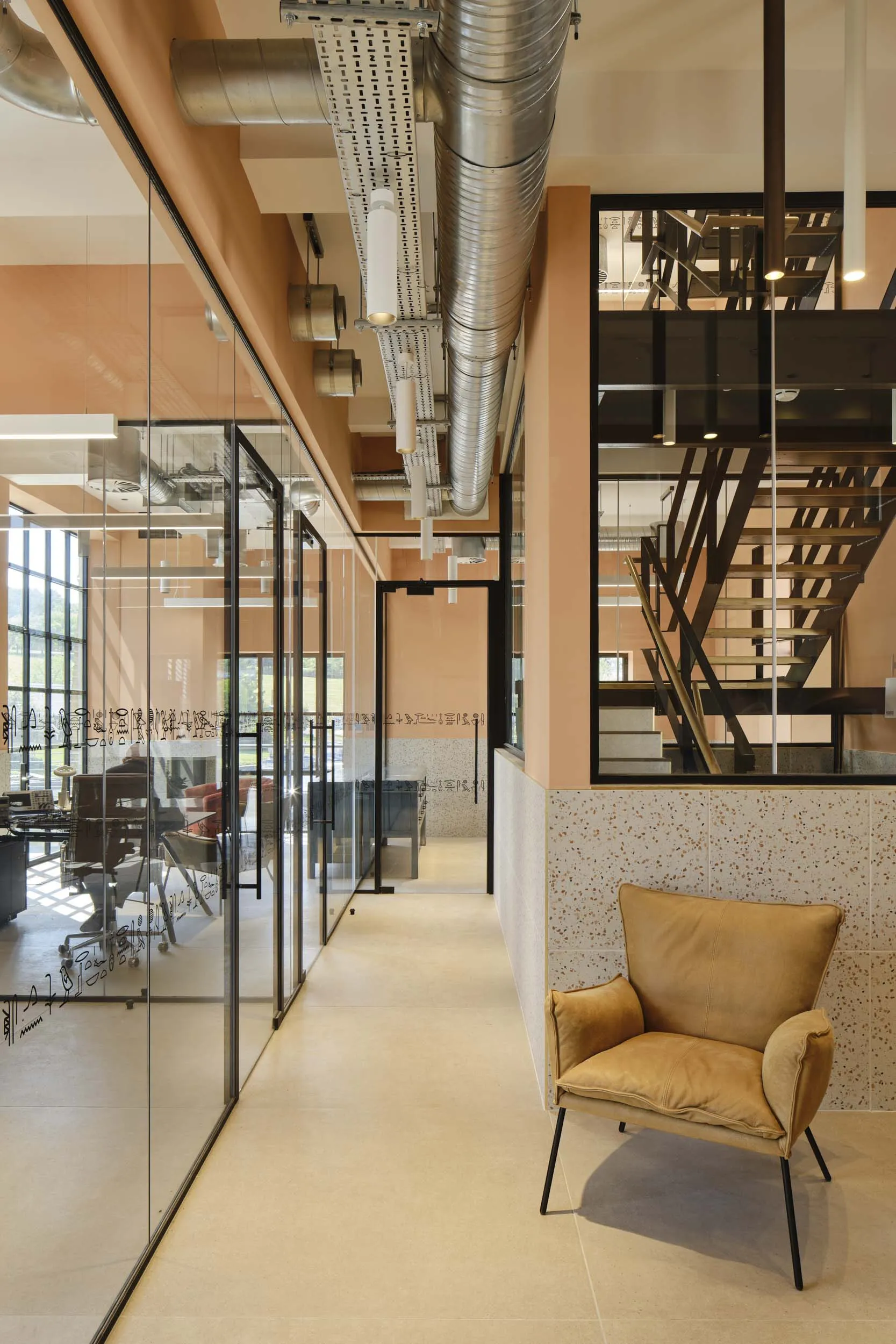
Inside, the previously dark, cellular interior spaces have been transformed into a light-filled, flexible workspace. Glazed partitions open up long views through the building, connecting spaces and floors. Steel windows frame vistas of the river, linking the workplace to its setting. A warm palette of sandy hues has been used while the bespoke glass partitions are etched with hieroglyph-inspired motifs telling the dual story of the Nile and Medway Rivers.
Architect’s view
This project was about embracing the extraordinary character of a rare piece of Egyptian Revival architecture, while ensuring that it could support a contemporary business in a challenging riverside location. By drawing on historic references and designing with flood resilience at the core, we aimed to create a workplace that honours the past, responds to the present and provides a sustainable legacy for the future. It has been a privilege to work with Chord Electronics on such a unique and ambitious commission.
Felix Lewis, founder and director, Felix Lewis Architects
Client’s view
Our newly designed conversion for the Works building has transformed how we work and present ourselves as a high-end audio company. Felix Lewis has managed to work with the character of the original listed, Egyptian inspired, industrial 19th century building, designing a beautiful contemporary extension with a superb aesthetic that reflects our brand perfectly. The spaces are not only visually striking but also highly functional, creating an inspiring environment for both staff and clients alike. The architect’s fine attention to detail and ability to balance heritage with contemporary design added real value to the project, exceeding our expectations at every stage.
John Franks, CEO, Chord Electronics
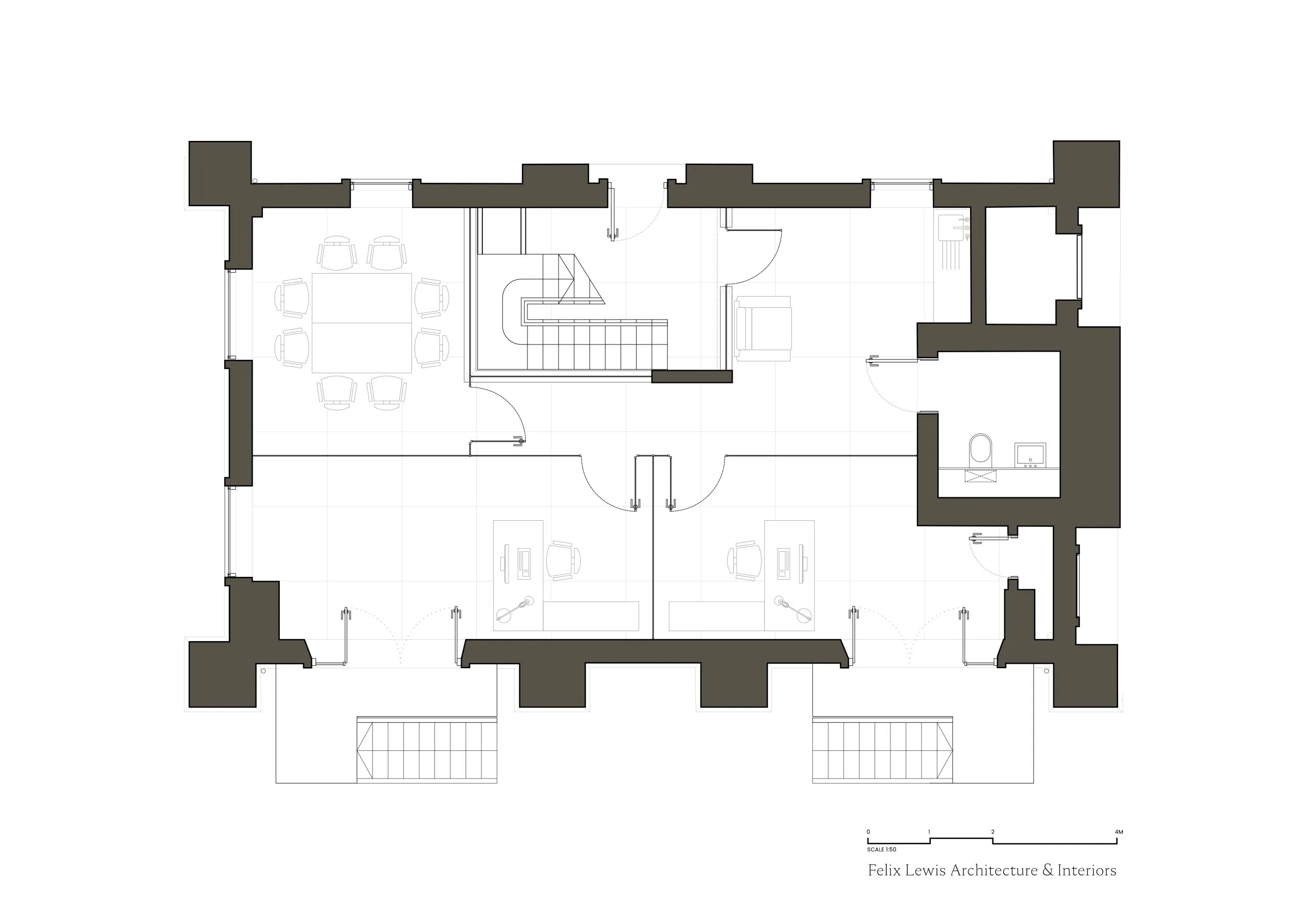
Ground floor plan
Project data
Location East Farleigh, Kent
Start on site June 2023
Completion January 2025
Gross internal floor area 244m2
Construction cost Undisclosed
Architect Felix Lewis Architects
Client Chord Electronics
Structural engineer Considine Consulting Engineers
Interior designer Felix Lewis Architects
Lighting designer Integrated Light
Planning consultant DHA planning
Main contractor Inline Design