
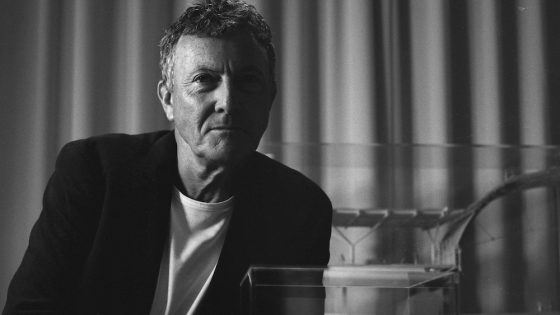
Figures released by the ARB show that the number of architects who paid to stay on the register before the 31 December deadline was ‘broadly in line’ with the numbers rejoining at the beginning of 2025.
Last month Williamson announced he would become the first president in the RIBA’s post-1945 history not to be a qualified architect by refusing to renew his subscription – a shock move which he claimed would ‘draw attention to the absurdity of the current regulatory framework’.
Williamson said he wanted to highlight the ‘ineffectiveness’ of the UK registration system which only protected the legally restricted title ‘architect’ – and not the function – while failing to provide ‘oversight of the competence of those who undertake architectural services or activities’.
However, unlike the 69-year-old co-founder of WW+P, a total of 38,726 architects did decide to renew their ARB registration for 2026, according to figures supplied by the regulator.
This means the number of architects on the register at the beginning of 2026 is similar to the 38,981 who renewed at the start of last year.
The AJ also understands the number of strike-offs for non-payment of the retention fee – which went up by 10 per cent to £225 this year – was marginally lower than at the beginning of 2025.
According to the RIBA, Williamson’s surprise resignation from the register – which he said he hadn’t ‘taken lightly’, paved the way for an institution-backed campaign to establish ‘a new regulatory model’ for UK architects.
It also provoked widespread debate on social media about the role of the ARB and about whether other architects would follow Williamson’s example.
A poll run by the AJ in the wake of the RIBA president’s announcement found that 90 per cent of respondents agreed with Williamson’s decision to end his ARB membership, with just 10 per cent disagreeing.
In total, more than 600 individuals responded to the AJ survey. Of those, 23 per cent told the AJ they were ‘thinking about resigning’ their ARB membership; 4 per cent said they were ‘definitely going to resign’, and 8 per cent said they ‘already resigned’ from the ARB.
Williamson’s resignation from the register followed rumours that government officials were looking at whether to introduce protection of function for architects.
In November the AJ reported that advisers to the Ministry of Housing, Communities and Local Government (MHCLG) working on the design and scope of a new single construction regulator were also reviewing whether to legally prevent architects’ job functions from being carried out by unqualified individuals.
Talking about this year’s figures, a spokesperson for the ARB said: ‘[The] number of architects on the register at the beginning of 2026 is broadly in line with the position at the beginning of 2025, when there was a little over 39,000 architects on the register.
‘Resignation levels were consistent with the previous year and were driven primarily by demographic factors, notably retirement (55 per cent) and relocation outside the UK (30 per cent). Strike-offs for non-payment of the retention fee were lower than in the prior year, further supporting the stability and integrity of the register.’
During 2025 the number of qualified architects on the register rose to 41,000 by mid-December and the total is also expected to increase throughout 2026.
The RIBA has been contacted for comment.
Selected (annoymous) comments from the AJ’s December survey
‘I felt compelled to renew my membership even though I’m deeply unhappy about it, especially given there is seemingly no protection afforded by the ARB and, even worse, membership and architect status increases the likelihood of being viewed as professional and therefore potentially sued.’
‘What does the ARB do for me? I can still be RIBA if I so chose. The CPD programme should be tailored to be relevant to all staff levels within an architectural practice so it is appropriate to their role in the business.’
‘I admire Chris Williamson’s resignation, but as junior/mid-level architects at the start of our careers it’s not a luxury we can afford. I hope more in senior (and secure) roles follow suit.’
‘I have never been able to see the point of the ARB … we have a fully established professional body in the RIBA and I would like to see the RIBA having more influence and prestige in society. I do not think that the ARB does anything to enhance this endeavour.’
‘Chris Williamson’s statement regarding not renewing his ARB membership was not clear and appeared reactionary. He should have stated this in his election manifesto and make a clearer statement on what he thinks should happen next.’
‘I applaud Chris Williamson for taking a clear, public position on an issue many architects care about. The attention it has attracted is useful: it forces a conversation about standards, accountability and public trust. That said, I’m not persuaded that protection of function fixes what is actually broken. Even if it were achieved, it wouldn’t address the structural pressures that are damaging outcomes: under-resourced planning, long-winded procurement models that reward lowest price, fragmented appointment scopes, and fees that don’t match the risk and responsibility we’re asked to carry.
Those are the conditions in which quality is lost and they won’t change simply because a function is restricted.
There’s also a significant risk. If the profession’s primary message becomes ‘you must use us’, we invite a backlash from clients, contractors and other professionals and distract from the harder work of making it obvious why appointing architects early and keeping them engaged through delivery produces better, safer, more sustainable buildings.
If we want to spend political capital, I’d put it into: properly funding planning; procurement reform that values long-term outcomes; clearer policy on quality and whole-life carbon; and a much more confident, evidence-led articulation of the value architects bring.
One practical example: under the Building Safety Act, our experience of taking on the BRPD role (albeit not on high risk buildings) has strengthened continuity and accountability beyond RIBA Stage 3 and supported pushing for traditional procurement and safeguarding design intent.
I’m open to being convinced but the case needs to show, concretely, how protection of function changes outcomes on cost, risk, procurement behaviour and built quality, rather than assuming it will.’