

Bella Bayliss’ sudden weight gain was actually a symptom of her Gastro-Intestinal Stromal Tumour (GIST), a rare form of cancer — but it was missed at first by medics Bella Bayliss was diagnosed with a rare cancer(Image: Kennedy News/@bellabayliss)
A young woman claims doctors dismissed her bloating as simply “women’s problems” — which was actually a sign of her rare cancer.
When Bella Bayliss, 25, experienced stomach bloating and pain, breathlessness and tingling in her hands and legs, she went to A&E only to be reportedly told she had “women’s problems”. These symptoms persisted despite Bella being unable to eat a lot, even struggling to manage any of her christmas-dinner>Christmas dinner.
So Bella was convinced she had something serious, and returned to hospital, where she demanded an endoscopy. This revealed a 6cm tumour in her stomach, a sign of Gastro-Intestinal Stromal Tumour (GIST), a rare form of cancer caused by a sarcoma developing in the digestive system.
Expressing her shock today, Bella, from Gloucester, said she wants to share her story to help raise awareness of the cancer and reminded Brits to be confident about their own bodies.
READ MORE: ‘My husband and I both have brain cancer – we were diagnosed just months apart’READ MORE: Prostate cancer treatment by boosting diets ‘could help men avoid surgery’ Bella, pictured at Christmas, continues to remain optimistic (Image: Kennedy News/@bellabayliss)
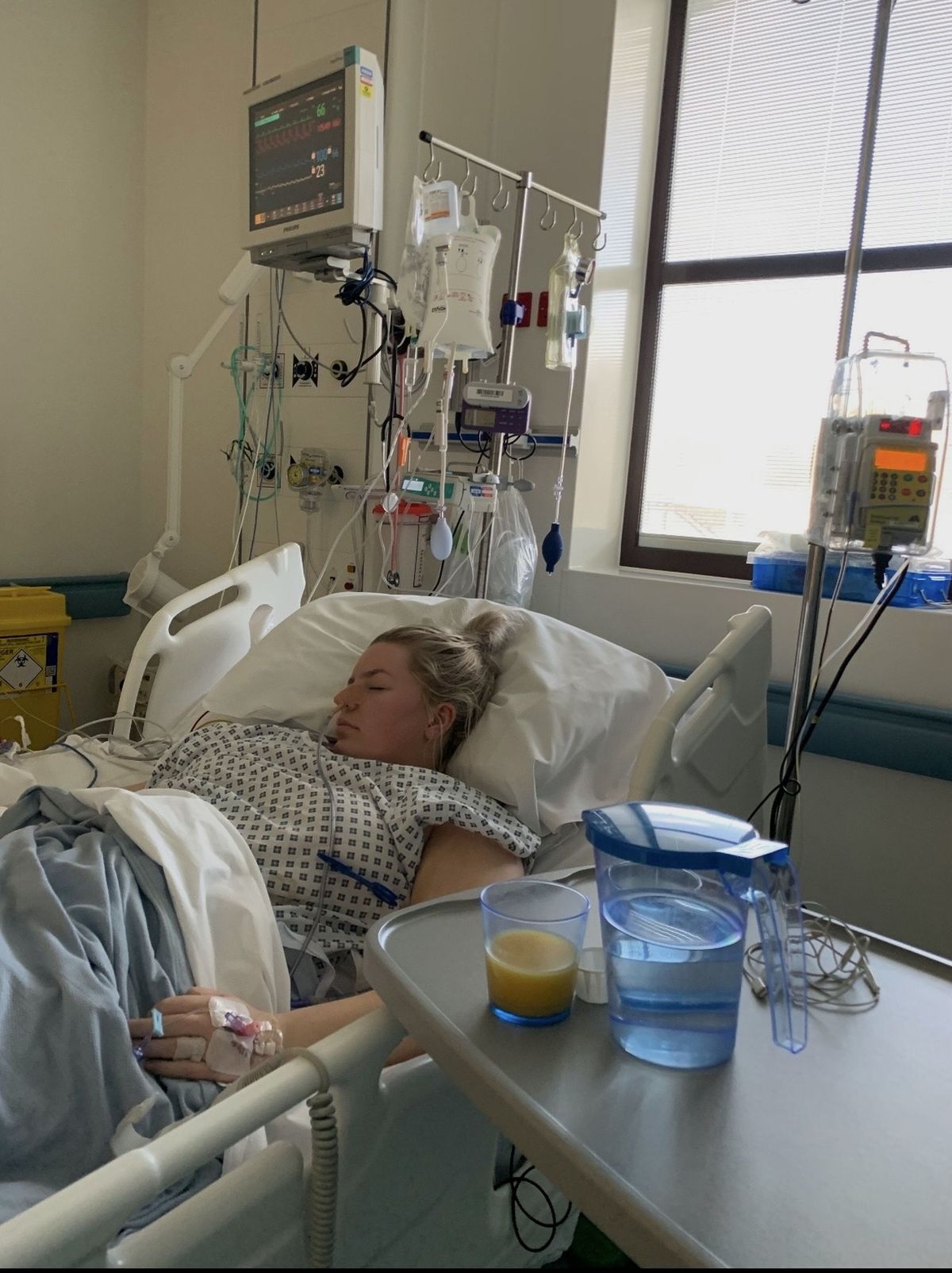 The young woman has been in and out of hospital(Image: Kennedy News/@bellabayliss)
Bella underwent surgery to remove the cancer and 70% of her stomach weeks after her diagnosis. However, in October last year — almost six years after the first diagnosis — Bella was devastated to learn the cancer had returned and she needed further surgery.
The transport assistant administrator said: “At first I was shocked because after five years you think it’s a part of your life you can put behind you. I was very shocked, me and my mum and dad were devastated. This time it felt different, I think you worry when it comes back. I know what to expect, I’m extremely overwhelmed and tired.”
The latest surgery said the operation left her struggling to eat dairy and large amounts of food, while the scar on the stomach has impacted her confidence. She said there is currently no medication to treat her cancer and that the only solution is surgery.
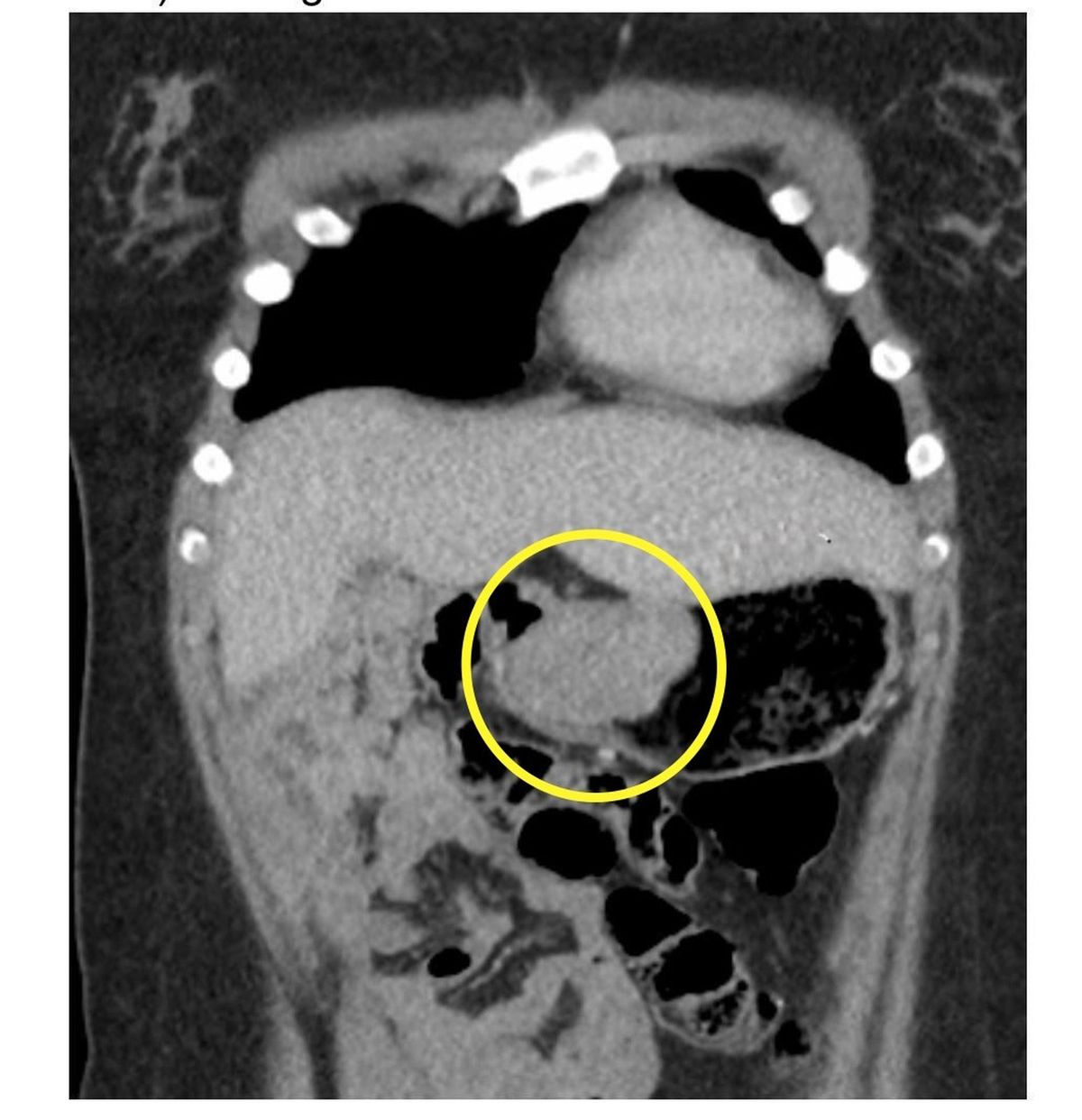 Scans found Bella had a 6cm tumour in her stomach(Image: Kennedy News/@bellabayliss)
But the symptoms in 2019 were dismissed by doctors at Gloucestershire Royal Hospital, Bella claimed. Recalling this period, Bella said: I went to hospital because I was extremely anaemic, they sent me home and blamed it on women’s problems. I knew it wasn’t that.
“I used to work at a supermarket and I was waking up quite early in the morning and I blamed it on that. I was getting really breathless doing normal activities, I was really pale, I had constant stomach pains.”
“I had lost my appetite completely, my legs were going numb, [I had] tingly hands, tingly legs. I went home and a few months later I went back because I was anaemic again and I had an endoscopy and that’s when they found the tumour in my stomach.”
The cancer is rare and complex. According to the NHS, a GIST is a rare type of sarcoma found in the wall of the digestive system. It is most often found in the stomach, but it can also grow in other parts. A soft tissue sarcoma is a type of cancer.
A Gloucestershire Hospitals NHS Foundation Trust spokesperson said: “We are very sorry to hear that Miss Bayliss’s cancer has returned, and we understand how distressing this must be for her and her family.
“We are also sorry about the experience she had with her care in 2019 and 2020. Isabella’s condition is rare and diagnosis requires a high degree of clinical suspicion.
“We are sorry that it was not detected when she was first seen and have used her experience to reinforce the importance of appropriate investigation in similar situations.”