
The UK Ministry of Defence confirmed that British Armed Forces provided operational support to the United States in the interdiction and seizure of the oil tanker Bella 1—later renamed Marinera—in the North Atlantic, in an operation led by Washington and linked to the enforcement of sanctions against evasion networks associated with Russia, Iran, and Venezuela.
X de U.S. European Command
According to the official statement released on January 7, the British contribution included airborne surveillance and reconnaissance capabilities provided by the Royal Air Force (RAF), alongside naval support from a vessel of the Royal Fleet Auxiliary (RFA). The operation took place between the United Kingdom and Iceland, following a formal request for assistance from the United States, and was conducted—according to London—in full compliance with international law.
X de Ministry of Defence 🇬🇧
The key role of the P-8A Poseidon in the North Atlantic
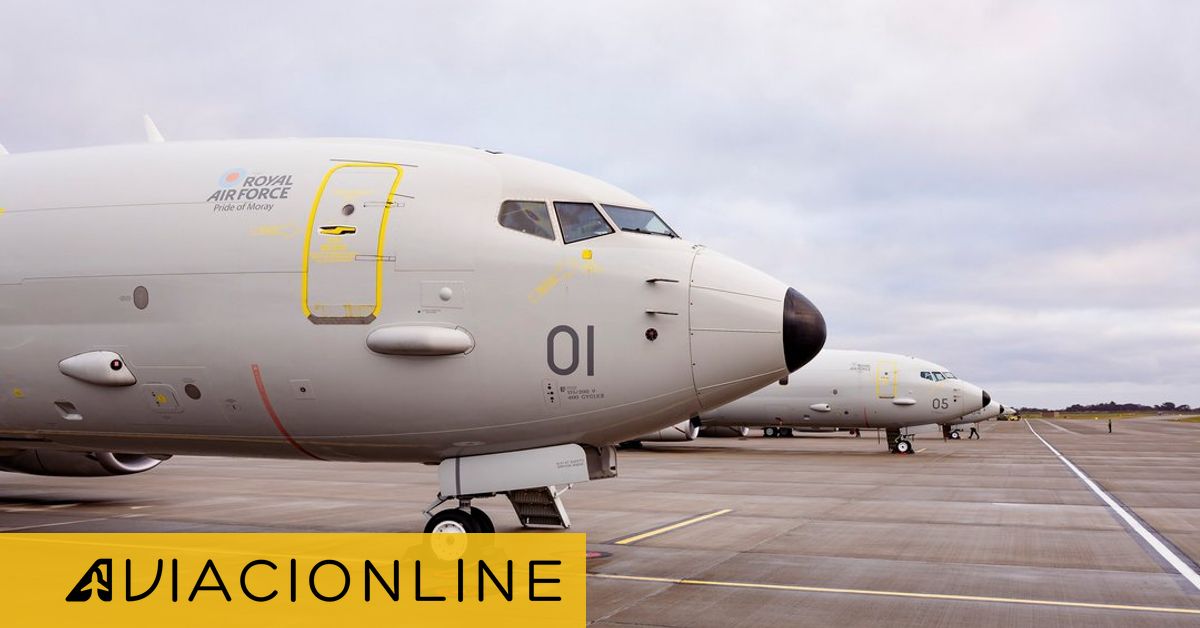
From a military aviation perspective, the most significant element of the UK’s involvement was the employment of RAF maritime patrol assets, most likely Boeing P-8A Poseidon MRA1 aircraft, currently the UK’s primary platform for maritime surveillance, anti-submarine warfare (ASW), and long-range intelligence, surveillance, and reconnaissance (ISR) missions.
Based at RAF Lossiemouth, the P-8A Poseidon constitutes the backbone of Britain’s capability to control the North Atlantic and monitor hostile or covert naval activity. Equipped with a multimode synthetic aperture radar, electro-optical/infrared sensors, ESM systems, and secure data links, the Poseidon enables persistent detection, classification, and tracking of surface contacts, even in highly complex environments and under conditions of information denial—such as those involving vessels operating with transponders switched off or under false flags.
P-8A Poseidon de la RAF lanzando sonoboyas durante una misión de entrenamiento ASW.
The Bella 1 was tracked for more than two weeks across the Atlantic, and during the final phase of the operation, reports indicated the presence of a Russian submarine in the area—an element that further underscores the relevance of deploying aircraft with advanced ASW capabilities such as the P-8A. In this context, the RAF’s airborne contribution proved critical in ensuring maritime situational awareness, early warning, and deterrence against potential interference.
Cooperation with Washington’s closest ally
UK Defence Secretary John Healey emphasized that the operation demonstrated “the depth and effectiveness of the defence relationship between the United Kingdom and the United States,” stressing that the security of the North Atlantic is vital to both nations. From an operational standpoint, the action reflects the high degree of doctrinal and technical integration achieved between the RAF and U.S. forces, particularly in the air-maritime domain.
The UK’s fleet of nine P-8A Poseidon aircraft, acquired through the U.S. Navy’s Foreign Military Sales (FMS) programme, reached initial operating capability in 2023 and is now fully integrated into allied North Atlantic surveillance frameworks. Joint training—rooted in the legacy of Project Seedcorn—and interoperability with U.S. assets allow these aircraft to operate as force multipliers in multinational maritime control, sanctions enforcement, and strategic deterrence missions.
Beyond the vessel: sanctions, the “shadow fleet,” and air-maritime control
The Bella 1, sanctioned by the United States under its Iran-related sanctions regime, has been identified by London and Washington as part of the so-called “shadow fleet”—a network of vessels used to evade sanctions through flag changes, AIS shutdowns, and opaque routing. According to the UK Ministry of Defence, the United Kingdom has already sanctioned more than 520 vessels linked to such practices, with a direct impact on Russian energy revenues.
Within this framework, the employment of platforms such as the P-8A Poseidon strengthens allied capabilities to make the maritime domain transparent—an expression historically used by the RAF to describe the combined effect of sensors, range, and airborne persistence in countering submarines, covert vessels, and illicit activities at sea.