
During the Big Bash League fixture between Perth Scorchers and Melbourne Renegades on Wednesday, there was a moment of some controversy.
With the contest in the balance, Ashton Turner believed he had caught striker Oliver Peake, only for the third umpire to adjudge it Not out – much to the displeasure of the home crowd.
However, the officials were absolutely right in their decision. The Law states that for a catch to be completed, the fielder must be in complete control of the ball AND their own movement.
In this example, while Turner maintains control of the ball throughout the incident, as he caught it he tumbled backwards, falling head over heels and, in the process, twice touching the ball on the ground. Given he was falling, it is clear that Turner was not in control of his own movement, and so the catch was not completed, and the ball touched the ground. Not out.
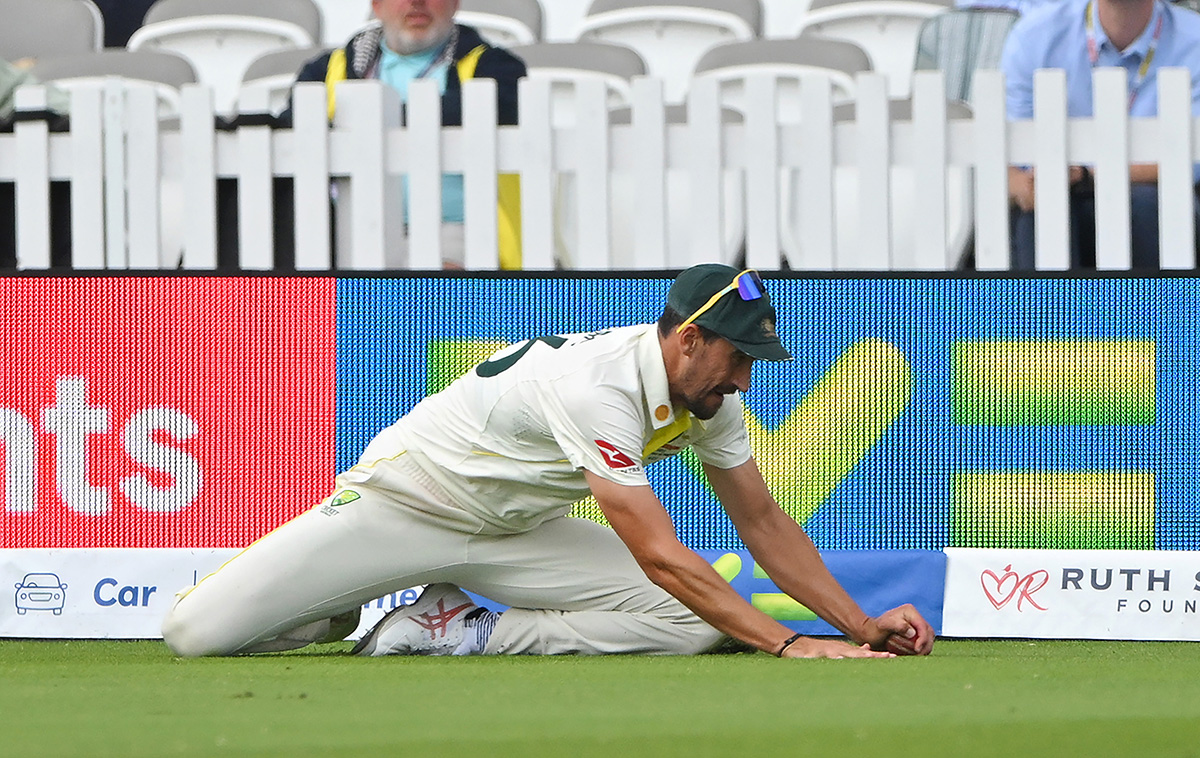
We have seen incidents like this before – most notably Mitchell Starc at Lord’s in 2023 – but it is worth re-stating not only that in these scenarios the striker should always be given Not out, but also why this Law is so important.
.jpg "laws-of-cricket-(1).jpg") If a fielder drops the ball after landing but while still moving – perhaps as their elbows hit the floor – no-one would doubt that the catch had not been completed. If the fielding is near the boundary, and the fielder falls onto the rope with ball in hand, again, it would have been widely accepted that it was six runs. It is no different if a player puts the ball on the floor while falling or diving, or if they choose to throw the ball up in celebration before they have achieved control of their own movement.
If a fielder drops the ball after landing but while still moving – perhaps as their elbows hit the floor – no-one would doubt that the catch had not been completed. If the fielding is near the boundary, and the fielder falls onto the rope with ball in hand, again, it would have been widely accepted that it was six runs. It is no different if a player puts the ball on the floor while falling or diving, or if they choose to throw the ball up in celebration before they have achieved control of their own movement.
This is not a new piece of Law but, with increased numbers of cameras in grounds capturing more footage from different angles, similar examples are being brought to light more often. MCC once again urges all players to take extra care and ensure that they are in full control of their own movement before disposing of the ball or putting it on the ground.