
To this day, Laura Wellington struggles to identify the moment her relationship with her youngest daughter Imogen went catastrophically wrong.
Was it when she declined to pay for law school after paying in full for an expensive university education?
Was it when she suggested two wedding celebrations on two continents might be excessive, implying a dinner for the second one might be more appropriate? Or was it when she remarked that her daughter’s wedding dress was on the revealing side?
Whichever one, she knows the ultimate result: the 59-year-old mother of five was disinvited from Imogen’s nuptials and blocked from contacting her altogether.
She has not spoken to her for nearly two years, joining the ranks of the estimated one in five adults who are estranged from their children, grieving for a person they no longer see.
It is a deeply painful path to tread, dotted with anguish, sorrow and self-recrimination. ‘A permanent knife to the chest,’ as Laura puts it now.
But in her case, there is another emotion too: profound anger that the daughter she loved, nurtured and supported could cut ties so abruptly.
It is an anger she has taken public. Last year, she created a TikTok account called ‘Doormat Mom’ and recorded a withering message for her followers. ‘Were you a really good parent who did the best they could and yet your child has decided to be an ungrateful little b*****d as an adult?’ she asked.
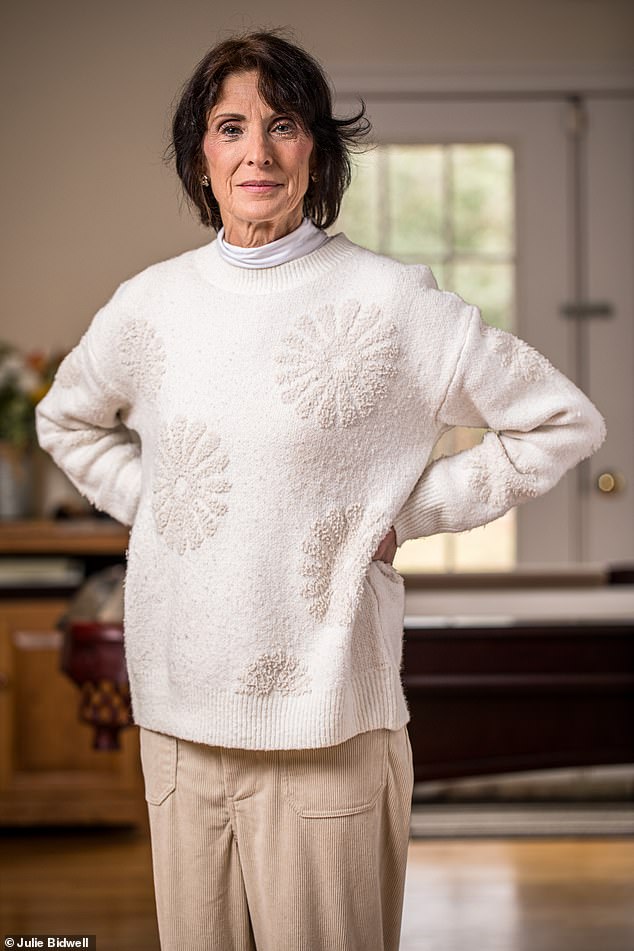
Mother of five Laura Wellington was disinvited from her youngest’s nuptials and blocked from contacting her altogether
‘We need to connect here. We need to support each other, and we need to talk about it.’
The post went viral, amassing nearly half a million views and thousands of new followers – the majority fellow parents whose children had, to use the parlance popularised on social media, ‘gone no contact’.
‘People got in touch from all over the world telling me their stories,’ she says from her home in the US. ‘How alone they felt, how desperate. Many had thought about committing suicide.’
The messages strengthened Laura’s resolve to what she calls ‘push back’. ‘I’m not a bad person and I wasn’t a bad parent,’ she insists. ‘I did the best I could for all my kids, like most parents. But good enough just doesn’t seem to be enough any more.’
Articulate and charismatic, Laura admits she is as surprised as anyone to find herself a spokesperson for a movement that’s become known as ‘defiant estrangement’. She asks wryly: ‘It’s not a role anyone aims for, is it?’
The product of a happy, loving childhood, she has a close relationship with her own parents, both now in their 80s, still married, and with whom she speaks every Sunday night. Laura says: ‘Were they perfect parents? No – because that doesn’t exist. But they were solid people. They worked hard and did the best they could. I had a really nice upbringing that I am hugely grateful for.’
It is an upbringing she sought to replicate when, aged 25, she married her first husband, Dean.
Their first child, a son, now 32, arrived two years later, followed in swift succession by two daughters, now aged 30 and 28, and finally 26-year-old Imogen.
She also has a 15-year-old son from her second marriage.
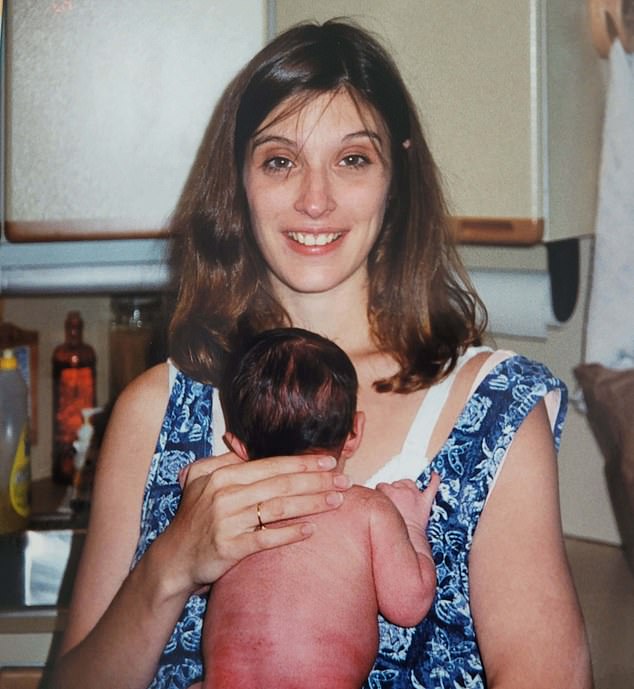
Laura, cradling newborn Imogen, was deeply hurt when she later rejected her
Alongside their growing family, Laura and her first husband founded two thriving technology companies, but Laura says it was motherhood that brought her the greatest fulfilment.
‘I really thrived on being a mum and wife,’ she recalls. ‘We had this incredible life and a wonderful marriage.’
That is, until seven years after their wedding – and just months after Imogen was born – when Dean was diagnosed with stage four cancer of the small intestine.
He survived for three years before passing away in 2002, aged 40, leaving Laura widowed and a single mother to four children at just 35.
Her eyes fill with tears as she recalls the bewildering years that followed, battling to keep the businesses afloat while raising the grieving children amid the devastation of her own loss.
‘It was tough, but I was always present,’ she says. ‘I didn’t miss a play. I didn’t miss an event. My kids had been through so much and I wanted to be there for them, like any mother would.’
She remained close to all her children as, one by one, they flew the nest, including Imogen, who left for university in California at 18 to pursue an environmental degree.
‘I felt her drifting away from me a little at this stage, but nothing you wouldn’t put down to a young person finding their own way,’ Laura recalls.
Then, around a year after graduation, aged 23, Imogen rang home to say she had resigned from her graduate job to go travelling.
Laura says: ‘Of course, like any mum I was concerned, but she had made up her mind.’
After several months traversing the globe – staying in touch throughout – Imogen arrived in Australia, from where she announced her intention to go to law school.
‘She also wanted me to pay for it, and that’s when I said no for the first time,’ Laura says.
‘I’d already put her through her degree, and my view was that if she wanted to pivot, she had to fund it herself. I paid for all my kids’ educations and whatever they needed, but this felt different. I wasn’t convinced she’d see it through. She seemed OK about it.’
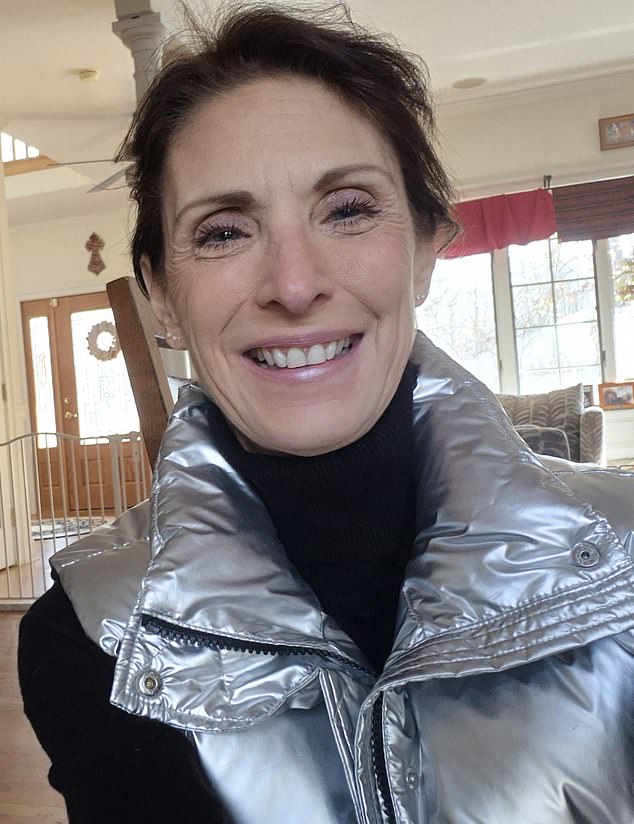
The name of Laura’s TikTok account Doormat Mom reflects how she felt, and hit a nerve. Messages poured in from parents across the world, many thanking her for making them feel less alone – particularly mothers
Indeed, less than a month later, Laura received another call from Imogen telling her she no longer wanted to go to law school.
‘She also told me she’d fallen in love,’ Laura says. ‘I was introduced to the man briefly over FaceTime and he seemed nice enough.’
Laura was nonetheless taken aback when, less than five months later, in early summer 2024, Imogen announced her intention to marry and asked whether her mother would fund a second wedding celebration in the US after the initial Australian ceremony.
‘It was slap-bang around the same time one of my other children was getting married,’ Laura says.
‘I told her that I could happily host a dinner or celebration, but I wasn’t going to pay for a second wedding. Again, she seemed to accept that, although who knows if that was another black mark against my name.’
Shortly afterwards, however, Imogen rang in tears saying she had no one to go wedding dress shopping with.
Laura recalls: ‘I suggested we do it virtually, and she said she would love that.’
Unbeknown to her, the moment would prove disastrous. After Imogen emerged in a dress Laura felt was too revealing, she was accused of body-shaming.
‘She contacted me later that day and said she was self-conscious about her body and couldn’t believe I’d called her fat,’ Laura says.
‘I never used that word – it wasn’t even in my mind. I would never disparage someone like that, especially my own daughter.’
Relations nonetheless still seemed cordial enough, with Laura speaking to her future son-in-law on the phone shortly afterwards.
Laura says: ‘He asked for my blessing, which was sweet. He seemed like a nice person. I told him I was looking forward to meeting him at the wedding.’
She pauses. ‘What I can only assume is that he went back to her and said I intended to come, because I then started getting panicked calls suggesting I fly out another time when we could, to use her words, ‘spend more time together’.
‘I said I didn’t want to fly out another time – I wanted to see my daughter get married. I was shocked there was even a suggestion I wouldn’t be there.’
A week later, Laura received the call from Imogen that shattered her. ‘Her exact words were: ‘I know you’re not going to like this, but you’re not allowed to come to the Australian wedding – and since you’re seeing a therapist, you can work it out with him.’ ‘
Laura’s eyes fill with tears.
She says: ‘You can actually feel your heart snap. In that moment, it felt like I’d lost my daughter. I mumbled something like, ‘I must make you really uncomfortable’ and then hung up.’
In the bewildering aftermath, Laura admits she struggled to make sense of what had happened. ‘Losing my husband was bad,’ she says quietly. ‘This was…’ She pauses. ‘I’m surprised I could stand. I was in shock.’
Three days later, she received a Facebook message from Imogen asking for documents required for the Australian ceremony.
‘So I can’t attend, but now she’s asking me to help with paperwork,’ Laura says.
‘It just felt wrong.’
She ignored the message, deciding to step back rather than respond in anger. ‘Once she realised I wasn’t going to help any more, she and her partner blocked me on everything,’ Laura says.
It was then, she adds, that something inside her tripped.
‘I was deeply hurt – but I was also angry. I couldn’t understand what I’d done to deserve this. And I knew I couldn’t be the only one going through it.’
Laura created her TikTok account Doormat Mom soon afterwards, its name reflecting how she felt, with her saying: ‘You turn your life inside out for a child you love, and suddenly it’s diminished. You feel like a doormat – like you’ve been walked over.’
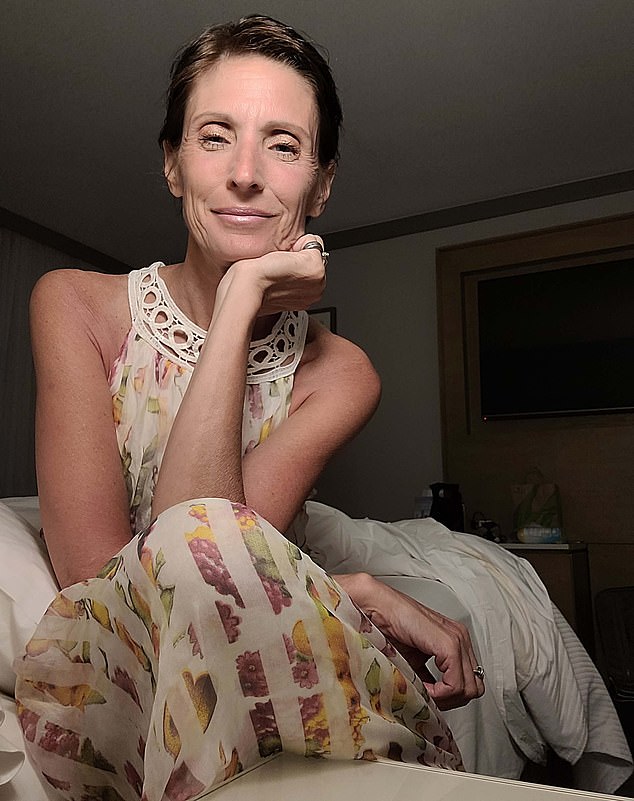
Imogen’s estrangement is not an isolated thing, says Laura, but extends to the majority of the extended family, including all her siblings, leaving everyone similarly baffled and saddened
That post hit a nerve. Messages poured in from parents across the world, many thanking her for making them feel less alone – particularly mothers, whom Laura believes are often the focus of adult children’s grievances. ‘Fathers reached out too, but mostly mothers. They’re usually the primary caregivers and often become the target of anger.
‘What struck me was the stigma. People told me they often lied or remained silent about their situation because there’s an assumption that if your child cuts you off, you must have done something wrong.
‘And, of course, sometimes parents have done something wrong – but often they haven’t.’
Convinced she was tapping into something bigger, Laura set up a Facebook group and, six months later, she self-published a memoir, Doormat Mom, No More! When Good Parents Finally Say ‘Enough’ To Their Ungrateful Adult Kids. She released it on the weekend of her daughter’s wedding in December 2024.
At this point, of course, any sympathy might waver at what appears a provocative, retaliatory move – but Laura insists that is not the case.
‘It wasn’t two fingers up,’ she says. ‘For weeks, I was waiting for the call saying, ‘Mom, I’m sorry. I freaked out. Please come’. I would have jumped on a plane without a moment’s hesitation.
‘But when the weekend came with no call, I realised she’d started her new life without me – and it was time for me to start mine.
‘The book marked a new beginning. And most of it isn’t about my story anyway. It’s about this wider phenomenon.’
That phenomenon is what Laura calls an ‘epidemic of estrangement’, fuelled by what she believes is shifting social values and the toxic legacy of social media.
‘Family used to be the core of your life,’ she says. ‘Now that influence has shrunk, replaced by social media telling you to prioritise your feelings above everything else.’
She is particularly incensed by the endless posts from young people claiming: ‘You don’t owe your parents anything.’
Indeed, her TikTok rebuttal ‘Yes, you owe your parents!’ struck another chord, amassing nearly 1.8 million views.
‘Of course, if a relationship is abusive, walking away could be necessary and healthy,’ she admits.
‘But now you have influencers – and even therapists – saying if your family makes you feel even slightly uncomfortable, it’s OK to cut them off. There’s a lack of loyalty, or nuance.’
Some would argue Laura’s own public denunciation of her daughter mirrors that behaviour. Certainly, alongside messages of gratitude have come brickbats from critics accusing her of lacking self-reflection. It’s an accusation Laura robustly refutes.
She insists: ‘Look, if my daughter had said, ‘You hurt my feelings, can we talk about it?’ then we could have done that. But that’s not what happened. There was this absolute shutdown and nothing I did could justify that.’
She points out that Imogen’s estrangement is not an isolated thing but extends to the majority of the extended family, including all her siblings, to the best of Laura’s knowledge, leaving everyone similarly baffled and saddened.
‘As far as I know, she hasn’t reached out to those she grew up with or anyone formerly closest to her. That hurts them and hurts me too,’ she says.
Of course, by airing her feelings so publicly Laura is no doubt sabotaging any chance of reconciliation. Astonishingly, she says it is a risk she is willing to take.
‘Some parents are so desperate to reconcile that they erase all boundaries,’ she says. ‘I won’t do that. I love my daughter to death – but that doesn’t mean she can walk back into my life whenever she chooses.
‘She hurt me terribly. She broke my trust. That has consequences. Of course, I want her back in my life – but even if she came to me tomorrow wanting to reconcile, it wouldn’t happen overnight.’
In the meantime, the forlorn milestones that mark so many estrangements continue to come and go. Christmases, birthdays – the first anniversary of a wedding Laura did not attend, not to mention the possibility of future landmarks in the form of grandchildren she may not meet.
They loom large, but Laura is steadfast in her belief that her pushback is justified.
‘You move back and forth through the emotions,’ she says. ‘One day, you cry and miss them unbearably. The next you’re angry you could be discarded so easily. It’s not right, and I’m not going to stop speaking out.
‘And if I have to sacrifice my own relationship so other parents don’t walk down this road, I will do it.’
Imogen’s name has been changed.