
For Ben Stokes, the historic opportunity to become one of “the lucky few” England captains to regain the Ashes in Australia, ended with him standing forlornly at slip, injured and unable to bowl, in a match where he made a duck and one. Instead, he joined Alastair Cook and Joe Root as England captains who, since Andrew Strauss last won here 15 years ago, have been unable to withstand the weight of history or derail the Australian cricketing machine.
At 2.30pm on a blazing-hot Sydney afternoon, Stokes simply took off his cap wearily and shook the hands of every one of his team-mates after Alex Carey, one of only a handful of Australia’s players who have enhanced their reputation in this series, drove Will Jacks to the extra-cover boundary to put the full stop on this Ashes and complete a successful run chase, albeit one touched with undeniable nerves. A five-wicket victory confirmed the 4-1 series mauling — a fair result.
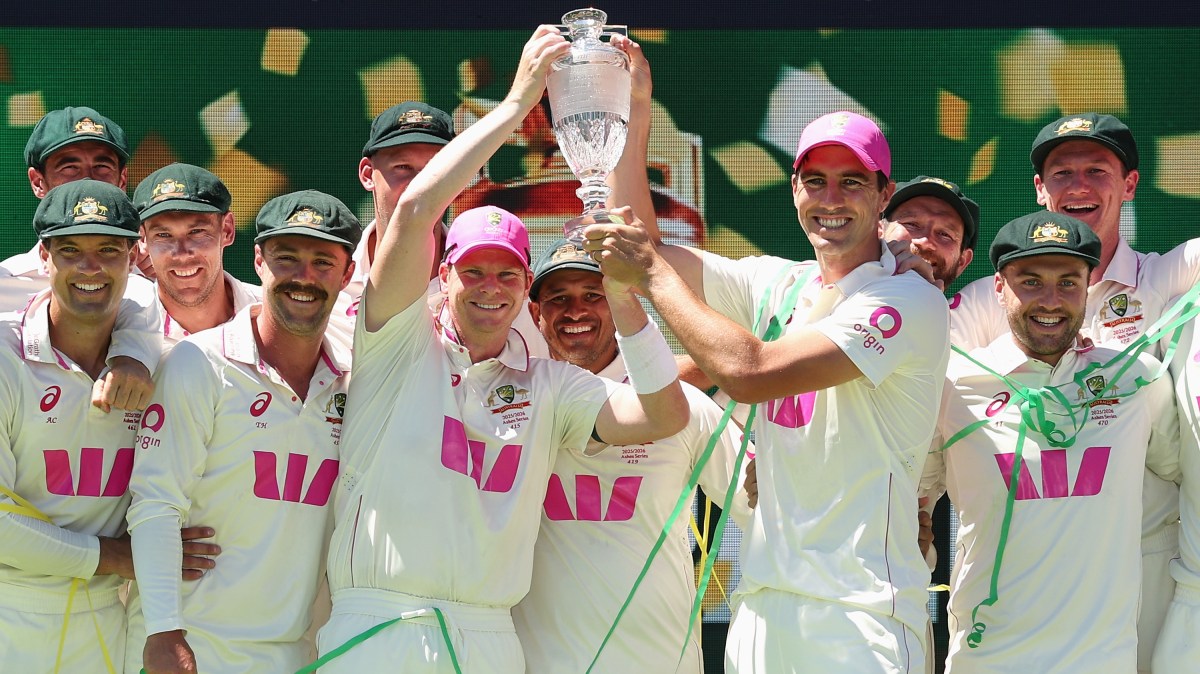
So it was that, 40 minutes later, Steve Smith accepted a giant glass urn, although Pat Cummins joined him on the stage to do so. Cummins was a ghostly presence having played only one match, in Adelaide, and it was his absence, above all — along with that of Josh Hazlewood and Nathan Lyon — and the paltry returns of three of the top five batsmen — Jake Weatherald, Marnus Labuschagne and Usman Khawaja — that was a reminder of the opportunity to be more competitive that England had missed here.
Because of that, Stokes said it was time for some “honest truths” after describing his team’s performance as “three out of ten” throughout. This comes on the back of Rob Key saying in Melbourne that England had been operating at only “20 per cent” capacity. Richard Gould, the ECB chief executive, issued a statement after the ceremonies were done to say that a review of planning, preparation, performance and behaviour was already under way. Clearly some change, of personnel or method, is required.
Stokes always strikes an emasculated figure when he cannot bowl, which has been too frequently in the past two years, but he was determined to finish the series on the field of play rather than in the dressing room despite the adductor injury he sustained on the fourth day. Though he has endured a difficult time with the bat and has had a poor tactical series at times, Stokes’s efforts have been unstinting and he drew a respectable final effort from his players.
What would he have given for a hundred more runs, though? In every match, well beaten though they have been, there have been important “what if” moments, as there are in any Test series. The difference here, perhaps, has been the magnitude of the errors England have made, in the afternoon session on the second day at Perth, for example, and here in Sydney, where Jamie Smith and Will Jacks, in first innings and second respectively, gave their wickets away in horrible fashion.
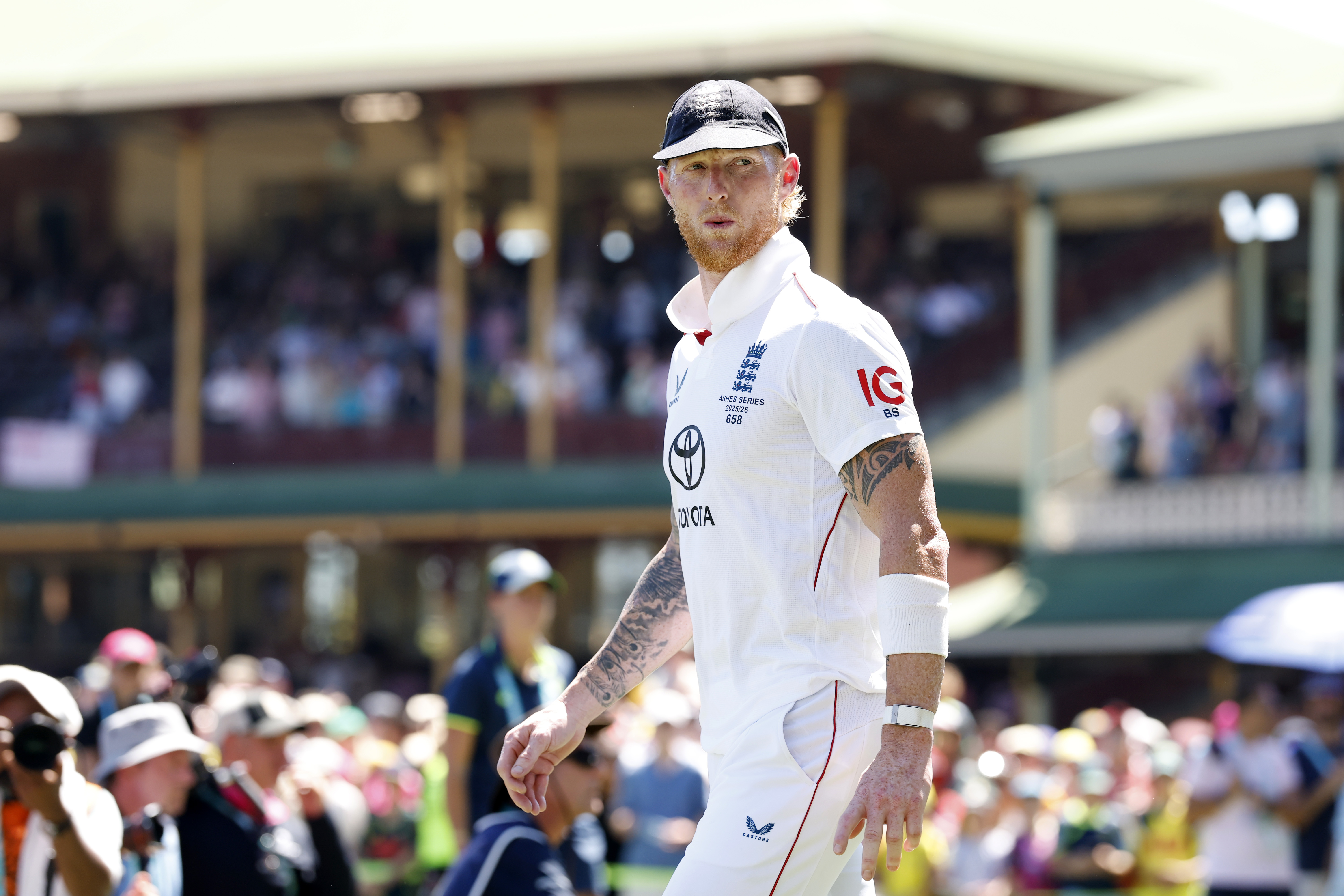
Stokes described his team’s performance as “three out of ten” throughout
DARRIAN TRAYNOR/GETTY IMAGES
The final day summed up this error-strewn, low-quality Ashes, to some extent, as Australia made hard work of overhauling a small target against an attack missing Stokes (injured) Matthew Potts (not trusted) and without a specialist spinner on a pitch that had begun to break up and offer sharp turn. This was a superb pitch, by the way, encouraging the widest range of skills, which resulted in a record crowd of 211,032 for a Sydney Test.
There were two missed chances. Khawaja, on four, edged Will Jacks between wicketkeeper and slip and Jacob Bethell dropped Labuschagne, on 20, in the gully. Australia’s running between the wickets betrayed their nerves: Labuschagne looked on the point of tears after running himself out to mid-off, and could barely haul himself off the pitch, though there were nearly tears of laughter shortly after, when Cameron Green and Carey almost produced another in a comedic routine that, at one point, had them both running towards the same end.
Please enable cookies and other technologies to view this content. You can update your cookies preferences any time using privacy manager.
Enable cookiesAllow cookies once
To cap it all, there was a final DRS controversy when Weatherald was given not out by the third umpire on 16, after a review for caught behind. “Snicko” seemed to confirm the edge, though the third umpire, Kumar Dharmasena, was strangely unconvinced. It provoked an angry exchange between Brydon Carse and the batsman, and further angry exchanges, prompting Travis Head to wave Crawley away contemptuously. Briefly things threatened to overheat.
Mitchell Starc, fittingly, had taken the final two England wickets, including that of Bethell, who became the second youngest England batsman, at 22 years and 76 days, to make 150 in Test cricket. Len Hutton, the youngest, went on to break the world record Test score on the occasion that he did so in 1938 and Bethell would have needed to extend his innings significantly in order to get England to a challenging-enough total.
Starc, rightly, won the Compton-Miller medal — man of the series for his 31 wickets and vital contributions in early, decisive Tests. He and Boland, 35 and 36 years old respectively, were still going strongly at the end and were a credit to themselves. Starc has rarely bowled better. Travis Head was man of the match for his first-innings hundred and once again helped post a flying start for the first wicket; at 62 for 0, there was no hint of the wobble to come, especially given the emasculated state of England’s attack.

The emergence of Bethell, who took his overnight score past 150, is one of few positives for England from this series
AYUSH KUMAR/EURASIA SPORT IMAGES/GETTY IMAGES
But Josh Tongue, 18 wickets at an average of 20 for the series, picked up Head and Weatherald before lunch, and when Jacks spun a beauty through Smith’s forward push, England sniffed an opportunity. Khawaja was given a guard of honour for his last game, but, looking overcome by the occasion, dragged one on to his stumps and left the arena as a Test cricketer for the last time, but not before he bent and kissed the turf. After Labuschagne’s run-out, Green and Carey saw Australia home.
So ended the 2025-26 Ashes, a series that promised so much but delivered so little. Eighteen days of cricket; two rushed, chaotic matches at Perth and Melbourne; the rest that had their moments but were too one-sided and uncompetitive in the main. There remains a huge appetite for Ashes cricket here, but the quality of cricket barely reciprocated the generosity of the crowds.
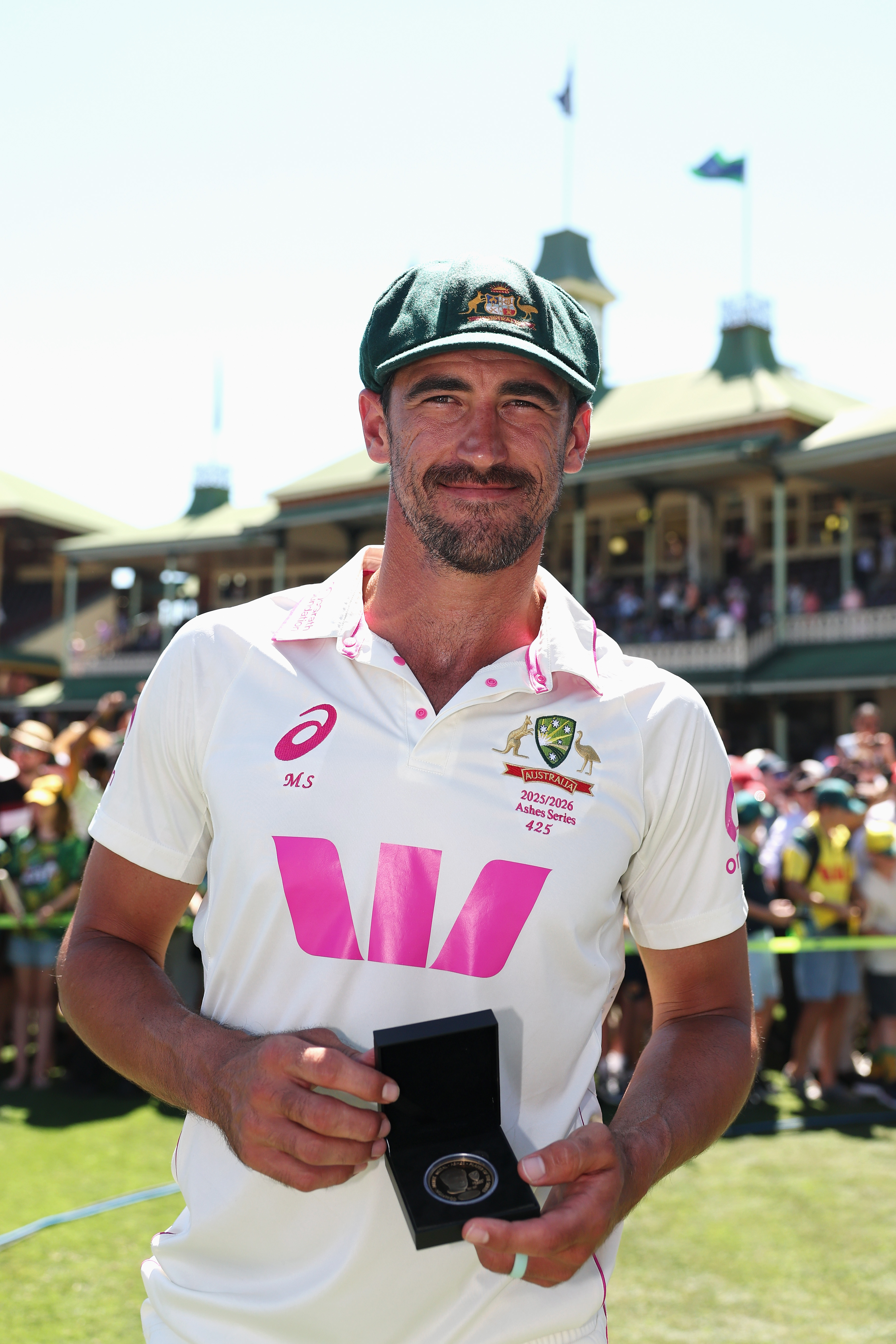
Starc, the leading wicket-taker, was the deserving recipient of the Compton-Miller medal for player of the series
CAMERON SPENCER/GETTY IMAGES
Australia did not have to be very good to beat England at this level and they were good enough, playing disciplined cricket for longer periods and doing the basics in the field brilliantly. But, really, only five players burnished their reputations: Head, Carey, Starc, Smith (14 catches to boot) and Boland, while others flatlined or faded.
Too many of England’s players failed to shine. Ben Duckett and Crawley disappointed; Ollie Pope lost his place for a second consecutive Ashes; Harry Brook failed to do himself justice; Smith had a poor tour; injuries bedevilled others, with three fast bowlers returning home. At least, Bethell and Tongue arrived in earnest; the size of Carse’s heart is beyond question and Root finally left his mark in Brisbane and Sydney.
This campaign was among the worst to Australia of recent times, though, which is saying something. It was characterised by a cavalier approach to preparation and a lack of rigour. They did not give themselves the best chance of competing and there is no bigger failure in sport than that.