
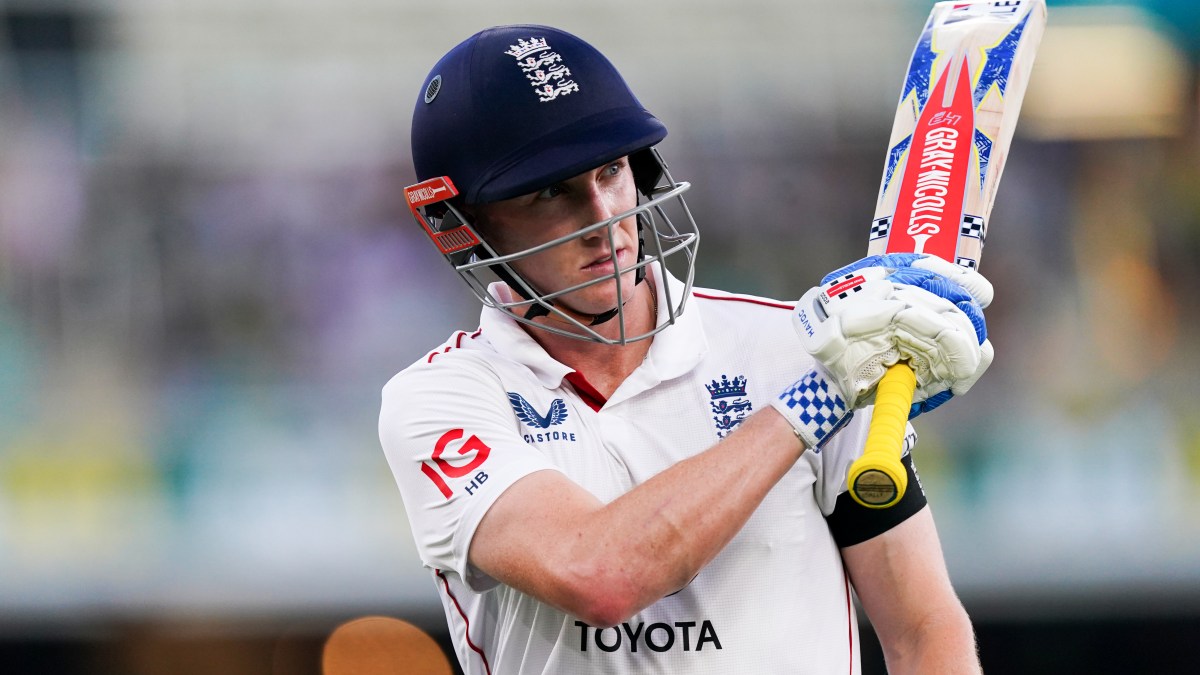
No player has been given more responsibility in the past year than Harry Brook. He was made captain of the white-ball team after Jos Buttler stepped down from the job following a poor Champions Trophy, and he replaced Ollie Pope as the Test vice-captain on the eve of the Ashes. Rob Key and Brendon McCullum have placed enormous faith in him, which will raise questions about their judgment at a time when their own positions are under scrutiny.
Have they backed the wrong horse? Nothing that we have seen so far from Brook, other than his brilliance as a player, gives confidence in his credentials, right now, to lead a revival of England’s white-ball teams, or that he should be close to the captaincy of the Test team. His behaviour in New Zealand, for which he has now apologised unreservedly, is a wake-up call for him. He has a lot of maturing to do.
It was hours after the end of the Sydney Test, when it was reported that Brook had an altercation with a bouncer after being refused entry to a nightclub on the eve of a day-night ODI in Wellington on the white-ball tour to New Zealand that preceded the Ashes. He was reportedly fined the maximum amount under the terms of his central contract and put on a final warning at the time.

The incident in Wellington must be a wake-up-call for Brook that he has a lot of maturing to do
ROBBIE STEPHENSON/PA
His own words are damning. “I fully accept that my behaviour was wrong and brought embarrassment to both myself and the England team,” he said. “I am deeply sorry for letting down my team-mates, coaches and supporters. I have reflected on the lessons it has taught me about responsibility, professionalism and the standards expected of those representing your country.” It is to be hoped he is true to the words in the last sentence.
There was no formal complaint from any third party, Brook self-reported and has now formally apologised, but the behaviour is so unintelligent and naive at best — much like England’s cricket on this tour. The one feeds into the other. Many of the off-field decisions in the Ashes have been naive, too. A mid-series break was fine but to go to Noosa, a small town where everyone is so visible, was asking for trouble.
The context of this story will not be lost on supporters who are dismayed by the general looseness and lack of rigour in preparation that has contributed to the scoreline in the Ashes. Hours after defeat in Sydney, Richard Gould, the chief executive of the ECB, said that a thorough review of planning, preparation, performance and behaviour was under way and this reinforces the need for that.
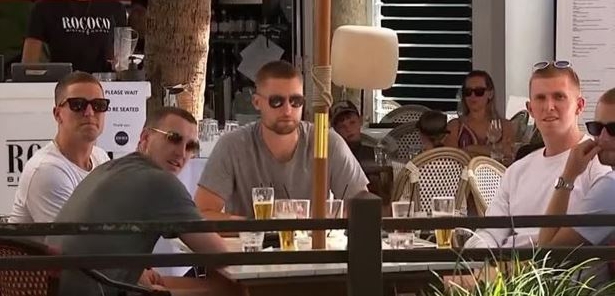
Choosing Noosa as the location for the mid-Ashes break was an error of judgment from the England’s management
7NEWSADELAIDE
McCullum was brought in at a particular time in 2022 when players were crying out to be liberated after a two-year period on the road playing under heavy Covid restrictions and after a spell of dismal underperformance. Part of his philosophy has been to grant players greater freedom and responsibility both in the way they prepare for matches in practice and off the field, where a midnight curfew that was imposed during the 2017-18 Ashes was eventually relaxed.
In principle there are good reasons for this, and this initial liberation certainly contributed to a sharp improvement in results. Professional cricket is about decision-making, on and off the field. How do you react when the ball comes down? How do you respond to a tight situation in a game? How do you manage your preparation? The more players are spoon-fed by coaches, the more they are shielded from taking responsibility for decisions, the more infantilised they become.
But this tour suggests the pendulum has swung too far. It is, of course, the leadership team that is now so important in rebalancing again and introducing more rigour. Brook is completely central to that, in his roles with both red and white-ball teams.
He needs to understand the broad responsibility, on and off the field, that comes with the positions and he needs to wise up, quickly.