
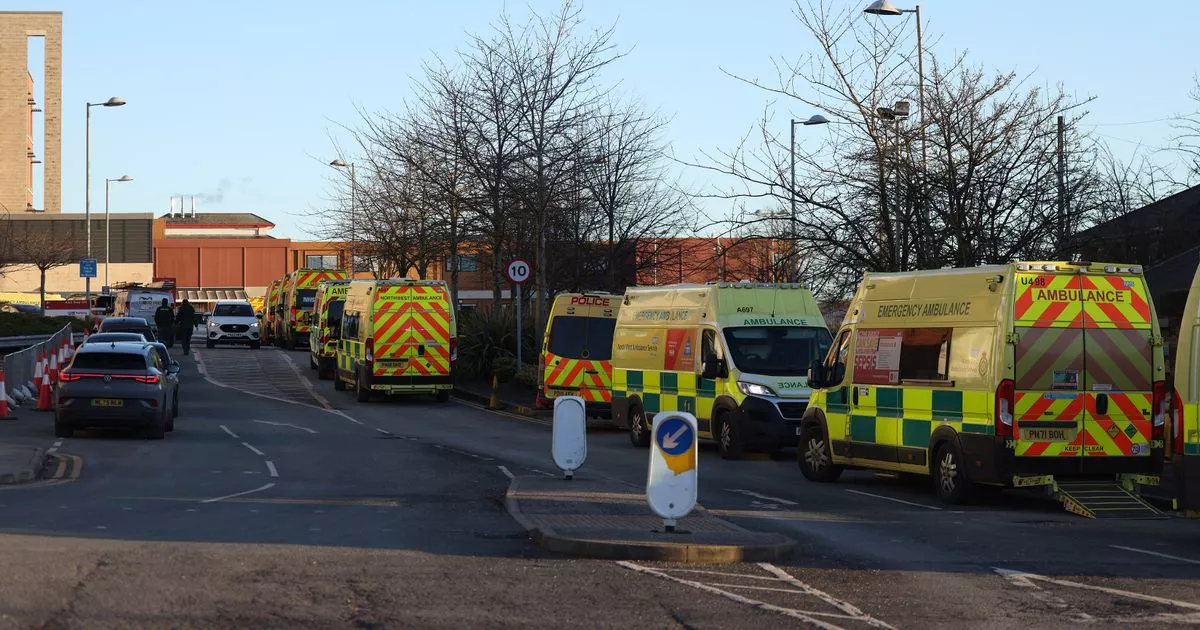
NHS Trust said a number of winter viruses are circulating across Merseyside which is having a “noticeable impact” on the number of people attending local hospitals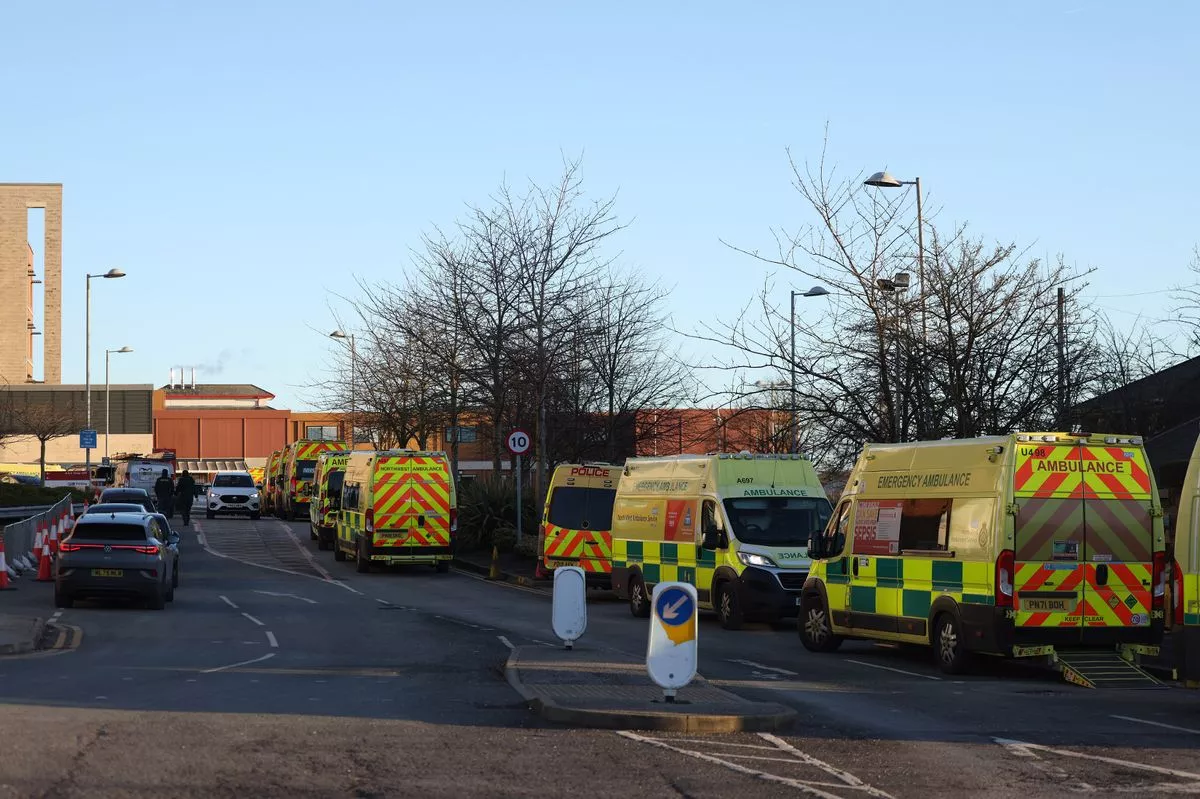 Ambulances lined up outside Whiston Hospital(Image: Liverpool Echo)
Patients visiting a Merseyside hospital experienced “extremely long waits” last weekend, according to its NHS Trust, which confirmed the number of winter viruses was significantly impacting access to emergency healthcare services. The Trust has advised people with non-urgent conditions to avoid using accident and emergency (A&E) departments, and contact their GP or the NHS 111 service.
However, several people have complained this advice is unlikely to result in reductions to wait times at A&E departments because they claim GP surgeries and NHS 111 are advising people with non-urgent cases to attend A&E.
On Saturday January 3, a Liverpool ECHO report detailed local concerns about the number of ambulances queued up and waiting outside Whiston Hospital. A spokesperson for Mersey and West Lancashire Teaching Hospitals NHS Trust confirmed it was experiencing “very high levels” of demand during the weekend, following the Christmas break.
The spokesperson added: “A number of winter viruses are circulating widely across our community, and this is having a noticeable impact on the number of people attending our hospitals. This means that unfortunately, some patients are experiencing extremely long waits, as those who need our care most are seen in order of clinical priority.”
The Trust published an update on its official Facebook page, confirming it had experienced an “extremely busy” weekend and advised people with non-urgent issues to use “alternative services”.
This post generated dozens of comments across social media as people shared their own experiences about accessing health care, many of who said they had been directed to A&E departments by their GP, NHS 111 or the local walk-in centre.
Responding the Trust’s Facebook post, one person said she has a lot of sympathy for the staff working at the hospital who are working long shifts, in difficult circumstances, she added: “[A&E] is totally being misused by non urgent cases being sent in by GPs who can’t be bothered seeing them.
“[NHS] is failing badly but its the government that needs to sort out and protect the vulnerable. It’s so different from our day working there. People who have devoted their lives are so tired, the frontline workers are stretched and the genuine sick people are put in a queue. It’s heartbreaking to see.”
Another person commented: “Partner’s mum spent over 9 hrs in one of the 22 ambulances outside yesterday, in the hospital at least now, but been waiting for a bed for almost 24 hrs now since leaving the ambulance.”
The issues at Whiston Hospital were also shared to a local Facebook group, one person wrote: [The situation is] going to get worse. We need doctor appointments because all they say is phone 111 NHS, [then] they tell you to go to A&E.”
The overwhelming majority of the comments shared their support and gratitude for NHS staff, including many who brought focus to the levels of demand they’re having to manage, especially at this time of year. However, there was plenty of criticism about the healthcare system and access to services.
The ECHO put the concerns about referrals to A&E – via GPs and NHS 111 – to the NHS trust that oversees Whiston Hospital, and also asked about what level of service patients can expect in the coming days and weeks.
A spokesperson for NHS Cheshire and Merseyside said: “Accident and Emergency Departments in our local hospitals are currently experiencing extremely high levels of demand.
“Hospital staff are working really hard to ensure people get treatment as quickly as possible – but will always prioritise those with the highest clinical need first. This means that patients with less urgent conditions may experience longer than average waiting times.
“We are working closely with local health and social care partners across Cheshire and Merseyside to help make sure that all possible capacity is effectively utilised, in order to help reduce delays to care.
“The public can also help by remembering that busy hospital A&E departments should only be used for life-threatening illnesses and injuries.
“People should continue to call 999 in emergency situations, but for conditions which are less urgent, please use NHS 111. The service can assess and direct to the most appropriate local service, including urgent treatment centres, GP practices, and consultations with a pharmacist. It is available 24/7 online at 111.nhs.uk, on the NHS App and by calling 111.”