
Periodically, almost cyclically, I reach a point of political fatigue. I still believe incremental progress is possible and worth the sustained effort it requires, and I know my energy will return. Still, sometimes the arguments feel so entrenched that I find myself tuning out.
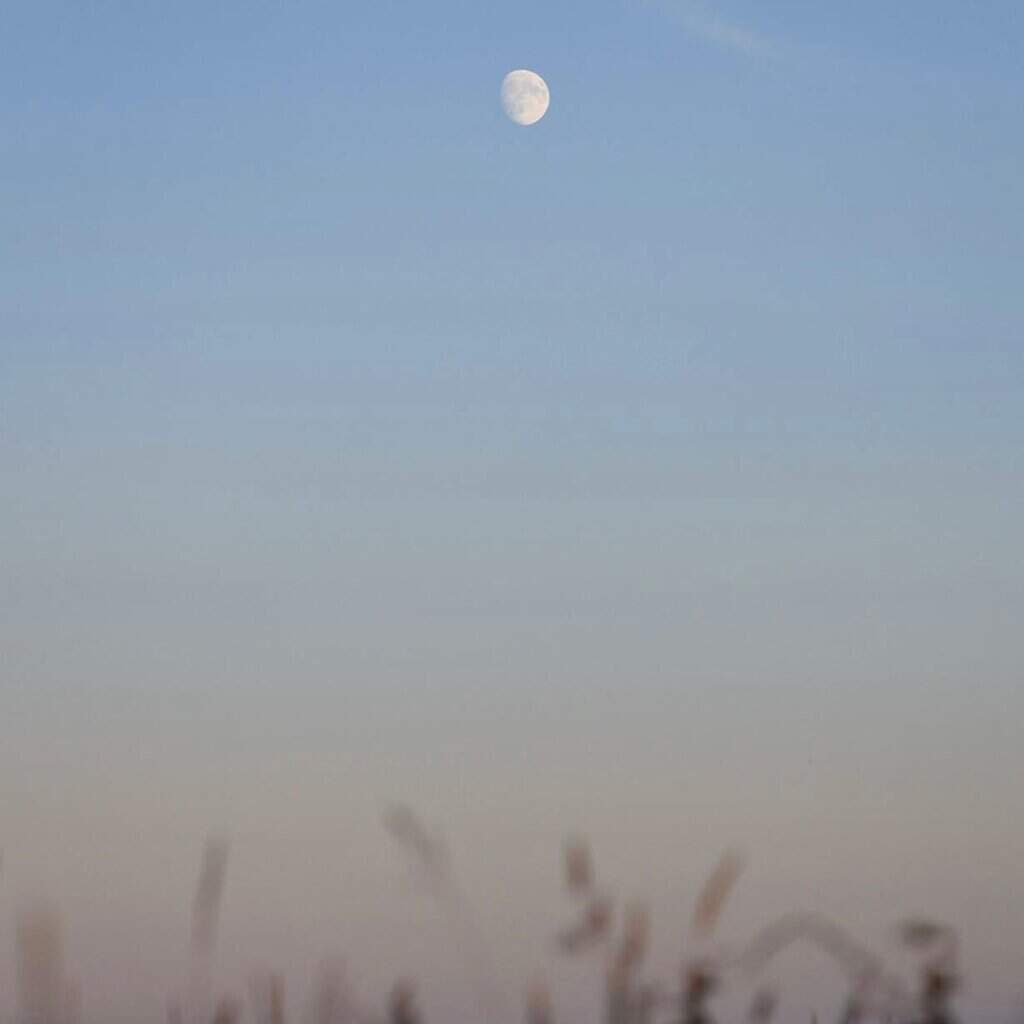
Driving to work just before sunrise a few days ago, the roads were icy and the sky clear, tinged pink. The moon sat over the water, and I suddenly wondered how many others were looking at it in the same moment, from entirely different places, in the middle of entirely different lives.
From Earth, we always see the same side of the moon. Much of the far side remains out of view. I only learned that recently. It made me aware of how easily we assume the world is simply as we experience it, without thinking about what lies beyond our own angle of vision.
The moon has been present through everything that has unfolded on this island and far beyond it. Civilisations have come and gone beneath it. It has seen the whole arc of history, while so often we struggle to see beyond the immediate.
Long before clocks or calendars, people used the moon to mark time itself. The word month comes from Old English mōnath, derived from mōna, meaning moon, a reminder that time itself was once counted by its phases.
What I was looking at this week was January’s Wolf Moon, a North American name, from a time when midwinter nights carried the sound of wolves. These names endure even when the world they described has changed. This year, it was also a supermoon, with the moon closer to Earth and noticeably brighter in the sky.
I remember camping on a small, uninhabited island in August 2022 during the Sturgeon Supermoon. As evening settled, we lit a small campfire on the shore and shared a few whiskies, the water completely still around us. When the moon rose over the drumlin above our tent, it came up huge and deep orange-red, hanging there in a way that felt almost unreal. I tried to photograph it and failed.
The moon plays a fundamental role in making life on Earth possible. Its gravitational pull helps stabilise the tilt of the Earth’s axis. Without it, seasonal and climate extremes would be far greater.
Sometimes, at the end of a winter workday, as we lock up and step out of our tightly controlled, brightly lit space and into the night, one of us will comment on the moon. We all look up and pause for a moment. There it is, ancient and untouched by any of it.
When do you remember noticing the moon and stopping for a moment?
Yeats wrote of the moon as something that remains unsullied by human violence:
The purity of the unclouded moon
Has flung its arrowy shaft upon the floor
Seven centuries have passed and it is pure,
The blood of innocence has left no stain.
W. B. Yeats, Blood and the Moon
Originally from Co. Armagh.
Discover more from Slugger O’Toole
Subscribe to get the latest posts sent to your email.