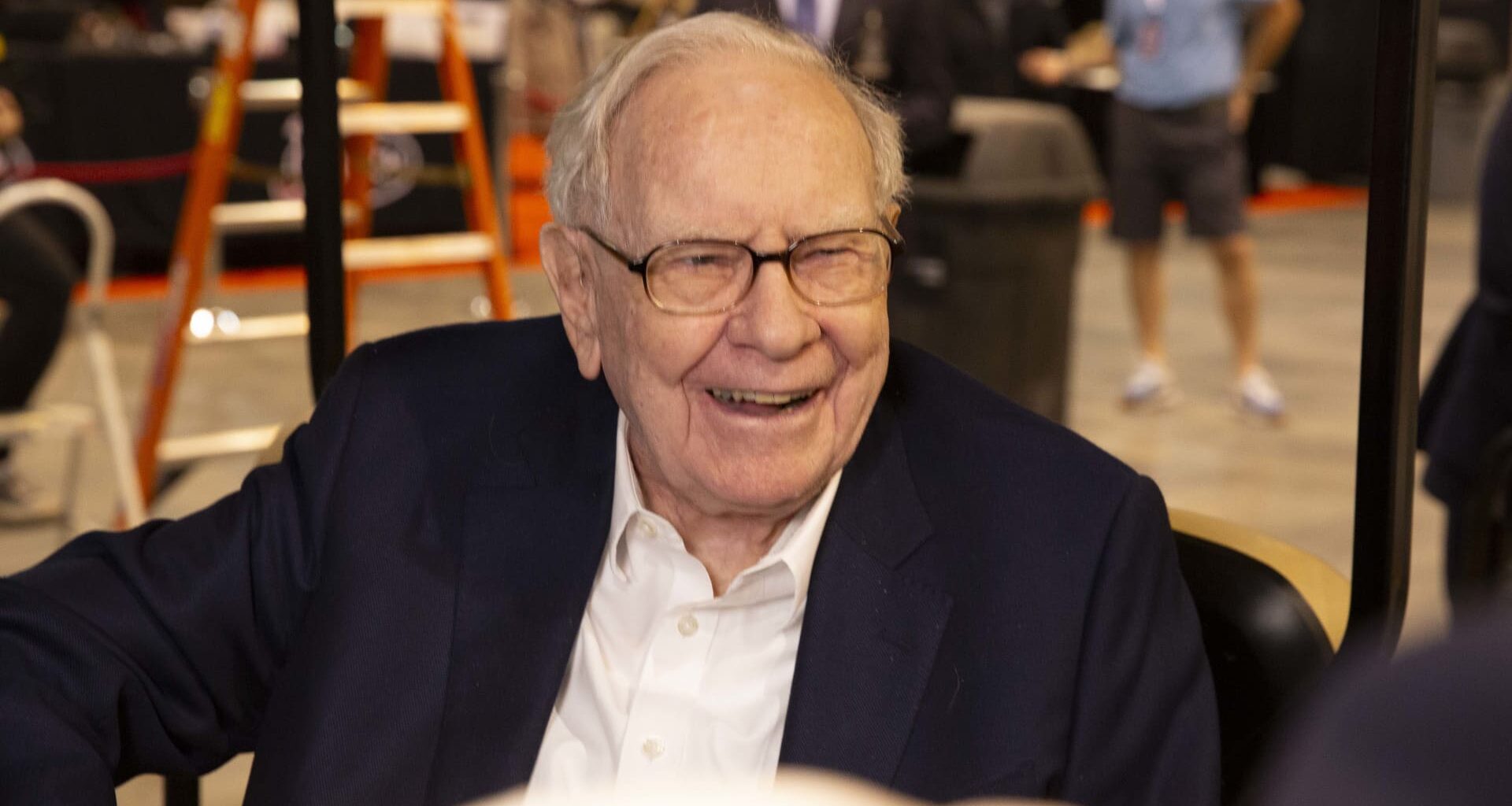
By the time he stepped down as CEO of Berkshire Hathaway at the end of 2025, Warren Buffett had built the company into a conglomerate worth more than $1 trillion and amassed a personal net worth of about $150 billion, according to the Bloomberg Billionaires Index.
It’s a career that scarcely anyone could hope to emulate — though that hasn’t stopped people from asking the Oracle of Omaha for wealth-building advice.
Back in 1999, at Berkshire’s annual meeting, Buffett fielded a question from a shareholder on how to make $30 billion, Buffett’s approximate net worth at the time.
“Start young,” Buffett said, with a chuckle.
“We started building this little snowball on top of a very long hill,” he added. “So we started at a very early age in rolling the snowball down, and of course … the nature of compound interest is that it behaves like a snowball.”
Compounding interest is the phenomenon by which you earn a return on your principal, and then on your principal plus your earnings, and so on and so on, which investing pros often describe as “magic.”
And the “trick” to building a big snowball, Buffett said, is “to have a very long hill, which means either starting very young or living to be very old.”
Why starting early is a key to building wealth
Buffett went on to say that, were he fresh out of college with $10,000 to invest, he’d build his fortune the same way he did the first time around, by searching for excellent but undervalued companies to invest in.
Over the years, Buffett has acknowledged that the average retail investor doesn’t have the time or ability, as he did, to build a portfolio of individual stocks that delivers market-beating returns. “In my view, for most people, the best thing to do is to own the S&P 500 index fund,” he said at the 2021 annual meeting of Berkshire Hathaway shareholders.
Will doing so get you to $150 billion? Not if you only have $10,000 to invest. But play around with any compound interest calculator, and you’ll see that Buffett’s advice of maximizing the runway can have an enormous impact on how your wealth grows over time.
Say a 22-year-old college graduate invested $10,000 in a portfolio earning 8% per year on average, and added in another $5,000 every year. By the time they turned 95, Buffett’s age, their portfolio would be worth north of $21 million, according to CNBC Make It calculations.
If that same investor started five years later, the value of their portfolio would drop to less than $15 million. A 10-year delay puts it under $10 million.
Of course, none of that is in the same stratosphere of Buffett’s wealth — a sum he has called “incomprehensible.” But at the same 1999 meeting, Buffett said that, beyond giving yourself a certain quality of life, having a huge net worth doesn’t mean much.
“The money makes very little difference after a moderate level,” he said.
He went on to say, “If you asked me to trade away a very significant percentage of my net worth either for some extra years on my life or being able to do during those years what I want to do, I’d do it in a second.”
Want to get ahead at work with AI? Sign up for CNBC’s new online course, Beyond the Basics: How to Use AI to Supercharge Your Work. Learn advanced AI skills like building custom GPTs and using AI agents to boost your productivity today. Use coupon code EARLYBIRD for 25% off. Offer valid from Jan. 5 to Jan. 19, 2026. Terms apply.
Take control of your money with CNBC Select
CNBC Select is editorially independent and may earn a commission from affiliate partners on links.