
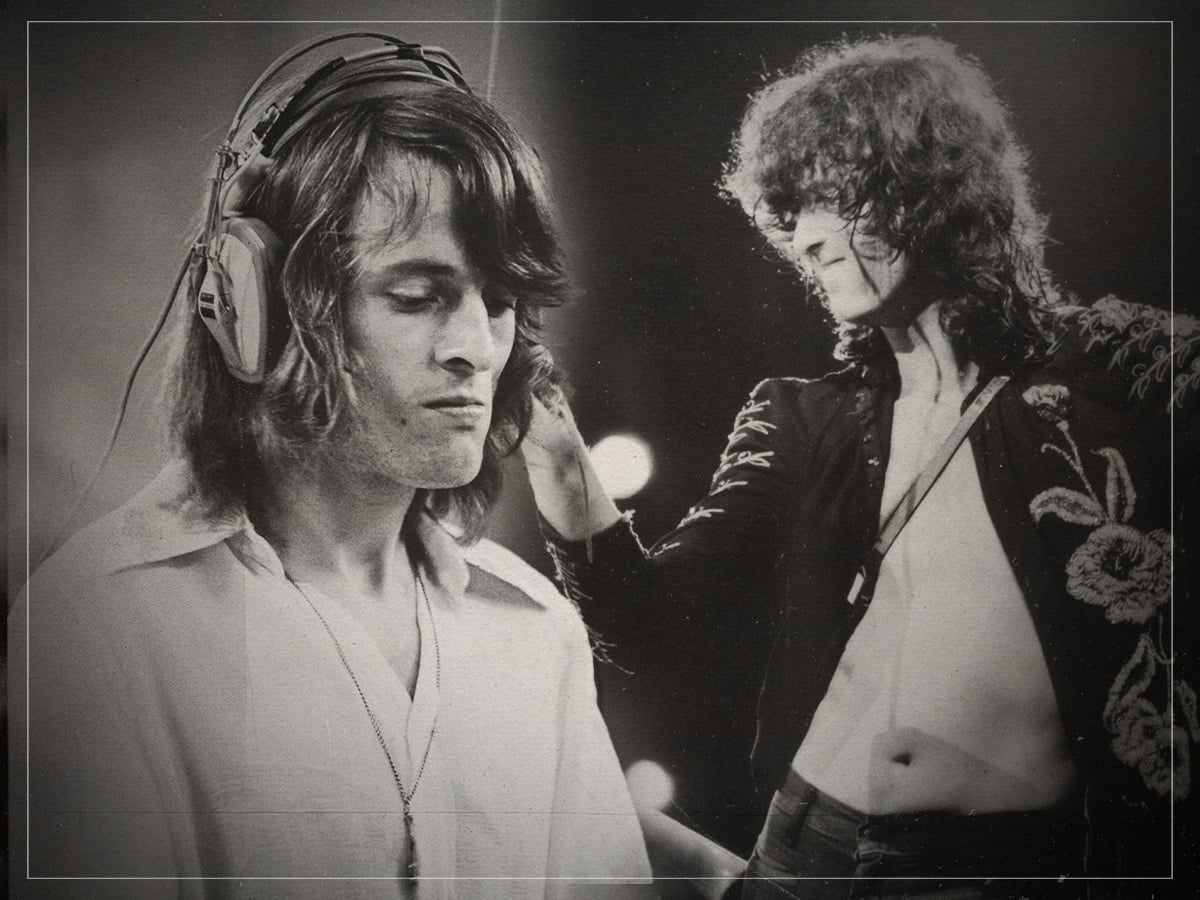
(Credits: Far Out / John Paul Jones / Open Culture)
Fri 9 January 2026 14:00, UK
How do you ever put the sound of a band like Led Zeppelin into words? The haphazard nature of it is what remains so enticing.
Well, far be it from me to try and describe this sound; instead, I’ll leave that for the mastermind behind it, Jimmy Page. Page put the band together with a pretty clear vision in mind, he wanted to merge a range of genres and create something that sounded completely unique and yet undeniably unified. Light and shade is what he called it.
“I had a lot of ideas from my days with The Yardbirds. The Yardbirds allowed me to improvise a lot in live performance, and I started building a textbook of ideas that I eventually used in Zeppelin,” said Page, “I wanted Zeppelin to be a marriage of blues, hard rock and acoustic music topped with heavy choruses – a combination that had never been done before. Lots of light and shade in the music.”
So, how did Page come to be such a master of multiple genres? Well, you might not believe it, but he owes a great deal of his success to the fact that touring didn’t work out the first time around. Page has always been a great guitar player, meaning bands always wanted to work with him; however, when he embarked on his tour with Neil Christian and the Crusaders, the rock ‘n’ roll lifestyle proved a touch too much.
Before a gig in Sheffield, a combination of lack of sleep, the chaotic lifestyle that comes with rock music, and the pressure that comes with being a budding guitarist meant Page found himself getting up off the concrete of the Steel City after suddenly collapsing. He returned to London, intending to take a break from playing live and looking for a more stable job in music.
He wound up becoming a session musician, residing in a cosy studio, helping other bands bring their ideas to life. While this is but a footnote in Jimmy Page’s long career, it shouldn’t be underestimated how important it was, as he wouldn’t have grown so accustomed to so many different genres of music were it not for this elongated period working as a session musician.
John Paul Jones also worked for a long period as a session musician. He managed to join Led Zeppelin so seamlessly because while Page was dabbling in various styles of music, he was doing exactly the same thing. “I got booked by a couple of people,” said Jones, “I was a Motown cover artist. I was employed to make the artists sound American. Then I started to do arrangements and I connected with the Rolling Stones management. My father told me: never turn down work. That’s how I got into it.”
John Paul Jones’ experience as a session musician meant that he was the perfect choice for Led Zeppelin when Page started putting the band together; however, we’re lucky he actually took the job in the first place. Page left the session musician life before Jones as he went to play with The Yardbirds for some time, but Jones couldn’t understand the decision, given they were both making so much money as session artists. This is one of those rare exceptions where we are happy that an individual quit their day job, as if Page and Jones didn’t, we wouldn’t have had one of the most versatile rock bands on the planet.
“All sorts of styles, country in the evening, swing from eight to nine; from nine to ten we’d do two commercials,” said Jones, “Page got out earlier and joined the Yardbirds. I thought he was completely crazy. I couldn’t spend all the money.”
Related Topics
The Far Out Led Zeppelin Newsletter
All the latest stories about Led Zeppelin from the independent voice of culture.
Straight to your inbox.