
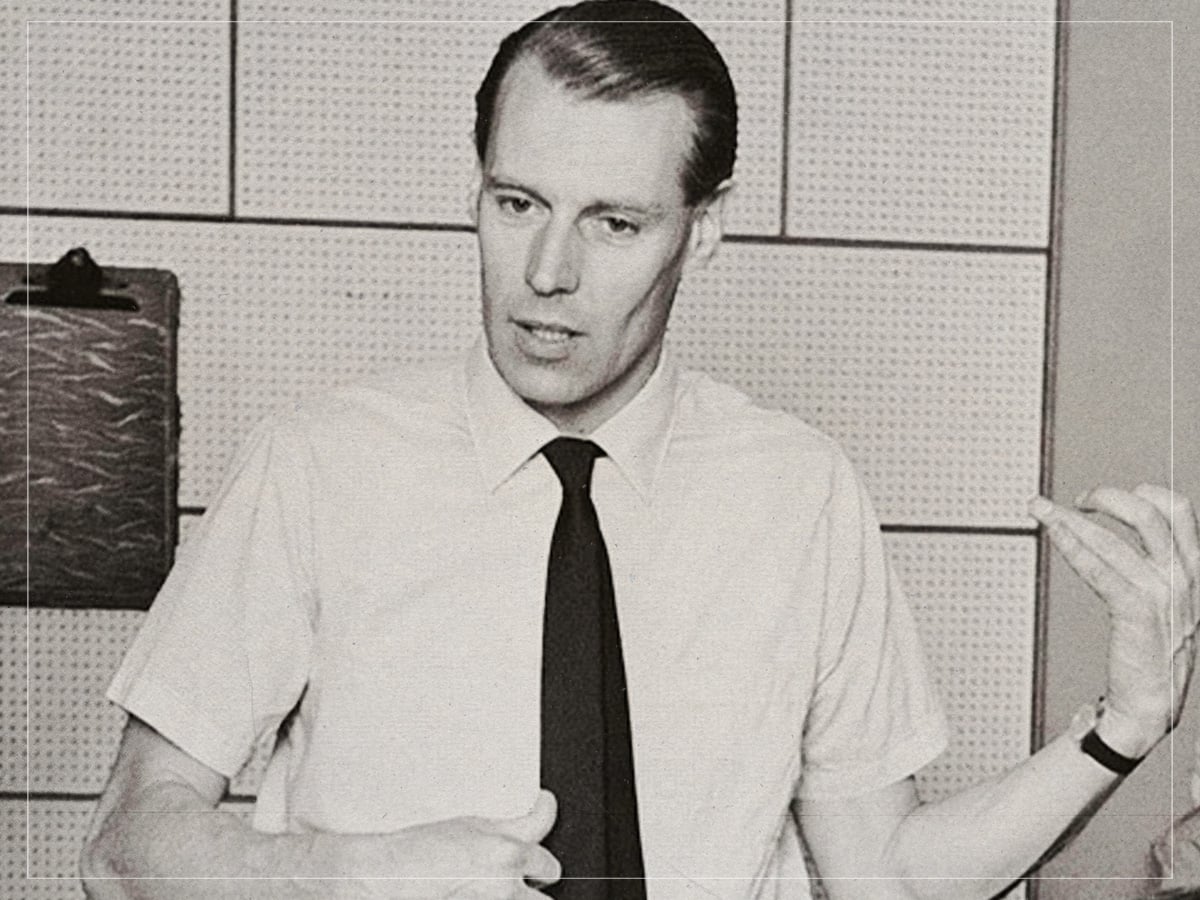
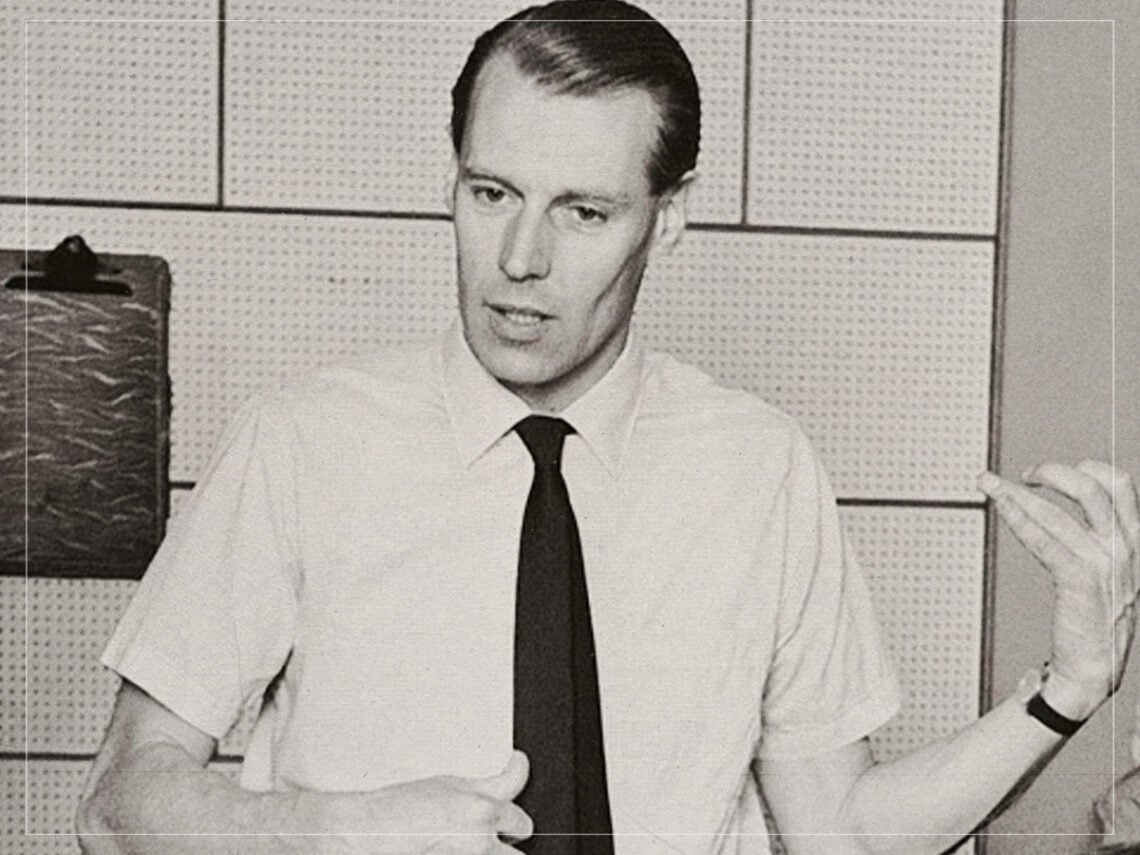
(Credits: Far Out / TIDAL / George Martin)
Fri 9 January 2026 20:20, UK
It might be assumed that if any one person completely and utterly understood The Beatles, it must surely have been George Martin, but even he was just as lost as everyone else in moments.
Martin was uniquely placed to understand it all, though, and he might not have been there from the very start in the clubs in Liverpool, but the second things got serious, he was; he was first on the scene of the band beginning to hit the big time.
As the band were scrambling around for record label support, getting rejected left, right and centre by industry heads that likely regretted that move until the day they died, producer George Martin appeared quick as a kind of saving grace. It’s not just that Martin was one of the first people to see even the slightest glimmer of hope in them, it was that he told it to them straight, telling them to fire Pete Best, bring in Ringo Starr and step up.
Before they even properly worked together, Martin was pushing them to be better, so then, when it came to actually making albums, he seemed like an obvious choice to be their producer, and he stayed in that role to the end.
It’s a rare and magical relationship in musical history, where when things go wrong between an artist and producer, it can be disastrous, but when things go right, it can be world-changing, as it was with Martin and the band. The producer not only allowed them to evolve and change, but encouraged them to and helped them. He introduced them to new sounds and techniques that would open the doors to their fast morphing from one thing to another, allowing them to build their infamous history of different phases and chapters, moving from true rock and roll, into elements of folk, psychedelica, even early punk and beyond.
 The Beatles in their Sgt Pepper’s Club Band garb. (Credits: Far Out / Apple Corps Ltd)
He was uniquely placed to understand it all because he was in the band, but he wasn’t; these songs weren’t personal to him, but he was involved with them all from their true genesis, meaning that surely he could look at them without the clouds of subjective real-life experiences. He also had the advantage of hearing the band talk in the studio, literally getting to witness what their thoughts were on each and every song.
Yet still, despite all that access and despite his long relationship with the artists, there were moments of complete mystery to him, one in particular. What made him love the band was their ever-changing energy. “Everyone took a new twist, and that pretty well maintained the whole of their career,” he said, talking about the way each and every album from the group seemed to be a completely different thing, but there was one release amongst them that just never made any sense to him, even though he worked on it.
“There were some things during The Magical Mystery Tour, the freaking out bits, that didn’t seem to make much sense,” he said, admitting that the 1967 album is a confusing weak spot to him.
Already, it feels like a blip in their discography, more of a movie soundtrack than an album, but one that felt even more isolated and out of place than their other ones, like Help! Or Hard Days Night. Those both felt like albums, whereas this felt more like a lazy mix of off-cut songs left out of Sgt Pepper’s Lonely Hearts Club Band.
It was a strange beast of a release, making one wonder how a project can feel at once both so forgettable, yet house so many hits like ‘All You Need Is Love’ and ‘Strawberry Fields Forever’. It’s home to songs Martin always ranked amongst his all-time favourites, but yet, as a whole release, it was one that always baffled him.
Realistically, though, it probably baffled them all, given that it was made at the absolute lofty heights of the band’s 1960s trippy hippie phase. No one was seeing straight in that studio, so it’s really just a miracle Martin could produce, or the band could play at all.
Related Topics
The Far Out Beatles Newsletter
All the latest stories about The Beatles from the independent voice of culture.
Straight to your inbox.