
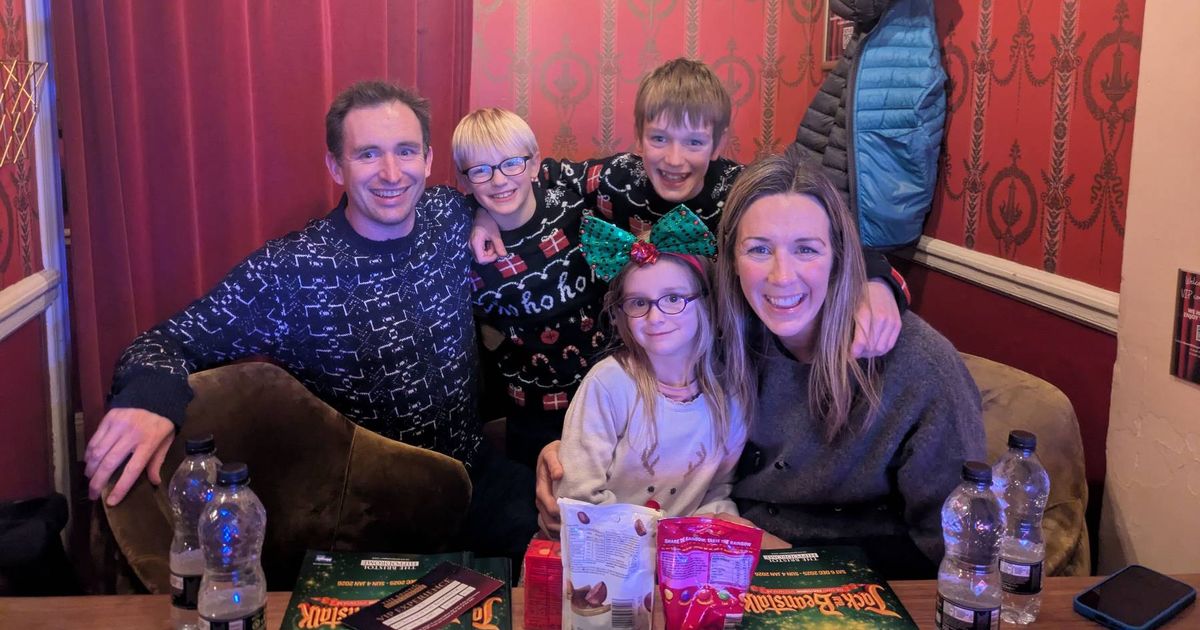
It turned out Sofia has a rare genetic condition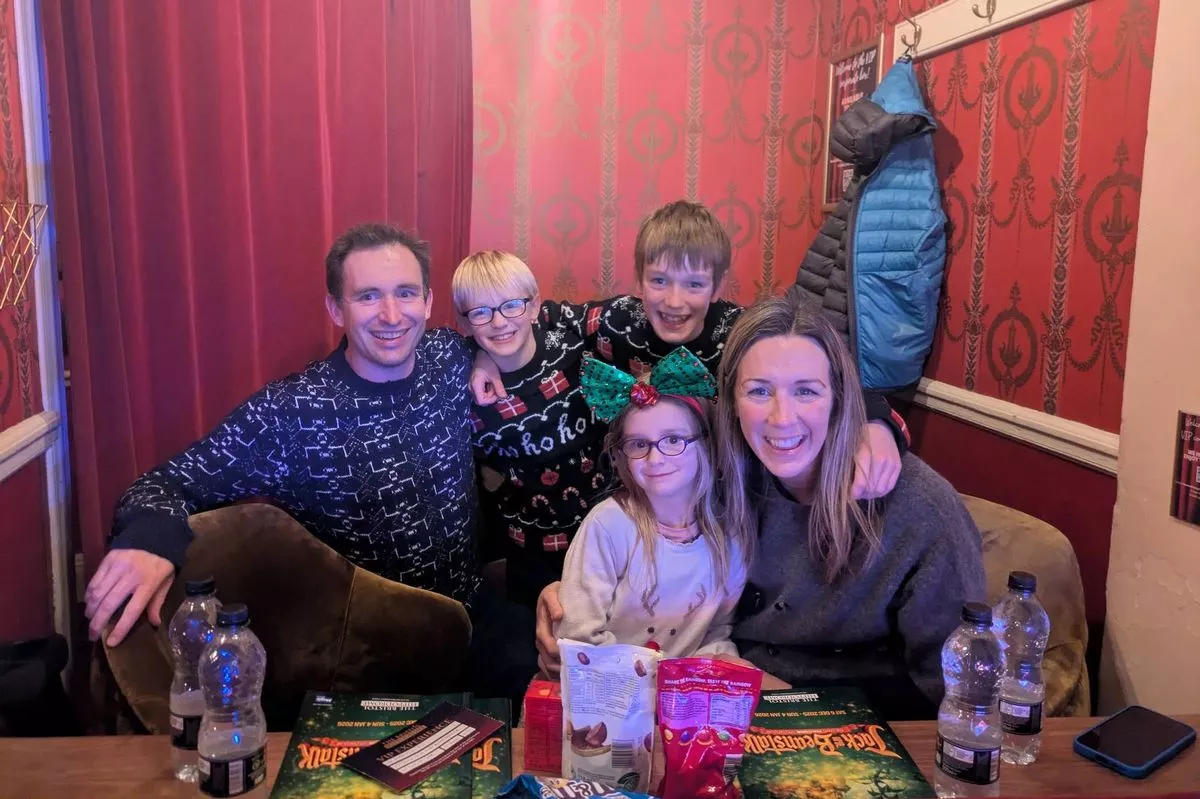
Six-year-old Sofia with her family.(Image: PA)
A mother who observed her daughter having difficulty walking and dragging her leg has shared the story of how her child was left paralysed following life-saving surgery.
Kate Hill and her husband Pete recognised something was amiss with their six-year-old daughter Sofia, who was struggling to walk properly and frequently falling over and stumbling.
Believing she had sustained an injury to her leg, hip or knee, they brought her to hospital for examination in June 2024, only to discover that Sofia had a rare genetic condition known as spinal arteriovenous malformation (AVM) – a tangled web of abnormal blood vessels in or around the spinal cord where arteries link directly to veins – and were urged by medical staff to get her to hospital without delay.
At first, two different neurologists had suspected cerebral palsy – the term for a collection of lifelong conditions that impact movement and coordination, stemming from problems with the brain – and had arranged for scans of her brain and spine.
“We had (the scan) at about four o’clock on a Monday in July 2024, and then we came back from London, went to bed, and then woke up at about 7am to a very urgent phone call from the doctor that had reviewed the scan,” said 43-year-old Kate, who lives near Bristol.
“They said, ‘No, it’s not cerebral palsy. There’s a huge mass on her spine’. They’d been on the phone all night to Bristol Children’s Hospital, and could we take her straight into the hospital? Which we did.”
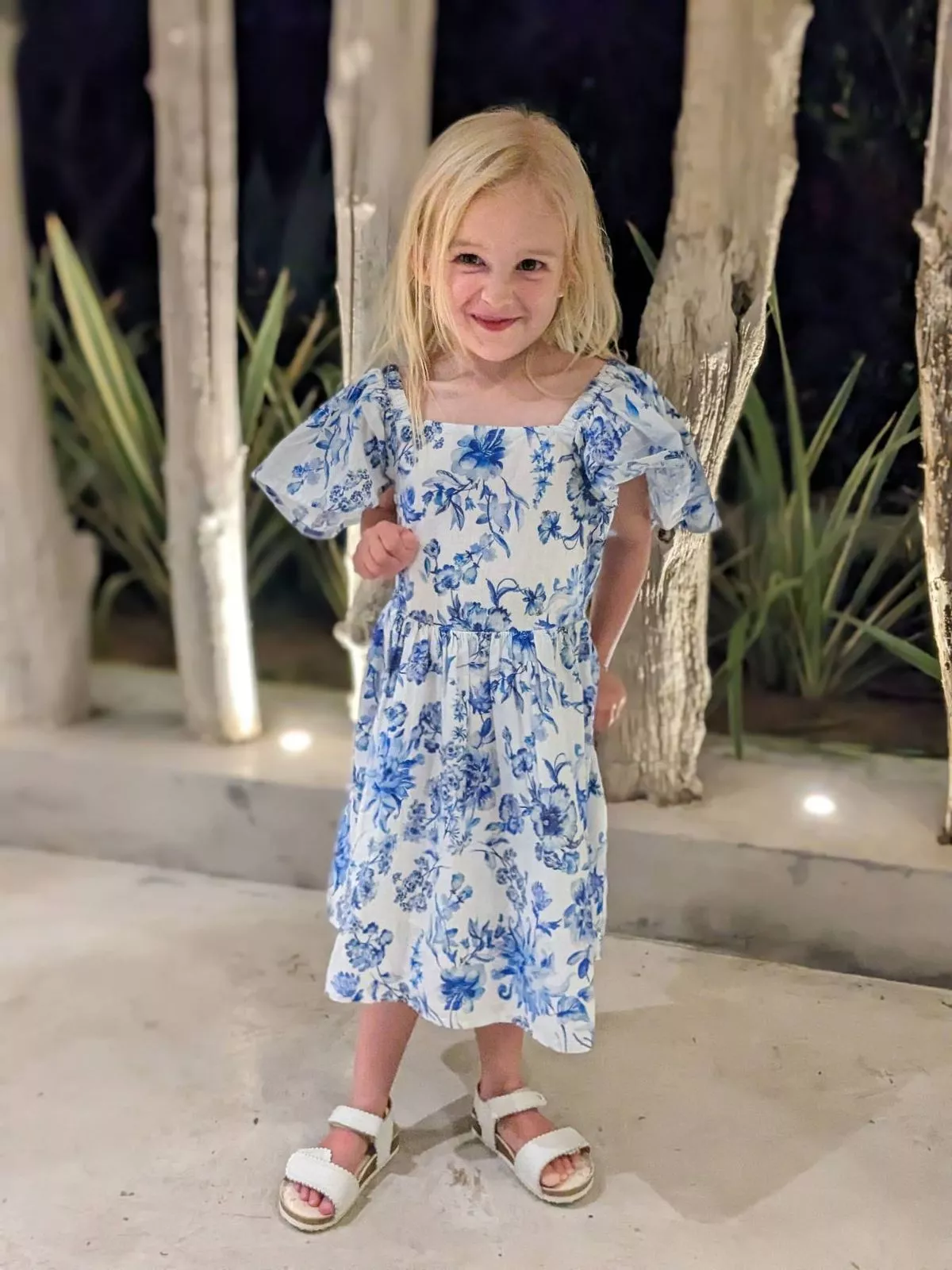
Sofia in June 2024.(Image: PA)
Sofia was subsequently diagnosed with hereditary haemorrhagic telangiectasia (HHT), an inherited genetic condition also referred to as Osler-Weber-Rendu syndrome, which is characterised by the formation of AVMs.
Medical professionals discovered numerous AVMs throughout her body, including one on her spine requiring immediate surgical intervention, reports the Mirror.
Kate said: “She had one on her spine, she’s got at least 10 in her lungs. In terms of the one on her spine, they’re incredibly, incredibly rare – the doctors said we just haven’t seen them grow on a child’s spine before, because they normally start growing when you hit puberty, and she was four when it all first happened. So I don’t think anyone expected it to be that diagnosis.”
Kate, who also has two sons – Ralph, 12, and Arlo, nine – with her husband Pete, revealed the couple then faced the agonising decision of whether to proceed with the life-saving operation for their daughter Sofia, despite the significant risks it posed for her recovery.
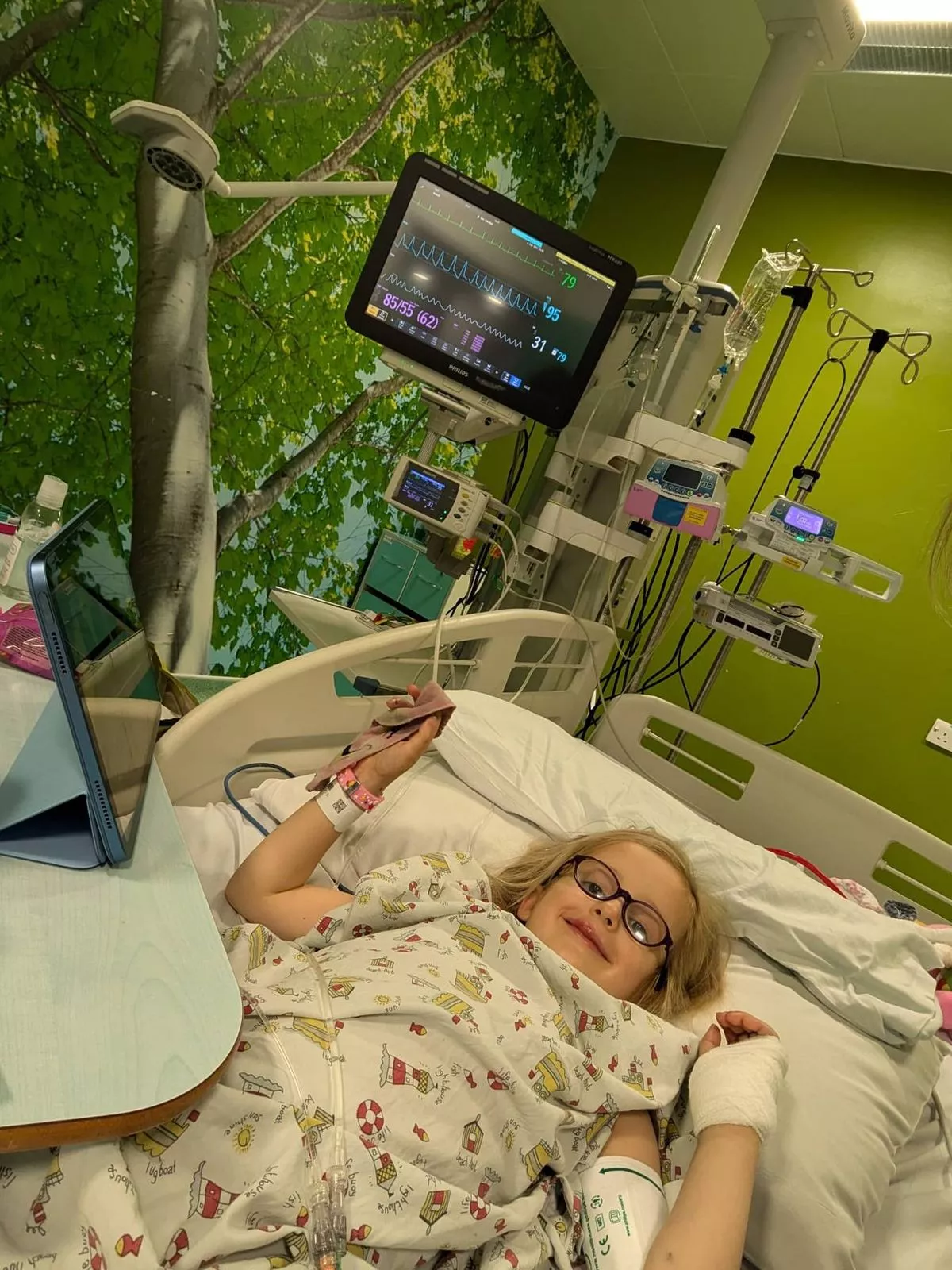
Sofia after her life-saving operation.(Image: PA)
The parents understood that paralysis was a potential outcome of the surgery, as medical staff had explained and it was explicitly stated on the consent documentation for the procedure. However, they were still devastated that Sofia would face yet another challenge following the operation.
“You sign a consent form, and they said quite clearly: The risks are this operation is going to paralyse your daughter,” Kate recalled. “But the alternative was she was going to die if we didn’t do the surgery. So it wasn’t kind of a decision… We went into it knowing there was a risk, but you obviously hope for the best.”
From July 2024, Sofia was admitted to Bristol Children’s Hospital, where she remained until February 2025, undergoing two gruelling 15-hour sessions of critical spinal surgery.
The procedure was successful, but it resulted in paralysis for the six-year-old, leaving her with an incomplete spinal cord injury.
This means that while the spinal cord isn’t entirely severed, it is damaged, necessitating extensive recovery and rehabilitation.
“She woke up and she just couldn’t move or feel anything. And then, after a few days, she could just about wriggle a toe with monumental effort and no feeling whatsoever.
“So that was the first month or two months, and then it’s just been about a year of very intensive physiotherapy and rehab.”
Sofia was left paralysed from the waist down, losing the use of her legs as well as bladder and bowel function.
After being transferred to a specialist spinal cord injuries unit in Buckinghamshire, Sofia has been in and out of hospital as specialists continue to monitor her condition.
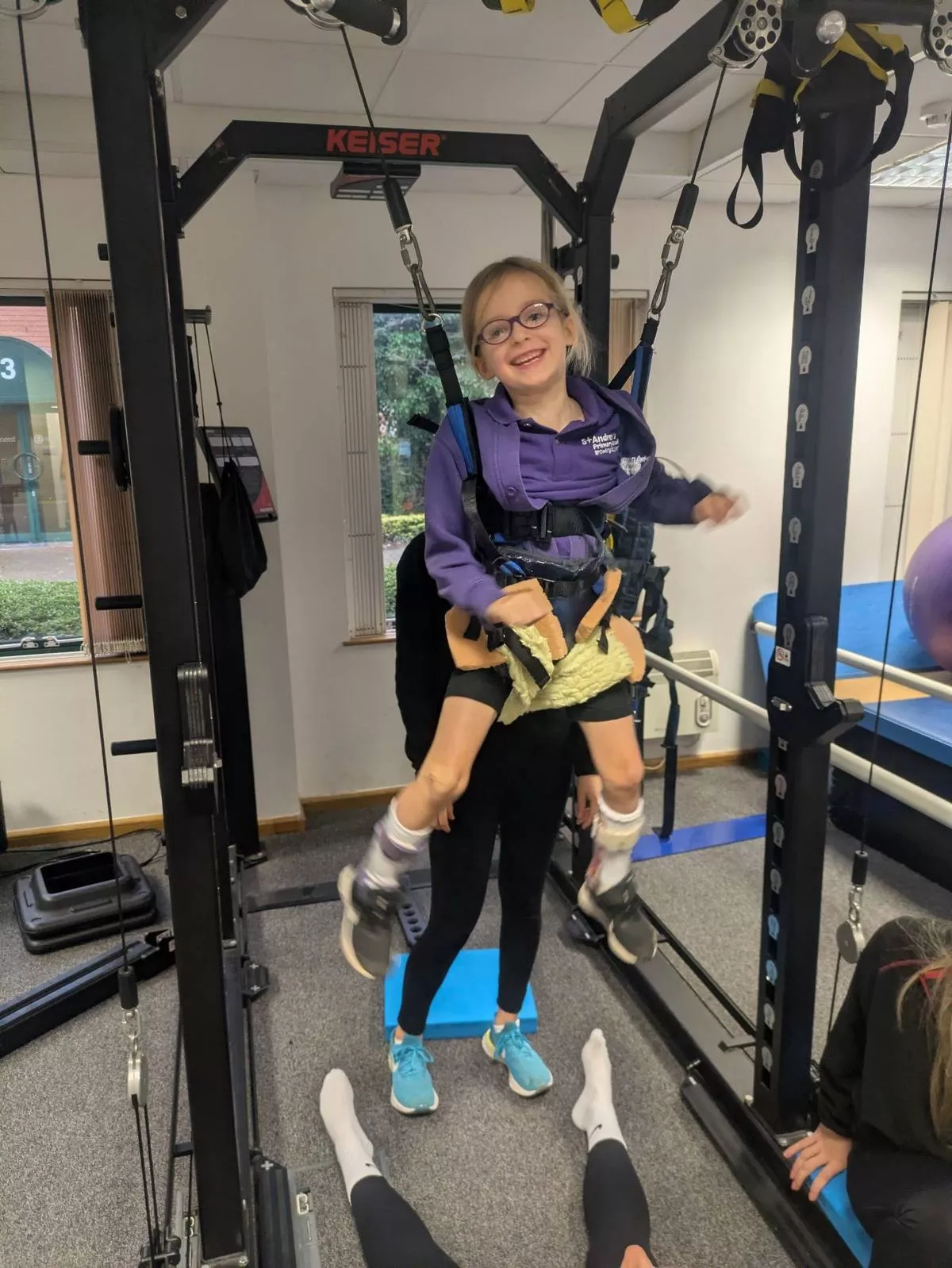
Sofia during spinal injury rehabilitation.(Image: PA)
She also receives care from Neurokinex, a non-profit organisation that offers specialised activity-based rehabilitation for individuals with spinal cord injuries and other neurological conditions.
After witnessing Sofia’s enjoyment of the sessions and their effectiveness in her rehabilitation, Kate and Pete were convinced that “this is something we’ve got to find the money for”.
“It’s just brilliant,” she expressed. “They are so good for children, they try and make it fun, which for Sofia is the main thing, because she’s just turned six, she’s spent 18 months of her life doing physio, and it’s boring.
“Also, it’s really hard to get Sofia to appreciate that she’s got to do it now, because we’ve got to get these pathways firing again.
“If we don’t, then the chances are she’s going to spend the rest of her life in a wheelchair, and there is a significant chance of this.
“So we just need to do everything we can while she’s still young, and while, hopefully, the connections between her brain and her spine and her legs can try and regrow.
“It’s not cheap at all, but you just have to think: I’ve just got to do what I can, find the money and give up everything else so that we can make this work,” Kate said.
“I don’t want to look back and think we could have done more for her.”
Sofia is now able to take steps with crutches, and the family are hopeful that walking with poles will be the next milestone she achieves.
The condition will remain with Sofia throughout her life, requiring regular check-ups to monitor the AVMs and detect any spread or new developments.
For the family, it’s about tackling each challenge as it comes, but after celebrating Christmas at home together for the first time since Sofia’s diagnosis, Kate is delighted that her son’s wish to Father Christmas last year is becoming a reality.
“Last Christmas, my son’s Christmas list was just: Dear Santa, please, please make my sister walk again, and now I’m like: ‘Look, she’s walking on her crutches, isn’t she?’ So we’ll get there.”