
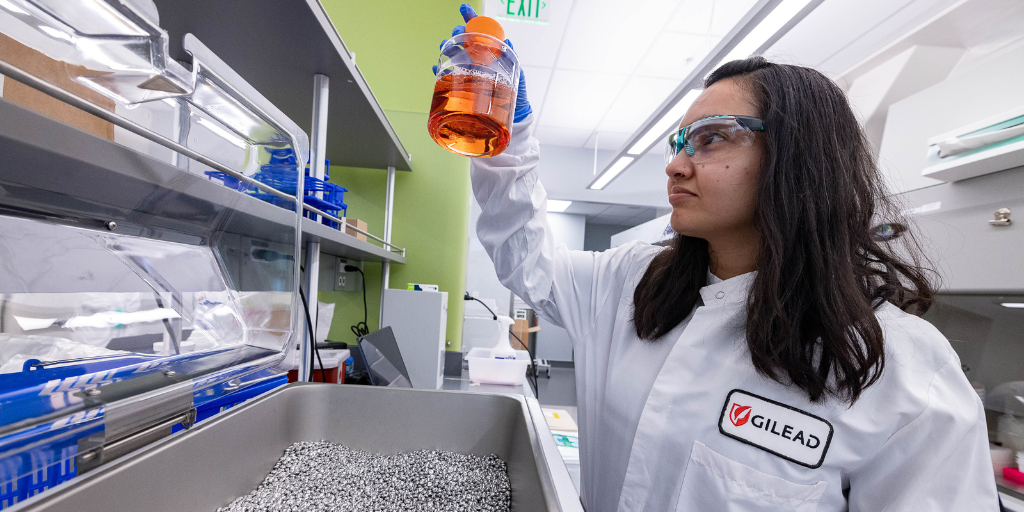
In an era of rapid scientific advancement and ongoing global health challenges, Gilead Sciences is advancing a long-term research strategy focused on areas of significant unmet medical need. In 2019, with a clear mission to tackle serious diseases, Gilead outlined a long-term plan to advance 10 potential transformative therapies by 2030. This plan reflects Gilead’s targeted investments across HIV, oncology, and inflammatory diseases, underscoring a focus on research-driven innovation, strategic growth and global collaboration.
Rewriting the rules of HIV treatment and prevention
For decades, Gilead has been synonymous with HIV treatment and prevention leadership, establishing itself as a pioneer in antiviral therapy. This legacy continues with comprehensive research programs that can lead to groundbreaking therapies to help address the persistent challenges of the global HIV epidemic.
The recent U.S. approval of the world’s first twice-yearly HIV prevention medication adds an innovative option for those who need them most. In 2025, Gilead submitted regulatory filing in 18 countries representing a substantial share of the global HIV burden, with the goal of enabling initial access in resource-limited countries, pending regulatory review and local approvals.
Building on this breakthrough, Gilead’s clinical HIV development programs continue to push boundaries. These trials explore innovative approaches aimed at making HIV prevention and treatment simpler, more effective and more accessible for a broad variety of people. Gilead studies investigate novel combinations, formulations, dosing strategies and delivery methods that could further transform the HIV landscape, reinforcing Gilead’s commitment to help end HIV transmission and improve outcomes for people worldwide.
Advancing precision frontiers: A pipeline engineered for breakthroughs
Beyond virology leadership, Gilead is building the future of oncology, inflammation and other disease areas through targeted investments in innovative platforms and strategic acquisitions. The company’s oncology strategy addresses the most aggressive, treatment-resistant cancers, including breast, brain and rare blood cancers.
In the rapidly evolving field of cell therapy, Gilead is driving innovation with its CAR-T candidates. KITE-753, currently in Phase 1 studies for lymphoma, is expected to enter pivotal studies in 2026, while KITE-363 is being evaluated in Phase 1 studies for refractory autoimmune diseases. Both candidates utilize the KITE DuoCore™ construct, an investigational design that incorporates two independent CARs intended to address challenges such as antigen loss. Ongoing studies are examining how this approach may influence durability of response, safety profile, and treatment delivery settings. Additional research will be required to determine how these attributes may translate into clinical practice. Additionally, KITE-753 leverages a novel manufacturing process that preserves T-cell fitness. Combined, these developments are targeted to provide higher efficacy, lower toxicity, durable function and faster delivery to patients.
In the inflammation space, Gilead is tackling chronic diseases that cause lifelong pain and disability, drastically impacting quality of life for millions of patients worldwide. The company’s research focuses on developing novel therapies that target underlying disease mechanisms rather than simply managing symptoms, offering the potential for disease modification and improved long-term outcomes.
These diverse programs reflect a disciplined, innovation-driven strategy, one that carefully balances scientific ambition with a laser focus on delivering meaningful patient outcomes and addressing significant unmet medical needs.
Access without limits: Partnerships that matter
Scientific innovation alone cannot address global health challenges without deliberate, system-level access planning. Gilead has long embedded access considerations across its portfolio, working to ensure that advances in virology, oncology, and inflammatory diseases can reach patients in diverse healthcare settings around the world. This approach reflects a belief that access must be designed alongside innovation, taking into account affordability, infrastructure, regulatory pathways, and healthcare capacity.
One recent example of this approach is Gilead’s work to expand access to its long-acting HIV prevention medication. In 2024, the company signed royalty-free voluntary licenses with six generic manufacturers to make and sell the first twice yearly treatment for HIV prevention in 120 low- and lower-middle-income countries. Gilead also completed early technology transfers to support manufacturing readiness, recognizing that timely access requires preparation well in advance of regulatory review and local approvals.
Building on its broader access framework, Gilead partners with global health organizations, governments, and non-profits to support access across its portfolio. This includes collaborations with initiatives such as the U.S. State Department’s PEPFAR program and the Global Fund, which bring together complementary expertise in procurement, health system support, and delivery. These partnerships are designed to help ensure that scientific advances across disease areas can translate into real-world impact.
Through strategic healthcare institution partnerships worldwide, Gilead helps develop comprehensive screening, testing and diagnostic protocols for critical viral diseases. These collaborations extend beyond drug distribution, encompassing capacity building, healthcare worker training and support for infrastructure development. By strengthening healthcare systems, these partnerships aim to help ensure that breakthrough therapies can be effectively delivered to underserved populations, translating innovation into real-world impact.
This comprehensive approach reflects a broader philosophy deeply embedded in Gilead’s corporate culture: healthcare innovation must be inclusive, sustainable and globally relevant to truly transform patient outcomes.
2030 and beyond: A bold blueprint for transformative therapies
Looking ahead, Gilead’s strategy is to continue accelerating innovation while maintaining disciplined growth and resource allocation. By focusing on transformative therapies, strengthening strategic healthcare ecosystem collaborations, and driving sustainable stakeholder value, Gilead aims to help shape the next era of biopharmaceutical innovation.