
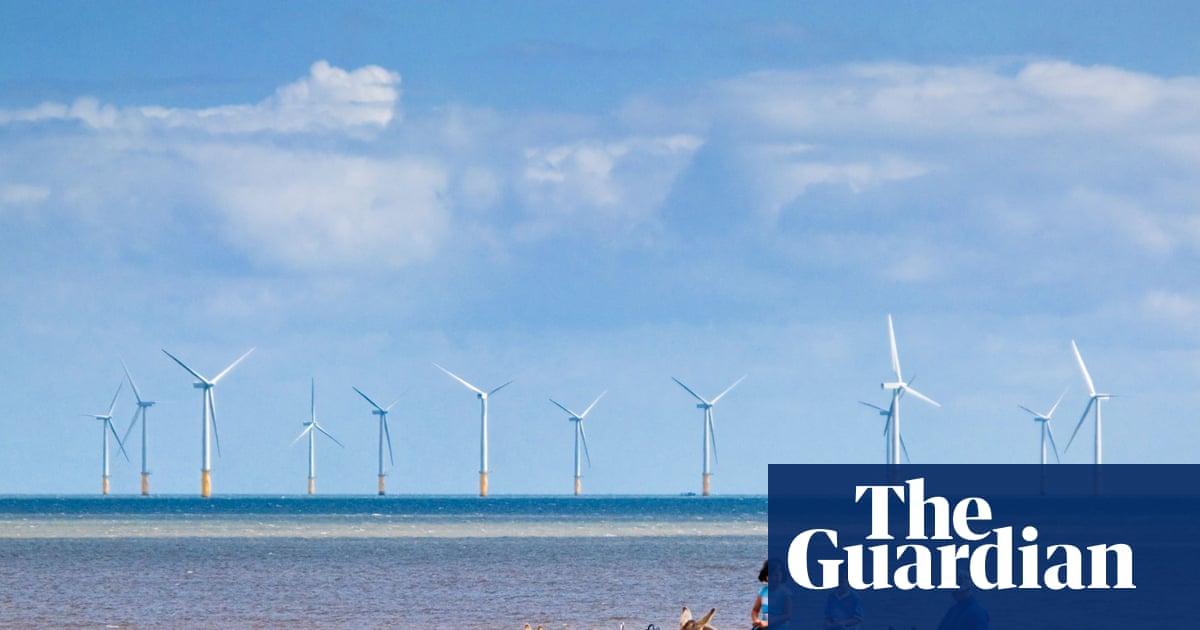
A make-or-break auction for the UK government’s goal to create a clean electricity system by 2030 has awarded subsidy contracts to enough offshore windfarms to power about 12m homes.
In Great Britain’s most competitive auction for renewable subsidies to date, energy companies vied for contracts that guarantee the price for each unit of clean electricity they generate.
Contracts were awarded to eight new offshore farms after ministers increased the amount of funding available to developers to help them produce projects worth £22bn.
The government expects the investment to support 7,000 skilled jobs, and has promised that its clean energy agenda would help to lower energy bills for good.
The funding was awarded to offshore windfarms with a total capacity of 8.4 gigawatts (GW), or enough to generate clean electricity for more than 12m British homes by the end of the decade.
These included standard windfarms fixed to the seafloor and a new generation of floating windfarms that could help the UK to build projects in far deeper areas of the North Sea.
The standard windfarms were awarded a contract price of £89.49 a megawatt-hour (MWh) in 2024 prices for those in Scotland, and £91.20/MWh for those in England and Wales. The two floating windfarms were granted a contract that will earn £216.49/MWh.
Ed Miliband, the energy secretary, said: “We’ve secured a record-breaking 8.4GW of offshore wind … This is the largest amount of offshore wind procured in any auction ever in Britain or indeed Europe.”
He called it “a significant step towards clean power by 2030”, adding: “The price secured in this auction is 40% lower than the alternative cost of building and operating a new gas plant. Clean, homegrown power is the right choice to bring down bills for good, and this auction will create thousands of jobs throughout Britain.”
The most successful energy company in the bidding was the German utility RWE, which secured contracts for its Dogger Bank South and Norfolk Vanguard windfarms. SSE also won a contract for the first phase of its massive 4.1GW Berwick Bank project off the Scottish coast.
Although the winning bids’ prices are higher than in previous years and above the typical price of electricity in the wholesale power market, which now stands at about £81/MWh, experts say the growth of wind power in the UK energy system could still help to keep bills down because they would lower the market price by limiting the use of expensive gas plants.
The success of the auction was considered crucial if the government hoped to achieve its election pledge to double onshore wind, triple solar power and quadruple offshore wind by 2030 with the aim of creating a virtually zero-carbon electricity system by the end of the decade.
However, the government will need to repeat the results of its record-breaking auction by securing another 8GW of offshore wind power at similar prices at next year’s allocation round if it hopes to meet its goal of committing to between 43GW to 50GW of offshore wind by 2030.
The auction round was also considered “a litmus test for the resilience of UK offshore wind after two challenging years”, according to Alon Carmel, an offshore wind expert at PA Consulting.
“The results will signal whether the sector can regain momentum toward 2030 targets or faces a prolonged slowdown,” Carmel said.
The offshore wind industry has faced rising costs because of inflation across its supply chain, and higher interest rates to finance its multibillion-pound projects. Large developers building windfarms in US markets have also faced an increasingly hostile political environment under the Trump administration.
The UK government has faced criticism for accelerating its investment in offshore wind at a time when the technology faces higher costs. Supporters of the industry have argued that speedy investment is key to replacing Britain’s ageing nuclear and gas plants, about half of which are due to close before 2035.
“Investment in renewables is also crucial to keep pace with the UK’s need for more energy,” said Ana Musat, a policy director at RenewableUK. “Electricity demand is set to increase significantly in the years ahead as existing nuclear and gas capacity retires, so the 8.4 GW awarded contracts today will be crucial for economic growth.”