
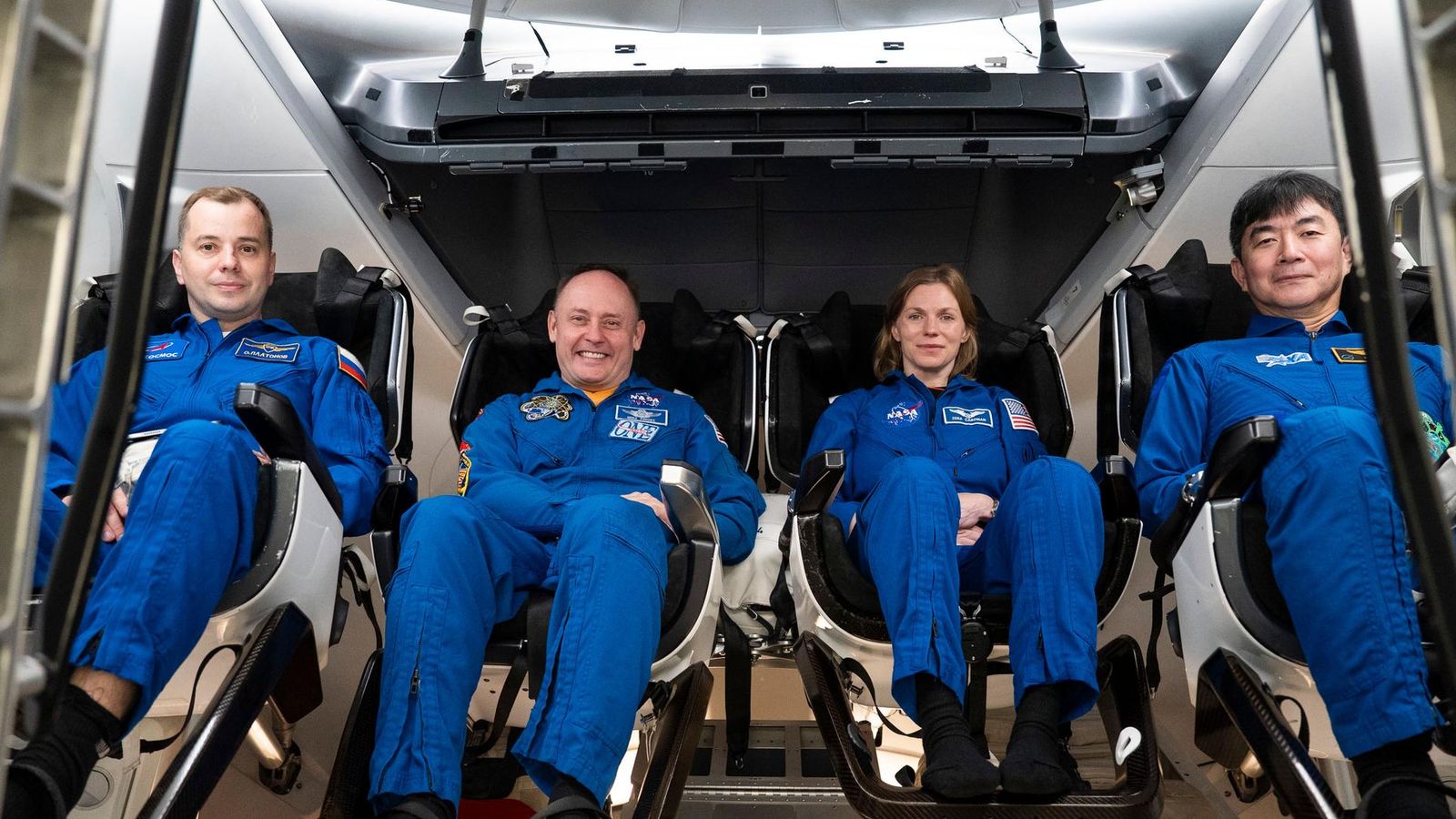
Analysis: Evacuation highlights risks as astronauts begin a new era of space exploration
By Thomas Moore, science correspondent
Never has 250 miles been so far from home.
That’s the distance above the Earth that the International Space Station (ISS) orbits. But when one of the crew needs a medical evacuation it’s painfully remote.
NASA won’t say which of the four astronauts leaving the ISS late tonight has a “medical concern”, nor what the problem is, because of confidentiality.
But Jared Isaacman, the new NASA chief, ordered the return because the space station doesn’t have the diagnostic capability or treatment available for the mystery condition.
It’s remarkable that this is the first evacuation. There have been more than 280 astronauts on the ISS since the first crew arrived in November 2000.
Statistically, there should be a serious medical problem requiring an early return to Earth every three years.
But, up to now, the astronauts themselves, backed up by a flight surgeon and other medics on the ground, have been able to deal with all medical incidents in orbit.
That included a blood clot in the jugular vein of an unnamed astronaut a few years ago. They had to ration the supply of blood thinners, injecting a slightly lower dose than normal, until a cargo spaceship brought new stocks 43 days later.
The ISS has a mini-pharmacy of more than 190 drugs and medical equipment including an ultra-sound machine, defibrillator and an intravenous therapy kit.
It’s enough for the most medical problems in astronauts who are carefully screened for physical and mental fitness before they launch.
But the evacuation highlights the risks as astronauts begin a new era of space exploration. What happens if there’s a medical incident on the moon, or on a spaceship to Mars?
It’s not like the crew can count on “Bones” McCoy, the doctor in Star Trek, with his fancy diagnostic wand and miraculous surgical skills.