
“Naz, you must have been approached a million times about making a film of your life and career. Why did you say yes to this one?”
“It’s really funny,” he replies to The Athletic with a wry smile, “because I didn’t.”
It’s the morning after the UK premiere of Giant, the Hollywood film based on the remarkable story of British-Yemeni boxing champion Prince Naseem Hamed and his Irish-born, Sheffield-based trainer Brendan Ingle.
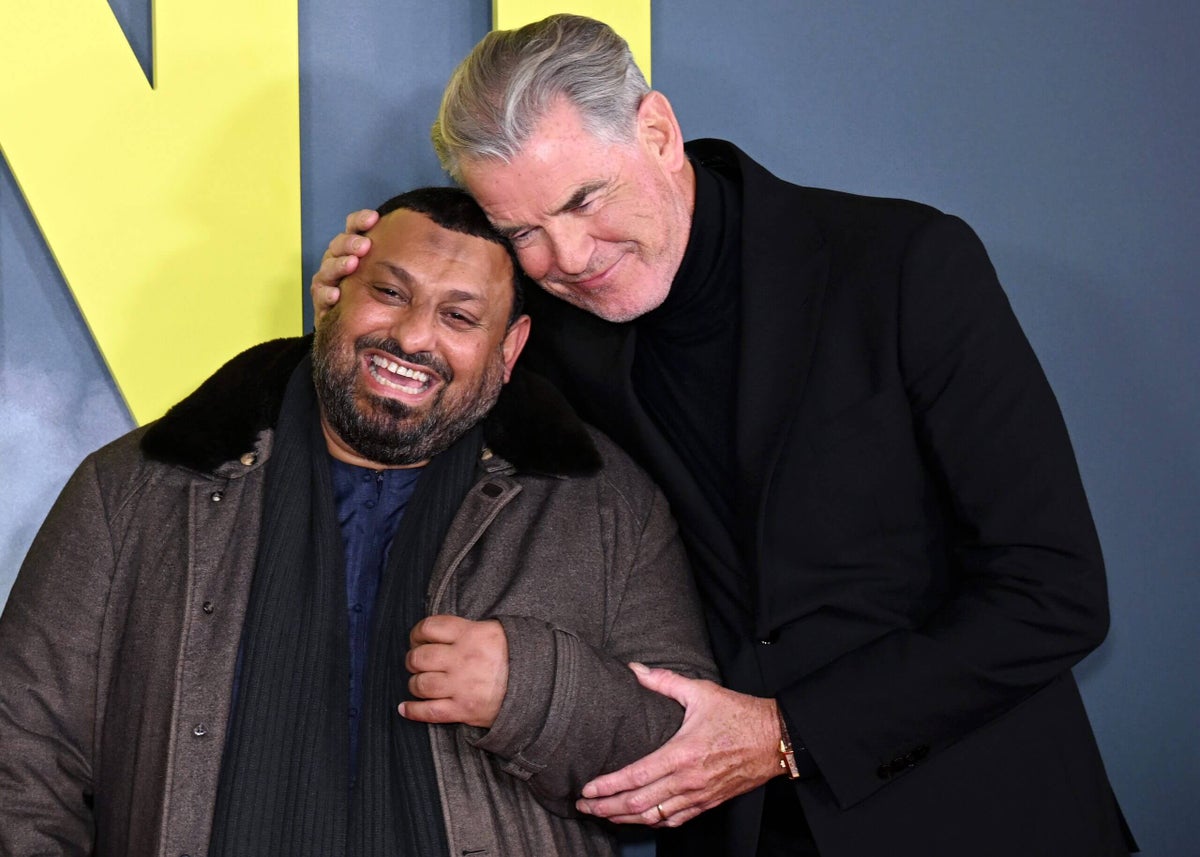
The previous evening, he walked the red carpet along with the film’s stars, Pierce Brosnan (who plays Ingle) and Amir El-Masry (who plays Hamed), posed for pictures and gave interviews about the film, which was written and directed by Rowan Athale with Sylvester Stallone also on board as executive producer.
Few observers of the glitz and glamour of that premiere would have guessed that Hamed had nothing to do with the making of a film that depicts his journey from a scrawny six-year-old swerving playground bullies and racist taunts in his hometown of Sheffield in the north of England to a world champion and global star who transcended boxing. But that, says Hamed, is the reality.
“This film was made without my consent,” he says, spreading his arms wide across a long table that fills the meeting room in the London offices of the film’s publicists.
“I didn’t get involved until this film was finished, on a marketing and advertising campaign for it. It’s about a part of my career with my trainer, but it’s unofficial.”
Athale, who is from Barnsley, a Yorkshire town about 16 miles north of Sheffield, was a teenager when Hamed was in his 90s pomp and was a huge fan, telling the BBC that as a British-Indian, “he was someone I felt me and my brothers were represented by.”
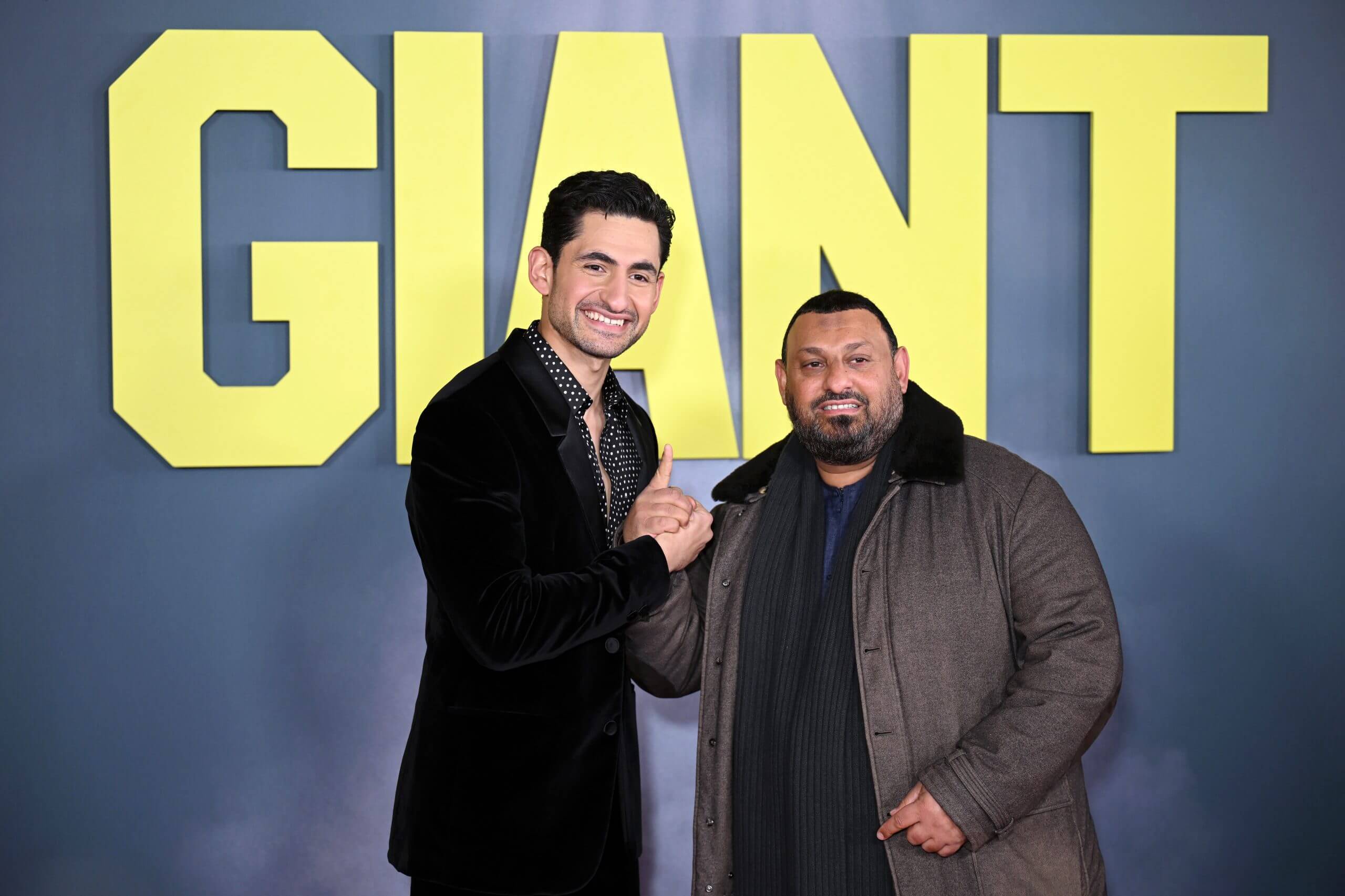
Actor Amir El-Masry and Naseem Hamed at the premier of the film Giant in London on January 7, 2025 (Kate Green/Getty Images)
His intention had always been to include Hamed as part of his research. “Initially, it was going to happen,” Athale tells The Athletic in a separate interview a few days later, but when production restarted in September 2023 after the end of the four-month Writers’ Guild of America strikes, the director says things went quiet from Hamed’s side.
“In reaching out to Naz, what I really wanted to be was respectful and show that we were going to be authentic to him, but Naz is a busy guy and he works on his own timeline.”
And so the show went on without him. Athale says he spent five years researching for the film, reading every piece of journalism on the relationship between Hamed and Ingle, every interview, scouring hundreds of hours of footage and interviewing “a dozen people from the gym”, including Brendan’s sons, John and Dominic, former fighters and the psychologist Geoff Beattie who trained in the Ingle gym during the Hamed era.
Asked about Hamed’s claim that “80 to 90 per cent of the scenes in the film are made up,” Athale says it’s something he has discussed with him and puts it down to a “misreading,” and likens his big-screen adaptation to “adapting a 400-page book to be a 90-page script.”
“You’ve had to try and take something that would be hours and hours on screen and make it 90 minutes, so you may do a reinterpretation,” he explains.
“All the events and all the emotions that I’ve written and put into the film happened. But rather than it be an absolute recreation of events that were never recorded, it’s a dramatic interpretation of events that are well recorded.”
For almost 10 years as a professional, Hamed was untouchable; unhittable, unhurtable. Outwardly, he looks like a different person now compared to those featherweight days but, at 51, he speaks with the same unshakeable confidence and swagger that underpinned the ‘Prince’ persona.
Hamed was in Dubai when he heard that the film was finished and asked a contact to get in touch with those involved to tell them he wanted to see it. The director and producer travelled to Dubai where they arranged for a cinema near Hamed’s accommodation to screen Giant for them.
“We watched it together,” says Hamed. “It was very uncomfortable to watch. It’s strange to see a film about you that you’ve had no input in. You’re looking at it, and you’re just thinking: ‘How? What? That’s not me!’”
Ingle, who died in 2018 at the age of 77, was a former boxer from Dublin whose gym in the tough east end of Sheffield became renowned as a place where local youths needing a place to keep them out of trouble were as welcome as elite-level fighters working towards a world title.
Hamed was seven years old when he was brought to the gym by his father, although Ingle liked to tell a story of how he’d first spotted this son of a shopkeeper from his seat on a double-decker bus as it stopped outside a primary school, recalling in a 1995 interview how he noticed a young Hamed’s talent as he fought “these three white kids off. All three of them are kicking and punching him.”
The duo became inseparable as coach and protege for more than a decade, during which time Hamed became a five-time national schoolboy champion and 1990 junior ABA champion before turning professional on his 18th birthday. Ingle predicted that he would be “world champion and a millionaire at the age of 21”, and he was right.
In September 1995, aged 21, Hamed defeated Steve Robinson to win the WBO featherweight title — a belt he successfully defended 15 times.
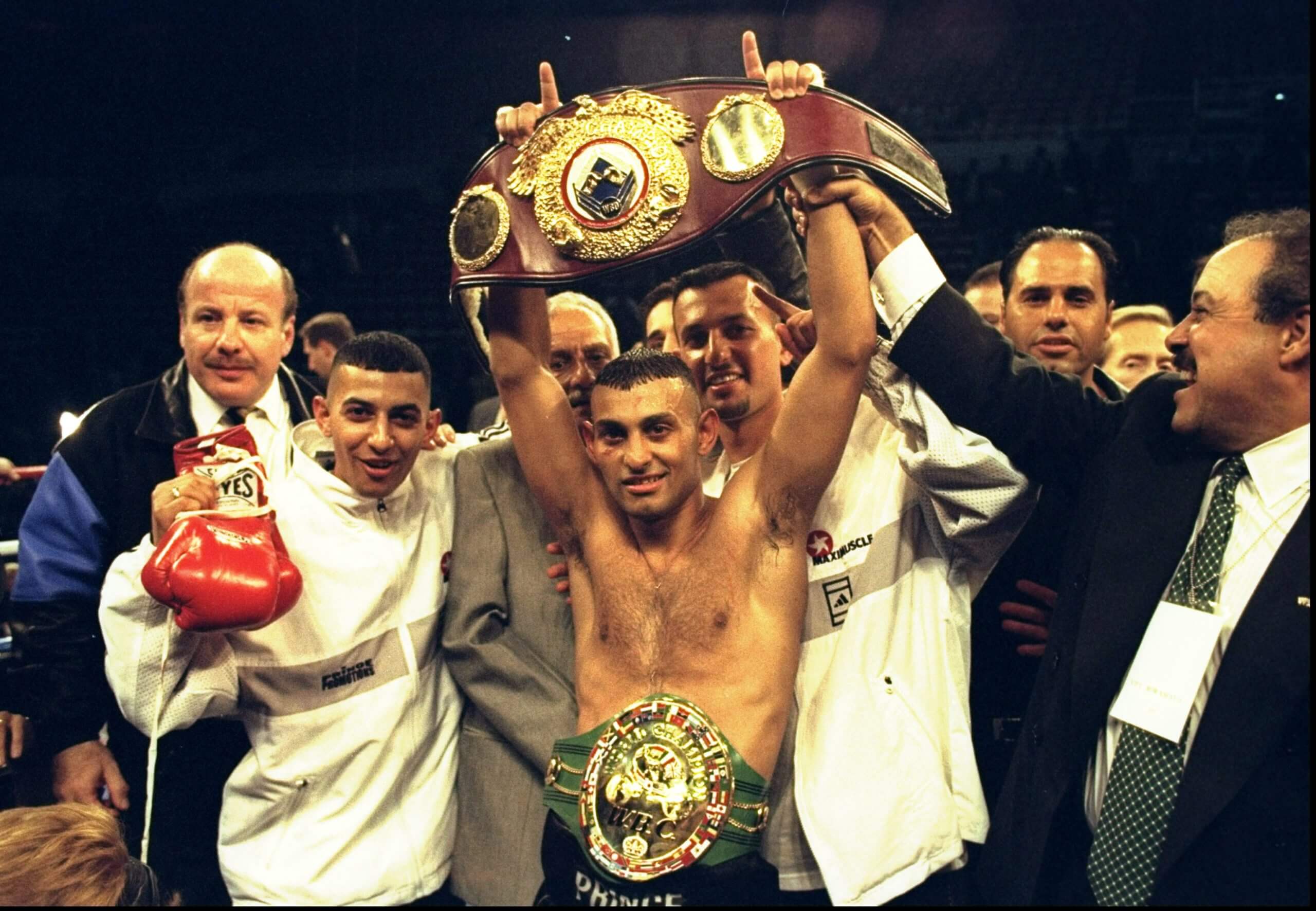
Prince Naseem Hamed celebrates after beating Cesar Soto in 1999 to unify the WBC and WBO featherweight titles at Joe Louis Arena in Detroit, Michigan (John Gichigi/Allsport)
But over the following years, cracks developed in their relationship. Ingle’s view — which is largely represented in the film — was that money and fame overtook boxing in Hamed’s list of priorities.
Hamed’s view, which is partly referenced during an imagined reconciliation between the pair at the end of the film, is that Ingle was “very money-oriented” and took advantage of his youth when forging a deal when he was 11 years old that awarded the trainer 25 per cent of his fight purses.
In 1998, the pair acrimoniously split. Three years later, Hamed — who ended his career with a 36-1-0 record — suffered his first and only loss as a professional, a unanimous-decision defeat to Mexico’s ‘baby-faced assassin,’ Marco Antonio Barrera. He fought only once more, against the relatively unknown European featherweight champion, Manuel Calvo, 13 months later.
At 28, he was retired in all but name. “I never retired, by the way,” he smiles, in reference to the fact he never made an official announcement.
His hands were in pieces, shattered from years of unleashing devastating knockout power. He could look good in the gym but in a real fight, the fragility was limiting. “If every time you hit, you break your hands and they’re brittle, it’s finished,” he says. “You can’t compete. There was no use.” For a period, he would tease a return but, in reality, he never saw the need for one.
“I had 31 knockouts out of 37 fights, I was content in my heart and I was happy with what I did in the sport. I was content with the legacy that I’ve left for me and my sons and I put that stamp on the sport that will never ever be taken off. People will always talk about that guy.”
Ingle guided four fighters to world titles — Hamed, Johnny Nelson, Junior Witter and Kell Brook — but died without reconciling with his greatest protege.
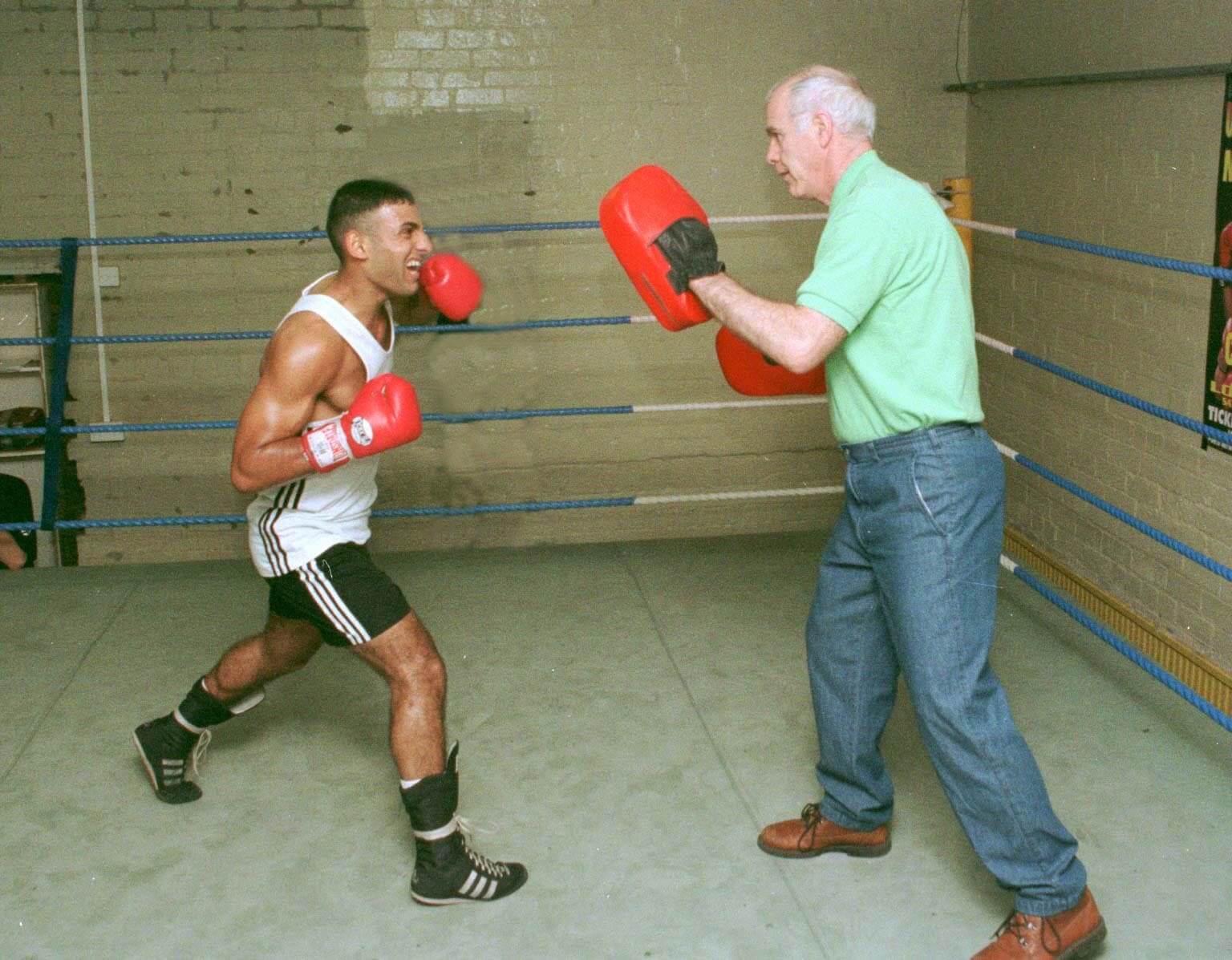
Brendan Ingle pictured training with Naseem Hamed (Paul Barker/PA images via Getty Images)
While Hamed admits he was “uncomfortable” watching Giant’s version of events, he is also more relaxed about it than some might be.
“You know, with me … everything’s cool and the gang,” he says, smiling before glancing over to his wife of 30 years, Eleasha, who is also in the room. The couple’s three sons, Aadam, Sami and Sol — the former two are also boxers — were less equanimous after first watching the film and he admits that if it were them or Eleasha in his position, “it would be different.”
He points out that he has spent a lifetime following his own path without worrying what others think. “I’m going to be 52 years old in February, Inshallah, God willing. Am I going to start now being upset what people think? From all my life having people booing and calling me whatever, am I going to start letting my feelings be hurt now? No.”
Why then did Hamed decide to support the film with his presence during its week of release? “Because what’s the use in going against it, regardless of what’s in the movie and what they say about me, when it enables me to turn up to promote it, knowing that mine’s yet to come.”
Hamed has plans for a documentary series that will tell “the true story” of the boy from Sheffield and his explosive rise to become a global superstar, changing the landscape of a sport along the way.
He says he also wanted to show respect to those involved with making the film, including the “mad fan” of a director whose lifelong dream had been to make a film about Hamed.
“Imagine somebody making a film about you, and then you turning around to that guy and shooting him down in flames, telling him that this is the most despicable… you can’t do it, you wouldn’t do it. He doesn’t deserve that,” he says. “And to be honest, the film is nowhere near as bad as it could be.”
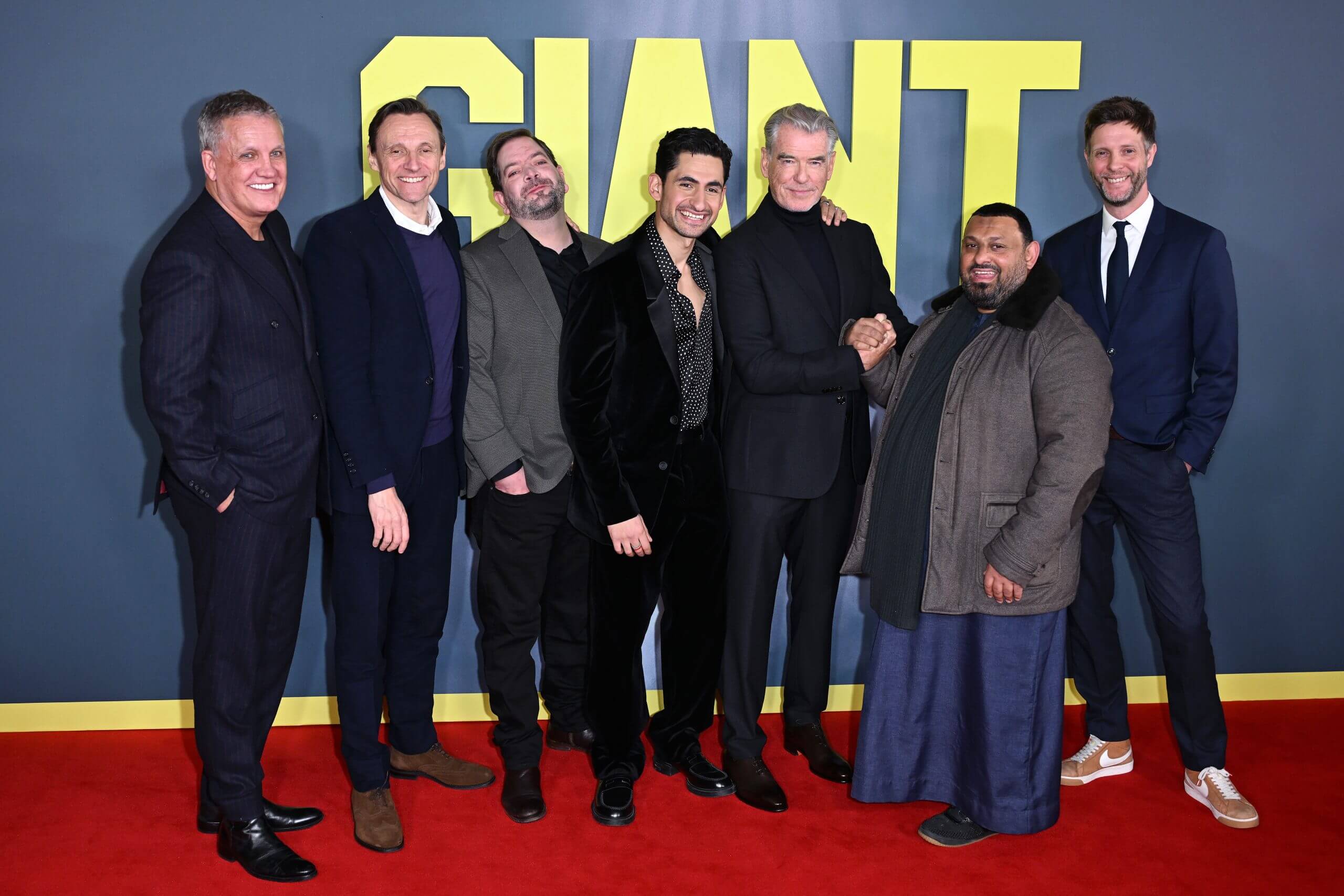
Naseem Hamed pictured with some of the cast and crew at the screening of Giant (Kate Green/Getty Images)
There is one particular scene that jars with those who know Hamed best. Set amid the time when tensions are rising between trainer and fighter, it shows him joking around inside the ring, riling other boxers in the gym and invoking the wrath of Ingle, who threatens to get in there with Hamed. The viewer sees him glove up and step into the ring where Hamed lays into him with body shots before the scene cuts to a shot of Ingle’s house where he is laid flat on his back, recovering.
“That did happen,” says Hamed, “but what didn’t happen, I didn’t take advantage of him and hit him like they say. He got in the ring and we just moved about. I tipped and tapped. I couldn’t hit an old man to the body hard where he would be bruised. They were dying to try and make me look the worst that I could look. And I don’t mind it because the people who really know me know the truth. The people who were there, who saw that, know the truth.”
Hamed says he spent “many years trying to reach out and trying to fix everything” with Ingle. “As much as I tried, it was pushing him further away from us, so I just thought, ‘It’s not meant to be’,” he adds.
“It was sad for me when Brendan passed because whatever anybody thinks, he’s the person that I was with a lot when I was very young.
“I only wish with my whole heart that we could have sat down. I wanted to say to him, ‘Listen, there’s many things that I said maybe to upset you. There’s many things that you’ve said to upset me. But let’s clear the air, let’s be men. I’m older now, we’re wiser. Let’s call this whole thing a day’.”
It’s not a regret, though, says Hamed, who has always held a strong belief in fate. “When the pen’s been lifted, and the pages are dry, you can’t change what’s been written,” he says.
He smiles as he speaks, proud of the fact that more than 20 years after his last fight, people are still talking about “that guy”, and confident that they will be for some time yet.