
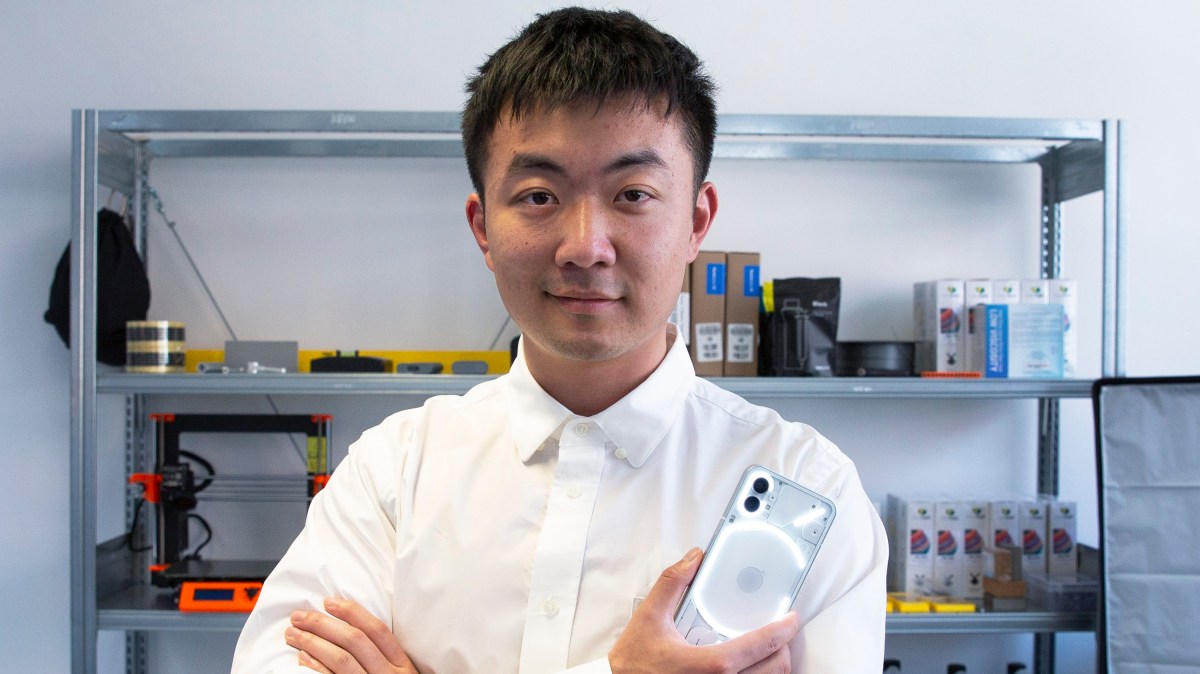
The boss of Nothing, the British smartphone maker, said his industry is facing a “fundamental change” as unprecedented demand for memory chips driven by the artificial intelligence boom has seen costs soar.
Carl Pei, the founder and chief executive of the company, said smartphone manufacturers and the broader consumer electronics sector would have to navigate a “structural shift” as a result of the higher prices of memory chips and that the “era of cheap silicon is over”.
• UK smartphone company Nothing valued at $1.3bn after fundraising
The “sharp and unprecedented surge” in prices has “broken” the long-term downward trend in component costs, which he said had allowed for gradual specification improvements without significant price rises.
Higher demand for memory chips caused by the AI boom and the related race to build data centres has caused a shortage and significant price increases.
Samsung, Arm and Qualcomm are among technology giants that have this month warned of a supply squeeze for memory chips.
Pei said: “AI has fundamentally reshaped demand” and in some cases costs have tripled, “with further rises expected”. He said memory components could be the “single largest cost driver” for smartphone materials by the end of the year, with parts that would have cost less than $20 a year ago reaching more than $100 by the end of 2026.

Nothing is a rare example of a UK hardware technology business
“This is a reversal of everything we’ve come to expect from this industry,” Pei wrote in a post on LinkedIn. “When something that used to get cheaper every year suddenly becomes a lot more expensive, the economics of building a smartphone fundamentally change.”
At the recent Consumer Electronics Show in Las Vegas, a key annual event for technology manufacturers, Rene Haas, the chief executive of Arm, said the shortage of memory chips was the most “severe I have seen in at least two decades” while Samsung executive TM Roh called the constraints “unprecedented”.
Nothing, a rare example of a UK hardware technology business, was founded in 2020 and makes smartphones as well as Bluetooth headphones and watches.
Pei, a Chinese-born Swedish entrepreneur who previously co-founded OnePlus, the popular Chinese smartphone brand, said brands faced the choice of raising prices by 30 per cent or more or downgrading specifications. “Some markets, particularly entry and mid-tier segments, are likely to shrink by 20 per cent or more, and brands that have historically dominated these segments will struggle.”
“The ‘more specs for less money’ model that many value brands were built on is no longer sustainable in 2026.”
• UK smartphone start-up won’t commit to a London IPO
Pei said Nothing’s prices will “inevitably” increase but the problems present an opportunity for his company as it has focused on design and user experience because of its inability to compete with the cost advantages enjoyed by its giant rivals. He said: “2026 is the year the ‘specs race’ ends.”
London-based Nothing claims to be the world’s fastest-growing smartphone and consumer audio brand.
Towards the end of last year, it raised funds from about 13,000 ordinary “community’ investors at a $1.3 billion valuation. The company has indicated it is planning an initial public offering within the next three years, but has yet to decide where it intends to float.
In September it had a $200 million funding round, led by Tiger Global, GV, Highland Europe, EQT and Qualcomm Ventures.