
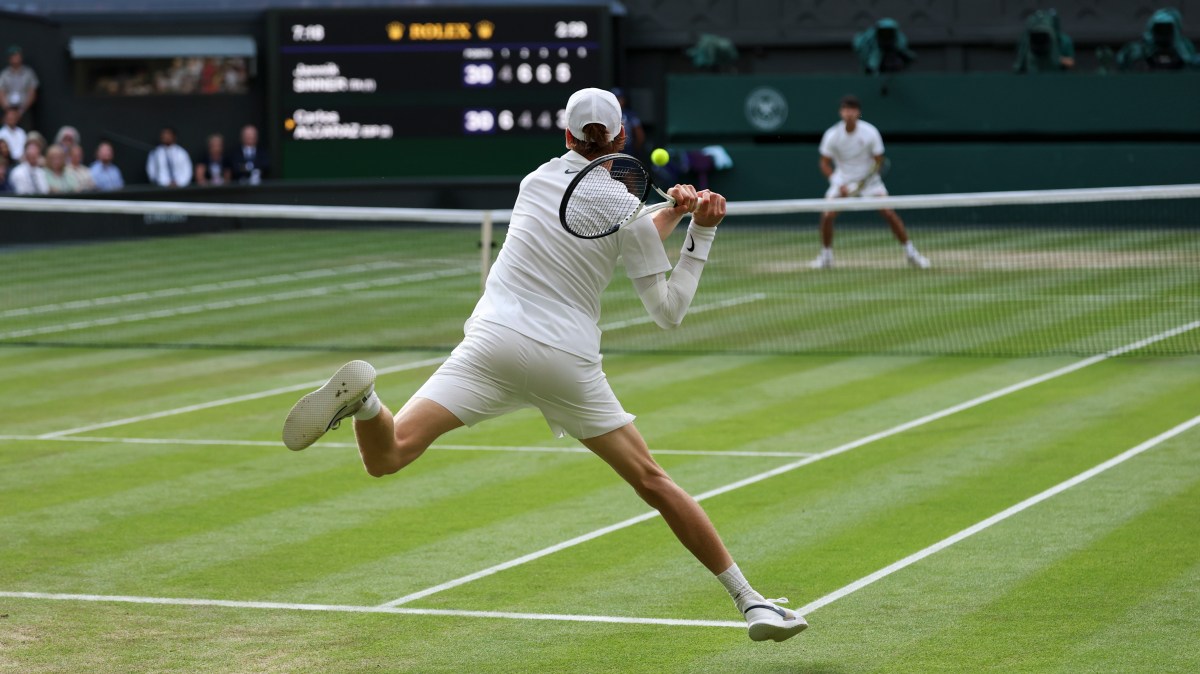
I was six years old when Vitas Gerulaitis vied with Bjorn Borg over five nail-biting sets in the semi-finals of Wimbledon in 1977. I remember it like yesterday: watching on the green sofa with the fraying fabric in the living room. Miriam, my second cousin, was down to stay, and we could scarcely contain ourselves as these two Norse gods hit balls with their wooden rackets like Thor and Odin going head to head with maces.
It felt like gazing into Narnia. I can still remember pulling for Gerulaitis, an American with the most flowing of backhands, but what struck me most was how this wonderful tournament could incubate such insane excitement. My dad came in during the fifth set, settled on to the sofa and let rip his favourite phrase during any tennis match — “Double fault!” — just before the person he wanted to lose was about to serve, believing till his dying day that he could somehow put them off.
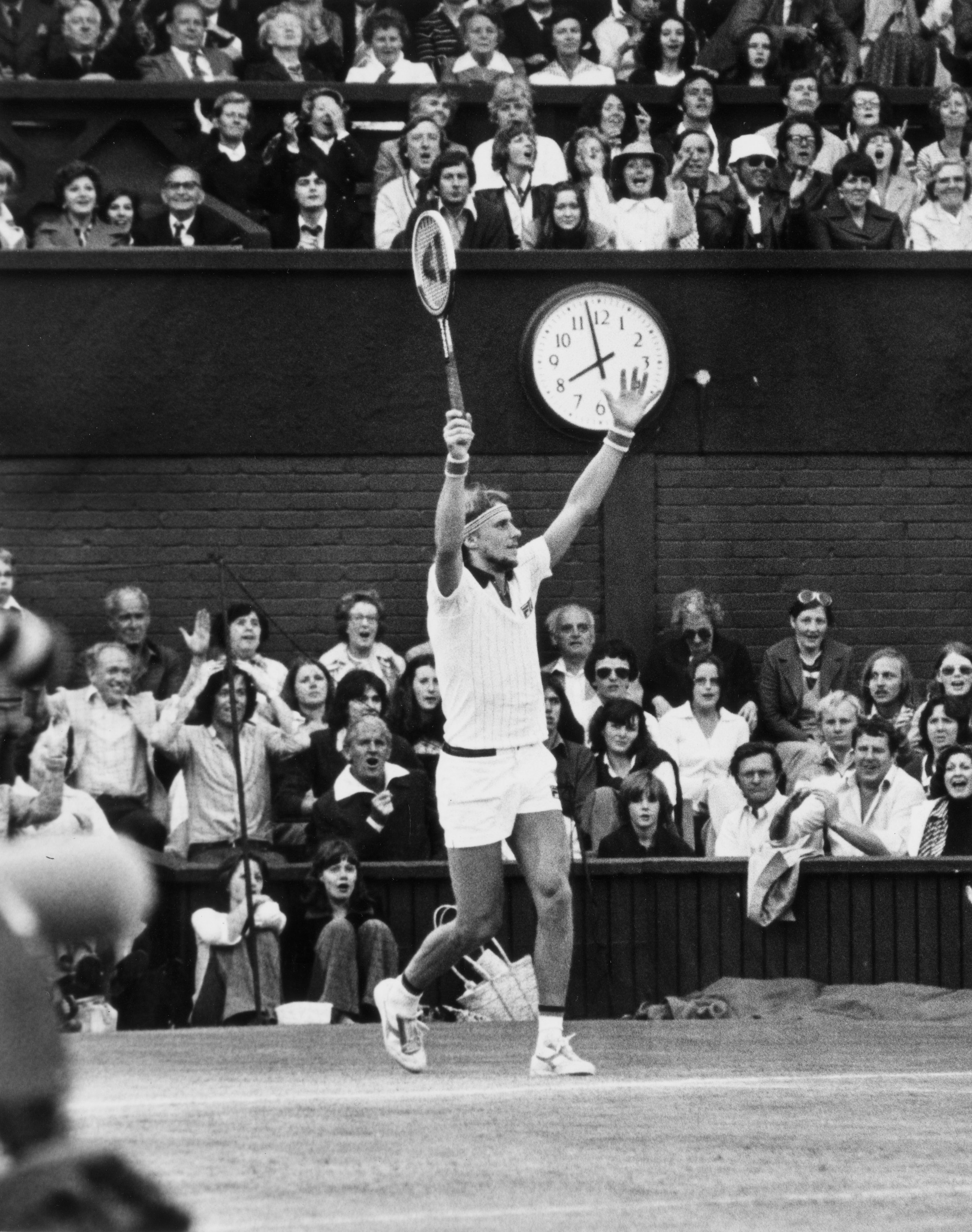
Borg raises his arms in celebration after defeating Gerulaitis in the enthralling 1977 Wimbledon semi-final
TIMES PHOTOGRAPHER MIKE MOORE
Another match I can’t help mentioning, because it was so formative to a teenage sportsman trying to find the courage to put in that little bit extra — the early morning run, the late sprint session in the evening after finishing homework — to reach the top. Jimmy Connors, perhaps the closest thing sport has produced to the Newcomen steam engine — all intensity, drive and piston power — going up against the rather more sedate Mikael Pernfors of Sweden in 1987.
Jimbo, as the audience shouted out on the rare occasions they breached the etiquette of this unique tournament, was two sets to love down and trailing 4-1 in the third. I was at a table tennis training camp in Soham, Cambridgeshire (one of the top UK coaches back then happened to live in the small town), watching the match in the guest house along with my team-mates. We decided the match was all over and walked to the grass track to do some 400m reps.
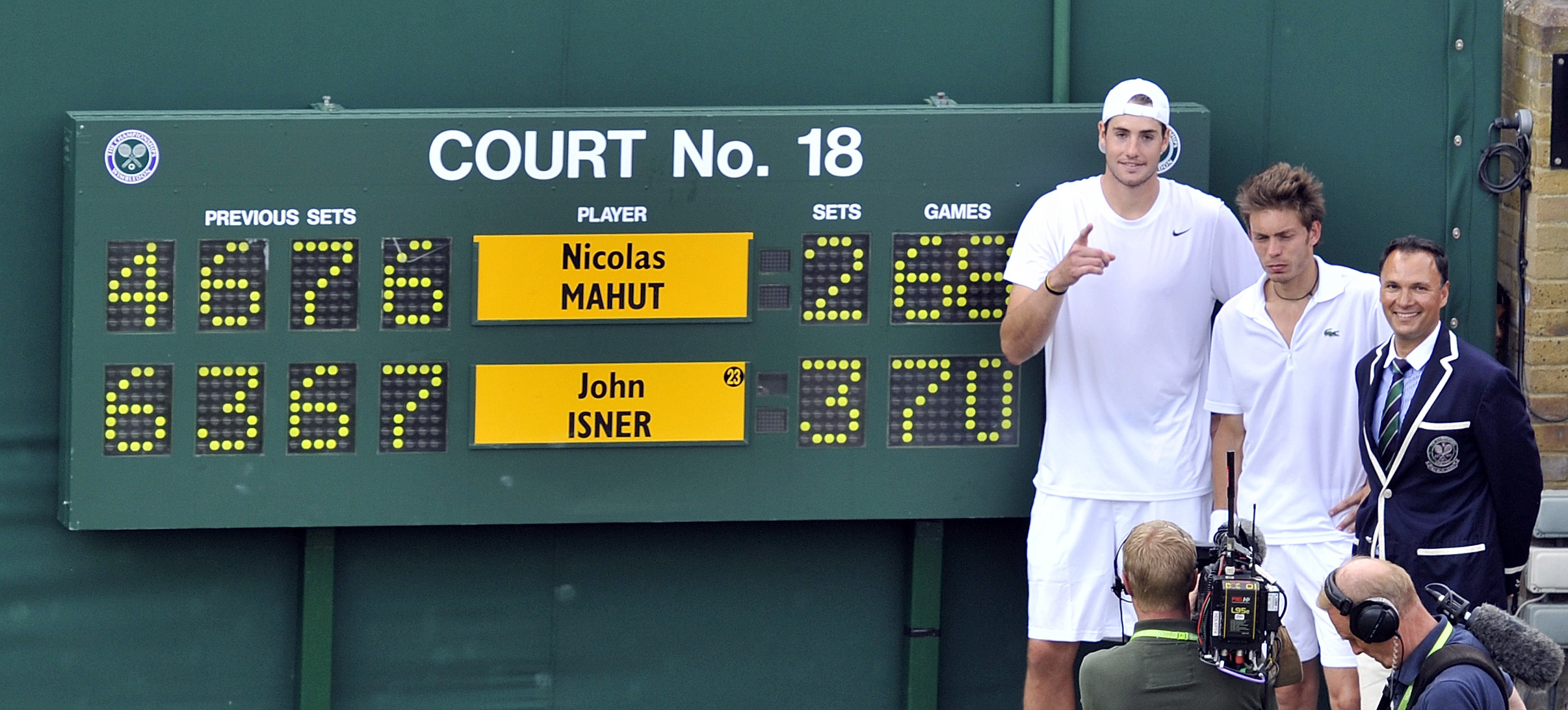
The 2010 first-round match between Isner, left, and Mahut became the longest tennis match in history and was another moment when Wimbledon captured the imagination of the nation
DAVID ASHDOWN/GETTY IMAGES
We trailed back an hour later and turned on the Beeb and — yep — Connors was still there, perhaps the only man who dared to believe when all seemed lost (he’d go on to win in the fifth set). Paul Day — our coach, an inspirational man who would go on to build Turners, the family haulage firm, into a thriving UK business — told us to reflect on what we had witnessed. “There’s a lesson boys,” he said. “Never, ever give up.” When we did our 400m training the next day, we were all Jimmy Connors. I ducked under 60 seconds for the first time.
Every person reading these words will have their own Wimbledon memories. Arthur Ashe winning in 1975; Virginia Wade in the Queen’s jubilee year; Andy Murray drawing down the curtain on decades of pain in 2013; Roger Federer and Rafael Nadal in 2008 (a match that, even now, rebukes description for its sustained drama and artistry); Jana Novotna against Steffi Graf in 1993; John Isner and Nicolas Mahut in 2010, a marathon that ultimately caused a rule change to bring in a tie-break in the final set; Novak Djokovic winning on such a tie-break against Federer in their 2019 clash, when the Serb saved two match points on the Swiss’s serve.
All wonderful. All magical. But all — and this is the point of this column — part of a wider story. Not just the story of tennis, or the players we marvelled at, but also the national story. I remember going to primary school after that Gerulaitis match and finding that many of my classmates had watched too (there were only three TV channels back then, so this kind of thing wasn’t serendipitous, it was part of the cultural “architecture”). Did you see that forehand? What about their long blond hair? I’m growing mine!
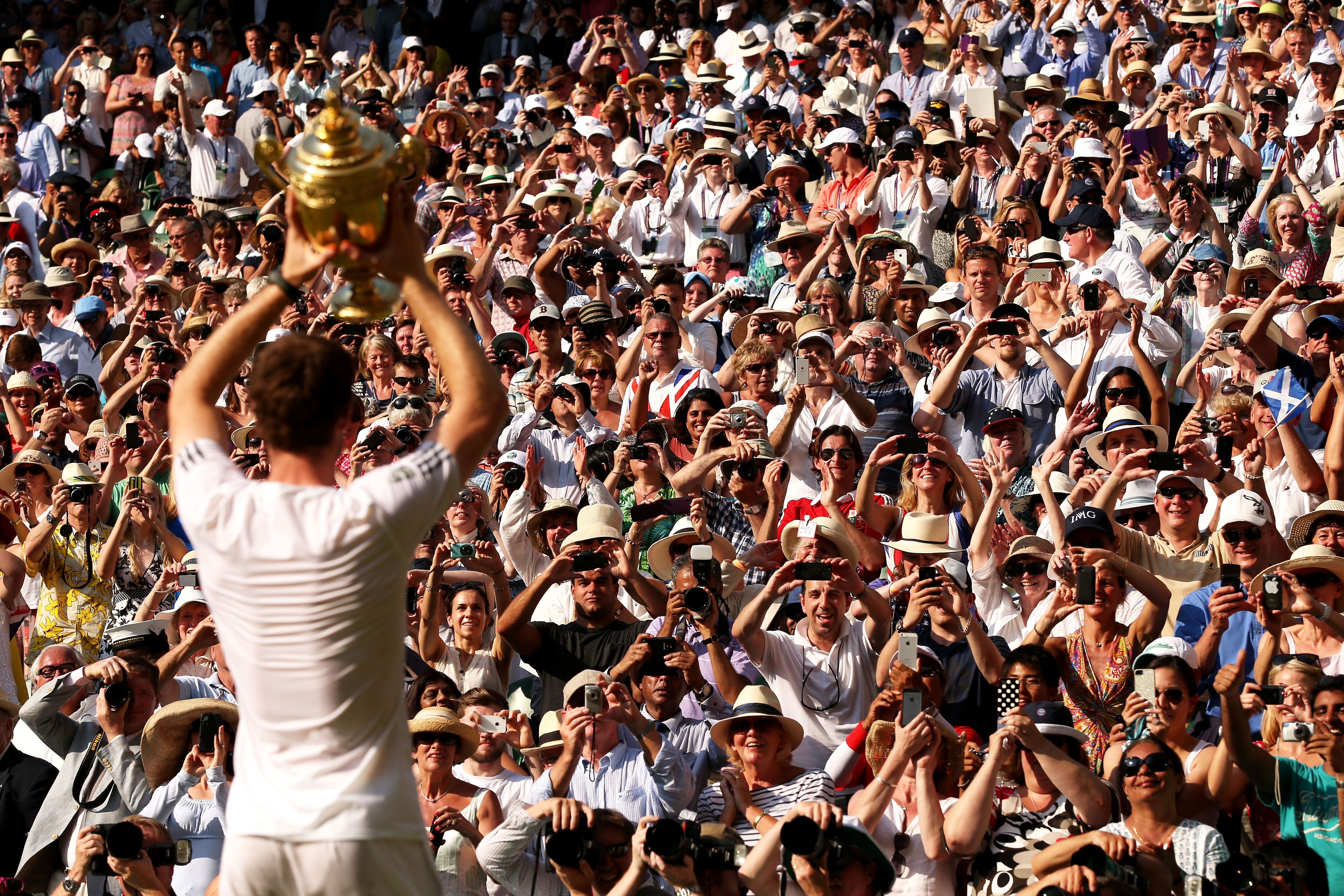
A peak audience of 17 million BBC viewers watched Murray win his first Wimbledon title in 2013
CLIVE BRUNSKILL/GETTY IMAGES
Today we live in a divided society, a divided world. I hate to use that hackneyed term “polarised”, but it’s true. This is why I can’t help thinking that Wimbledon still being free to air is no trivial matter. It is part of the last remnants of the glue holding a fraying nation together. Older readers will remember Morecambe and Wise, the Only Fools and Horses Christmas special, FA Cup Mastermind: the sense back then that one was not merely watching a rectangle in the corner of the room but enjoying a shared experience with millions of countrymen.
Our children will never experience this. They will only ever have a desiccated sense of these collective moments. Except, that is, for things such as Wimbledon. And the coronation. And the World Cup. My son was blown away when Jude Bellingham scored with a bicycle kick in the dying seconds of the Euro 2024 last-16 match against Slovakia and he raced into the garden to scream his heart out and could hear neighbours doing the same. His face was a picture when he came back in because he glimpsed that this wasn’t just a football match. It was a moment, as Émile Durkheim would put it, of “collective effervescence”.
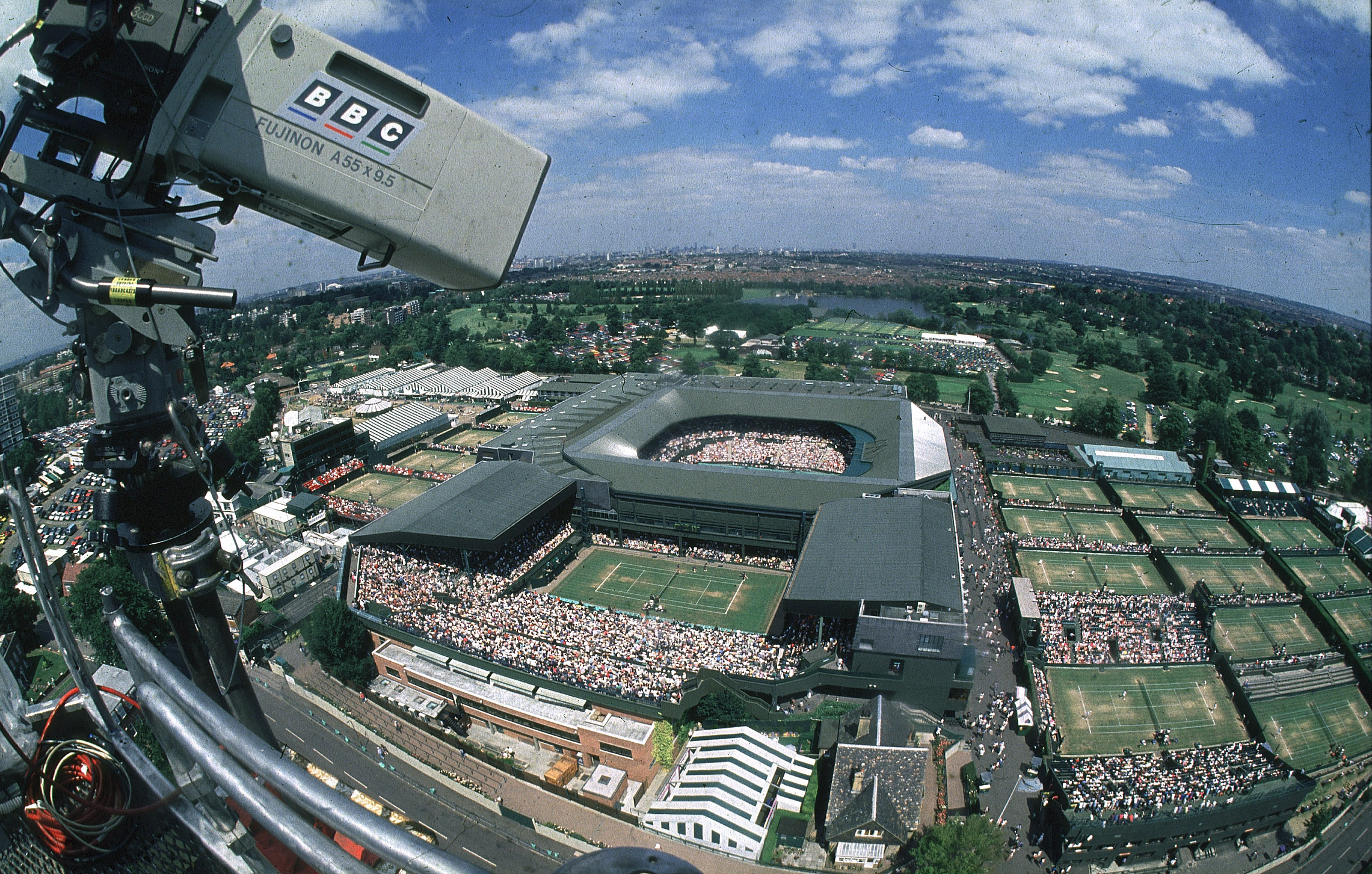
The BBC has televised Wimbledon since 1937, but the All England Club want the broadcaster to refresh its coverage
JEFF OVERS/GETTY IMAGES
I write all this today because I noticed the story by my colleague Martyn Ziegler this week about the BBC being asked to improve its Wimbledon coverage by the All England Club; the wish, apparently, is for something of a refresh. A visitor from Mars might think: “Err, this is a non-story. Why is a trifling broadcast matter at the top of the sports coverage?” But then they would look below the line and see hundreds upon hundreds of impassioned comments. Get rid of Clare Balding! No, keep her! End the banal courtside interviews! And on, and on.
You may have opinions too; I certainly do. But can I be honest: I was struck most of all by how much it means to people. And I wonder if this is in no small part because of our latent hunger for cultural institutions that (whatever our superficial differences about the nature of the coverage) unite rather than divide. I hope that the BBC gets the coverage right (the tennis should always remain the focal point: not the lifestyle pieces or razzmatazz) but most of all I hope such events will always remain free to watch for all in this nation.
I know some will say: “Who cares these days given such a rapidly changing and fractured media landscape?” But isn’t this why it matters now more than ever? “Friendship is born,” CS Lewis wrote, “at the moment when one man says to another, ‘What! You too?’” Sport at its greatest, perhaps more than any other institution, offers us these “you too” moments. It is part of the ambrosia of life.